Roman Polanski’s Hardy is patient, quiet and as handsomely made as anything he has done, with Nastassja Kinski a still, wounded centre. It is also 172 minutes long and moves at the speed of farm work. Worth the evening, if you have the whole evening.
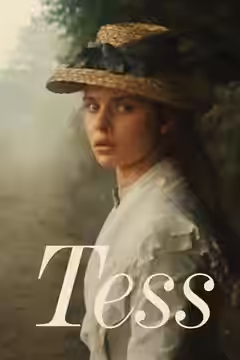
Roman Polanski, with his regular collaborator Gérard Brach and John Brownjohn on the script, has taken Thomas Hardy’s novel about a country girl ruined by two men and made a film that moves at the pace of the seasons it photographs. Tess runs 172 minutes. It is beautiful, it is faithful in outline, and it is about half an hour longer than it needs to be. We recommend it, with that plainly stated.
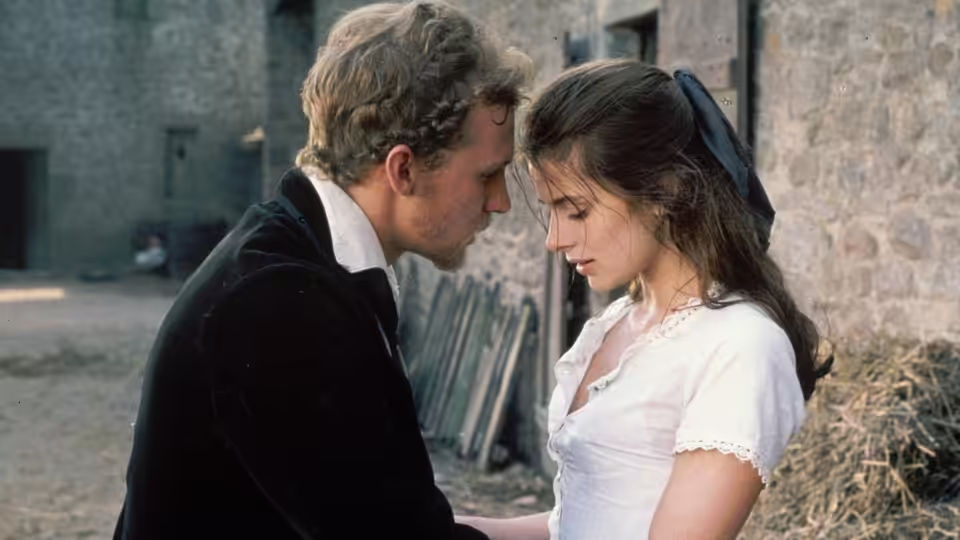
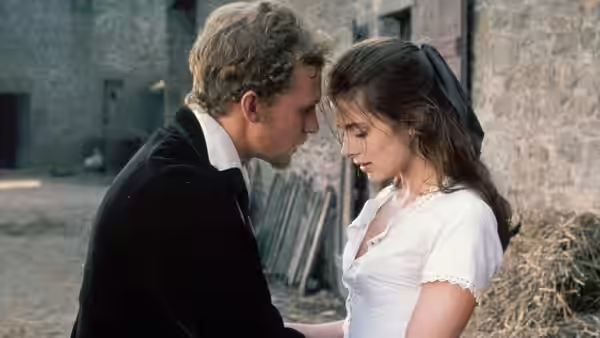
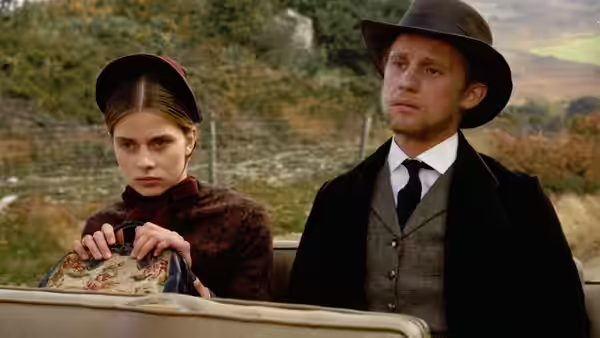
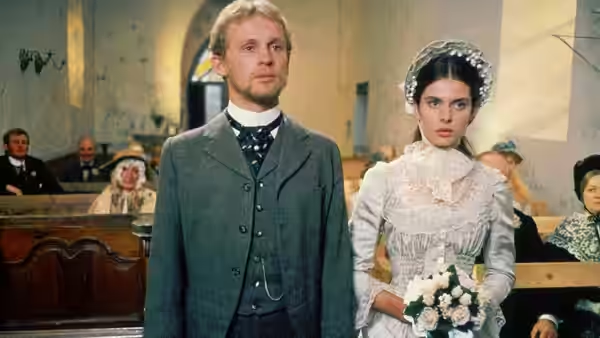
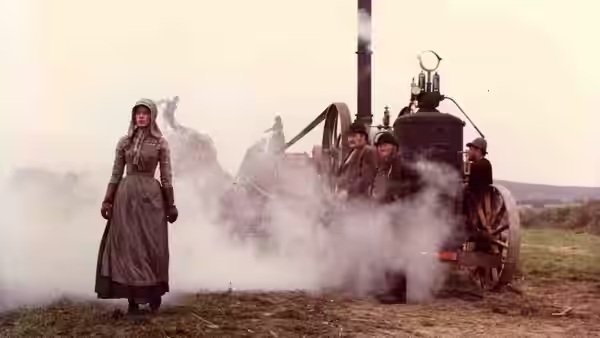
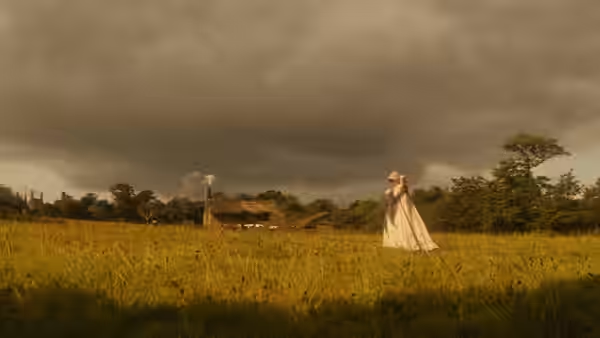
The pictures are the reason to sit down. Two cinematographers are credited, Geoffrey Unsworth and Ghislain Cloquet, and between them the film has a consistent look: low sun through mist at dawn, cottage interiors lit by a single window, fields the colour of wet straw. Pierre Guffroy’s production design puts real mud in the farmyards and real dust in the d’Urberville house, and Anthony Powell dresses the field workers in cloth that looks slept in and the gentry in cloth that has never been near a hedge. Nothing here is prettified. The lanes are rutted, the milk is warm, and the girls’ feet are dirty.
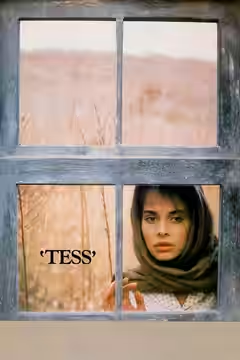
Kinski plays Tess as a young woman who has learned to wait. She barely moves her face; she watches, and lets things happen to her, and speaks only when there is no way round it. Her accent wanders, and there are stretches where the stillness reads as absence rather than depth. But when the film asks her to hold a look, as it does across a kitchen table with Firth late on, she holds it and something breaks behind it, and we were moved more than we had expected to be by an actress who has been so quiet for so long.
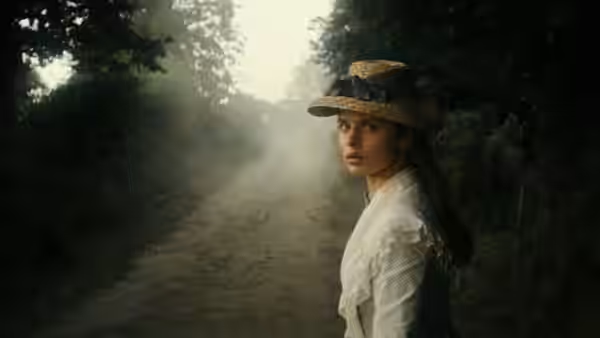
The scene in the Chase, which closes the first act, is where Polanski shows what restraint can do. Alec finds Tess asleep under the trees, the fog comes in, and the camera does not stay. We were horrified, and the horror came from how little we were shown: a face in mist, then trees, then morning. A cruder film would have made a set piece of it. This one treats it as weather, which is worse.
Leigh Lawson’s Alec is a bounder with a moustache and a fast trap, and he plays him without apology, which is right. Peter Firth’s Angel Clare is the more damaging man because he thinks he is the kind one, and Firth lets us see the vanity under the gentleness without ever pointing at it. John Collin is funny and sad as the father who cannot hold a shilling or a thought. Suzanna Hamilton, Carolyn Pickles and Caroline Embling, as the dairymaids, give the middle stretch its only warmth, and the film is sunniest when they are on screen.
The trouble is the length, and it is not a small trouble. Tom Priestley and Alastair McIntyre have kept every season, every walk between farms, every slow approach up a drive, and around the two-hour mark we found ourselves admiring a hayfield and wondering why we were still in it. Philippe Sarde’s score, soft and folk-tinged, tells us to feel sorry for Tess in scenes where Kinski had already done the work.
Polanski’s best films happen in rooms: a flat, a boat, a city that behaves like a locked door. This is his first long film shot mostly under the sky, and he is not quite at home there. The fog and the kitchens are his; the wide fields belong to his cameramen. Most critics like it a little less than we do, and the ones who call it hollow have a point about the second half, where suffering becomes the whole of Tess’s character and the film watches it rather than arguing with it.
See it in one sitting or not at all; broken up, it loses the slow pressure that is its only real design. It carries a 15 certificate, and it opened in British cinemas on 9 April 1981, two years after it was made.