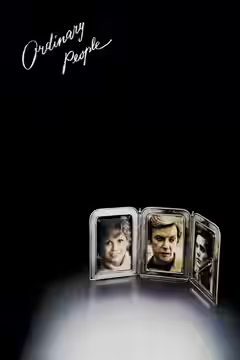
Lawrence Kasdan’s film of Anne Tyler’s novel is quiet, careful and funnier than its subject suggests, and William Hurt’s portrait of a man sealed shut is hard to shake. It is slow, and John Williams keeps trying to warm it up, but it earns its patience.
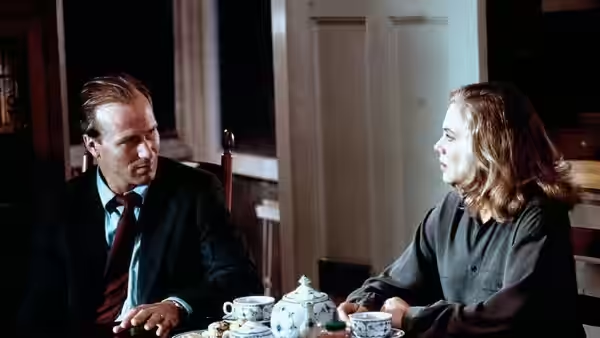
Macon Leary writes guidebooks for people who hate to travel. His readers are businessmen who want to fly to Paris and feel as though they never left Baltimore, and he tells them which hotels have American plumbing and how to pack a single grey suit. A year before the film opens his son Ethan was killed in a hold-up, and in the first scene, in a car in the rain, his wife Sarah tells him she wants a divorce. “You’re not a comfort,” she says. He does not argue. Lawrence Kasdan and Frank Galati have adapted Anne Tyler’s novel with care, and the result is good, quiet and slow, with faults we will get to.
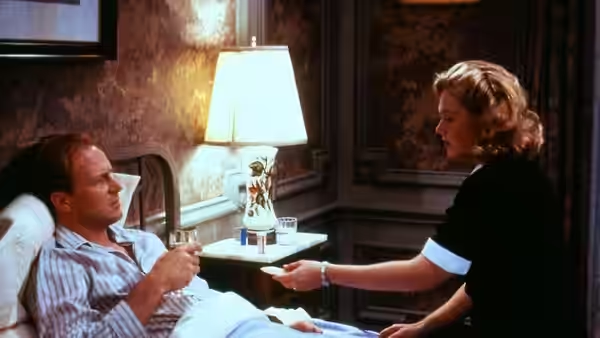
William Hurt plays Macon as a man who has turned grief into housekeeping. He sews his sheets into a sack so the bed never needs making. He showers in his shirts to save on laundry. His voice, reading the guidebook over the opening images, is so level it could be a recorded announcement. For the first twenty minutes we wondered whether a performance this shut could hold a film, and then the dog bit somebody, Macon broke his leg, and the picture moved him back into the family house with his sister Rose and his brothers Porter and Charles.
The Learys are the funniest thing here, and Kasdan is wise enough to play them straight. Amy Wright, David Ogden Stiers and Ed Begley Jr. live among their grandparents’ furniture, alphabetise the tinned goods and play a card game whose rules nobody outside the family has ever grasped. None of them can find their way anywhere, even to places they have driven to a hundred times. Bill Pullman turns up as Macon’s publisher Julian Hedge, takes one look at Rose and is lost, and Pullman plays the surprise with real sweetness. Bo Welch’s house is dim, brown and crowded, curtains drawn against a Baltimore winter, and John Bailey lights it by table lamp so that a visitor in daylight looks like an intruder.
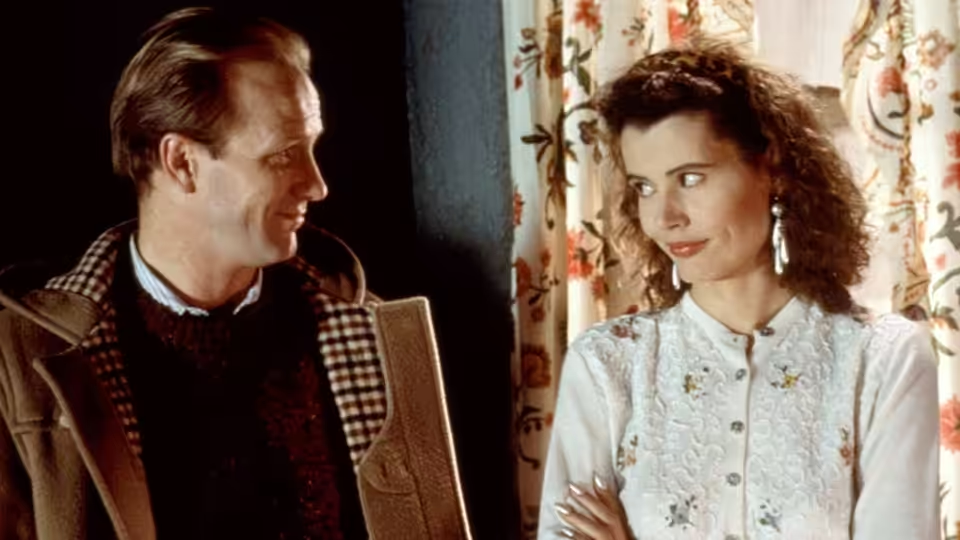
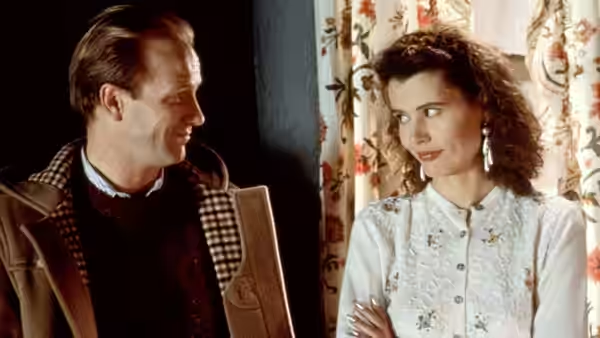
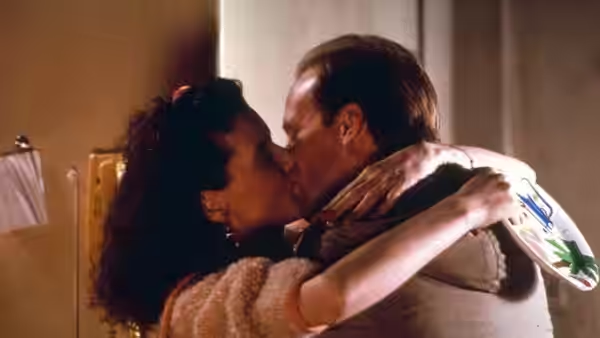
Muriel Pritchett is the intruder. Geena Davis plays the dog trainer from the animal hospital as a woman who talks before she thinks and dresses as though she had lost a bet: Ruth Myers puts her in clashing prints, spike heels and earrings the size of doorknobs, next to Macon’s raincoat and three shades of grey. She has a sickly small son, Alexander (Robert Hy Gorman), and no shame about asking Macon for things. Davis does not soften her. She is pushy and needy and sometimes tiresome, and the film never quite decides whether she is good for him, which is the honest choice. Kathleen Turner has the harder part and less of the film; Sarah is the reasonable woman who left, and the script gives her one fine speech and not much else.
The scene we keep returning to comes at night on Muriel’s front step, when Macon finally tells her what happened to Ethan. Hurt does it without raising his voice, with the same flat delivery he used for the packing tips, and we were moved more than a scene that plain should manage. It is the not crying that does it. He has explained the worst day of his life the way he would explain a hotel.
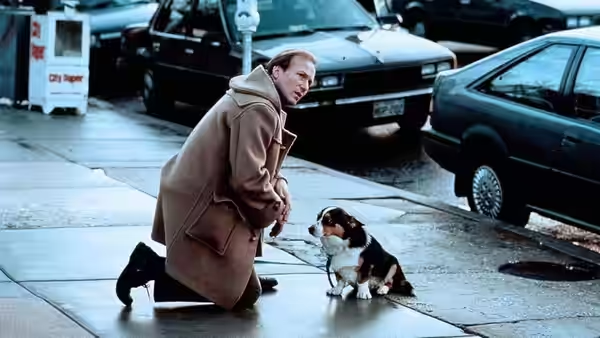
The faults are pace and sugar. Carol Littleton cuts slowly, which suits a man who does everything slowly, but at 121 minutes the second half goes back and forth more than it needs to, and we felt the loops. John Williams’s score is mostly piano and strings, pretty and quiet, and it swells at the moments Kasdan has already made his point; we wished someone had turned it down. The dog, Edward, is a scene-stealer, and there are a few too many scenes for him to steal. One dissenting critic found the whole thing obvious. We do not agree, but we can see how the score gave that impression.
Kasdan directed Hurt and Turner in Body Heat and Hurt again in The Big Chill, and this is the quietest of the three by some distance. Nobody sweats and nobody dances in a kitchen. It is a film about a man who packs one suit, and it asks you to sit still with him for two hours. Watch it on a wet evening with the phone in another room. It is not a comfort, exactly, but it is company.