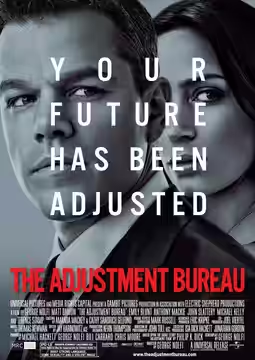
George Nolfi’s debut takes a Philip K. Dick premise about men who quietly correct the world and turns it into a romance, and the romance is the good part. Damon and Blunt are easy company; the film explaining itself is not.
George Nolfi’s first film as director takes a Philip K. Dick premise and does something unusual with it: he makes it kind. The idea is that the world runs to a Plan, and that a workforce of men in hats keeps humanity on course with small corrections, a spilt coffee here, a missed bus there. Dick would have used that to frighten us. Nolfi uses it to keep Matt Damon and Emily Blunt apart for 106 minutes, and the film is at its best when it is about the two of them and at its weakest whenever it stops to tell us how the machinery works.
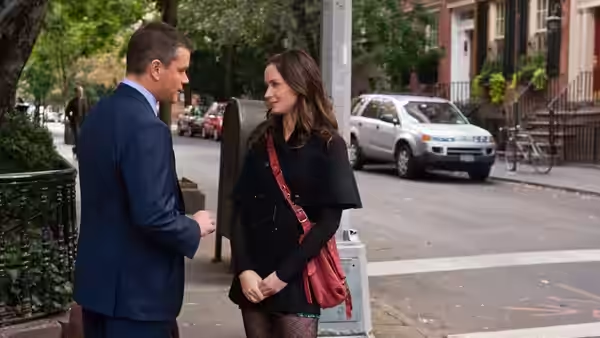
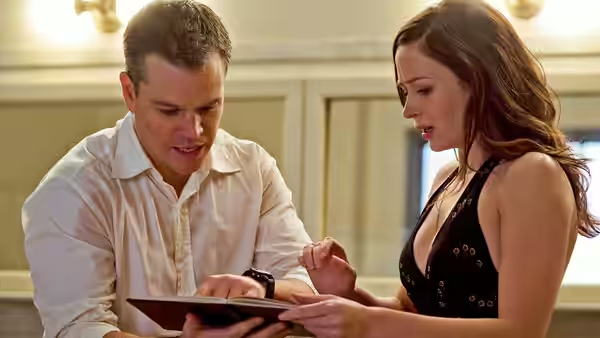
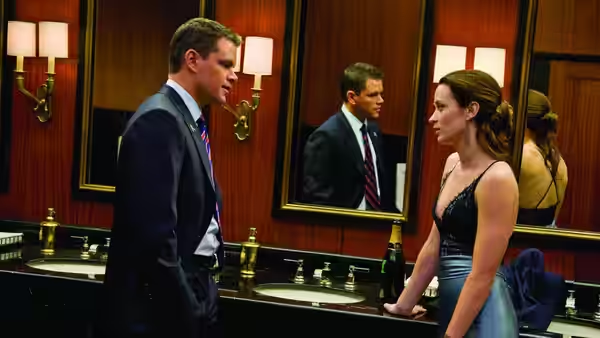
The couple is the good part. Damon plays David Norris, a congressman with a temper and a talent for rooms, as a man who is pleased to be liked and slightly ashamed of how much. Blunt’s Elise Sellas, a dancer he meets in a hotel men’s room, is quicker than him and knows it, and the two of them talk the way people talk when they are trying to make each other laugh. The bus scene, in which she steals his phone and dares him, is the film in miniature, and we grinned all the way through it. We believed the next hour largely on the credit it earned.
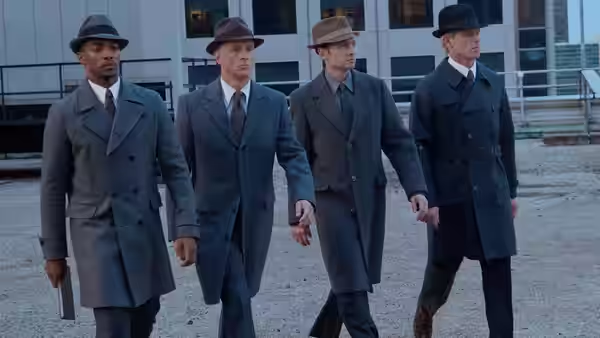
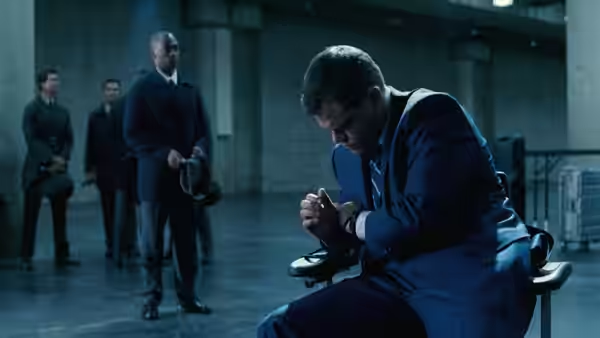
The Bureau is a pleasure to look at. Kasia Walicka Maimone puts the agents in fedoras and grey overcoats cut for about 1960, so that John Slattery, playing the harassed middle manager Richardson, looks as though he has stepped out of Mad Men to do a bit of overtime. Kevin Thompson gives them offices of marble and long empty corridors, and a set of ordinary doors that open from one part of Manhattan into another. John Toll shoots all this in plain, bright New York daylight, on the streets and in the parks, so the strangeness has nowhere to hide.
Anthony Mackie gives the film its conscience as Harry Mitchell, the agent who falls asleep on a bench and lets David catch the bus, and who spends the rest of the film looking tired in a way the script never quite explains but Mackie does. Michael Kelly’s Charlie Traynor, the campaign manager, is the one man in David’s life who does not know anything is wrong. Terence Stamp arrives around the midpoint as Thompson, a more senior man, and treats the whole metaphysical apparatus as a nuisance he would rather not discuss. He is the only person in the film who makes the Plan sound like a burden, and the film improves every time he speaks.
The trouble is that everyone else wants to discuss it. Roughly every twenty minutes somebody sits David down and explains another rule: ripples, case files, the Chairman upstairs, why the hats matter. Each rule is introduced so that it can be bent later, and by the second hour we found we were nodding along politely, the way one does when a stranger explains the rules of a game we had already agreed to play. The film also spells out what David and Elise each stand to lose by staying together, and once it has done that the romance feels like a calculation. The last stretch takes a turn we will not describe; we will say only that after ninety minutes of a system with no exits, one appears so tidily that we felt slightly patronised.
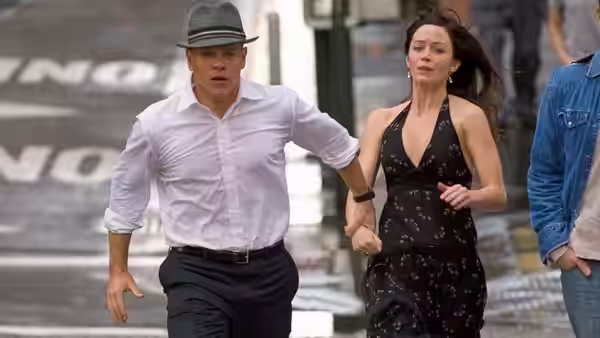
Thomas Newman’s score does not help. It is piano and warm strings, and it plays over the chases as well as the kisses, so the film never gets to be frightening for more than a few seconds at a time. Jay Rabinowitz cuts the foot chases with real clarity, so that we always know which door leads where; he cuts the briefings as fast as he can and they still sit there.
Dick’s people usually open a door and find another room. Nolfi’s find a way out, and it is the least interesting thing about them. This is a good film for two people who have already agreed to like each other, best watched at home, where the hats are funnier and the speeches feel shorter than they do in the dark. It runs 106 minutes, carries a 12A, and reached UK cinemas on 4 March 2011.