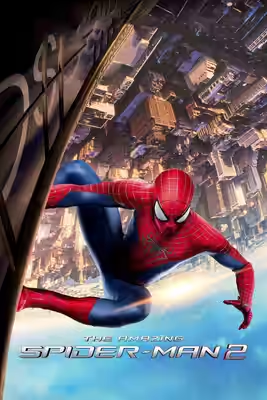
Marc Webb’s second Spider-Man film has a real romance at its centre and a committee’s worth of plot stacked around it. Andrew Garfield and Emma Stone are a pleasure to watch; nearly everything built to launch a franchise around them is not.
Two years after The Amazing Spider-Man (2012), Marc Webb sends Peter Parker out of high school and into a film that wants to be five films at once. It is a love story between two clever teenagers. It is a mystery about Peter’s dead parents. It is the origin of a villain made of electricity, a boardroom drama at Oscorp, and the opening chapter of several sequels the studio had already announced. It runs 141 minutes and is good at exactly one of these things, and the other four keep walking in on it.
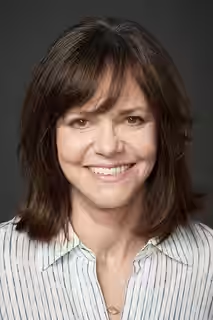
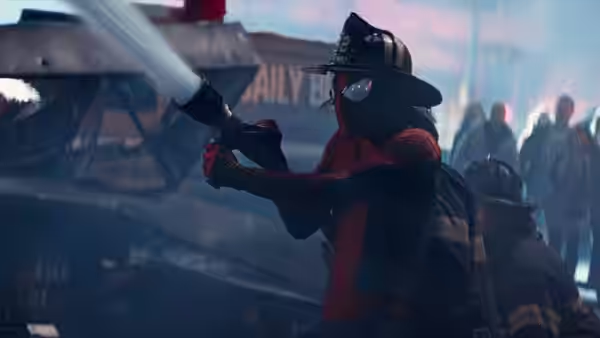
The one thing is Garfield and Stone. Their scenes together have the loose, overlapping rhythm of two people who like each other and have not decided what to do about it: a rooftop at dusk, a hopeless attempt to agree to be friends that collapses in a minute. Garfield plays Spider-Man as a talker, chattering at the criminals he is tying up and stopping to walk a bullied boy home, and Peter as a young man who is only fluent when the mask is on. Stone’s Gwen does the science, makes the decisions and is never once asked to stand still and be rescued. Sally Field, folding laundry and lying about a night job, gets more out of two scenes than most of the villains get out of twenty.
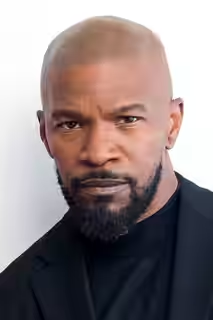
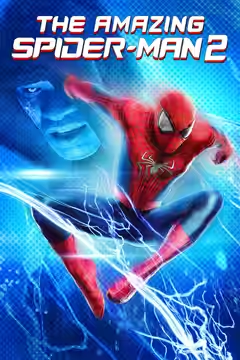
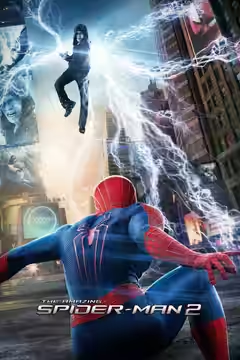
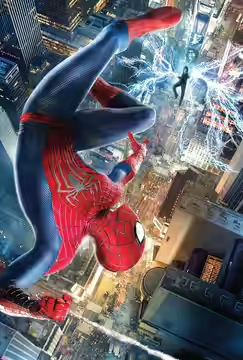
Jamie Foxx’s Max Dillon is the next best thing in it, for a while. He starts as a gap-toothed, combed-over nobody who fixes Oscorp’s wiring and is ignored in lifts, and Foxx plays the humiliation straight. When he comes out of the eel tank and wanders into Times Square, Dan Mindel lights his skin from the inside, so the veins glow and the blue arcs crawl up the advertising screens behind him, and the score Hans Zimmer put together with Pharrell Williams, Johnny Marr, Junkie XL and others fills with whispered voices telling him he has been lied to. For ten minutes we were properly caught, tense and sorry for him, watching a frightened man find out he can kill. Then he is packed off to an institute where Marton Csokas plays a doctor with a German accent and a drill, and the film forgets what it had.
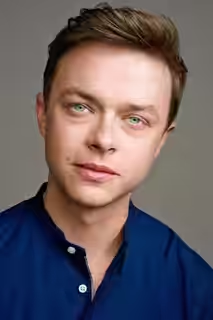
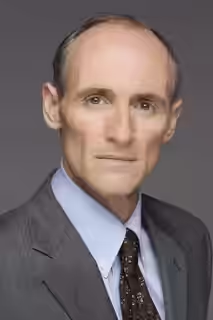
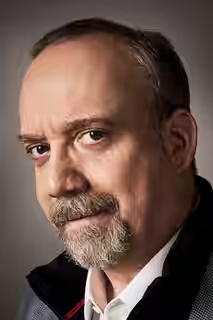
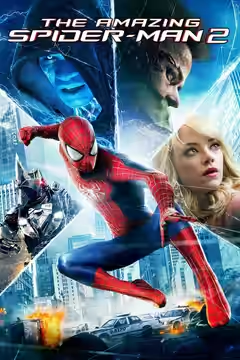
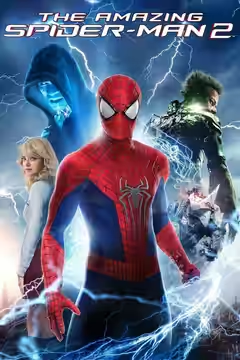
The script is credited to Alex Kurtzman, Roberto Orci and Jeff Pinkner, with James Vanderbilt on the story, and it reads like a merger. Peter’s parents, Richard (Campbell Scott) and Mary (Embeth Davidtz), are given a backstory of their own that keeps interrupting the film without ever joining it. Paul Giamatti bellows in a Russian accent at the start and again at the end and is otherwise absent. Felicity Jones is billed as Felicia, Harry’s assistant, and given almost nothing to do. Dane DeHaan is good as Harry, pale and smoking and nursing a grievance that predates his arrival, and the credits list him as the Green Goblin; we will say no more about that.
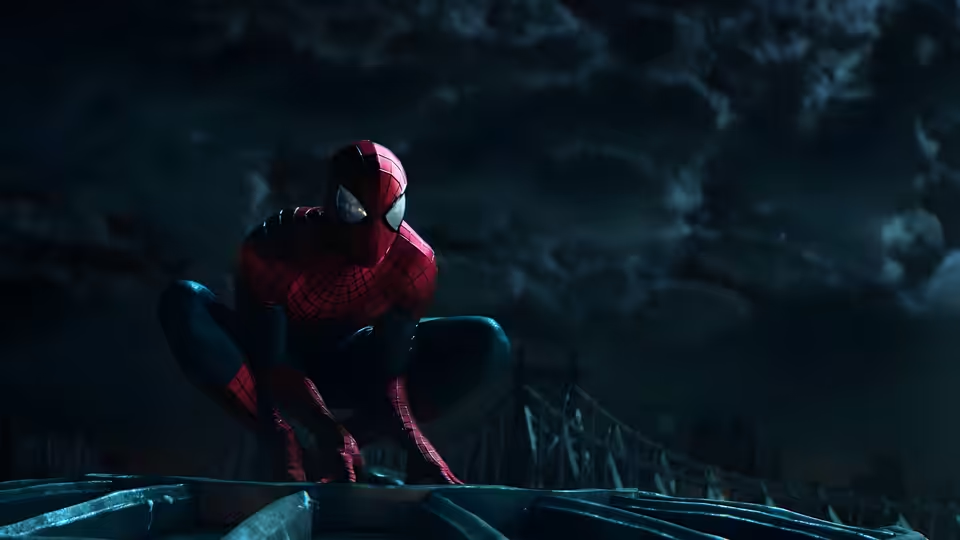
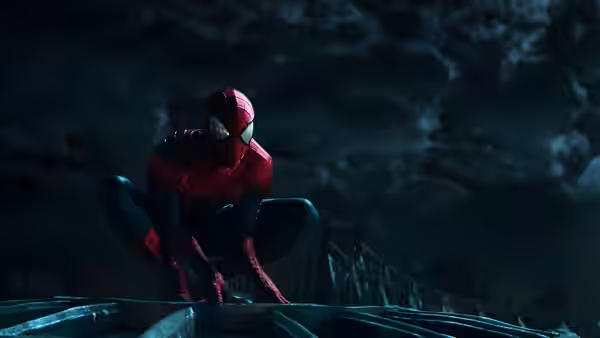
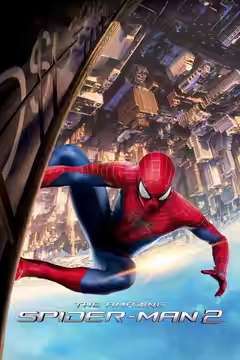
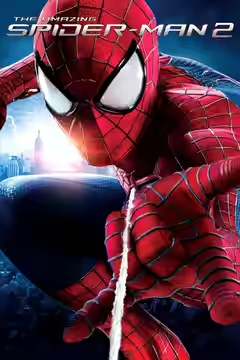
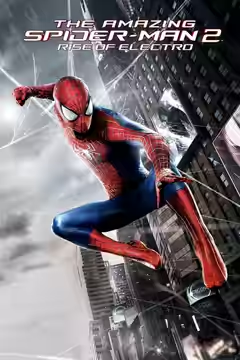
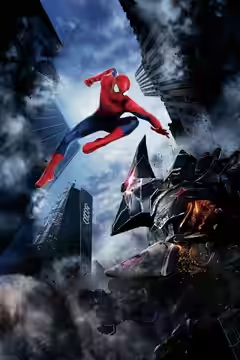
Pietro Scalia and Joshua Raymond Lee are asked to cut between all of these strands and so none of them builds. Mark Friedberg designs Oscorp as a tower of glass and white panels, as cold as the people in it, and Deborah Lynn Scott gives the suit bigger eyes and a brighter red, so that in Mindel’s daylight swinging sequences Spider-Man looks like a comic panel moving through a real city. Those sequences are the film at its most confident, and there are not enough of them.
By the third climax we were checking how much was left, and then we were annoyed with the film for making us do it. The romance we cared about had been shelved for a fight we had already seen, and the ending is arranged so that the next instalment will have somewhere to start.
Sam Raimi’s Spider-Man 2 (2004) had one villain, one problem and a hero who wanted to quit, and it is still the standard. Webb made (500) Days of Summer (2009) and knows how two people talk when they are in love; this film is at its best whenever it lets him do that and at its worst whenever it remembers it is a franchise. Watch it for Garfield and Stone, and for the blue man in Times Square. When the boardroom comes back, make tea.