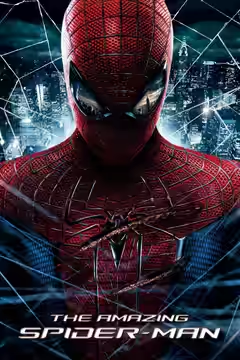
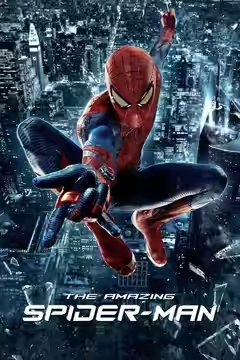
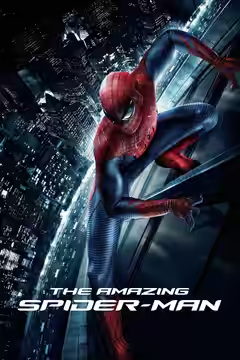
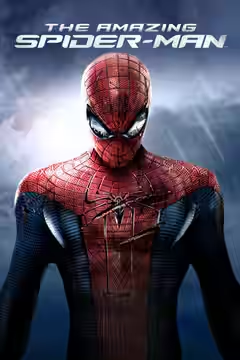
Marc Webb retells an origin story the cinema finished with five years earlier, and gets away with it on the strength of Andrew Garfield and Emma Stone. The romance is lovely; the villain is a lizard in a lab coat, and the plot barely troubles to explain him.
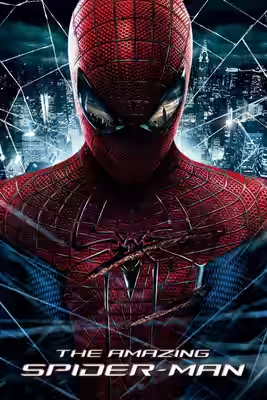
Ten years after Sam Raimi’s Spider-Man, and five after his third film closed the series, Sony has started again from the beginning. Marc Webb’s The Amazing Spider-Man retells the origin: the orphaned boy, the bite, the uncle, the mask. The question the film cannot escape is whether anyone needed to hear it again so soon, and the honest answer is no. What saves it is that the two people telling it are Andrew Garfield and Emma Stone, and they are good enough company that for long stretches we stopped minding.
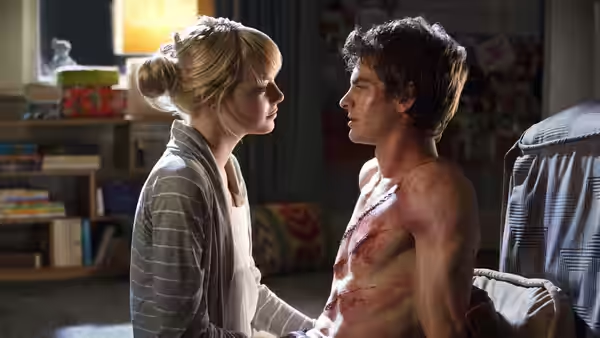
Garfield plays Peter Parker as a stammering boy on a skateboard who talks too fast when he is nervous and cannot look at a girl without rearranging his hair. He is funny long before he is heroic. Stone’s Gwen Stacy is top of the class and knows it, and she gives Peter nothing he has not earned. Their scene in a school corridor, where he tries to ask her out and never finishes a sentence, is the best thing in the film and would be the best thing in most films of this size.
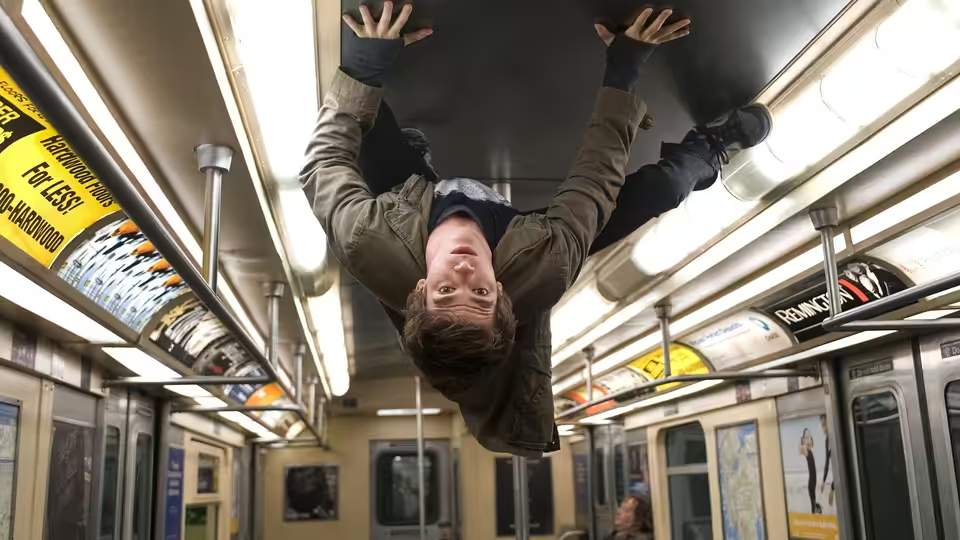
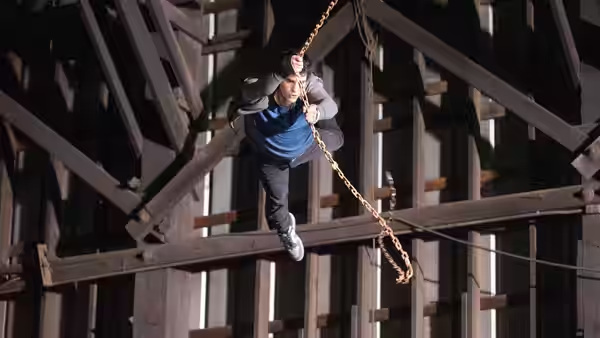
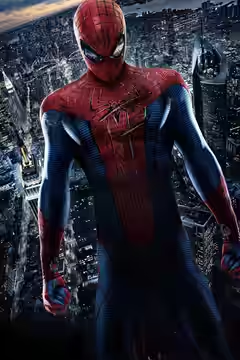
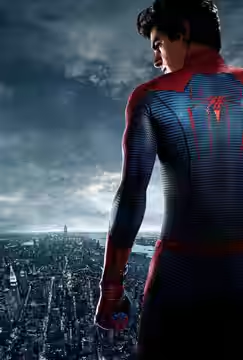
John Schwartzman shoots New York at dusk and after dark, in ambers and deep blues, and when Peter swings the camera goes with him, sometimes to the point of looking out through the mask, so the street rushes up and drops away. It is the first time the swinging has had weight: he misjudges, he hits things, he is sore the next morning. Kym Barrett’s suit is darker and narrower than Raimi’s, with smaller eyes and a texture like a basketball, and it hangs on Garfield’s thin frame like something a teenager made in his bedroom, which is what it is meant to be.
Sheen is the film’s conscience, and he plays Ben as a man who says the right thing slightly too late and knows it. Denis Leary’s Captain Stacy, a police captain who regards the masked man as a vigilante, gets the film’s one good dinner-table argument, with Peter defending Spider-Man to a man with a badge while Gwen watches him dig the hole.
The trouble is the plot, and the plot is Rhys Ifans. Dr Curt Connors, a one-armed geneticist who once worked with Peter’s father, is a decent man who becomes a monster, and Ifans plays the decent man well: tired, courteous, hungry for a cure. But the Lizard he becomes is a smooth, snouted, faintly human thing that never once frightened us, and its scheme, when it finally arrives, is the kind a screenwriter settles for at the end of a long week. The screenplay, by James Vanderbilt, Steve Kloves and Alvin Sargent, opens a mystery about Peter’s parents and then forgets it for an hour. Irrfan Khan turns up as a corporate menace, threatens Connors twice and leaves the film. We can name the moment, roughly ninety minutes in, when the love story stopped and the lizard story started, because it was the moment we stopped leaning forward.
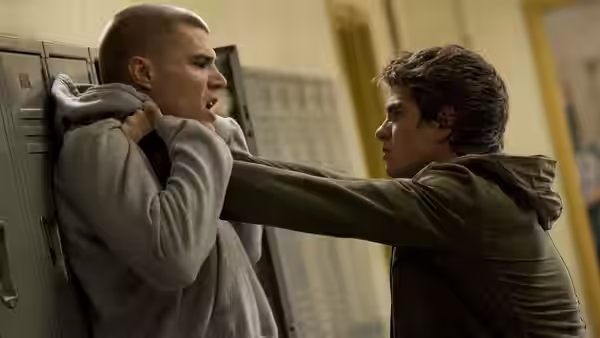
Pietro Scalia and Alan Edward Bell cut 136 minutes, and the middle hour feels every one of them, because the film must stop for each beat the origin demands: the bite, the fight at school, the night Peter walks out on his uncle. We know the beats; the film knows we know them; it does them anyway, carefully, like a student showing working. J. Michael Riva’s Oscorp is a glass tower of white light with the laboratory at the top, and the sewers beneath the city are the usual sewers.
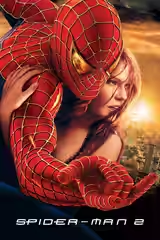
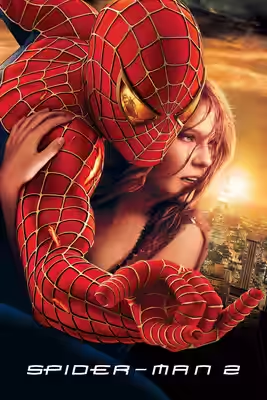
Raimi’s Spider-Man 2 (2004) understood that this is the story of a boy who cannot have the life he wants, and it put the villain second. Webb’s film has the same understanding for an hour and then hands the last forty minutes to the monster.
See it for Garfield and Stone, who are better than the film around them. It carries a 12A, and the Lizard is loud rather than scary, so older children will be fine. If you have seen the earlier films you will know where every scene is going; if you have not, this is a kinder, funnier place to start.