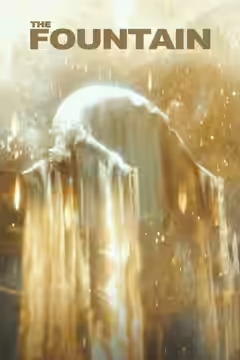
Darren Aronofsky’s third film tells one grief three times, with a conquistador, a surgeon and a man in a bubble, all Hugh Jackman. It is sincere past the point of comfort, often beautiful, and at 96 minutes too short to earn all of it.
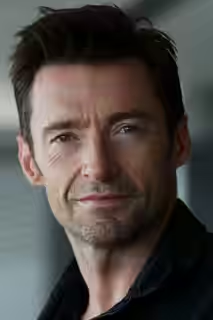
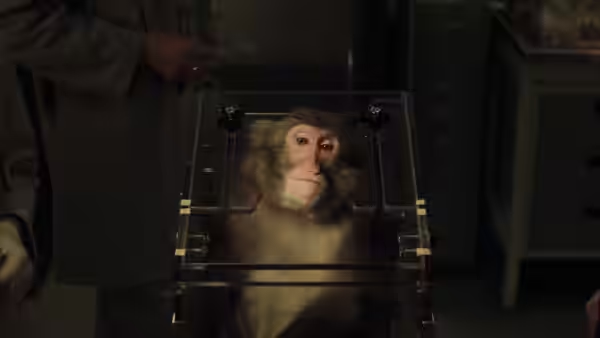
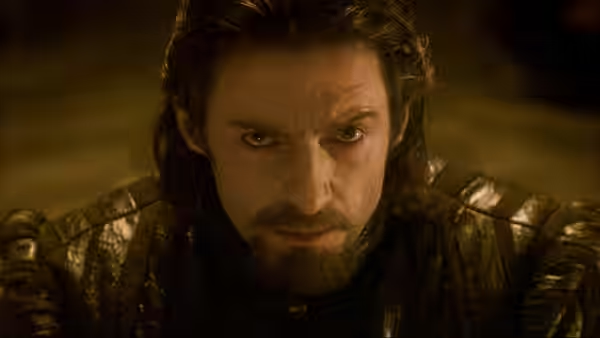
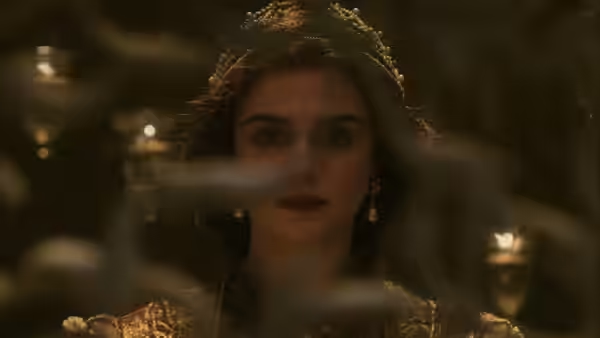
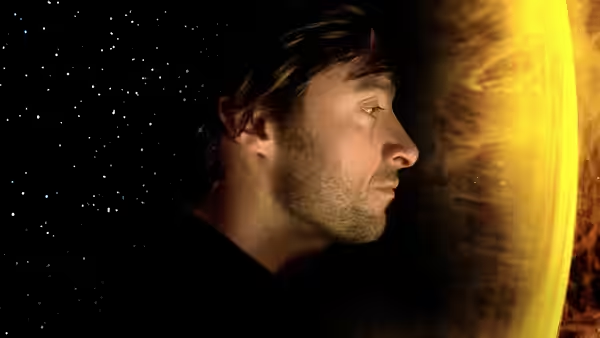
Darren Aronofsky made Pi (1998) and Requiem for a Dream (2000), two small, hard films about people who want one thing far too much. The Fountain is about a man who wants his wife not to die, and it spreads that want across a thousand years. Hugh Jackman plays a Spanish conquistador hunting the Tree of Life for his queen, a present-day surgeon testing a tree compound on a monkey while his wife dies, and a bald traveller in a glass bubble carrying a dying tree towards a golden nebula. Rachel Weisz plays the queen and the wife. It is a film with one idea and an enormous amount of feeling, and at 96 minutes it is both too much and not enough.
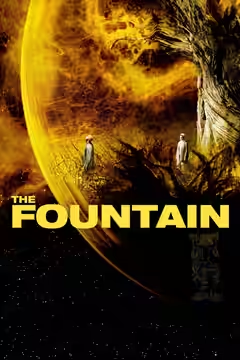
The looking is the easy part to praise. Matthew Libatique lights almost everything in gold, white or black. The Spanish court is candles and torches; the hospital is flat white with a cold blue edge; the bubble ship is lit from below by the nebula it is falling towards. James Chinlund builds that ship as a sphere of glass with a wooden floor and a tree in the middle and no instruments at all, so it reads as a chapel rather than a craft. The nebula itself looks like ink dropped in water.
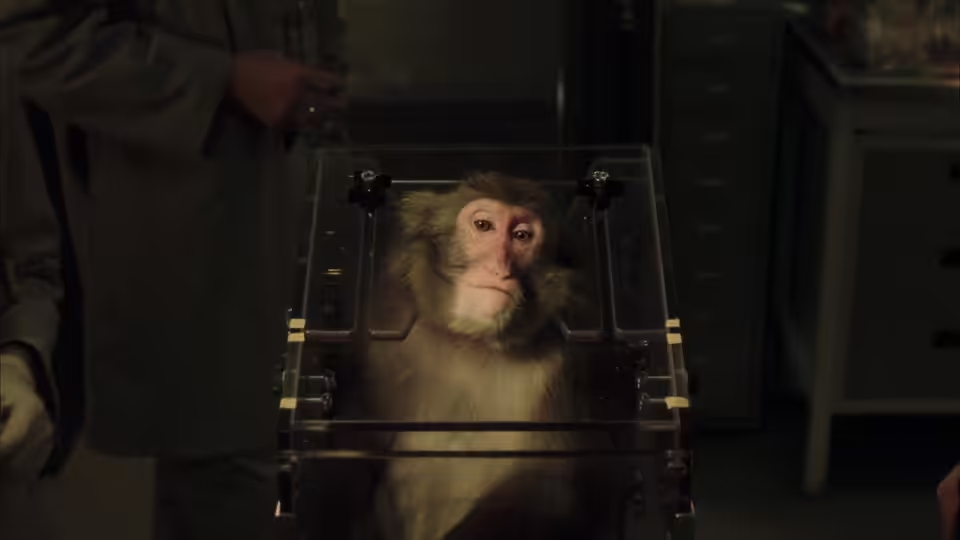
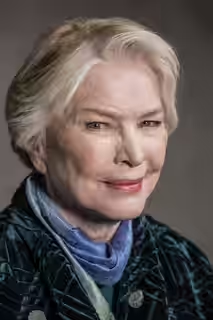
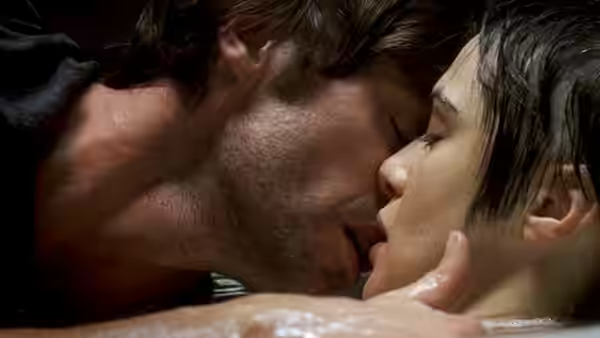
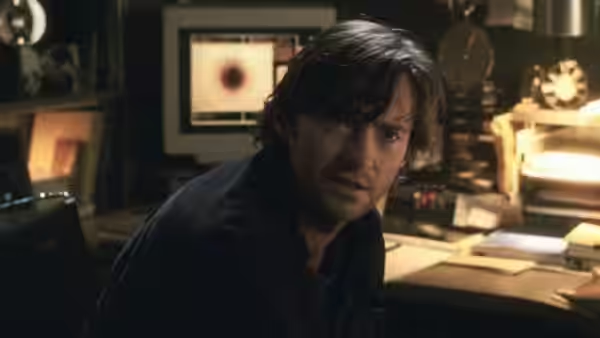
Jackman carries all three men with no protection whatever. The surgeon is his best work. Tom Creo will not leave the laboratory, because leaving means there is nothing left to do, and Jackman plays the refusal as a physical thing, jaw set, hands busy. When Izzi asks him to walk with her in the first snow of the year and he stays at his bench instead, and Ellen Burstyn’s Lillian Guzetti, his boss, orders him home, the film has its plain centre. It moved us more than we expected, and the reason is the imbalance: Weisz plays a dying woman who is not afraid, Jackman plays a husband who is, and Aronofsky lets the two of them sit in the same room without fixing it.
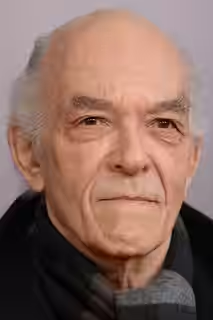
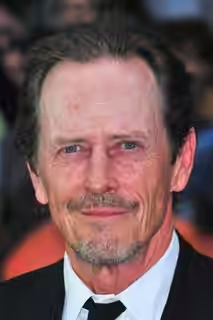
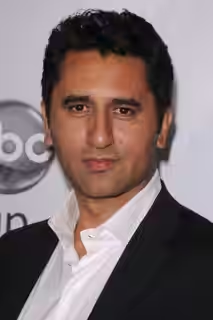
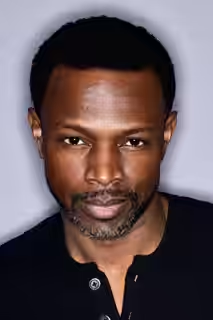
The Spanish strand is the weak leg. Stephen McHattie’s Grand Inquisitor Silecio hisses under a hood, Cliff Curtis and Sean Patrick Thomas, as Captain Ariel and Antonio, have little to do but follow Tomás up a pyramid, and Fernando Hernández’s Lord of Xibalba guards the tree with a flaming sword. We laughed at the sword, once, and then felt shabby about it, because the film means every frame. The future strand asks even more of your patience: a man in loose grey clothes doing tai chi, talking to a tree, eating its bark. We went with it, more or less.
Clint Mansell’s score is a rising phrase for strings and piano, played again and again, a little louder each time, across all three centuries. For an hour it is the thread that holds the strands together; by the last twenty minutes it has become a hand on the back of the neck. Jay Rabinowitz cuts between eras on gestures, a hand reaching, a ring turned on a finger, and the matches are exact enough that the film needs no explaining captions. The dialogue is the weakest craft on show. The queen’s speeches sound translated, and “finish it” is said so often it stops being a line and becomes a cue.
Against Aronofsky’s own record this is the odd one out. Pi and Requiem for a Dream filmed obsession as an assault, fast cuts and a drum under everything. The Fountain films the same obsession as a prayer, slow and gold, and a prayer is harder to edit. It is a film about accepting death that spends most of its running time refusing to, and that is either the point or the problem, depending on the evening.
The last act does something we will not describe. Whether it lands depends almost entirely on whether the snow scene got to you. See it alone, or with someone you trust not to laugh at the sword. It runs 96 minutes and carries a 15, which is a short span for a thousand years.