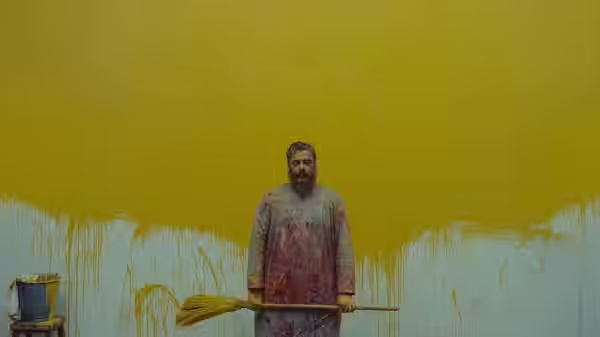
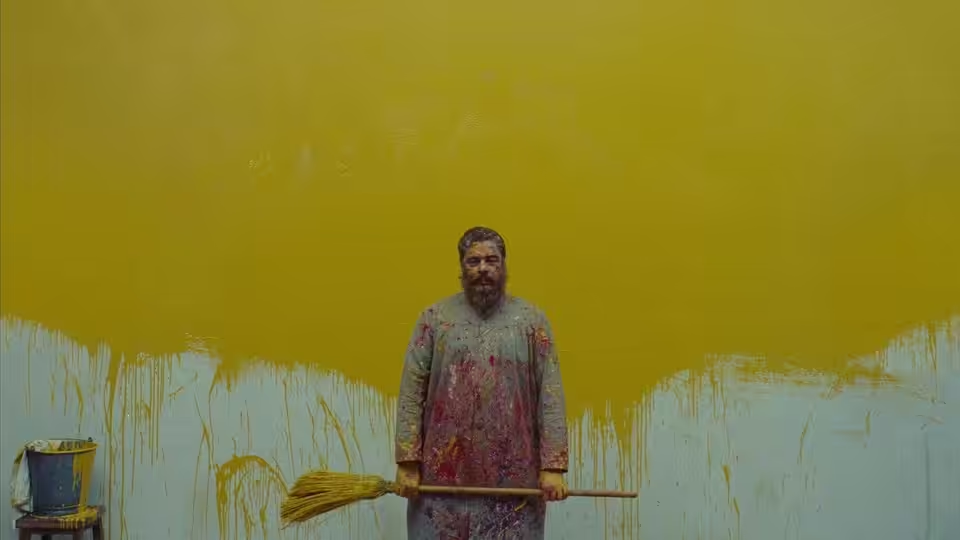
Moses Rosenthaler (Benicio del Toro), covered in paint, holds a broom before a painted wall
Film review

The French Dispatch of the Liberty, Kansas Evening Sun

2021 · Directed by Wes Anderson · 1h 48m · MPA R

In a sentenceEvery frame is a magazine cover and about a third of the articles are worth finishing

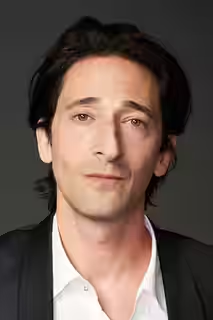
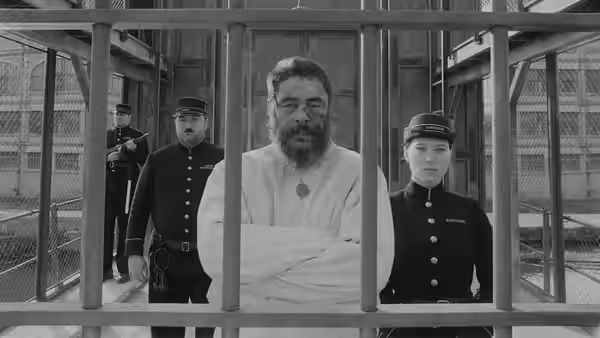
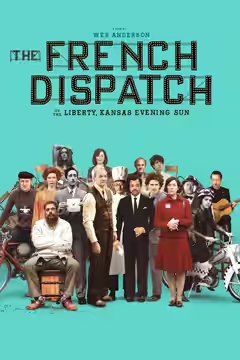
Ennui-sur-Blasé, France, in the twentieth century. Arthur Howitzer, Jr. (Bill Murray), the Kansas-born editor of The French Dispatch, a weekly supplement to the Liberty, Kansas Evening Sun, has died at his desk, and his will orders the magazine closed after one last issue. That issue is the film. Herbsaint Sazerac (Owen Wilson) cycles us through the town’s rat-infested alleys and rooftop cats. Then the features begin. J.K.L. Berensen (Tilda Swinton) lectures on Moses Rosenthaler (Benicio del Toro), a murderer painting in prison with his guard Simone (Léa Seydoux) as his model, and on Julian Cadazio (Adrien Brody), the dealer who wants his work. Lucinda Krementz (Frances McDormand) covers a student uprising; Roebuck Wright (Jeffrey Wright) files a food column that does not stay one.

Plays from YouTube when you press play; nothing loads from them until then.

Fi1m review

Wes Anderson’s anthology is the handsomest thing he has made and the least sure of why we should care. One of its three stories works, one half works, and one has us checking the clock. Jeffrey Wright saves the last quarter of an hour.

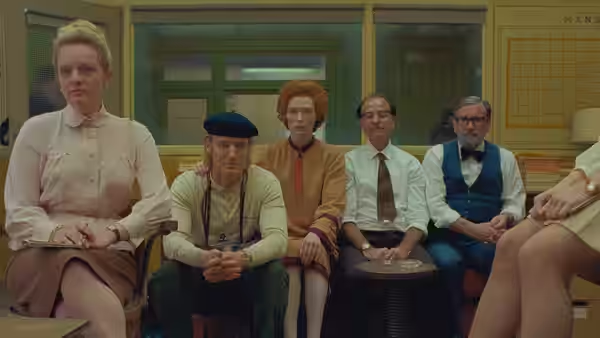
Wes Anderson has made a magazine. Not a film about one, though it is that too, but a magazine: a cover, a travel column, three long features and an obituary, assembled as the final issue of The French Dispatch, the Kansas newspaper supplement that Arthur Howitzer, Jr. (Bill Murray) edited from a French town called Ennui-sur-Blasé until he died at his desk. It is 108 minutes long, and nearly every one of them is beautiful. Whether you will want to read past the pictures depends on which of the three stories you are in.

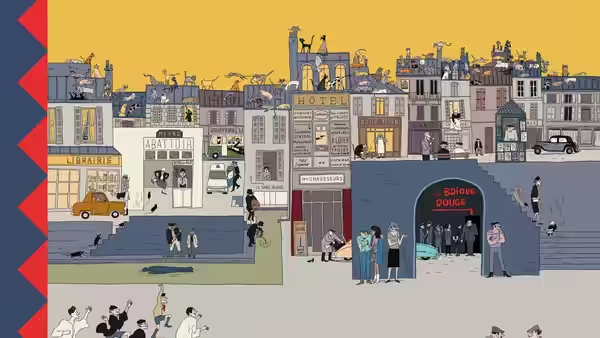
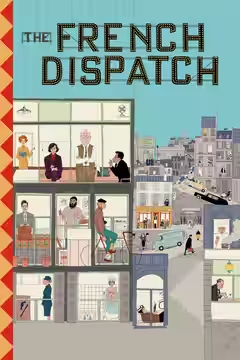
The craft is not in question. Robert Yeoman shoots most of the film in black and white and cuts to colour for a few seconds at a time, when a canvas is unveiled or a plate is set down, so that colour becomes a thing the film does to you rather than a thing it simply has. The frame narrows and widens as the stories demand. Adam Stockhausen builds the town in cross-section, a police station opened up like a doll’s house with the front wall taken off, a prison that is all corridor. Milena Canonero puts the prison guard in a uniform starched to attention and the students in tweed jackets that look inherited. Alexandre Desplat’s score is spare, mostly piano, and does not fight the images.

The first feature is the sturdiest. Tilda Swinton’s J.K.L. Berensen delivers it as a lecture, slides and all, and Swinton’s plummy hesitations are funnier than most of the written jokes. Benicio del Toro plays the painter Moses Rosenthaler almost entirely in grunts, Léa Seydoux gives his guard and model Simone a stillness the film badly needs, and Adrien Brody, as the dealer Julian Cadazio, talks about art the way other men talk about horses. The story has one idea, that money arrives to spoil a thing before the thing is finished, and it keeps finding new ways to say it. It ends before it wears thin.

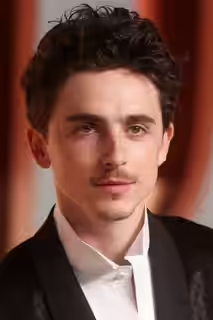
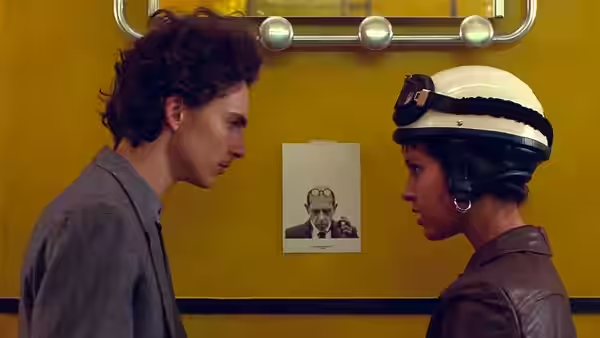
The second does not. Frances McDormand’s Lucinda Krementz is a journalist who has decided to keep her distance from a student revolt and then does not, and Timothée Chalamet’s Zeffirelli and Lyna Khoudri’s Juliette are the students. The film is not interested in what they want, and neither, as far as we could tell, are they. Around this point we felt our attention drift off the people and on to the furniture, which is where Anderson seems to want it. McDormand does what she can with a woman who is mostly a typewriter. Chalamet has the hair and the cigarette and not much else.

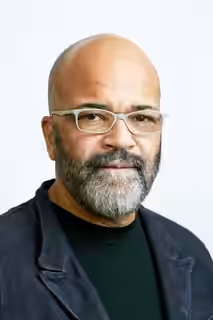
Then Jeffrey Wright arrives and the film finds its pulse. His Roebuck Wright is a food critic on a television chat show, reciting a profile of Nescaffier (Steve Park), the police chef who cooks for the Commissaire (Mathieu Amalric), and the joke, delivered without a wink, is that he remembers every word he has ever written. Wright plays the man’s loneliness underneath the elocution, and the segment is the only one in which somebody’s insides matter more than the set. It moved us more than we thought this film had in it. There is an exchange near its end, between two men who have each come a long way to be here, that we will not quote, and it is the reason to sit through the middle.

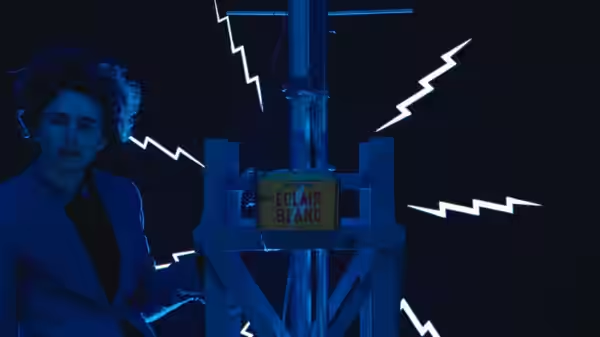
Andrew Weisblum cuts the whole thing fast, stories inside stories, a freeze frame every time a character is introduced, an animated chase when the live action will not do. The speed is the trouble as much as the design is. The Grand Budapest Hotel (2014) had one story and a grief running under it, and gave both room. Rushmore (1998) had one boy. This has three features and an editor, and the affection goes to the magazine, the mastheads and the house style and the sign on the wall forbidding crying, rather than to the people who wrote for it. We admired the pages more than we read them.

See it, if you like him, and see it at home, where you can stop the picture and read the headlines Stockhausen has painted on the shop fronts. Skip nothing in the last twenty minutes. It runs 108 minutes and carries a 15 certificate, mostly for a nude painter’s model and some cheerful violence in the kitchen.
Critical consensus AI synthesised

70
Positive
21
Mixed
8
Negative
4

Most critics like it, and several call it among Wes Anderson’s best or most accomplished films. The praise settles on the same things: the density of detail in Adam Stockhausen’s production design, the precision of the compositions, and the way the film moves between magazine page and screen. Jeffrey Wright’s segment is singled out more than any other, and even critics cool on the rest find his performance affecting.

The reservations are about structure and feeling. Many find the anthology episodic and scattershot, and a recurring complaint is that the surface pleasures bury the characters and leave the film emotionally remote. The spread is wide: The New Yorker calls it perhaps Anderson’s best, Polygon his least successful. The Los Angeles Times finds it overstuffed and distant, and The Guardian often exasperating. Even the admirers concede the distance; they simply forgive it.

The New Yorker
25 October 2021 · Richard Brody
95*

Brody calls it perhaps Anderson’s best film and certainly his most accomplished, praising its exuberant, complex cinematic energy. He especially admires how its elaborate artifice gives style and substance to stories of resistance, heroism, and journalism.

Read the full review →
The AV Club
21 October 2021 · A- · A.A. Dowd
90

Dowd finds the film a dizzying, poignant, affectionate tribute to journalism and the art of reporting. He especially praises its precise visual compositions and intricate, playful details.

Read the full review →
Variety
12 July 2021 · Critics Pick · Peter Debruge
85*

Debruge praises the film as a lively, original tribute to literary journalism and finds it less safe than Anderson’s earlier work. He especially admires its intricate craftsmanship and ensemble, which make its carefully controlled world feel human.

Read the full review →
IndieWire
12 July 2021 · B+ · Eric Kohn
83

Kohn finds the film an endearing, engrossing salute to storytelling, though its scattershot vignettes do not always cohere. He particularly praises Jeffrey Wright’s segment and its lyrical, haunting imagery.

Read the full review →
Empire
19 October 2021 · Ian Freer
82*

Freer finds the film a joyful, intricately crafted delight, though its episodic structure leaves it less fulfilling than some of Anderson’s narrative films. He especially praises its dense detail, comedic invention and exquisitely controlled filmmaking.

Read the full review →
Evening Standard
22 October 2021 · ★★★★ · Charlotte O'Sullivan
80

O'Sullivan finds the film below Anderson’s best but still a winner compared with most films. She praises its zesty dialogue and tender portrait of crumpled writers.

Read the full review →

Straight answers AI written, from our review

Is The French Dispatch of the Liberty, Kansas Evening Sun worth watching?
The French Dispatch of the Liberty, Kansas Evening Sun is worth watching for anyone who already likes Wes Anderson, and we scored it 68. Of its three stories one works, one half works and one drags, so the pleasure is uneven. Jeffrey Wright's final segment is the reason to stay, and watching at home lets you pause to read the painted shop fronts.
How long is The French Dispatch of the Liberty, Kansas Evening Sun, and what is it rated?
The French Dispatch of the Liberty, Kansas Evening Sun runs 1h 48m and is rated R by the MPA in the US. It is a drama and comedy film.
Where can I watch The French Dispatch of the Liberty, Kansas Evening Sun in the US?
The French Dispatch of the Liberty, Kansas Evening Sun is available to rent from Apple TV and Amazon Prime Video from $3.99. Availability is checked daily; the links above go straight to each service.
How violent or frightening is The French Dispatch of the Liberty, Kansas Evening Sun, and is it suitable for children?
The French Dispatch of the Liberty, Kansas Evening Sun is a 15 in the UK and is not made for children. The certificate is earned mostly by a nude painter's model and some brisk violence in a police kitchen, played for comedy rather than fright. Teenagers may sit through it; younger viewers will find little to hold them in a film built like a magazine.
How does The French Dispatch of the Liberty, Kansas Evening Sun compare to The Grand Budapest Hotel?
The French Dispatch of the Liberty, Kansas Evening Sun is the handsomer film and The Grand Budapest Hotel is the better one. The earlier film has one story, one hotel and a real grief running under the comedy; this one has three features and gives its affection to the magazine rather than the people writing for it. Start with The Grand Budapest Hotel if you know neither.
What should I watch after The French Dispatch of the Liberty, Kansas Evening Sun?
After The French Dispatch of the Liberty, Kansas Evening Sun, try The Grand Budapest Hotel (2014, Fi1m 86): Anderson with one story, one hotel and a proper sadness underneath the pastry. Then Playtime (1967, Fi1m 88): Tati builds an entire Paris to get lost in, and the jokes are architectural too; and Amarcord (1973, Fi1m 82): Fellini’s small town remembered in episodes, warmer and ruder than anything here.

Cast

If you liked this, try…

  1. The Grand Budapest Hotel (2014, Fi1m 86)Anderson with one story, one hotel and a proper sadness underneath the pastry.

  2. Playtime (1967, Fi1m 88)Tati builds an entire Paris to get lost in, and the jokes are architectural too.

  3. Amarcord (1973, Fi1m 82)Fellini’s small town remembered in episodes, warmer and ruder than anything here.

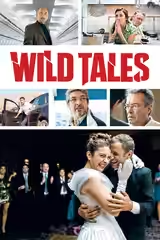
  4. Wild Tales (2014, Fi1m 83)An Argentine anthology where every story has a fuse and lights it.

  5. Almost Famous (2000, Fi1m 82)A young writer, a magazine deadline and an editor who actually reads the copy.