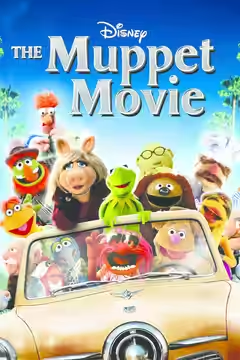
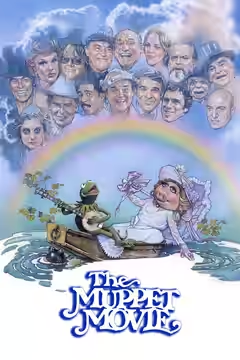
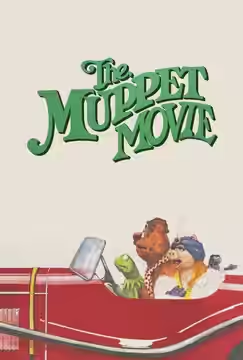
Jim Henson takes Kermit out of the swamp and onto the open road, and the film that follows is warm, ramshackle and often funny. The middle wanders and not every cameo lands, but the songs and the frog carry it.
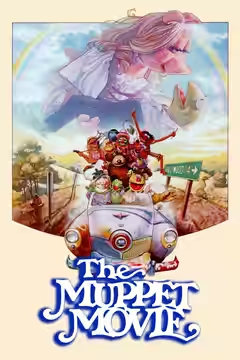
Jim Henson’s first feature for the Muppets begins with the Muppets sitting down to watch it. Kermit the Frog herds the company into a Hollywood screening room, the lights go down, and what follows is the story of how they all met: a frog on a log, a talent agent lost in a rowboat, a bicycle, a bear, a long drive west. Jerry Juhl and Jack Burns wrote it and James Frawley directed it, and between them they take an act built for a stage and a curtain and put it under an open sky. It works. Not all of it, but the parts that work are as good as anything the Muppets have done.
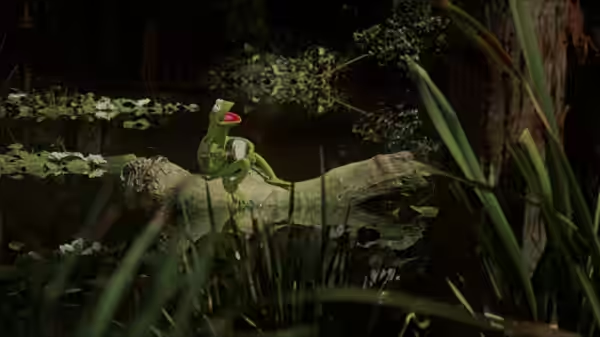
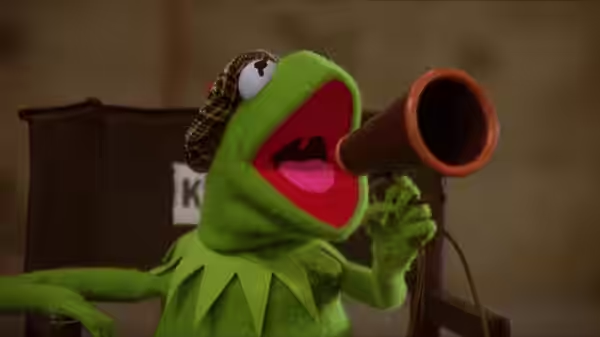
The first ten minutes are the best. Isidore Mankofsky opens from the air, low over water and cypress, and settles on Kermit alone with a banjo, singing “Rainbow Connection”. Nothing about it should move a grown adult: a puppet, a swamp, a song about wishing. It moved us more than we were ready for. It is Henson’s voice, which has a crack in it and does not push; it is the lyric, about not knowing what you are looking for and setting off anyway; and it is the camera, which holds on the frog and trusts him. Then Dom DeLuise rows in as Bernie the Agent, hopelessly lost, mentions that Hollywood is auditioning frogs, and Kermit is off.
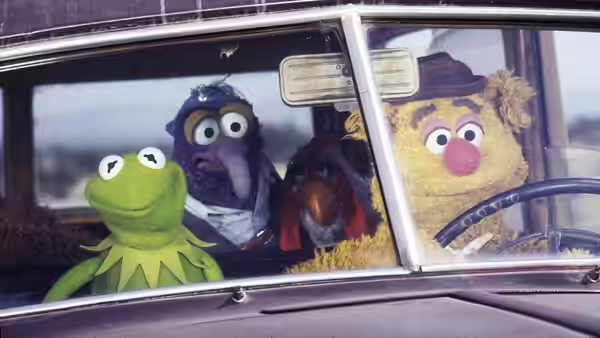
Off on a bicycle, pedalling down a country road with his knees going and nobody visibly attached. The film keeps making good on that shot: Kermit and Fozzie Bear singing “Movin’ Right Along” in the front of a Studebaker on a real road with real sun on the dashboard. Mankofsky shoots the puppets as he would actors, at their own eye level, in daylight, and you stop seeing felt within a minute. Joel Schiller’s El Sleezo Cafe, where Fozzie is dying on stage in front of the roughest crowd in the county, is a proper dive, and James Coburn runs it.
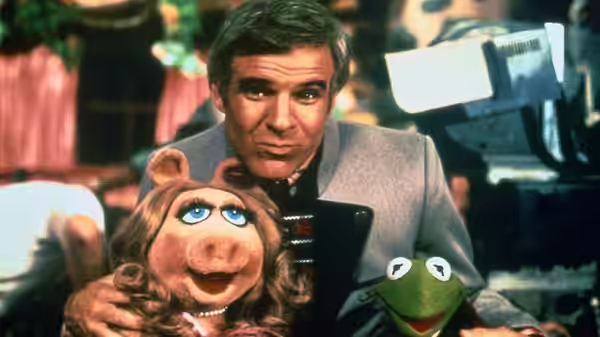
Frank Oz does the heavy lifting. His Fozzie is all hope and no material, the comedian who tells you the joke was funny after you have not laughed, and Oz plays the hurt under the hat without pathos. His Miss Piggy, met at a county fair, arrives with her own weather. Dave Goelz’s Gonzo turns up as a plumber with a chicken, and Jerry Nelson and Richard Hunt fill the edges.
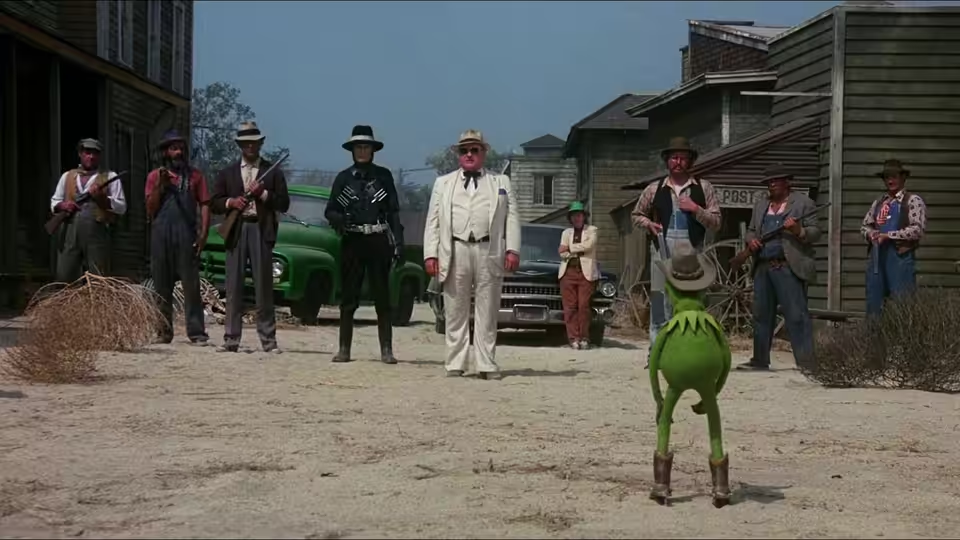
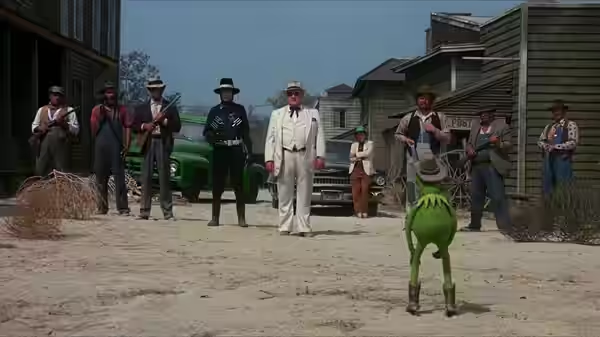
Charles Durning’s Doc Hopper, a fried-frog-legs franchise king in a white suit, wants Kermit for his commercials and cannot understand why a frog would say no. Durning plays him straight, with a salesman’s smile that curdles, and the film needs one person who is not in on the joke. Austin Pendleton’s Max, his assistant, is in on it and wishes he were not, and his slow drift towards decency is the closest thing the script has to a second story. The cameos are a mixed bag. Mel Brooks, as a mad scientist with a brain-scrambling machine, plays a five-minute sketch at full volume and gets most of his laughs. Milton Berle sells used cars. Edgar Bergen sits on a judging panel with Charlie McCarthy on his knee, and the film pauses to let one generation of puppeteer nod to the next.
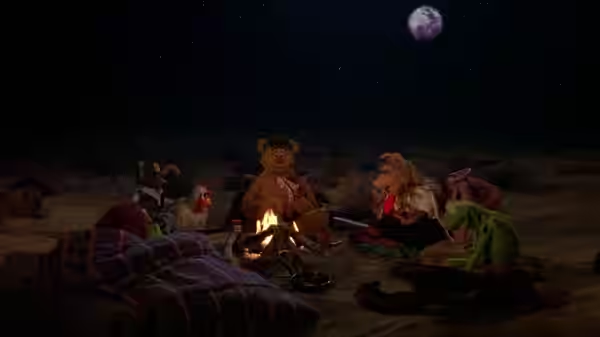
The middle wanders. Each stop is a Muppet, a song, a cameo, and back in the car, and Juhl and Burns give every stop the same size. Christopher Greenbury cuts briskly, but around the hour mark we knew exactly what the next scene would be and were right. Paul Williams and Kenny Ascher’s songs after the first two are pleasant and go past. The Hopper pursuit, which should tighten, mostly recurs, and a late stretch in the desert takes longer than it needs to.
One of the critics we read faults the film for throwing away the television format, and it is true there is no theatre, no curtain, no weekly guest star to be politely tormented. We think that was the point. On television the Muppets had a stage to hide behind; here they have a highway and weather, and the question of whether a frog can carry a feature is asked and answered. It runs 97 minutes and carries a U. Bring children if you have them. They are not required.