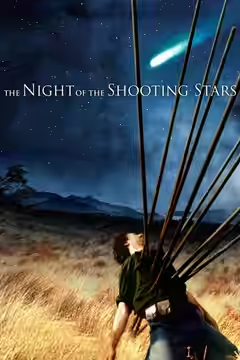
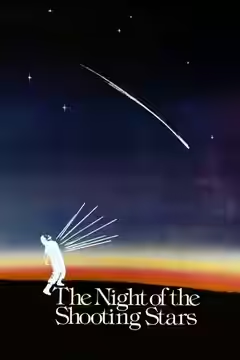
The Taviani brothers tell a Tuscan village’s flight from the Germans in 1944 as a bedtime story, and it pays off. Funny, then abruptly not, and lit like a summer holiday, which makes the violence worse. See it.
The Night of the Shooting Stars is a war story handed to a child. A woman’s voice tells her infant what happened to her Tuscan town in August 1944, when she was six. Because the teller was a child, the story keeps a child’s shape. The grown-ups are enormous and slightly ridiculous, the danger never arrives when expected, and once or twice something impossible happens and nobody objects. Paolo and Vittorio Taviani wrote it with Tonino Guerra and their producer Giuliani G. De Negri, and it runs 105 minutes.
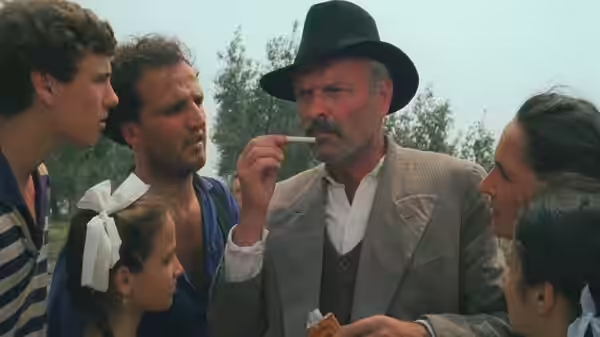
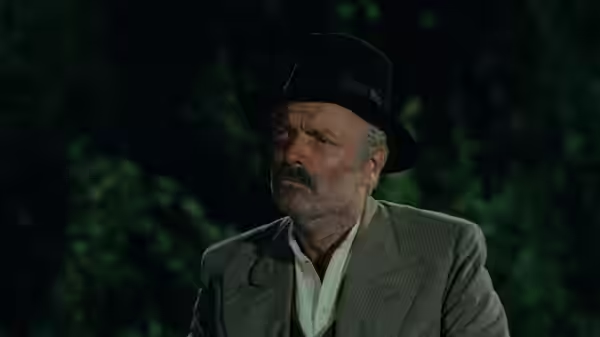
The plot is a walk. The retreating Germans have told the townspeople to gather in the cathedral before they blow up the houses. The Bishop (Giorgio Naddi) says go. Galvano (Omero Antonutti), a farmer with no authority beyond the fact that people listen to him, says the opposite, and leads a party out of the town in the dark to look for the Americans, said to be to the south. Antonutti plays him gently, a man never asked to decide anything, and carries the weight of it in his shoulders. The film’s spine is his slow, unspoken business with Concetta (Margarita Lozano), whom he has wanted since they were young.
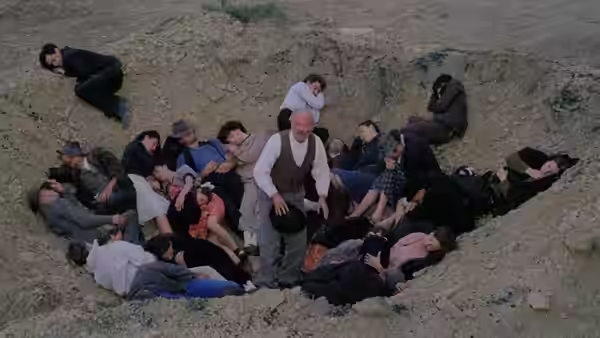
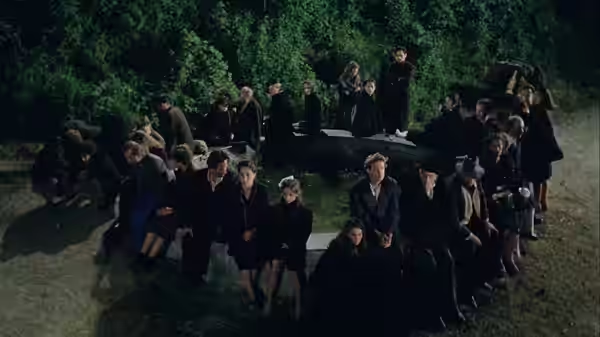
For its first half the film is nearly a comedy. Corrado (Claudio Bigagli) and Belindia (Miriam Guidelli) are married on the eve of departure because she is pregnant, and the wedding is conducted with the impatience of people who have packing to do. The walkers argue about whether God is in the cathedral or out here with them. Lina Nerli Taviani dresses them in dark wool and blankets over summer clothes, so that from a distance the column looks like a village fete that has wandered off. We laughed a good deal, and the film wanted us to.
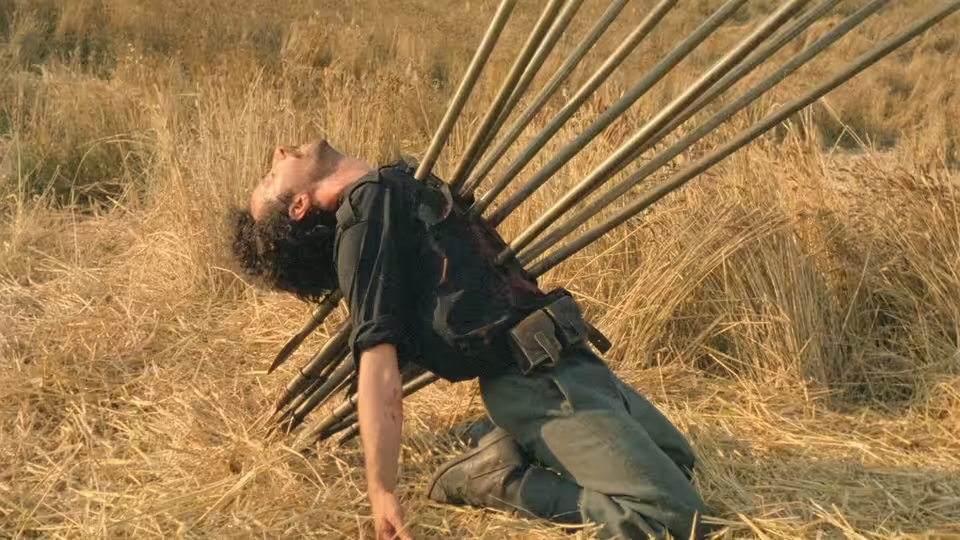
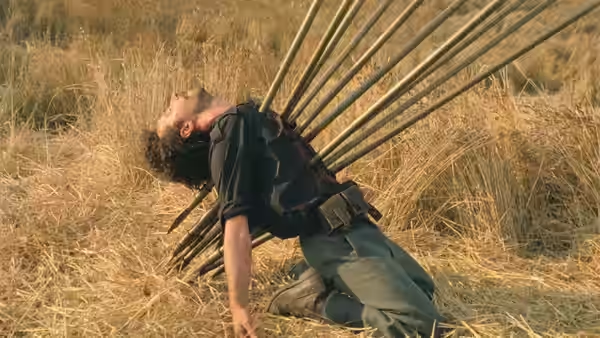
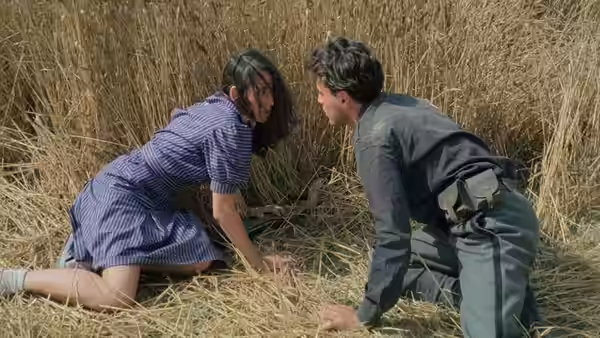
It also wanted us defenceless, and we were. Franco Di Giacomo shoots the Tuscan countryside in warm afternoon light, gold on the wheat and white on the roads, with no shadow for a threat to hide in. Gianni Sbarra’s production design keeps the town small: a square, a church, a few streets. When the killing comes, in the second half, it comes in that same lovely light and is over in a second. There is a sequence in a wheat field that we will not describe. We had been smiling a minute before, and then we were not, and we sat through the next scene not really watching.
The fantasy belongs to Cecilia (Micol Guidelli). Because she is six, what she sees in the field is not quite what happened, and the Tavianis film her version without apology. Roberto Perpignani cuts it in flat against the realism on either side, no dissolve, no change of light, so it lands as fact. Nicola Piovani’s score does the same job with sound, a tune that could be a children’s song under scenes that are not for children. We can imagine a viewer who finds it precious. We did not. A child is doing the remembering, and the film said so in its first line.
Not everything holds. The younger lovers, Nicola (Massimo Bonetti), Mara (Enrica Maria Modugno) and Rosanna (Sabina Vannucchi), are sketched where Galvano and Concetta are drawn, and their scenes mostly give the walk a rest. The narration occasionally tells us what to feel about a face that has already told us. And Piovani brings his melody back once or twice more than he needed to.
Most critics have been warm, one or two rapturous, and we are nearer the second group. Watch it in one sitting and do not read about the wheat field first. The light will tell you nothing is coming, and that is the point.