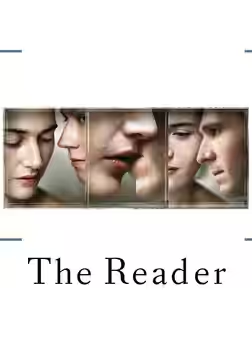
Stephen Daldry’s adaptation of Bernhard Schlink’s novel is handsomely made and finely acted, above all by Kate Winslet and David Kross. It is also far too tidy about the questions it raises, and the tidier it gets the less we believed it.
Bernhard Schlink’s 1995 novel asked how the German generation born after the war was supposed to love the one that fought it, and it asked through a fifteen-year-old boy and the older woman who takes him to bed. David Hare has adapted it and Stephen Daldry, after Billy Elliot and The Hours, directs. The result is 124 minutes of careful, good-looking, well-acted cinema that handles the worst subject there is with clean hands and a steady voice. That is the achievement and it is also the problem.
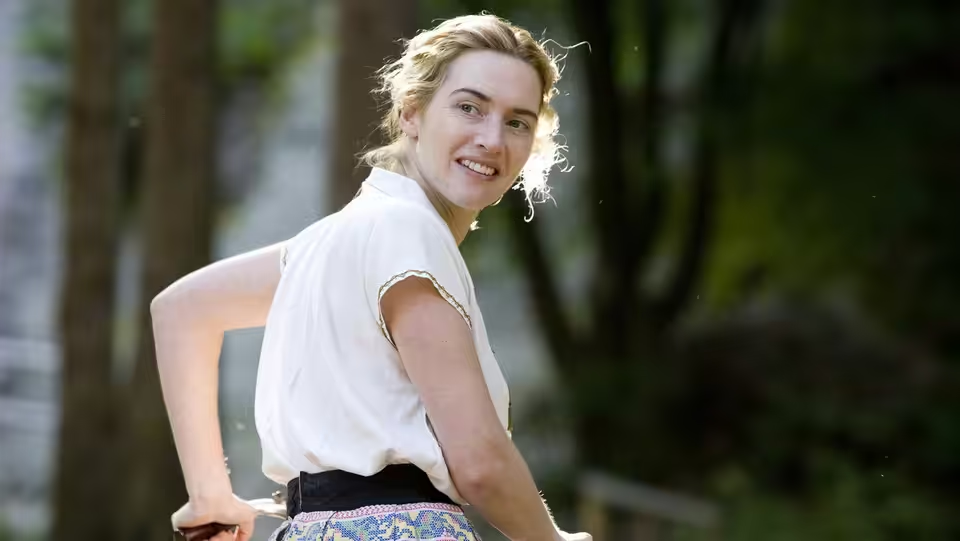
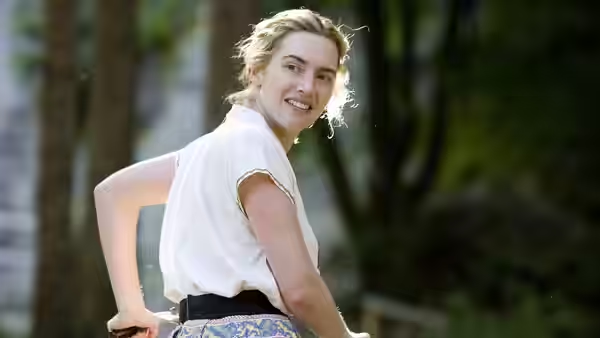
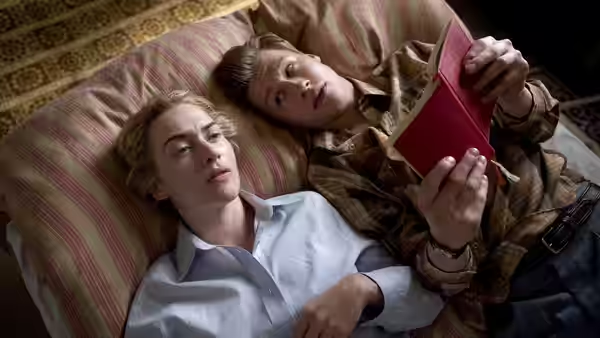
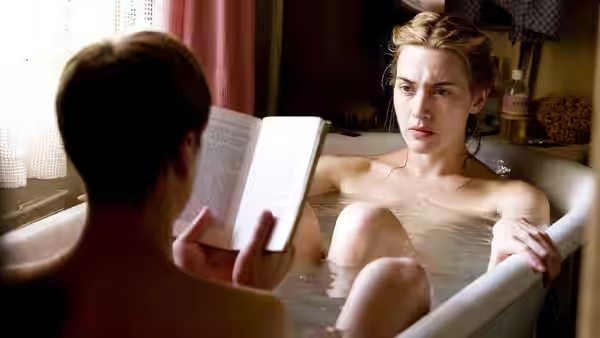
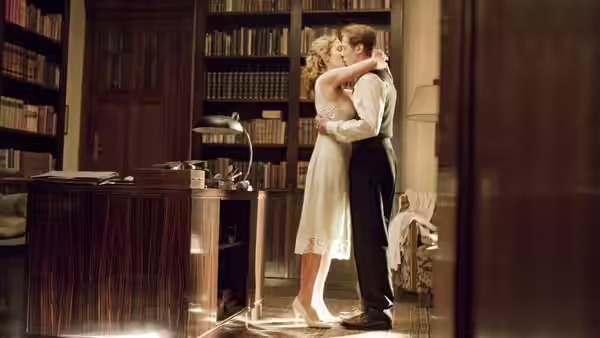
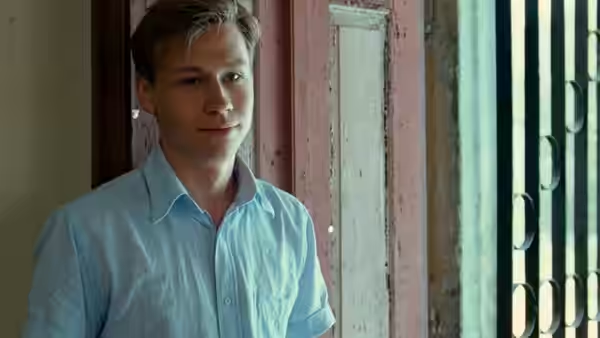
The first hour is the good one. Kate Winslet plays Hanna as a practical woman with a short temper and a strong back, ordering the boy about, scrubbing him down in a tin bath as if he were laundry, and only softening when he opens a book. David Kross, who was a teenager when this was shot and looks it, gives Michael a face that cannot hide anything, which is exactly what the part needs. Their scenes are frank about sex in a way British films seldom are, and franker still about the ordinary pleasures of a summer afternoon with the curtains drawn. We were moved, sitting in the dark, watching Kross read The Odyssey to a woman lying on the bed with her eyes shut, because for once a film about the twentieth century had found time to show two people being happy.
It is beautifully put together. Chris Menges and Roger Deakins are both credited with the photography and you cannot see the join: 1958 is all browns and yellows, steam on tiles, sun through net curtains, while the Berlin of 1995 is glass, grey water and the blue of an early morning nobody wanted. Brigitte Broch gives Hanna a flat with a stove, a bath and almost nothing else, and gives the older Michael a flat that looks unlived in. Ann Roth and Donna Maloney put Winslet in a conductor’s uniform and a slip and let the rest of the century happen around her. Nico Muhly’s score, mostly piano and strings, is spare and does not push, except in the courtroom, where it pushes.
The courtroom is where the film changes and where it goes wrong. Michael, now a law student in a seminar run by Professor Rohl (Bruno Ganz), is taken to watch a trial and finds Hanna in the dock. What she is accused of, we can say; the film is about the Holocaust and does not pretend otherwise. What the film then does with her we will not describe, except to say that Hare’s script turns a question with no answer into a puzzle with one, a single fact about Hanna that once produced makes everything line up. Schlink’s book knew the fact explained nothing. The film behaves as though it explains a great deal.
Behind the puzzle sits an idea the film seems to believe, which is that books make people better. Michael reads to Hanna; Hanna is a monster; therefore reading is what she lacked. The century in question is the best evidence against this that anyone has ever assembled, and a film set in it ought to know so. We came out of the second half irritated, not by the history but by how comfortable we had been made with it, and we are still not sure the film knows that is what it did.
Ralph Fiennes has the worst of it. He plays the grown Michael as a man with a permanent slight frown, and Claire Simpson’s editing keeps returning us to him in the middle of the 1958 scenes when nothing has changed except his expression. Lena Olin, in a late scene we will not describe, is the one person who refuses to take the film’s terms, and she is wary and exact and gone in five minutes. The film needed ten more of her.
Against Daldry’s own record this is the coolest thing he has made. Billy Elliot had feeling to spare and The Hours had more ideas than it could carry; this has taste, which is a virtue in a dinner party and a limitation in a film about mass murder. See it for Winslet and Kross and for the summer in the flat, which is close to lovely. Then argue about the rest, because the film has decided not to.