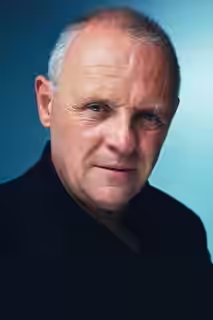
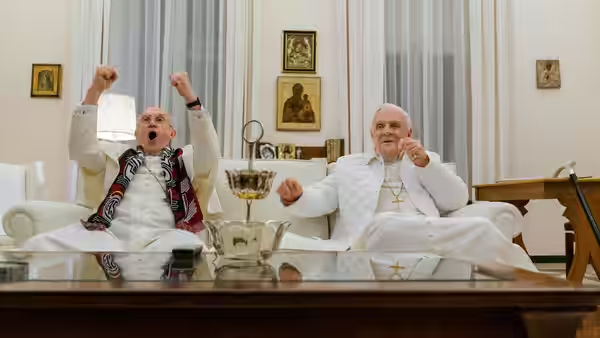
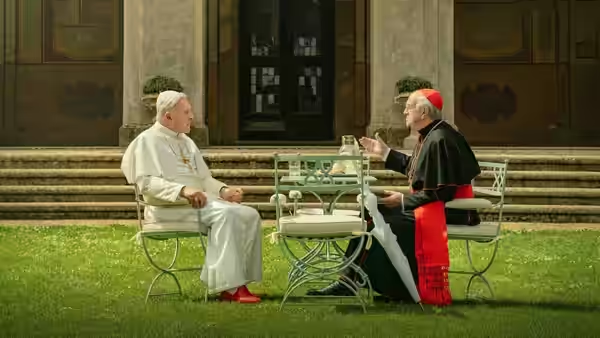
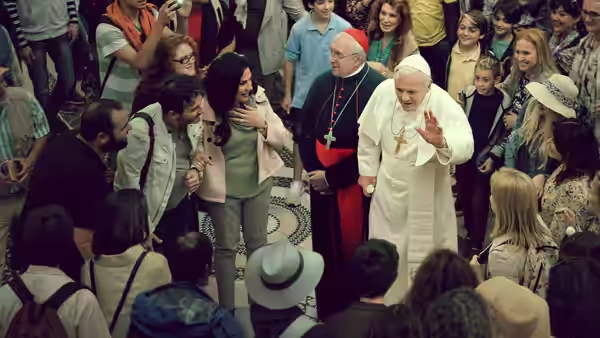
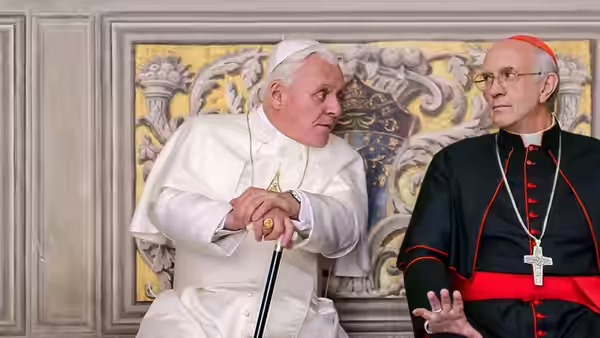
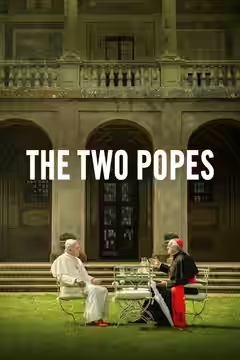
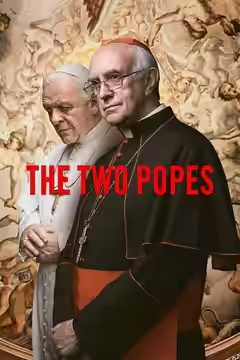
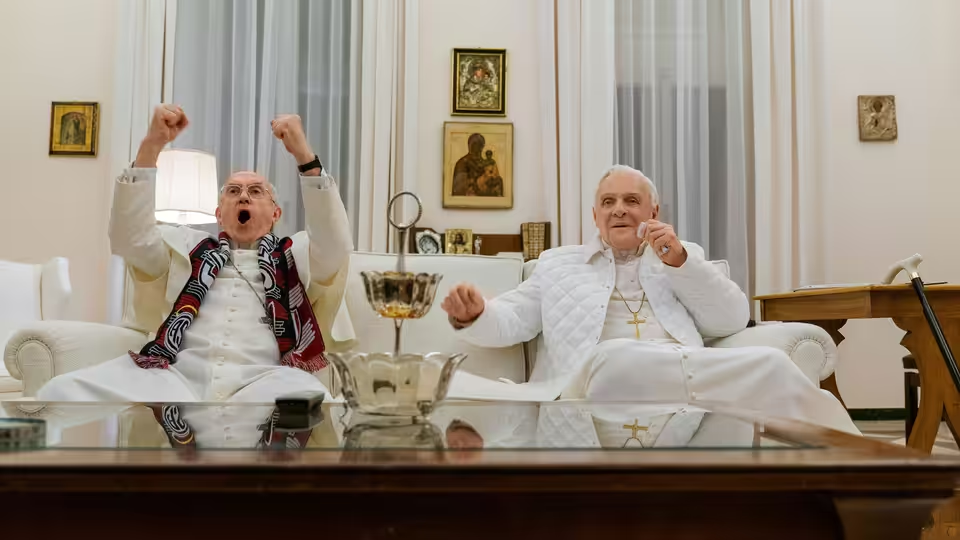
Pope Benedict XVI (Anthony Hopkins) celebrates beside Pope Francis (Jonathan Pryce) in a sitting room
Film review

The Two Popes

2019 · Directed by Fernando Meirelles · 2h 05m

In a sentenceTwo popes, two fine actors, and a camera that could learn something about sitting still

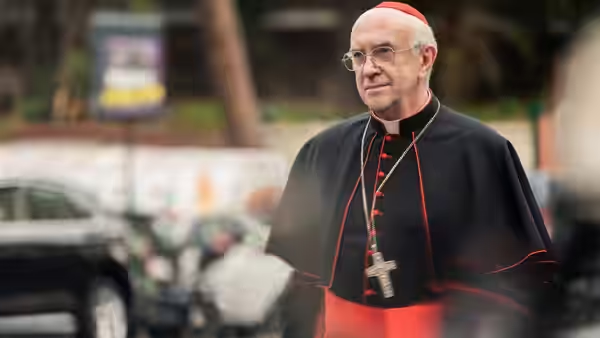
Jorge Bergoglio (Jonathan Pryce) and Pope Benedict XVI (Anthony Hopkins) face a disagreement about the direction of the Church. Bergoglio’s approach to its future differs from Benedict’s, and their conversations bring the dispute down to two men trying to explain themselves to each other. Cardinal Hummes (Luis Gnecco) is part of the surrounding Church hierarchy. As the two central figures discuss faith, responsibility and change, their contrasting temperaments complicate the exchange. The drama imagines their private conversations, with the Church’s future at stake and neither man’s position easily set aside.

Plays from YouTube when you press play; nothing loads from them until then.

Fi1m review

Jonathan Pryce and Anthony Hopkins make this imagined papal conversation funny and affecting enough to recommend. Fernando Meirelles is less convincing when he asks their warmth to compensate for the film’s gentle handling of the Church’s failings.

The Two Popes is worth an evening for Jonathan Pryce and Anthony Hopkins, though we would not mistake its friendliness for a searching examination of the Church. Fernando Meirelles builds the drama around two men talking through differences that reach far beyond either of them. The attraction is watching capable actors give those disagreements some personal weight. The reservation is that the film becomes so pleased with their company that it stops pressing them quite as hard as it should.

Anthony McCarten’s imagined exchanges have enough humour to make us understand why each man might keep listening to the other. A conversational drama needs that curiosity, especially when its speakers arrive with such settled public identities. Sometimes the dialogue explains a position too thoroughly, leaving the actor to disguise a small lecture as an exchange. The leads usually manage it, but we can occasionally hear the screenplay making sure that nobody has missed the point.

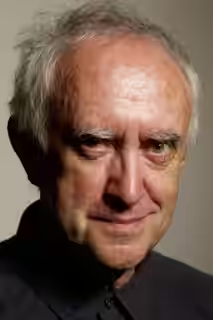
Jonathan Pryce plays Jorge Bergoglio with an openness that makes listening worth watching. His warmth matters because a conversation about the future of the Church could easily become a succession of speeches with polite gaps between them. He gives his partner room, and the exchanges acquire an ease the writing cannot always provide on its own. The limitation is in the portrait: the film is so disposed to like Bergoglio that his convictions receive less testing than they need.

Anthony Hopkins makes Pope Benedict XVI the more troubling and, for us, more interesting presence. We were moved by his vulnerability in the conversations. The performance lets uncertainty intrude on a man whose position seems to demand certainty, so his need to be understood carries an unexpected sadness. That does more to make the disagreement matter than the film’s efforts to reassure us that these men can get along.

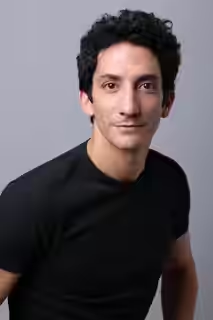
César Charlone’s restless cinematography is the part of the film we would most readily quieten down. Fernando Meirelles keeps looking for visual energy when the interest is already in the two performances, and the extra activity sometimes distracts from the conversation. Fernando Stutz’s editing faces a different problem in the flashbacks, where the pace slackens as more of Bergoglio’s past is supplied. Juan Minujín plays Young Jorge Bergoglio, but the extended attention to one man’s history leaves the other unevenly explored.

Mark Tildesley’s production design helps establish the importance of the office without overwhelming the people who hold it. That restraint is useful in a film already inclined to make a great deal of its setting. Bryce Dessner’s music is sympathetic to the warmth of the performances, although we need little encouragement to feel it. We would happily trade some of that reassurance for longer stretches in which the voices alone carry the scene.

The larger difficulty is the gentle treatment of institutional scandal, including abuse, which cannot be settled by making the people at the top more likeable. The film acknowledges troubling questions, then devotes much more care to the pleasures of companionship than to pursuing them. Its humour and the responsiveness of its leads keep it engaging, even when the scrutiny becomes too comfortable. Watch it for the actors, and be wary when their charm starts doing the institution’s work.
Critical consensus AI synthesised

74
Positive
17
Mixed
5
Negative
1

Most critics find The Two Popes an entertaining, thoughtful drama, with praise concentrated on Anthony Hopkins and Jonathan Pryce. Their chemistry makes the conversations lively and affecting, and even less enthusiastic reviews find much to admire in the performances. The dialogue also earns broad approval for its wit and warmth, with many critics finding the central relationship compelling enough to carry a film built largely around talk.

The reservations concern how much that warmth softens the subject. Several reviews question the treatment of Church scandals, while others find the flashbacks cumbersome or the visual flourishes distracting. The spread runs from enthusiastic approval to a lone strongly negative verdict: Slant Magazine argues that sentimentality comes at the expense of confronting institutional corruption. There is also a direct split over credibility: Sight and Sound finds the drama plausible, while The AV Club considers the imagined conversation unconvincing and the exposition clumsy.

Empire
29 November 2019 · Ian Freer
90*

Freer finds the film funny, engrossing and thoughtful, calling it Meirelles’ most entertaining work in years. He especially praises Hopkins and Pryce, whose performances and chemistry bring the central relationship to life.

Read the full review →
The Hollywood Reporter
1 September 2019 · festival review · Stephen Farber
90*

Farber calls the film a triumph, praising its writing and the lead performances. He particularly singles out Anthony Hopkins and Jonathan Pryce for matching each other in subtlety and charisma.

Read the full review →
Variety
2 September 2019 · festival review · Peter Debruge
90*

Debruge finds the drama brilliant, emotionally engaging, and thoughtful about the Church’s future. He especially praises the performances of Anthony Hopkins and Jonathan Pryce and the film’s deft, spirited dialogue.

Read the full review →
Los Angeles Times
26 November 2019 · Kenneth Turan
85*

Turan finds the film a lively, crowd-pleasing drama with a serious side. He especially praises Hopkins and Pryce, whose performances make the conversations between the two leaders compelling.

Read the full review →
Evening Standard
29 November 2019 · ★★★★ · Charlotte O'Sullivan
80

O'Sullivan calls the film an intelligent, moving tragi-comedy and says it is a pleasure to watch. She singles out Jonathan Pryce's superlative performance, alongside the nimble script and zippy visuals.

Read the full review →
Radio Times
★★★★ · Andrew Collins
80

Collins presents the film as an entertaining two-hander, with both lead performances singled out for praise. He highlights the actors’ barnstorming work in a story built around their conversations.

Read the full review →

Straight answers AI written, from our review

Is The Two Popes worth watching?
The Two Popes is worth watching for Jonathan Pryce and Anthony Hopkins’s funny, affecting performances, and we score it 75 out of 100. We recommend it to viewers who enjoy conversational drama, with a reservation: its warmth towards the two men comes at the expense of harder questions about the Church’s failings.
How long is The Two Popes, and what is it rated?
The Two Popes runs 2h 05m. It is a drama and history film.
Where can I watch The Two Popes in the UAE?
The Two Popes is streaming on Netflix in the UAE. Availability is checked daily; the links above go straight to each service.
How violent or frightening is The Two Popes, and is it suitable for children?
The Two Popes has a UK 12A certificate, so children under 12 need an accompanying adult at the cinema. Its conversations address institutional scandal, including abuse; we would steer families towards it for older children interested in faith and responsibility, rather than treat its humour and warmth as signs of light viewing.
How does The Two Popes compare to Of Gods and Men?
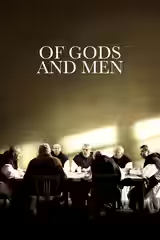
The Two Popes is the warmer, more conversational choice beside Of Gods and Men, which we recommend for a more searching examination of faith and responsibility. Pryce and Hopkins make the papal disagreements engaging, but the film softens difficult questions; the slower account of monks facing danger in Algeria offers fewer comforts and greater emotional force.
What should I watch after The Two Popes?
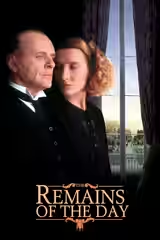
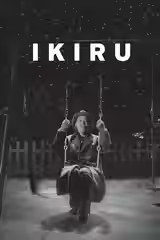
After The Two Popes, try Of Gods and Men (2010, Fi1m 84): Faith and responsibility examined through a community facing decisions without comfortable answers. Then The Remains of the Day (1993, Fi1m 88): Another Anthony Hopkins performance in which duty makes ordinary intimacy painfully difficult; and Ikiru (1952, Fi1m 92): An ageing official considers what his position has allowed him to accomplish.

Cast

If you liked this, try…

  1. My Dinner with Andre (1981) · not reviewed yetTwo people talking, with enough curiosity to make the disagreements absorbing.

  2. Of Gods and Men (2010, Fi1m 84)Faith and responsibility examined through a community facing decisions without comfortable answers.

  3. The Remains of the Day (1993, Fi1m 88)Another Anthony Hopkins performance in which duty makes ordinary intimacy painfully difficult.

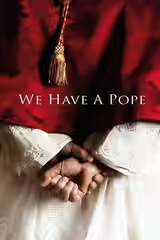
  4. We Have a Pope (2011) · not reviewed yetA more anxious papal comedy, alert to the person trapped inside the office.

  5. Ikiru (1952, Fi1m 92)An ageing official considers what his position has allowed him to accomplish.