Roger Donaldson’s account of the Cuban missile crisis is a sober, well-built thriller that finds real tension in men arguing round a table, and Bruce Greenwood is a fine Kennedy. It is twenty minutes too long and tells it through the wrong man.
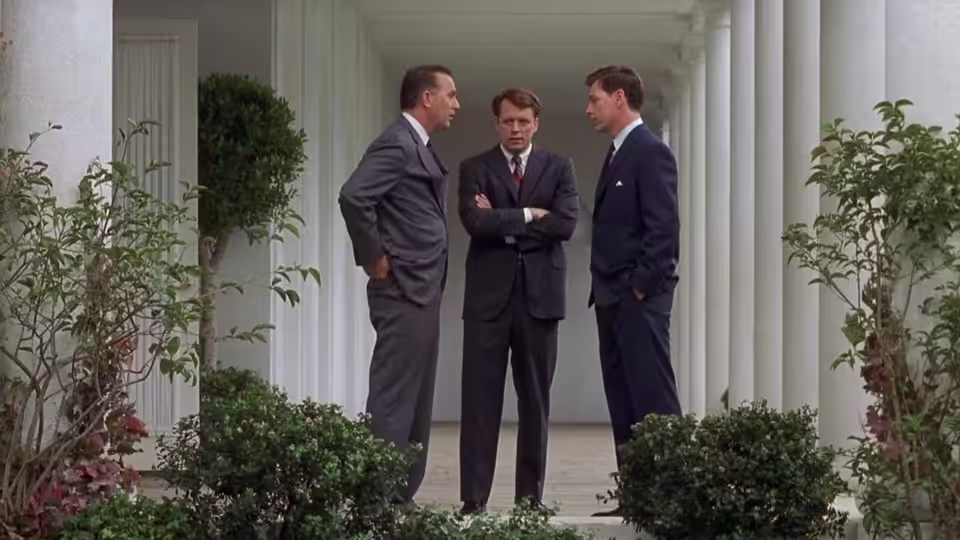
Roger Donaldson’s film takes the thirteen days of October 1962 in which Soviet missiles were found in Cuba and the United States had to decide what to do about them, and spends nearly all of its 145 minutes in rooms in Washington. There are no Russians to speak of and almost no Cubans. David Self’s screenplay is built from meetings: the Cabinet Room, the Oval Office, a corridor, a telephone. It knows that we know how the fortnight ended, and it bets we will be gripped anyway by watching the decision get made. For most of its length that is what happens.
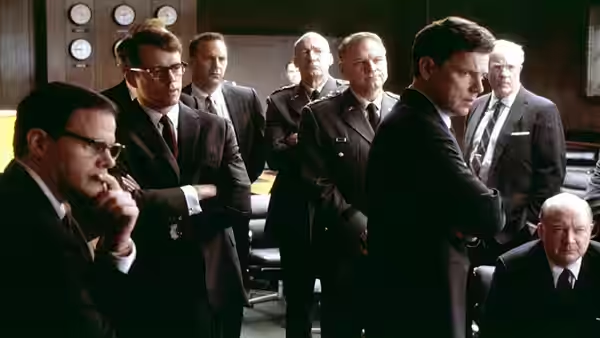
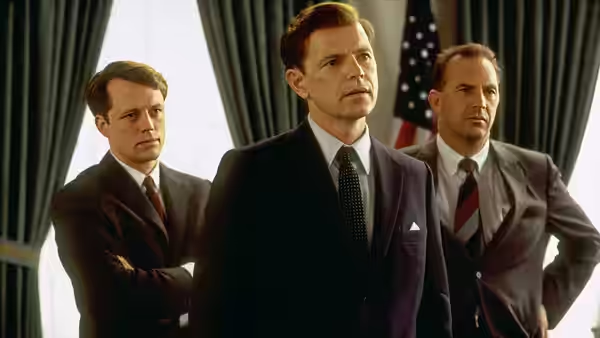
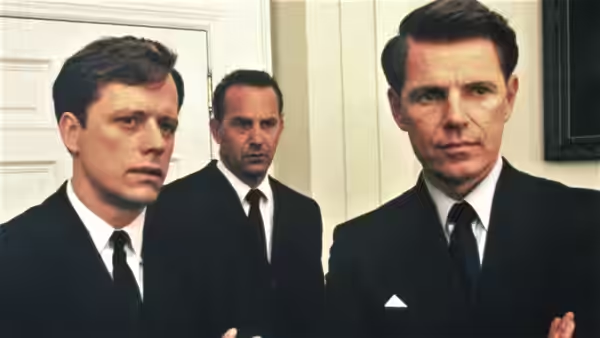
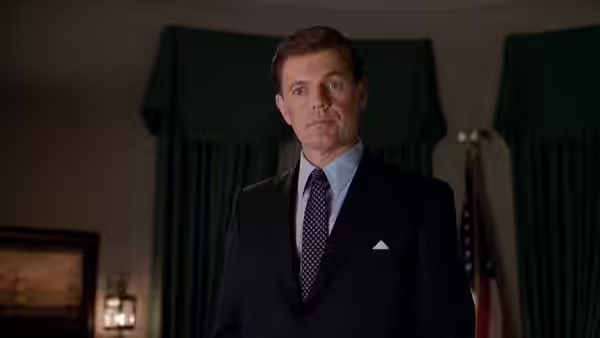
The Cabinet Room scenes are the film. Bruce Greenwood plays Kennedy as a tired, careful man who asks questions and lets other people talk, and he carries the picture on the face of someone who can see that every option in front of him is bad. Steven Culp’s Robert Kennedy is quicker and angrier, the brother who says what the President cannot. Dylan Baker’s McNamara is all slide rule and no pulse, and Kevin Conway’s Curtis LeMay is a frightening piece of work, a general who tells the President he is in a pretty bad fix and means it as advice. We knew how the week turned out and we were tense anyway, leaning forward through an argument about whether a blockade counts as an act of war, because Donaldson lets the argument run at the length and in the order the men might actually have had it.
Andrzej Bartkowiak shoots the rooms in flat, pale light, white shirts under strip lamps, and the film drops into black and white for stretches, which gives it the look of the newsreels these men would have watched. J. Dennis Washington’s Cabinet Room is a long table, a wall of maps and easels of reconnaissance photographs, and we return to it so often that we learn where everyone sits. Isis Mussenden’s narrow ties and the generals’ rows of ribbons sort the civilians from the soldiers before anyone speaks. Trevor Jones’s score is brass and snare drum, and it is laid on thickest in the scenes where the actors have already done the work. Conrad Buff IV cuts the flights over Cuba, the low-level runs with ground fire coming up through the frame, fast and loud; they are the film’s only action sequences.
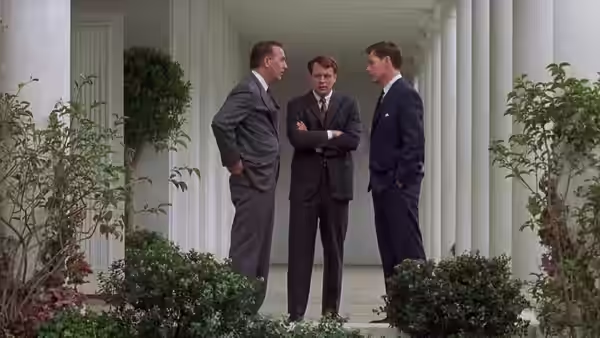
The trouble is Kenneth O’Donnell. The film is told through him, a special assistant whose work here is to stand at the back of every room, walk the brothers down corridors telling them what they already think, and ring a pilot to ask him not to report being shot at. The cutaways to his wife and children at breakfast are there to remind us what is at stake, and each one stops the picture for a minute or two. Kevin Costner, who also produces, plays him with real decency and a Boston accent that comes and goes, sometimes inside one sentence, and we winced for him more than once.
The narrowness has other costs. Khrushchev is a name on a cable. The United Nations gets one scene, and it belongs to Michael Fairman’s Adlai Stevenson, the man everyone at the table has already written off. London, Moscow and Havana are elsewhere. The film is honest about where its interest lies, and the result is that we only ever see one side of the crisis.
Donaldson made No Way Out (1987) with Costner, and he still knows how to make a Washington corridor feel like somewhere a man might be ambushed. He is less sure what to do with daylight. The date captions, the family breakfasts and the swelling brass give the film the shape of expensive television. It runs 145 minutes, and the twenty that could go are the family scenes.
See it for the table, for Greenwood, Culp and Conway, and for the slow, unglamorous business of grown men trying not to do the obvious thing. It carries a 12 and will hold a teenager who can sit still for talk.