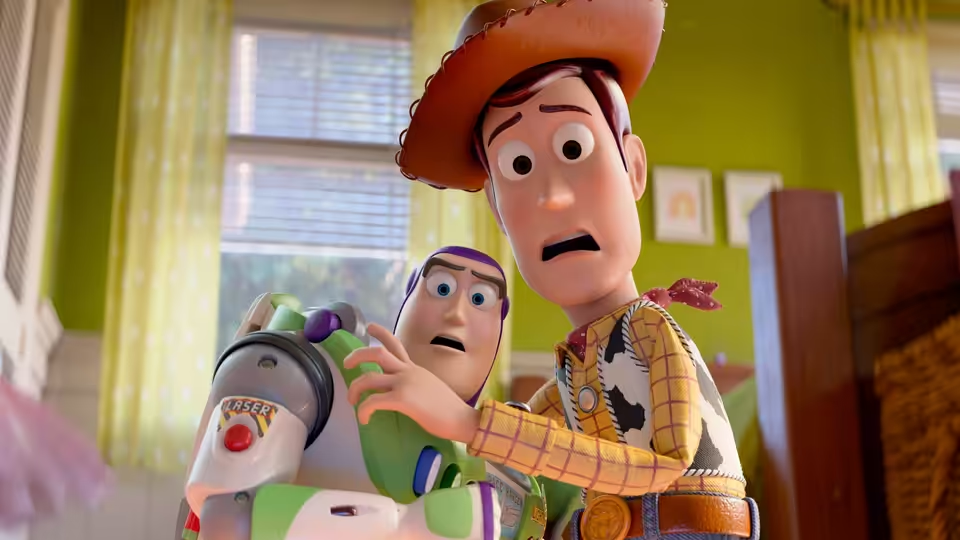
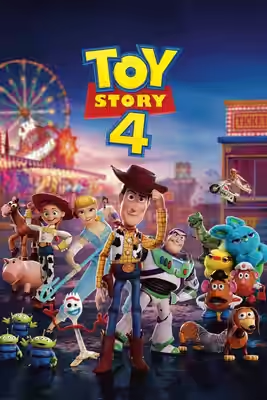
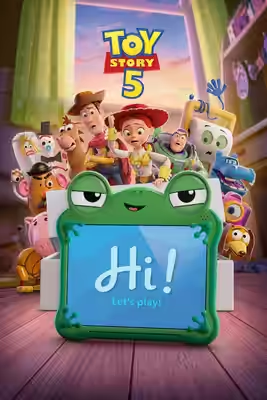
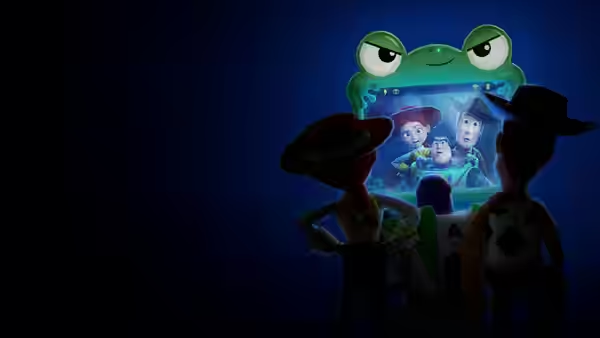
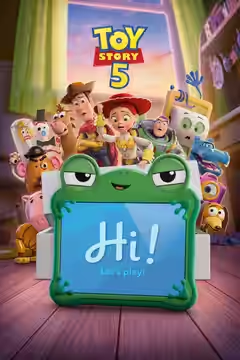
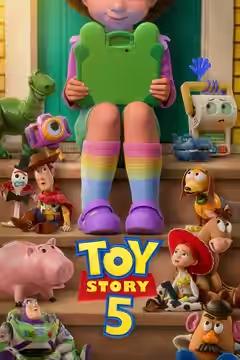
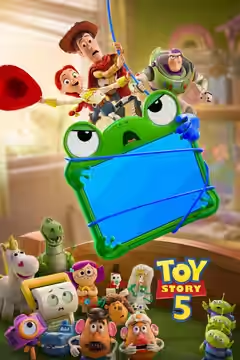
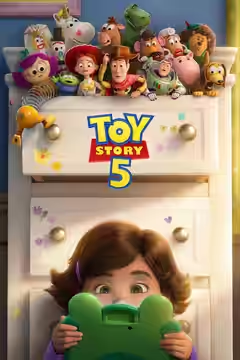
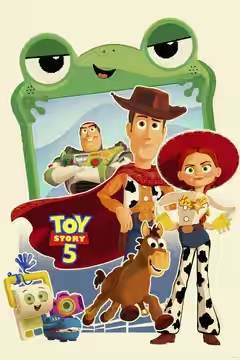
Andrew Stanton brings the toys back to face a tablet, with the wit and craft the series has always had. What it lacks is nerve: it raises the question of screens and children, then puts it down and goes home.
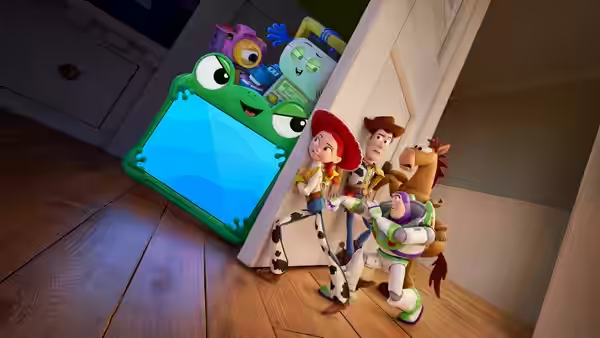
Thirty-one years after the first Toy Story, Andrew Stanton, who had a hand in writing that film and has since directed Finding Nemo and WALL-E, brings the toys back to face the thing every parent already has in the house. Bonnie has been given a tablet. It is called Lilypad, it has a face and a voice (Greta Lee), and it needs no child’s imagination to do anything at all. It is a good premise, the film is often funny and always handsome, and it has not got the nerve to see the premise through. That is the verdict, and the rest is detail.
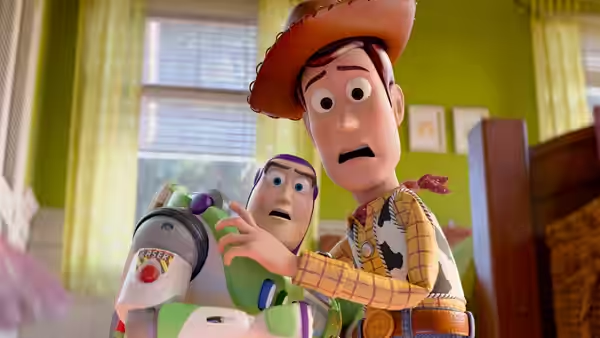
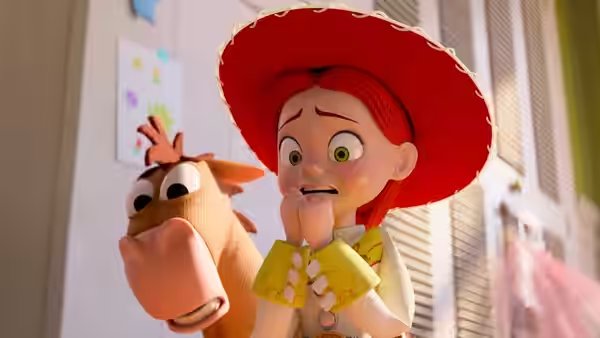
The best decision Stanton and his co-writer Kenna Harris make is to hand the film to Jessie. Joan Cusack has always played her at a gallop, and here she is allowed to slow down: a toy who was once left behind by a child and has never quite trusted one since, now watching another drift towards a screen. Cusack does the panic well and the stubbornness better. Tom Hanks and Tim Allen are present as Woody and Buzz and sound as they always have; the weight is Cusack’s.
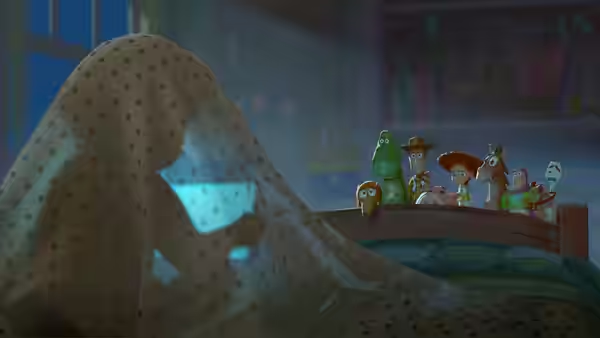
The film looks the way the series has always looked, which is praise up to a point. Jean-Claude Kalache and Matt Aspbury shoot Bonnie’s bedroom in the soft daylight of the earlier films and let the tablet’s screen be the brightest object in any room it enters, so that every felt hat and scuffed plastic arm nearby goes a shade greyer. That one lighting choice makes the argument better than most of the dialogue does. Bob Pauley’s design gives the old toys their years, thread worn at the seams and paint rubbed from the noses, and gives Lilypad no seams at all. Randy Newman’s score is Randy Newman’s score, and his quieter cues under Jessie’s scenes are the film’s most direct route to the eye.
The jokes land. A consignment of new Buzz Lightyears, fresh from the box and every one as sure of himself as Allen’s was in 1995, gives the film its loudest laughs. Conan O’Brien, as a toy called Smarty Pants, reads his lines as if from an instruction leaflet to people who have stopped listening, and it works every time. Bonnie Hunt’s Dolly is still the voice of sense in the toy box. There is a great deal of cast, and the film treats each newcomer as a promise it must keep.
Four editors are credited, Robert Grahamjones, Jason Hudak, Ayse Dedeoglu and Jennifer Neysa Jew, and the film moves like something cut by four people. It sprints between the toy box, the Buzzes and the humans, Jay Hernandez and Lori Alan as Bonnie’s parents, and gives none of the three room to settle. Worse, it loses its nerve about the tablet. The first act sets Lilypad up as a real danger to the way a child plays; by the second half the film has plainly decided it would rather not fall out with anyone, and says so with a shrug and a chase. Meaning to say something about screens and children is not the same as saying it.
And yet it got us. There is a passage past the hour mark, Jessie alone with the question of whether she is still needed, that we watched with a tightening in the throat we had not budgeted for. It is Cusack’s voice doing almost nothing and Newman’s strings doing less, and it is as good as anything in the series since the second film. Then the picture cuts to a set piece within a minute, as if embarrassed, and we were cross with it for not trusting the moment it had earned.
WALL-E put a whole species in front of screens and did not soften it. This one starts an argument and then reassures everybody that nothing in the toy box needs to change. Most critics have been kinder than we are, and we understand why: it is a pleasure to be back in that bedroom. It is a decent film, and about twenty minutes too long for the story it has.
Take the children. They will have a fine time and so, for most of its 102 minutes, will you; the PG is a soft one. Then take the tablet off them on the way home, because the film will not.