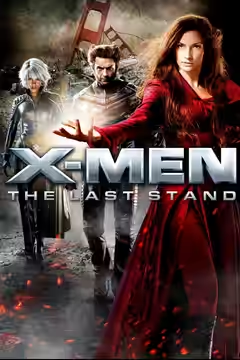
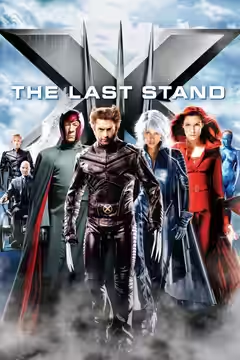
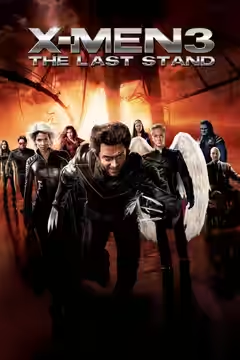
Brett Ratner’s crowded sequel has enough energy to remain watchable, and Famke Janssen gives its spectacle some feeling. But hurried character scenes and clumsy writing leave a capable cast fighting for space.
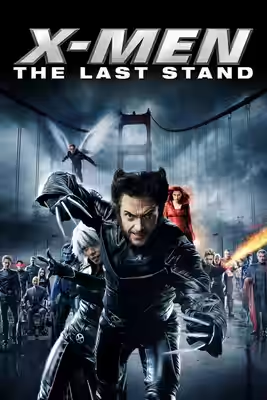
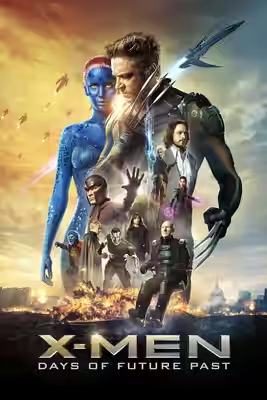
Brett Ratner’s X-Men: The Last Stand is a watchable but disappointing sequel, crowded with people whose problems deserve more attention than they receive. Simon Kinberg and Zak Penn have written enough competing material to keep the cast occupied, but too often a scene ends just as somebody becomes interesting. The film takes its characters’ difficult choices seriously, then hurries past them to arrange another confrontation. At 104 minutes, it is hardly an endurance test, though its haste becomes wearing.
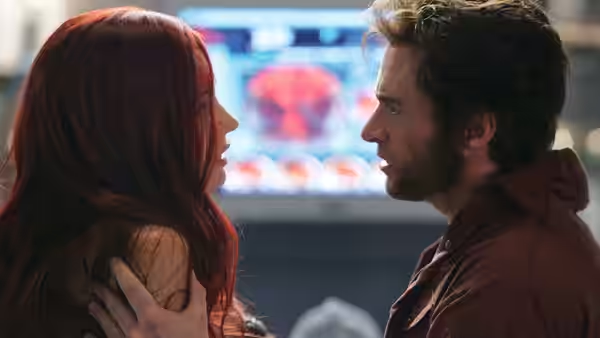
Famke Janssen is the strongest reason to stay. As Jean Grey / Phoenix, she supplies the distress and menace that the surrounding film struggles to sustain. We were unsettled by her bursts of power, because her performance keeps a suffering person visible within the spectacle. These passages suggest how forceful the film could have been with fewer competing demands. It is frustrating that her scenes are so limited.
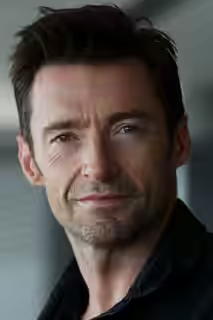
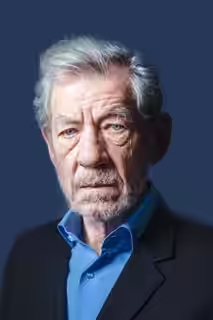
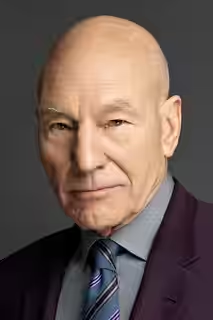
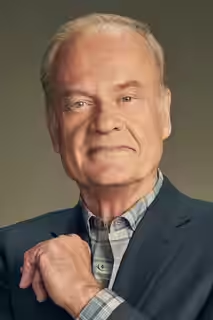
Hugh Jackman gives Wolverine an impatience that helps when the dialogue becomes cumbersome. Ian McKellen makes Magneto sound as though he has considered what he is saying, even when the writing has plainly not received the same attention. Patrick Stewart’s Professor Charles Xavier brings similar assurance, and Kelsey Grammer is an agreeable presence as Beast. These performers can establish themselves quickly, which is useful in a film that appears reluctant to let anybody settle into a scene. Their confidence makes some thin material tolerable.
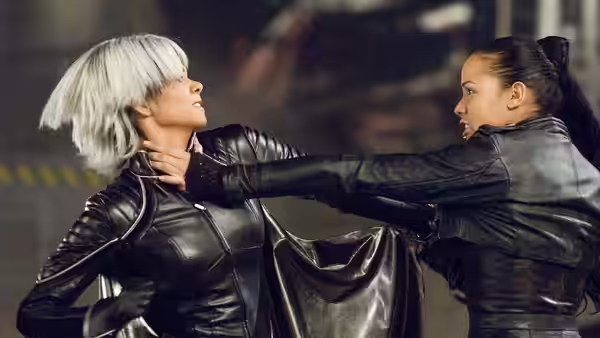
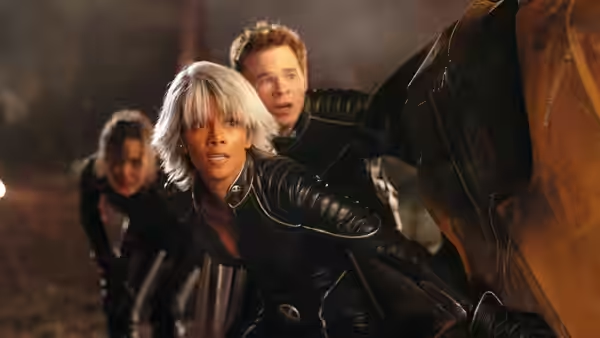
Dante Spinotti’s cinematography keeps the action readable, although we seldom feel caught inside it. Ed Verreaux’s production design supplies the scale for the spectacle, but the settings rarely become interesting places in their own right. There is pleasure in watching different powers operate within the same confrontation, and Ratner understands the basic appeal of that. The trouble comes when an action sequence needs to make us anxious about a particular person. Too often we are simply waiting to see the next ability demonstrated.
The editing by Mark Goldblatt, Mark Helfrich and Julia Wong maintains momentum without solving the crowding. Character scenes need a little time after the necessary information has been delivered, and this film repeatedly seems impatient with that extra moment. John Powell’s music supplies energy and insists on the importance of what we are watching, sometimes more forcefully than the performances require. The score helps the action along, but it cannot make an abbreviated exchange carry the feeling of a developed relationship.
For an ensemble superhero film, equal screen time is neither possible nor particularly desirable. What matters is that the people we follow have enough room to make their choices understandable, especially when the writing asks us to weigh moral questions. Here, the clumsy dialogue and frequent changes of focus make those questions feel underexamined. The cast can lend conviction to individual lines, but cannot supply the missing development between them. That is a substantial weakness in a film asking for more than passing excitement.
There are enough enjoyable passages for committed superhero viewers to find something worth their time. We would be more cautious with anyone hoping to spend a full evening in the company of these characters rather than catch them between action sequences. Janssen makes a persuasive case for watching; just do not expect the rest of the film to give its actors the same opportunity.