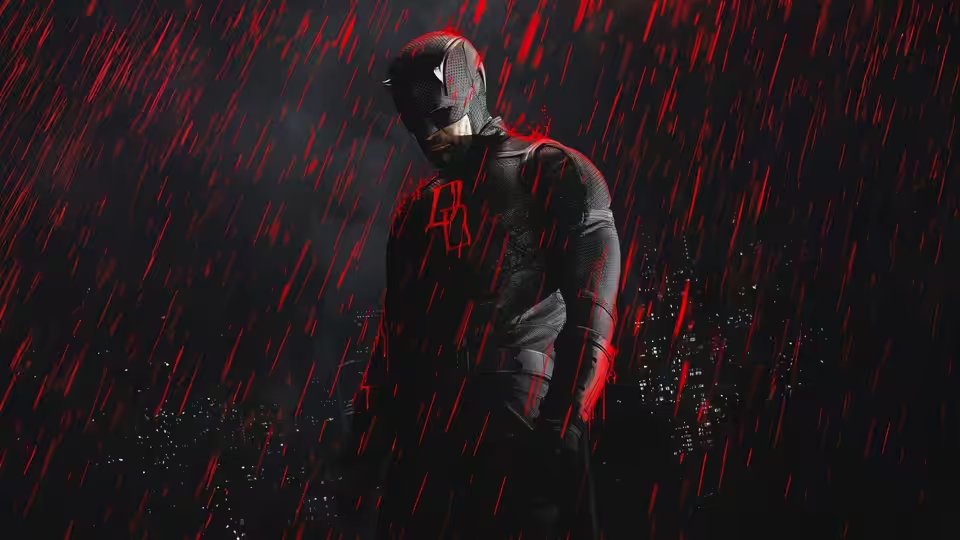
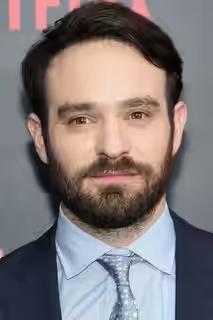
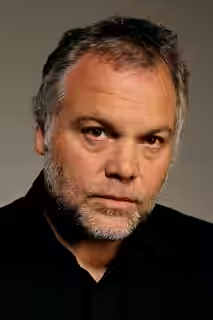
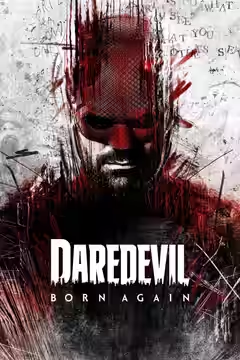
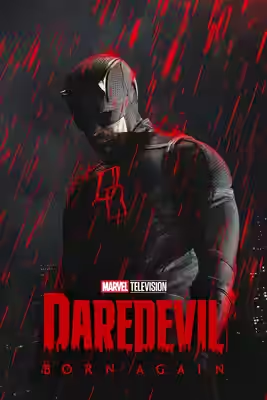
Charlie Cox and Vincent D’Onofrio make Daredevil: Born Again worth returning to, with fights that still hurt to watch. Familiar plotting and uneven pacing keep this capable crime series from becoming anything more surprising.
Daredevil: Born Again is a good, uneven return, carried by two actors who make familiar hostilities worth revisiting. It wants bruising action to sit alongside legal drama and political intrigue, while taking Matt Murdock’s reluctance to resume vigilantism seriously. That is a sensible ambition for a superhero crime series, particularly one asking us to invest in an established conflict again. The difficulty is finding room for everything, and the programme too often interrupts its strongest material to attend to something we recognise from less interesting television.
Charlie Cox makes Murdock’s hesitation worth considering, even when the genre has already told us what we have come to see. He gives the reluctance enough feeling to stop it becoming a routine delay before the action. Vincent D’Onofrio gives Wilson Fisk the force to make their renewed conflict compelling without depending on surprise. Their chemistry holds our attention through stretches where the writing supplies little that is new, and both performances suggest people whom pain has changed without necessarily improving.
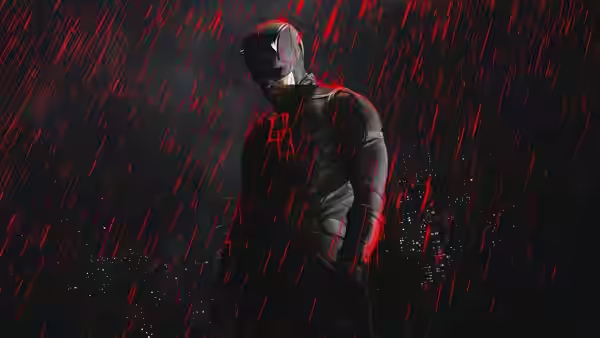
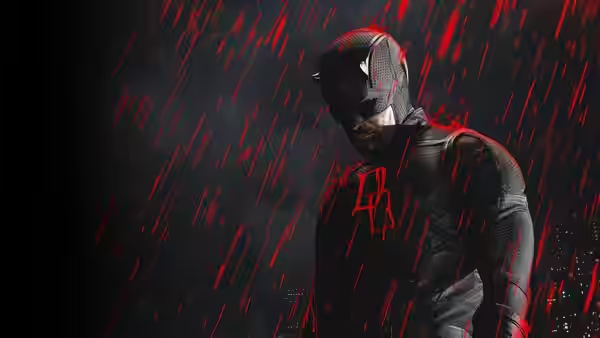
We winced at the bone-breaking fights, because the blows make injury feel unpleasant rather than conveniently temporary. The cinematography, credited to Pedro Gómez Millán, Hillary Spera and Jeffrey Waldron, is most persuasive in these action passages, giving the physical punishment enough force to make watching uncomfortable. That helps explain why Murdock’s reluctance matters. The brutality earns its place, although it also makes the less involving drama between fights harder to excuse.
Michael Shaw’s production design helps the crime drama feel credible, an important contribution when superhero action must occupy the same programme as legal proceedings. It supports the grounded approach without becoming the chief reason to look at the screen. The score by Taylor Stewart and Andrew Grush is effective at maintaining tension, though it makes less of an impression than the performances. D’Onofrio supplies enough menace that the music has a considerable advantage whenever he is involved.
The uneven pace is harder to forgive than the familiar plotting. The editing, credited to Melissa Lawson Cheung, Stephanie Filo, Cedric Nairn-Smith, Lyric Ramsey and Yoni Rusnak, struggles to give the crowded story a steady rhythm. The legal material offers a useful way to spend time with Murdock away from the fighting, but too much of it feels like routine procedural business. These passages are competent enough, yet they regularly continue beyond the point at which we have stopped caring about their immediate business.
The political material is more rewarding, giving the renewed antagonism a purpose beyond arranging another confrontation. It allows questions about power to complicate the pleasure of watching powerful people fight, and the series is more interesting when it follows those questions. The writing does not pursue them consistently enough, however, and some opportunities pass without much examination. By the standards of superhero crime television, there is welcome ambition here, but the crowded plotting prevents it from being developed as fully as it deserves.
Anyone coming primarily for Cox and D’Onofrio has good reason to stay. Those hoping for a crime series that keeps finding new things to say may find the familiar turns more wearing, particularly when the plot is at its busiest. Give it an evening if superhero crime is your sort of thing, but do not expect the legal work to be as gripping as the fights.