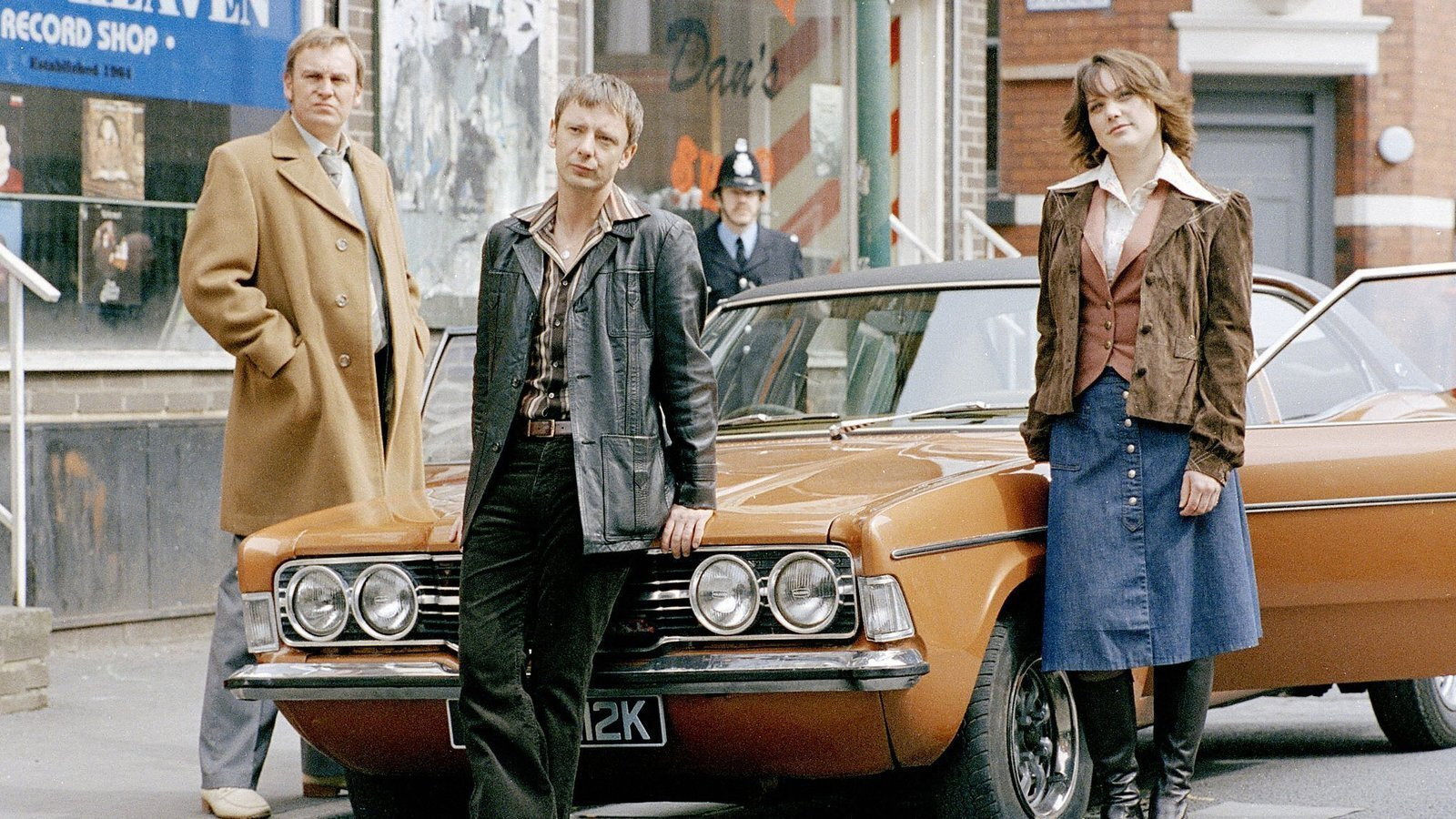
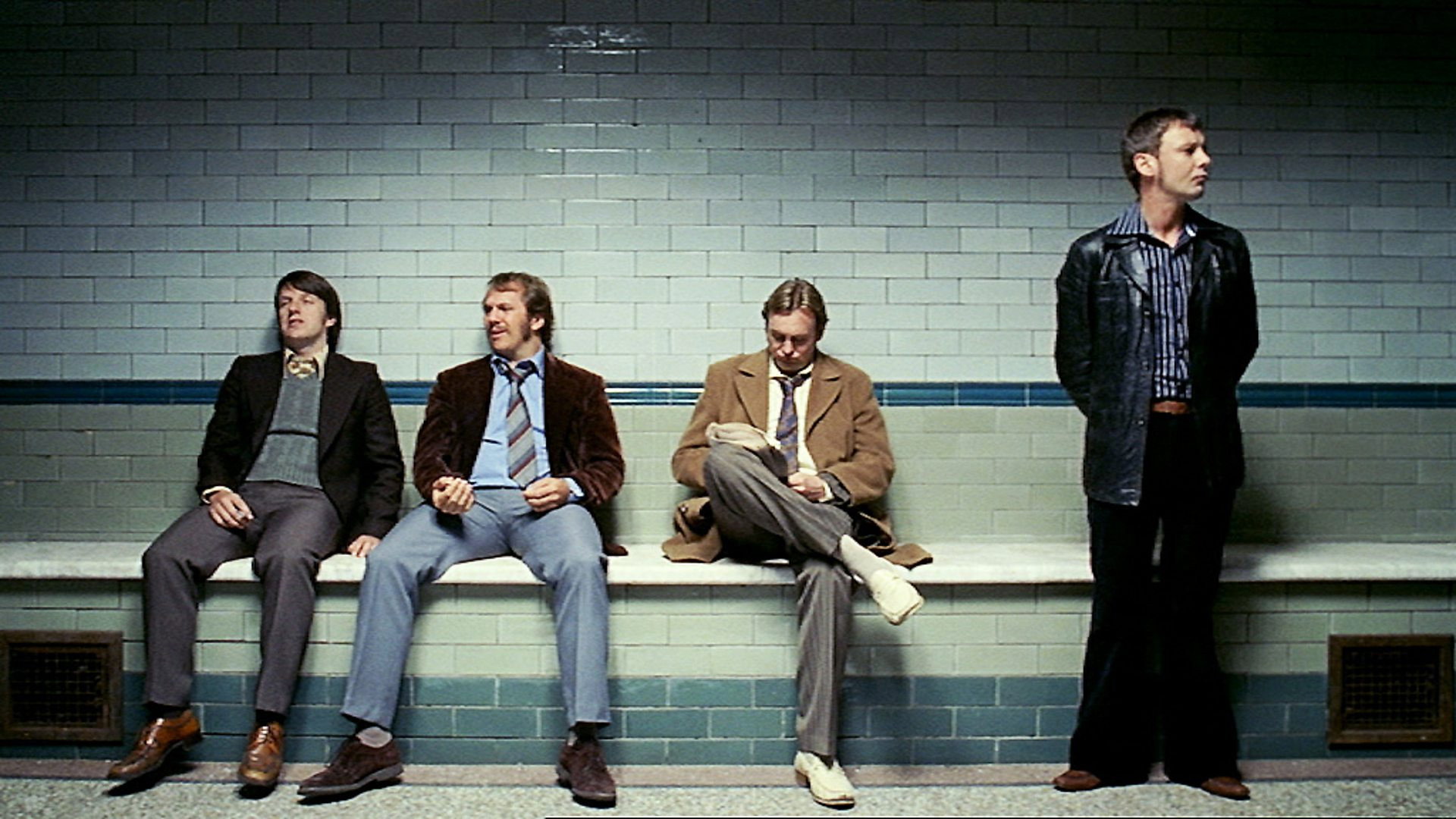
A gripping crime series whose time-travel mystery has consequences we can feel. John Simm and Philip Glenister make a compelling pair, even when the police stories and the arguments between them begin to repeat.
Life on Mars is a gripping crime series with a clever enough premise to survive some ordinary police stories. Detective Sam Tyler appears to have travelled back in time, although a coma or a crisis in his own mind might explain what is happening. Writers including Matthew Graham, Ashley Pharoah and Tony Jordan give him a problem that his professional training cannot resolve. The uncertainty makes even the familiar business of detection feel unsafe.
John Simm gives Sam enough strain and irritation to keep this from becoming a cheerful excursion into the past. We found his uncertainty unsettling, because a man trained to establish facts cannot establish the most basic fact about his own life. Simm makes that predicament feel tiring, and his seriousness gives the stranger material weight. He can also be a rather dutiful centre to the programme, especially when the writing leaves him reacting to stronger personalities. His performance is most persuasive when the need to understand feels urgent.
Philip Glenister’s Gene Hunt is the stronger personality, and the programme knows it. Glenister gives him such certainty that even an unreasonable position sounds, briefly, like the end of the discussion. The pleasure of watching him creates a problem: Hunt can become so entertaining that the objections to his attitudes struggle to hold our attention. We do not need the programme to interrupt every joke with a correction, but it sometimes lets his force of personality settle a disagreement that deserved more thought.
The cinematography team, including Balazs Bolygo and Tim Palmer, makes the period surroundings persuasive enough to account for some of that temptation. The images encourage us to enjoy looking backwards, even while Simm makes being there seem distressing. The editing team, which includes Sarah Brewerton and Barney Pilling, keeps the police investigations moving alongside the questions about Sam’s condition. The shifts between the two are usually brisk enough to sustain our interest, though the move from casework to personal mystery can sometimes feel awkward.
The weaker stretches belong to investigations and exchanges that return Sam and Hunt to familiar positions. Once we recognise how an argument is likely to go, another round brings little surprise. The writing team gets more mileage from the uncertain premise than from every individual case, and there are moments when we are plainly waiting for the larger mystery to resume. It is a real limitation for a crime drama, even one with this much else to keep us occupied.
The series nevertheless gives us more reason to worry about its detective than a procedural usually manages. Sam’s predicament makes his judgement, his temper and his ability to keep working matter when nothing around him feels dependable. The science-fiction element stays engaging because it affects his daily experience without requiring a separate lesson in how time travel works. Simm’s anxious presence makes the combination convincing, including those stretches when the case itself looks routine.
Across two series of eight episodes apiece, the central uncertainty has room to sustain more than an initial burst of curiosity. The ordinary police stories are a caveat, particularly for anyone chiefly interested in the procedural side, but they never cancelled our concern for Sam. We recommend it for the uneasy company of Simm and Glenister, whose performances make even the repeated disagreements worth hearing. Leave room for a second episode before starting the first.