John Carney’s anthology of New York love stories is warm, polished and well acted, and about half of it is worth your evening. Anne Hathaway’s episode is the reason to watch; the tidy endings are the reason to keep expectations modest.
Modern Love is an anthology of eight short love stories set in New York, made for television by John Carney, who wrote and directed Once and Sing Street and who created this series and directs some of it himself. Each episode has a familiar face and a small, kind story about two people finding each other. The plan is modest and clear. Some of it is lovely. A good deal of it is sentimental, and on purpose.
Carney gathered a long list of collaborators. Sharon Horgan, Emmy Rossum, Andrew Rannells, Tom Hall, Marta Cunningham, Celine Held, Logan George, John Crowley and Jesse Peretz all direct, several of them writing as well, and the result is uneven in the way anthologies always are. It is uneven within a narrow band, though. Yaron Orbach’s photography is clean and polished from the first episode to the last, and everything is lit so that nobody is ever cold and nothing is ever dirty. This is the New York people imagine before they arrive.
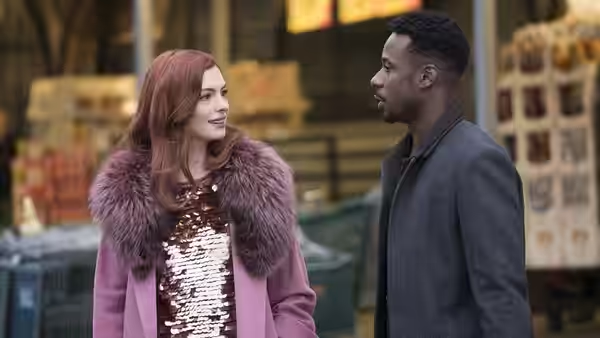
Anne Hathaway’s episode is the one everybody talks about, and it deserves it. She plays Lexi Donohue, a woman living with bipolar disorder, and she plays both halves of the illness, the height and what comes after it. We did not expect to be got at by a series this glossy, and we were. It was the second half of her performance that did it: Hathaway going still and quiet, and Andrew Marcus, the editor, letting the stillness run longer than television usually allows. It is the only episode here that is willing to stay in an uncomfortable room until the consensus has finished with us.
The trouble is what the episodes have in common. These are people whose money is never mentioned and never a problem, in flats that would cost the earth, and after three or four in a row the sameness begins to grate. Every story is resolved warmly, whether it has earned the warmth or not, and the ones with the nerve to be awkward for twenty minutes tend to lose it in the last five. We were irritated by that more than once, because the actors had plainly been prepared to go further than the scripts allowed them.
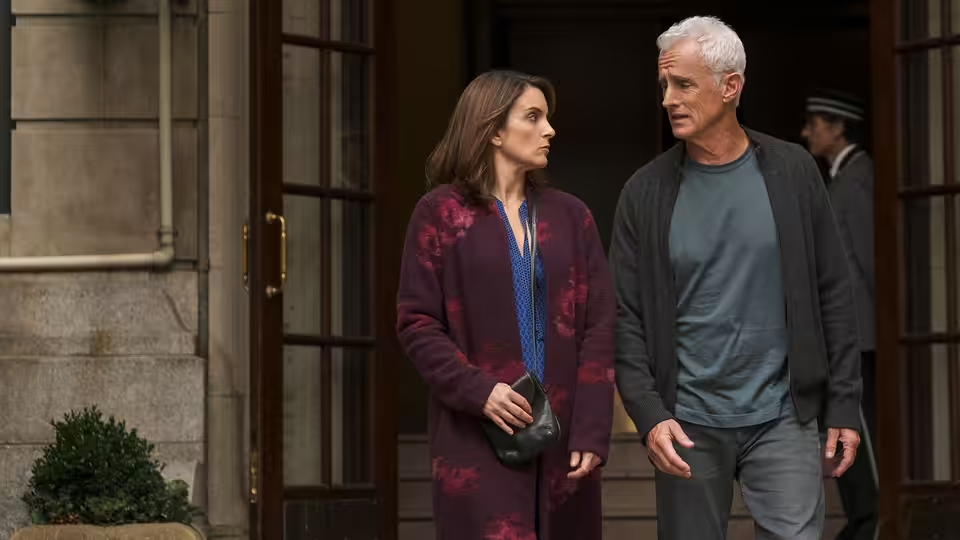
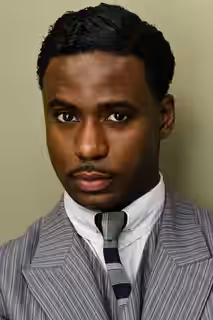
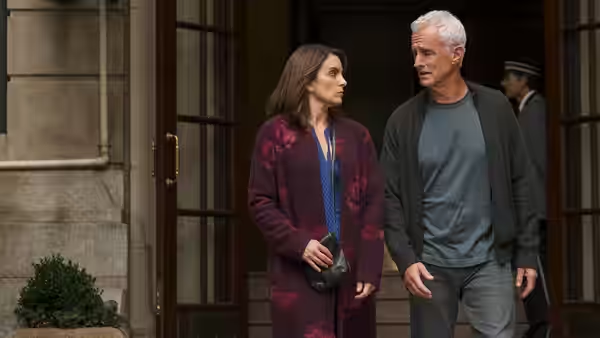
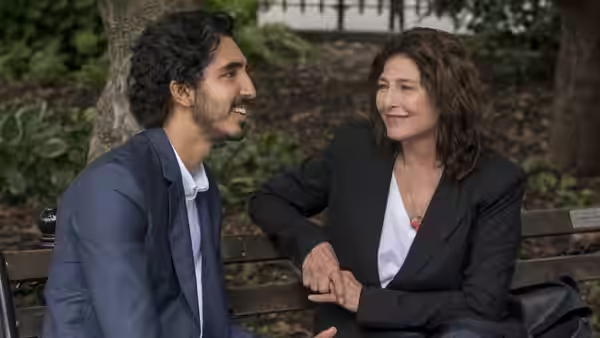
The cast is the reason to stay. Tina Fey, as Sarah, plays exasperation better than almost anyone working. Julia Garner, as Maddy, has a watchfulness the rest of the series is short of. Catherine Keener, as Julie, and Dev Patel, as Joshua, can each make a conversation feel like a story. Gary Carr, John Gallagher Jr., Sofia Boutella, Olivia Cooke, Brandon Victor Dixon, Jane Alexander and James Saito all do fine, quiet work in less time than they deserve. Nobody here is coasting, which makes the softness of the writing more of a pity.
Once worked because two people sang to each other and nobody told us it was moving. Here we are told, often, and the telling is what stops a good series being a better one. The reviews so far split hard, most of them warm and a loud minority calling it hollow, and we can see both cases. It is a comfortable thing to have on in the evening, and comfort is scarce. But comfortable is also what it settles for.
A second season of eight episodes followed on 12 August 2021, which we have not counted here. The first is best taken one or two at a time, with somebody you do not mind being sentimental in front of. Start with Hathaway. If she leaves you unmoved, the rest will not change your mind.