Natasha Lyonne makes Poker Face excellent company: a funny, warm crime series that enjoys the work of catching a killer. A few cases dawdle, particularly when they keep their most interesting person off screen.
Poker Face is a warmly recommended crime series, with one recurring irritation: some cases take too long to give Natasha Lyonne enough to do. Its self-contained mysteries are built around Charlie Cale, a waitress and drifter who can spot a lie, and the pleasure is in watching her work out what that lie means. Rian Johnson, among the programme’s writers and directors, understands the appeal of a familiar procedure carried out by someone we like. The next murder is a perfectly serviceable reason to spend more time with her.
The series follows the Columbo approach, letting us know about the crime before its investigator catches up. We listen to a suspect’s answers with information Charlie still has to acquire, which makes the talk itself part of the suspense. Knowing that a statement is false does not explain everything, so the lie-detecting gift still leaves room for questions and deduction. The format also lets an episode finish its business, a modest courtesy that television can be reluctant to extend.
Lyonne supplies the reason to care about all this machinery. Her rasping voice and unhurried chatter give Charlie a social ease that sits agreeably with her dishevelled appearance; she seems like someone who might talk for a while before mentioning the important thing. We laughed at the contrast between her untidy manner and the certainty with which she recognises a lie. Lyonne makes that ability funny without making Charlie smug, and her canniness never wipes out the warmth that keeps these encounters from becoming a procession of people being shown up.
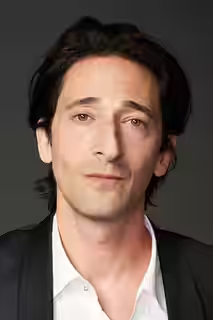
The supporting cast includes Adrien Brody, Benjamin Bratt and Chloë Sevigny, giving the series plenty of company for Lyonne. Changing the people around Charlie helps the repeated structure stay lively, though the guest performances cannot always compensate for her absence. Steve Yedlin and Jaron Presant are among the cinematographers, and the images have a tidiness that makes Charlie’s rumpled appearance funnier. Judy Rhee’s production design helps distinguish one case from the next, so the familiar structure need not mean looking at the same thing all evening.
The problem is the time spent getting back to Charlie. Editors including Melissa Kent and Bob Ducsay have the delicate job of making a crime interesting before the person we came to see gets involved, and the rhythm is not equally sure in every case. When an opening goes on, we start waiting for Lyonne rather than attending to what is there. The music, with Nathan Johnson among those credited, is an agreeable accompaniment but seldom the source of the programme’s personality. Her voice supplies more of that than the score.
We would take these as individual evening cases rather than hurry through them in a long sitting. Repetition is part of the pleasure, but the less nimble episodes are more noticeable when placed directly beside the brisk ones. Anyone needing a mystery to conceal its culprit will have to adjust to watching an investigator catch up with what we already know. Lyonne makes that adjustment easy. Give Charlie an evening, then save the next case for another.