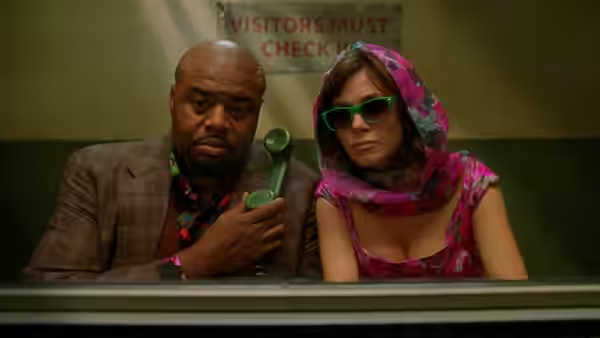
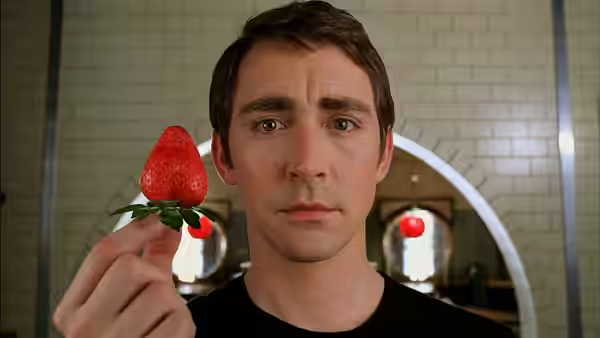
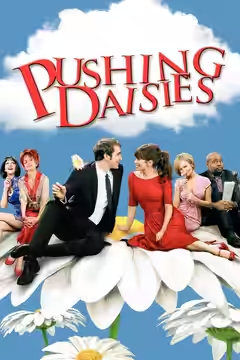
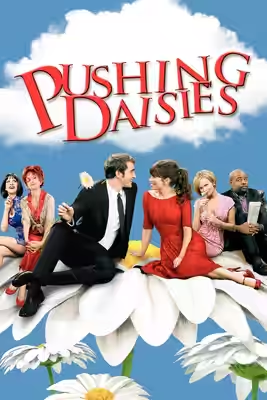
Ned (Lee Pace) stands with cast members in a vibrant diner
Series review

Pushing Daisies

2007 · Created by Bryan Fuller · Series · 42m

In a sentenceA piemaker can raise the dead, but holding hands is asking too much

Ned (Lee Pace) is a piemaker who can bring the dead back to life, but he cannot touch anyone he has revived again. The gift complicates a romance with Charlotte ‘Chuck’ Charles (Anna Friel), making physical contact dangerous. Bryan Fuller’s series combines that relationship with crime stories and a fantasy in which life can resume under strict conditions. Chi McBride plays Emerson Cod, Kristin Chenoweth plays Olive Snook, and Swoosie Kurtz and Ellen Greene play Lily and Vivian Charles. Jim Dale narrates a story in which death does not necessarily end someone’s involvement.

Fi1m review

Pushing Daisies makes its impossible romance matter, helped by Lee Pace, Anna Friel and a cast that takes the silliness seriously. We recommend it, with fair warning that the sweetness can become exhausting.

Bryan Fuller’s Pushing Daisies asks us to accept a piemaker who can bring the dead back to life, then worries about whether he can have a relationship. It is funny, touching television, and we recommend it with a warning about the quantity of sweetness. Ned’s gift comes with a prohibition: he cannot touch anyone he has revived again. That is enough to make an ordinary romantic hesitation feel dangerous, and Fuller wisely keeps the longing close to the fantasy.

Lee Pace and Anna Friel make the restriction matter as Ned and Chuck. Pace gives the romance a hesitancy that could become tiresome, but Friel brings enough warmth to stop the pair seeming merely trapped by a clever rule. Their enforced physical distance moved us more than we expected. Reaching for someone is such a small comfort to be denied, and Pace and Friel make the prohibition hurt without treating every moment as a tragedy.

The colour takes more getting used to. Cinematographers Jamie Anderson, David Klein and Michael Weaver keep the screen insistently cheerful, even with death so close at hand. Michael Wylie’s production design gives the fantasy a similarly emphatic artificiality; this is a place arranged to make a piemaker’s impossible gift seem at home. That consistency helps us accept the premise, although we would sometimes welcome a background that demanded less attention.

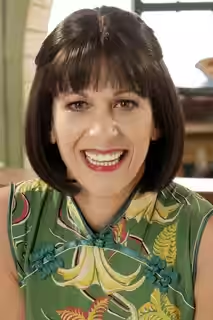
Chi McBride, as Emerson Cod, is especially welcome because his dry delivery does not ask us to find everything adorable. Kristin Chenoweth’s Olive Snook is funny because there is no embarrassment in the performance, however silly the material becomes. Jim Dale’s narration suits the storybook approach, making the strangeness sound like something we ought to have known about already. These are performances confident enough to let us enjoy the absurdity without repeatedly pointing it out.

Editors Andrew Charlton, Stuart Bass, Lisa Lassek and Scott J. Wallace keep the romance and crime strands moving briskly within 42-minute episodes. That pace helps the sillier material, although it sometimes hurries us past a feeling worth sitting with. Jim Dooley’s music supports the buoyant tone, but can add sweetness where the performances already supply enough. The programme would lose little by leaving a few moments less insistently decorated.

A fantasy series has to find fresh reasons for us to care once we have learned its rules. Here the cast does much of that work, giving us reasons to enjoy the company even when the style becomes predictable. The crime element supplies activity, but we would not recommend this chiefly for the detection. Ned and Chuck’s difficulty sustaining a relationship is more involving, because the wish for ordinary physical affection needs so little explanation.

The programme is most persuasive when it lets its actors make a fanciful problem seem ordinary. That happens often enough for us to forgive its fussier habits. Watch an episode at a time; this much sweetness benefits from a pause.


Critical consensus AI synthesised

72
Positive
5
Mixed
0
Negative
1

Most critics warm to Pushing Daisies, and the praise falls in the same places: the look and the premise. The reviews describe a bright, storybook colour scheme, a piemaker who can wake the dead but cannot touch the woman he loves, and a central romance that works because it can never be resolved. Several compare the style to Tim Burton. The cast is singled out as the reason the sweetness goes down easily, and the pilot in particular is called arresting.

The reservations cluster around whimsy, and whether there is too much of it. Even admiring critics wonder if later episodes can match the pilot, or if the tone will wear thin over a run. Empire finds it occasionally too stylised. The one dissent comes from The Guardian, where Sam Wollaston finds the show twee and irritating, the puns self-conscious and the whole thing short on substance. Without that review the spread would be narrow; with it, it is wide.

The AV Club
4 October 2007 · A- · Genevieve Koski
90

The pilot is a really good, arresting and exciting start to the series with strong visual style and originality. The critic expresses some caution about maintaining momentum without drowning in whimsy but is on board overall.

Read the full review →
Variety
28 September 2007 · Brian Lowry
85*

Standing head and shoulders above this fall's other seedlings, Pushing Daisies is whimsical, romantic, funny and visually distinctive, with a delicate mix of ingredients that makes for a beguiling pilot. Credit ABC with taking the season’s boldest leap in hoping that love conquers all.

Read the full review →
The Hollywood Reporter
27 September 2007
80*

The series is a masterful mixture of life, romance, optimism and youthful exuberance, all played out under the threat of instant death, with an arresting color palette and uncanny charm that makes it impossible to watch the premiere without wondering whether succeeding episodes can come even close to the pilot.

Read the full review →
Empire
25 June 2008 · William Thomas
75*

This dark-tinged, sugar-sweet fantasy series feels like Edward Scissorhands-era Burton meets Amélie, with a clever premise involving a piemaker who can bring the dead to life but can never touch them again. It is rarely less than delightful thanks to the excellent cast, though occasionally a little too stylised.

Read the full review →
The Times
14 April 2008
70*

The critic praises the show's sunny, whimsical take on death and its charming central relationship with irresolvable sexual tension. They highlight the Tim Burton-esque visual style and escapist appeal as standout elements.

Read the full review →
The Guardian
14 April 2008 · Sam Wollaston
30*

The critic finds the series stylish and witty in its visual and narrative approach but ultimately irritating and twee, with its high-concept premise and rapid-fire puns feeling overly self-conscious and lacking substance.

Read the full review →

Straight answers AI written, from our review

Is Pushing Daisies worth watching?
Pushing Daisies is worth watching, and we scored it 82. Lee Pace and Anna Friel make a piemaker's romance with a woman he cannot touch matter more than the clever rule suggests, and Chi McBride's dry Emerson Cod stops it all turning cloying. The sweetness can become exhausting, so it suits viewers who take an episode at a time.
How long is Pushing Daisies, and what is it rated?
Pushing Daisies has episodes of about 42m. It is a drama and sci-fi & fantasy series.
Where can I watch Pushing Daisies in Estonia?
Pushing Daisies is not on any streaming or rental service in Estonia at the moment. It is available in 6 other countries; change your country at the top of the page to see where. Availability is checked daily.
How violent or frightening is Pushing Daisies, and is it suitable for children?
Pushing Daisies carries a UK 12 certificate and a US TV-PG rating, so it is a fantasy with death constantly at hand but nothing we would call frightening. Bodies are revived rather than dwelt on, and the crime stories are played for storybook comedy in Jim Dale's narration. It suits older children and teenagers comfortably; very young viewers may find the murder premise odd rather than upsetting.
How does Pushing Daisies compare to Amélie?
Pushing Daisies shares with Amélie an elaborate colour scheme and a romance held back by hesitation, and both risk drowning the viewer in sweetness. The series has the advantage of a dry ensemble, particularly Chi McBride, to cut the sugar, while Jeunet's film is the more complete single object. Choose the film for one tender evening; choose the series if you want the company for longer.
What should I watch after Pushing Daisies?
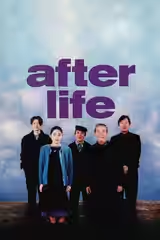
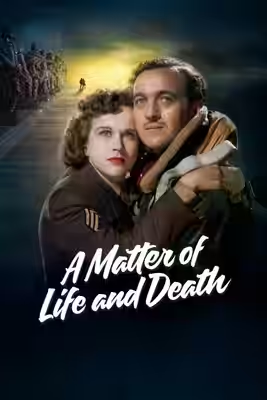
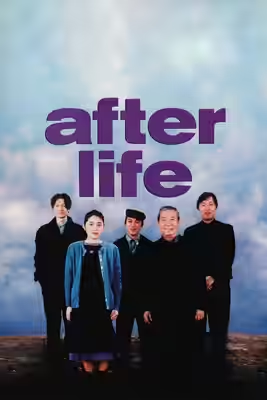
After Pushing Daisies, try Amélie (2001, Fi1m 82): Elaborate colour and romantic hesitation, with a similar risk of sweetness overload. Then A Matter of Life and Death (1946, Fi1m 92): An impossible romance that gives its rules about death real emotional consequences; and After Life (1998, Fi1m 85): A quieter fantasy about death, attentive to the small things people cherish.

Cast

If you liked this, try…

  1. Wonderfalls (2004) · not reviewed yetAnother prickly fantasy whose strange rules work because the people remain recognisable.

  2. Amélie (2001, Fi1m 82)Elaborate colour and romantic hesitation, with a similar risk of sweetness overload.

  3. A Matter of Life and Death (1946, Fi1m 92)An impossible romance that gives its rules about death real emotional consequences.

  4. After Life (1998, Fi1m 85)A quieter fantasy about death, attentive to the small things people cherish.

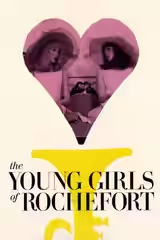
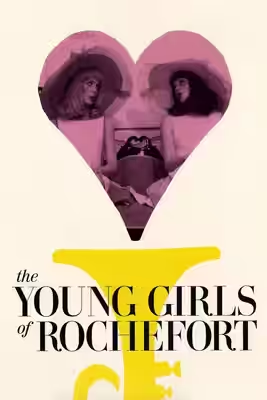
  5. The Young Girls of Rochefort (1967, Fi1m 84)For the colour, romantic near misses and performers who make artifice feel natural.

Free account

Know what to watch tonight

Two lists that know where things are streaming, collections you can share, your own score beside ours, and Discover that remembers what you have seen.

  • Want to see, sorted by what is streaming now
  • Seen, with your score out of ten
  • No adverts, ever