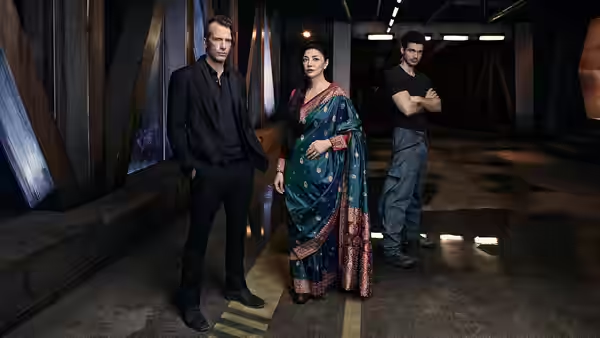
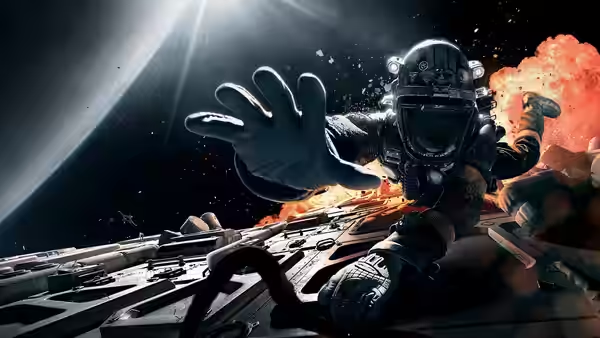
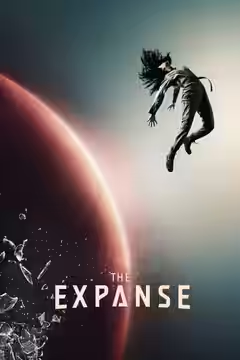
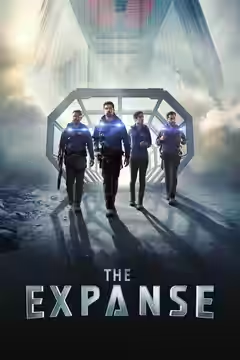
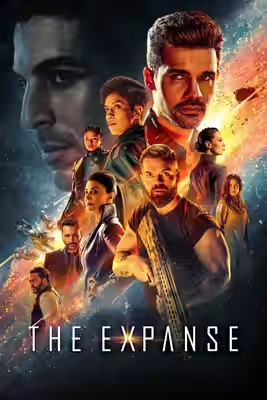
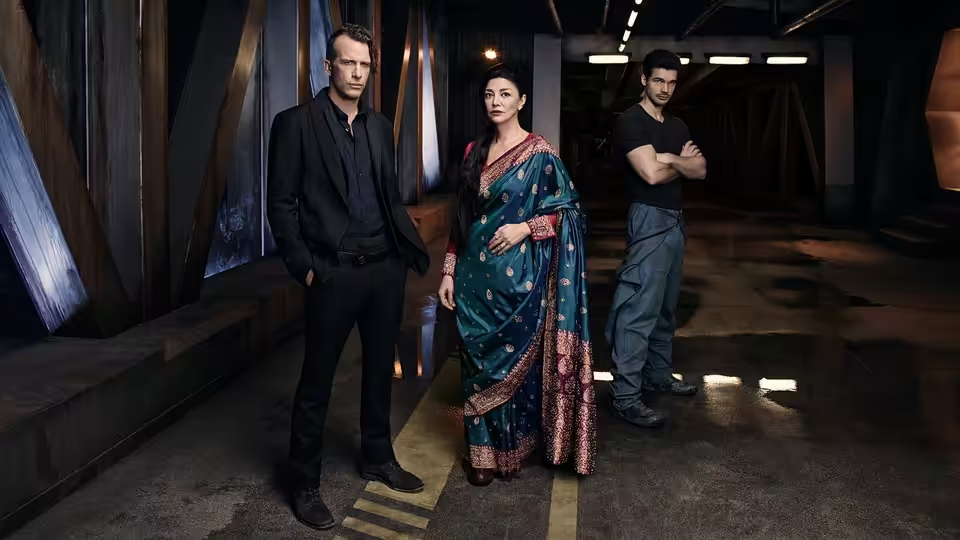
Chrisjen Avasarala stands between two men in a dimly lit corridor
Series review

The Expanse

2015 · Created by Mark Fergus, Hawk Ostby · Series

In a sentenceSpace politics would be easier to follow if someone handed round a seating plan

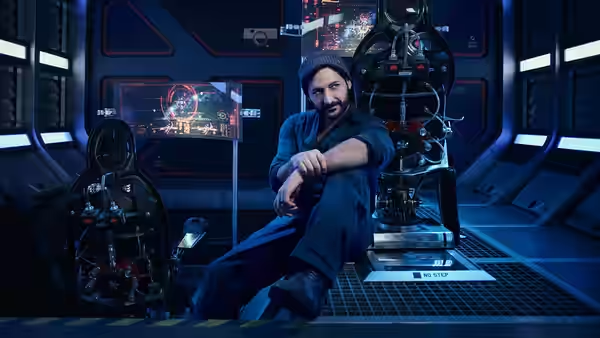
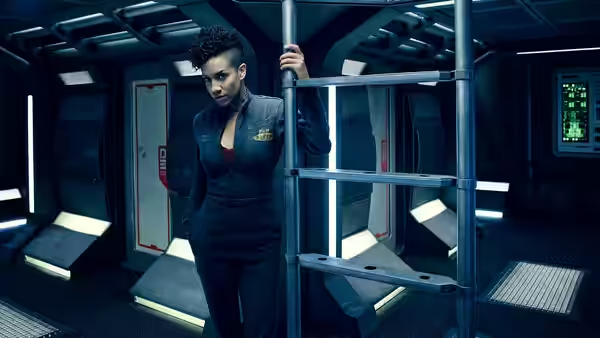
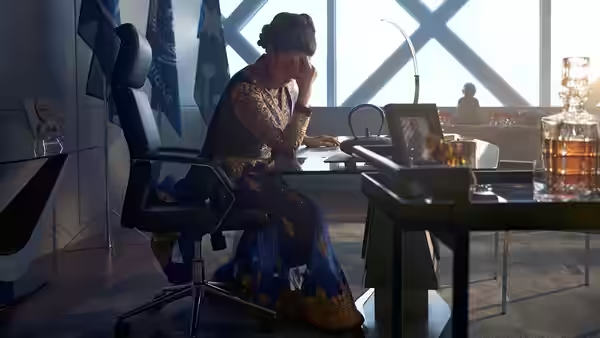
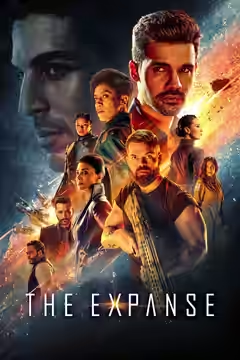
Jim Holden (Steven Strait), Naomi Nagata (Dominique Tipper) and Amos Burton (Wes Chatham) are among the central figures in The Expanse, a space drama combining mystery and political intrigue. Chrisjen Avasarala (Shohreh Aghdashloo) and Alex Kamal (Cas Anvar) feature in a wider story that moves between separate strands. The opening introduces its characters alongside the workings of their society, with political questions and a mystery developing in parallel. The connections between these stories take shape gradually as the series establishes the people and the setting.

Plays from YouTube when you press play; nothing loads from them until then.

Fi1m review

The Expanse builds a convincing setting, then makes meeting its inhabitants needlessly difficult. The detail and cast reward an interest in political science fiction, but the tangled opening and heavy explanations are substantial obstacles.

The Expanse, created by Mark Fergus and Hawk Ostby, is worth trying if political science fiction is already a pleasure. Its opening asks for more patience than it earns. It brings space drama, mystery and political intrigue together, with a seriousness that suits the material. The difficulty is getting these stories to hold our attention at the same time. There is enough promise to justify staying, though anyone hoping for a clear immediate reason to care will have some waiting to do.

The early episodes keep introducing information before the last explanation has become useful. We were frustrated by the switches between political intrigue and mystery, because each demanded fresh concentration before the people involved had begun to matter. The exposition makes this worse: too many conversations seem concerned with making sure we understand the setting. That leaves the characters with less room to be interesting, and the opening can feel busy even while it is moving slowly.

The casting gives the series a better chance than that introduction suggests. Steven Strait’s Jim Holden is a sober centre, though his seriousness becomes wearying when the writing supplies little else to hold on to. Dominique Tipper gives Naomi Nagata a welcome directness, while Wes Chatham gives Amos Burton an edge that keeps him worth watching. Shohreh Aghdashloo’s Chrisjen Avasarala has a firmness that the early storytelling badly needs. These performances encourage us to keep listening when the dialogue has become work.

The visual world is more immediately convincing, with the attention to practical detail making the setting feel habitable. We can believe people live here, and that belief helps sustain an interest when the plot is struggling to do so. Clinton Shorter’s music is effective at sustaining unease, although the dialogue sometimes talks it away. The images suggest a coherent place even when the separate storylines are making it difficult to get our bearings.

Stephen Roque’s editing has the difficult job of keeping those stories moving without making every interruption feel like a fresh start. The opening does not always manage it: just as one strand begins to acquire some urgency, our attention is required elsewhere. As the opening stories gather pace, the mixture of mystery and political intrigue becomes more involving, and the care taken over the setting begins to pay off. That improvement makes the hesitation beforehand more irritating, because we can see how much more engaging the series can be.

In a space drama, we want to know what a person needs before being asked to learn how the whole society works. The Expanse is too willing to postpone that part, trusting its larger mysteries to keep us interested while it explains the rules. For some, working through those explanations will be part of the enjoyment, and the improving momentum offers a reason to persist. Try it if political science fiction is already a pleasure, and allow for a start that makes getting to know everyone unnecessarily difficult.

Critical consensus AI synthesised

58
Positive
2
Mixed
3
Negative
1

The reviews lean towards a mixed assessment of The Expanse, with praise concentrated on its world-building and reservations about how it introduces its story. Critics find promise in the combination of space drama, noir and political intrigue, and several admire how convincingly the setting is realised. The early episodes are the main obstacle: even favourable assessments acknowledge that the pacing takes patience before the separate storylines gain momentum.

The spread is wide, particularly on whether the characters make that patience worthwhile. Den of Geek finds them believable and praises the realistic detail, making it the clearest enthusiast. The Guardian is the strongest dissenter, finding too much exposition and too little reason to care about the characters or understand the stakes. Elsewhere, complaints about familiar tropes, muddled plotting and density recur. The central disagreement is how much the promising setting compensates for a difficult opening stretch.

The AV Club
14 December 2015 · B · Alex McLevy
77

The review finds the series a partial success as a space opera mixed with noir and political intrigue, praising its world-building and eventual momentum but criticizing disjointed storylines and pacing issues in early episodes.

Read the full review →
The Hollywood Reporter
1 December 2015 · Daniel Fienberg
55*

The series has expansive aspirations but struggles with meandering storylines and familiar tropes in its first episodes, though it has potential to grow and the world is well-realized visually.

Read the full review →
Variety
23 November 2015 · Maureen Ryan
45*

The critic finds promise in the series' political themes and world-building but criticizes the muddled first episodes and generic characters, concluding it is a middling space saga that needs improvement to succeed.

Read the full review →
The Guardian
14 December 2015
30*

The series is big, ambitious and good-looking but incredibly confusing, with too much exposition and not enough investment in characters or clear stakes. It improves after the first few episodes but falls far short of Battlestar Galactica.

Read the full review →
Den of Geek
23 November 2015 · ★★★★½ · Michael Ahr
90

The critic praises the realistic attention to detail and engaging premise in this space drama, highlighting its believable world-building and characters. They note it may be slow-paced for some but rewards intelligent viewers.

Read the full review →
Collider
8 December 2015 · ★★★ · Allison Keene
60

The series has enough interesting elements to make it worthwhile despite some kinks in its early episodes. The critic notes its dense, insider-y feel can be hard to follow without prior knowledge of the source novels.

Read the full review →

Straight answers AI written, from our review

Is The Expanse worth watching?
The Expanse is worth trying for anyone who already enjoys political science fiction, and we scored it 64. Its setting is convincing and its cast is strong, but the opening switches between political intrigue and mystery before the people in them have begun to matter. Persist through the heavy explanations and the storytelling improves; anyone wanting an immediate reason to care will have a wait.
Where can I watch The Expanse in Czechia?
The Expanse is streaming on Amazon Prime Video in Czechia. Availability is checked daily; the links above go straight to each service.
How violent or frightening is The Expanse, and is it suitable for children?
The Expanse carries a UK 15 certificate and a US TV-14 rating, so it is not made for children and is best kept to older teenagers and adults. It is a serious space drama built on politics, mystery and unease rather than spectacle, and its chief demand on younger viewers is concentration. Our review notes nothing to trouble the squeamish in particular.
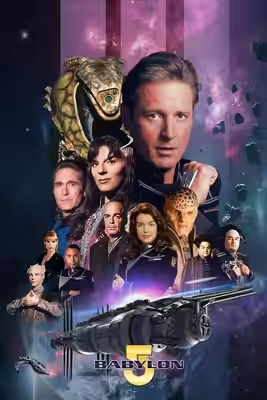
How does The Expanse compare to Babylon 5?
The Expanse and Babylon 5 are both political science fiction about competing loyalties, and both make their opening episodes harder work than they need to be. The difference is what the patience buys: Babylon 5 lets personal grudges grow into absorbing long-form drama, while The Expanse spends its early stretch explaining its society before its people become interesting. We find the earlier series the more rewarding of the two.
Is The Expanse based on a true story or a book?
The Expanse is based on novels by Daniel Abraham and Ty Franck, not on a true story. The series takes its world of separate political strands and a developing mystery from that source, though our review does not weigh how closely it follows the books. You do not need to have read them, but readers may find the early stretch of exposition easier to follow than newcomers do.
What should I watch after The Expanse?
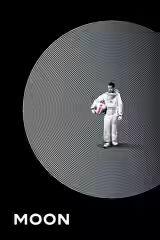
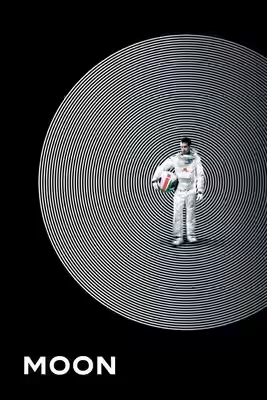
After The Expanse, try Babylon 5 (1994, Fi1m 74): Station politics and patient plotting reward an appetite for competing loyalties. Then Moon (2009, Fi1m 83): A lonely lunar workplace keeps its science fiction close to human needs.

Cast

Awards

Hugo Awards, 2017

Won
Best Dramatic Presentation, Short Form

If you liked this, try…

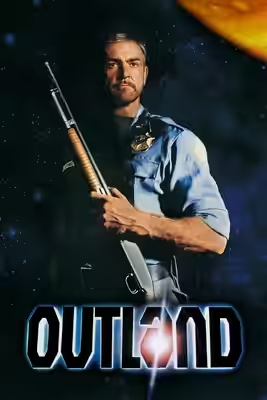
  1. Outland (1981) · not reviewed yetA mining colony gives the space thriller a grubby, workaday setting.

  2. Babylon 5 (1994, Fi1m 74)Station politics and patient plotting reward an appetite for competing loyalties.

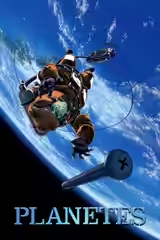
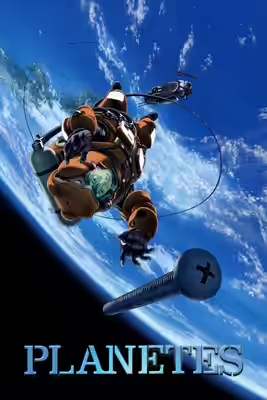
  3. Planetes (2003) · not reviewed yetOrbital debris collectors make space travel feel like an ordinary, precarious job.

  4. Moon (2009, Fi1m 83)A lonely lunar workplace keeps its science fiction close to human needs.

  5. Aniara (2018) · not reviewed yetA Swedish space voyage becomes a bleak study of people living under pressure.

Free account

Know what to watch tonight

Two lists that know where things are streaming, collections you can share, your own score beside ours, and Discover that remembers what you have seen.

  • Want to see, sorted by what is streaming now
  • Seen, with your score out of ten
  • No adverts, ever