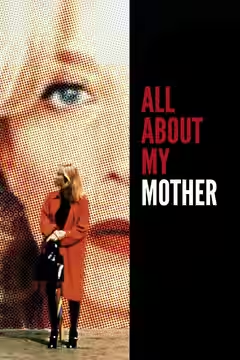
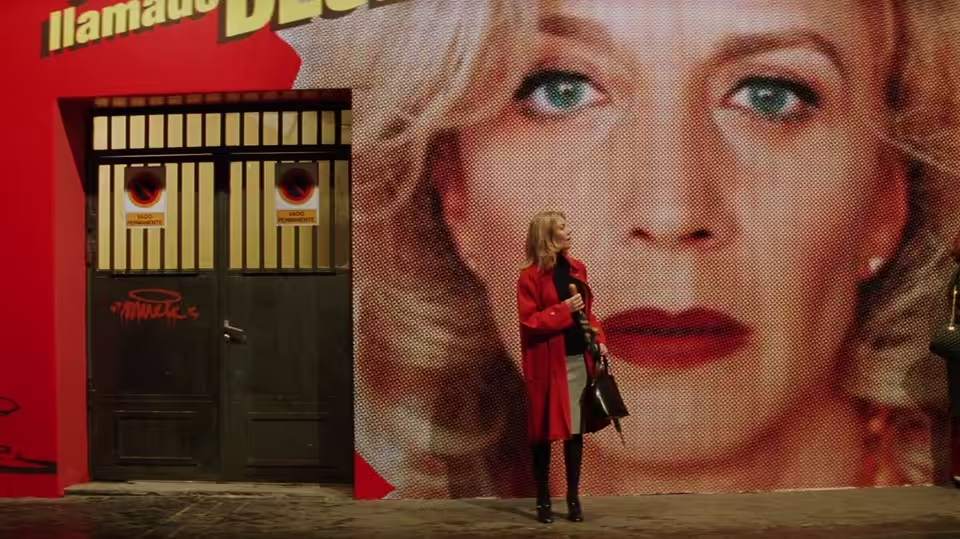
Manuela stands outside a theater beneath an enormous portrait of Huma Rojo
Film review

All About My Mother

1999 · Directed by Pedro Almodóvar · 1h 41m · Statens medieråd 11

In a sentenceGrief has to wait its turn when these women start talking

Manuela (Cecilia Roth) tries to carry on through grief while the women around her face pressing troubles of their own. Huma Rojo (Marisa Paredes), Nina (Candela Peña), Agrado (Antonia San Juan) and Rosa (Penélope Cruz) become part of a life shaped by illness and complicated family ties. The women tease one another, offer help and form bonds outside the conventional family. Manuela has her own sorrow to manage, but making room for other people means dealing with problems that cannot wait for hers to pass.

Plays from YouTube when you press play; nothing loads from them until then.

Fi1m review

Pedro Almodóvar’s melodrama is funny, compassionate and carried by Cecilia Roth and Antonia San Juan. We recommend it warmly, with a reservation about images that sometimes look too polished for these troubled lives.

Pedro Almodóvar’s All About My Mother is funny, compassionate and moving enough to justify its considerable appetite for melodrama. We recommend it warmly, with a small reservation about the gloss on its pictures. Almodóvar lets women be entertaining company even when their lives are painful. His screenplay takes grief seriously without requiring everyone within reach to speak in a whisper.

Cecilia Roth’s Manuela gives the film someone we can follow through its changes of mood. Roth does not overstate the character’s suffering, and she makes listening seem as important as speaking. There is a danger, in a story about grief, of turning the bereaved person into somebody too solemn to have an ordinary conversation. Roth keeps Manuela interested in other people, even when attending to them seems to cost her. That is a difficult performance to make look this straightforward.

We laughed at the teasing among the women, and felt relieved that the film gave them permission to be funny. Antonia San Juan’s Agrado is especially good company: her comic assurance stops the sadness from becoming oppressive. The humour also lets affection develop without everyone having to announce it, which matters in a film already so willing to express its feelings. Penélope Cruz gives Rosa a touching openness, though Almodóvar gives her less room to be awkward or disagreeable than we would have liked.

Affonso Beato’s cinematography gives the colours an intensity that suits the film’s emotional directness. Bina Daigeler and José María de Cossío’s costumes help establish how each woman chooses to present herself, giving the performers something useful to work with. The care is welcome, although the visual polish occasionally becomes distracting. At those points, the image looks a little too carefully arranged beside Roth’s unshowy performance, and the suffering becomes easier to look at than it should be.

José Salcedo’s editing keeps the various stories legible, an important job in a film that asks us to care about several people’s troubles. At 101 minutes, it has time for company without making a ceremony of every new connection. Alberto Iglesias’s music supports the emotional openness of the acting without making the humour feel out of place. The changes in mood usually feel comfortable, even when the screenplay asks a good deal of our willingness to accept melodrama.

Melodrama often makes suffering a punishment for somebody’s behaviour. Almodóvar has little interest in that: illness and grief do not arrive here as proof that someone deserves them. The allusions to All About Eve and A Streetcar Named Desire make his affection for theatrical stories about women explicit. There is no need to recognise every reference to follow his interest in people helping one another. The unconventional families are convincing because their members need not become agreeable before they can belong.

Anyone suspicious of melodrama should allow for some impatience with the weight placed on Rosa’s innocence. Cruz makes the character affecting, but a little more difficulty in the writing would have helped her. Elsewhere, the teasing makes the tenderness easier to believe, because affection need not sound reverent. See it with someone who understands that laughing during a sad film need not mean anything has gone wrong.

Critical consensus AI synthesised

79
Positive
8
Mixed
1
Negative
1

Most critics respond warmly to All About My Mother, praising its compassion towards grief and its ability to keep absurdist humour alive within an emotionally forceful melodrama. The performances draw consistent approval, with Roth and Cruz singled out for praise, while the film’s unconventional bonds of kinship also win support. Several reviews admire how Almodóvar brings complicated lives and themes together without treating his characters callously or making their suffering sentimental.

The spread is wide, though the reservations are less widely shared than the praise. Variety admires the ensemble, particularly Antonia San Juan’s comic contribution, but finds that the glossy visuals sometimes distract from emotional realism. Eye for Film suggests that the unusual characters can be difficult to relate to. The New Yorker offers the clearest dissent: it enjoys the women’s teasing and solidarity but finds the seriousness unconvincing, arguing that the sadness weakens the film’s theatrical energy.

Radio Times
★★★★★ · David Parkinson
100

Parkinson calls the film an inspired, mature and moving comedy-drama. He praises its allusions to All About Eve and A Streetcar Named Desire.

Read the full review →
RogerEbert.com
31 December 1999 · ★★★★/4 · Roger Ebert
100

Ebert gives the film a strongly positive verdict. He praises its compassionate treatment of grief and its vivid performances.

Read the full review →
Slant Magazine
30 January 2020 · ★★★★½ · Jake Cole
90

Cole praises the film as tender, empathetic, and thematically complex. He singles out the Blu-ray’s vivid color rendering and strong image clarity.

Read the full review →
The Guardian
17 December 2006 · Philip French
90*

French calls the film a masterpiece and praises Almodóvar’s deft interweaving of its plots and themes. He also singles out its handling of grief, AIDS, Alzheimer’s and sex-change operations without callousness or sentimentality.

Read the full review →
Empire
1 January 2000 · Kim Newman
88*

Newman gives the film a warmly enthusiastic verdict, praising its emotional force without losing its absurdist humour. He singles out the performances, especially those of Roth and Cruz.

Read the full review →
Variety
16 April 1999 · festival review · Jonathan Holland
78*

Holland finds the film emotionally satisfying and brilliantly performed, while noting that its melodrama is balanced by wit and empathy. He praises the ensemble, especially Antonia San Juan’s comic relief, but says the glossy visuals sometimes distract from emotional realism.

Read the full review →

Straight answers AI written, from our review

Is All About My Mother worth watching?
All About My Mother is warmly worth watching for its funny, compassionate treatment of grief, and we score it 88 out of 100. Cecilia Roth and Antonia San Juan keep the sadness from becoming oppressive, though viewers who dislike melodrama may find the emotions too emphatic and the images too polished.
How long is All About My Mother, and what is it rated?
All About My Mother runs 1h 41m and is rated 11 by the Statens medieråd in Sweden. It is a comedy and drama film.
Where can I watch All About My Mother in Sweden?
All About My Mother is available to rent from Amazon Prime Video from kr 39.00. Availability is checked daily; the links above go straight to each service.
How violent or frightening is All About My Mother, and is it suitable for children?
All About My Mother carries a US R certificate, so we would treat it as adult viewing rather than a choice for children. Grief, illness and complicated family ties make it emotionally demanding, despite the humour; the certificate alone does not establish how much violence or frightening material it contains.
How does All About My Mother compare to Secrets & Lies?
All About My Mother is the better fit for openly emotional melodrama, while Secrets & Lies suits an evening of painful, awkward family conversations. We recommend both for performances that make kindness convincing without making everyone agreeable. Almodóvar’s visual polish sometimes distracts from the suffering; Leigh’s writing sometimes spells out feelings the performances have already made clear.
What should I watch after All About My Mother?
After All About My Mother, try Secrets & Lies (1996, Fi1m 88): Family secrets and awkward kindness, with performances that resist easy sentimental answers. Then Tokyo Story (1953, Fi1m 92): Family duty and disappointment observed quietly, with patience for everyone’s imperfect behaviour; and Volver (2006, Fi1m 84): Another Almodóvar gathering of women whose practical solidarity survives unruly melodrama.

Cast

Awards

Academy Awards, 2000

Won
Best International Feature Film

Goya Award for Best Film, 2000

Nominated
Goya Award for Best Film

International Submission to the Academy Awards, 2000

Nominated
International Submission to the Academy Awards

European Film Award for Best Actress, 1999

Won
European Film Award for Best Actress

European Film Award for Best Film, 1999

Won
European Film Award for Best Film

European Film Award - People's Choice Award for Best Director, 1999

Won
European Film Award - People's Choice Award for Best Director

If you liked this, try…

  1. Secrets & Lies (1996, Fi1m 88)Family secrets and awkward kindness, with performances that resist easy sentimental answers.

  2. The Women (1939) · not on Fi1m yetA sharp ensemble comedy that lets women be complicated and thoroughly entertaining.

  3. A Fantastic Woman (2017) · not on Fi1m yetGrief and trans experience handled through one woman’s stubborn insistence on dignity.

  4. Tokyo Story (1953, Fi1m 92)Family duty and disappointment observed quietly, with patience for everyone’s imperfect behaviour.

  5. Volver (2006, Fi1m 84)Another Almodóvar gathering of women whose practical solidarity survives unruly melodrama.