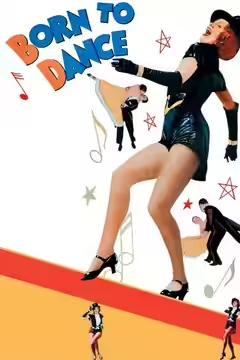
Roy Del Ruth’s backstage musical has a story nobody could care about and a leading lady nobody could stop watching. Eleanor Powell’s tap numbers are the reason to see it; the songs are the reason to stay.
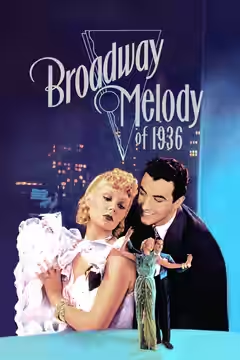
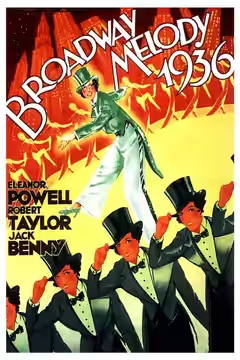
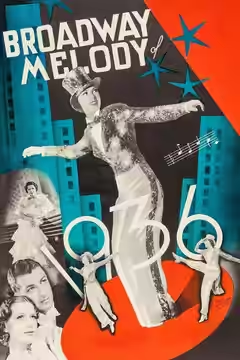
The poster tells us we have waited seven years for this, meaning since The Broadway Melody of 1929, and it is honest about the one thing the two films share, which is the title. This is a new show, put on by MGM in the usual way: a producer, a rich backer, a gossip columnist making trouble, a girl from out of town who can dance. Roy Del Ruth directs it as if the plot were a corridor between rooms, and the rooms are where the numbers are. He is right to.
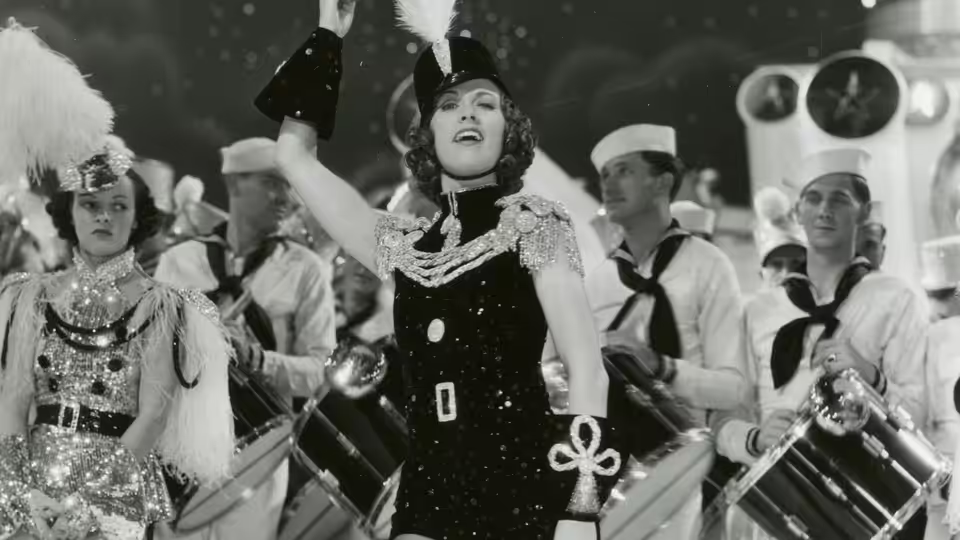
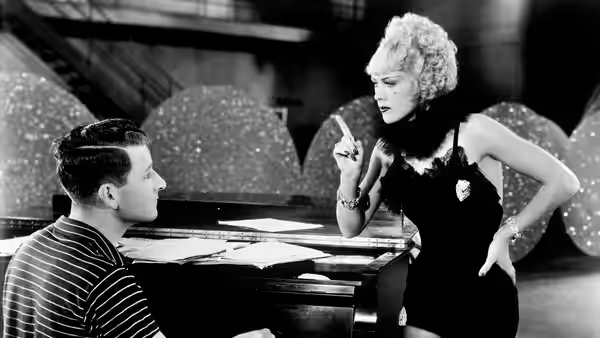
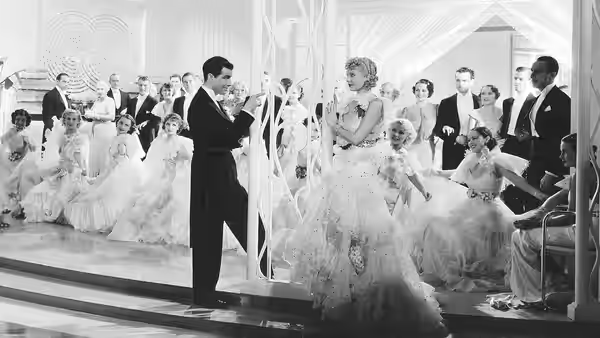
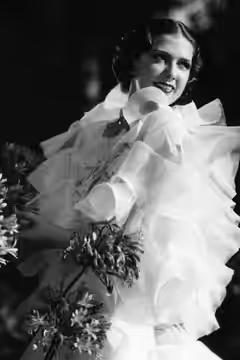
Eleanor Powell is the film. She is tall for a dancer and she taps with the whole of her body, arms flung out, back arched, spinning off a kick into a run of steps so fast the sound seems to arrive late. Charles Rosher photographs her head to foot in clean, bright light and mostly leaves the camera where it is, so we can see that the feet doing the work belong to the woman doing the smiling. There is no trick in it and none is needed. Her first proper solo, in Gordon’s office, made us sit forward, and the finale had us grinning like children for reasons we could not have put into words while it was happening; the reason, on reflection, is that she is plainly having a better time than anyone else in the building and has earned it.
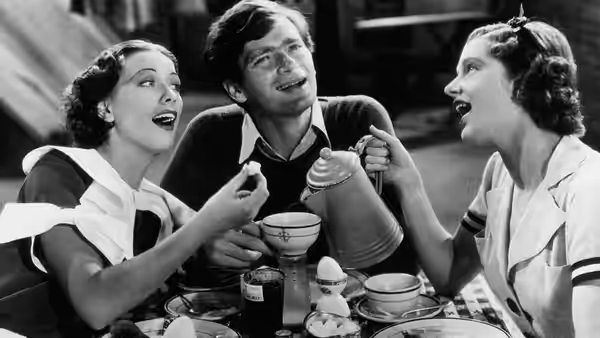
The songs are by Nacio Herb Brown and two of them, the reviews remind us, were later borrowed whole for Singin’ in the Rain. You Are My Lucky Star is sung more than once, which is fair enough. Broadway Rhythm carries the closing number. The best of the lot is Sing Before Breakfast, done on a tenement roof with Powell and the Ebsens, Buddy long and loose-jointed and Vilma neat beside him, all three in ordinary clothes and in step with the washing lines. It is the one number that looks like people rather than a production.
Jack Benny takes top billing and plays Bert Keeler as a man who has never once been in a hurry, letting each insult sit before he delivers it. He is funnier than the material. Una Merkel and Sid Silvers do the fast-talking comic couple, and Silvers, who co-wrote the script with Jack McGowan, gives himself most of the good lines. Robert Wildhack turns up as The Snorer and delivers a lecture on the varieties of snoring, with demonstrations, and we laughed far harder than the idea deserves. Frances Langford, appearing as herself, sings with a warmth the rest of the cast cannot match.
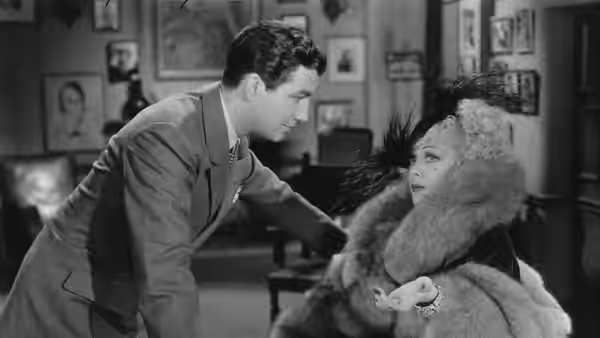
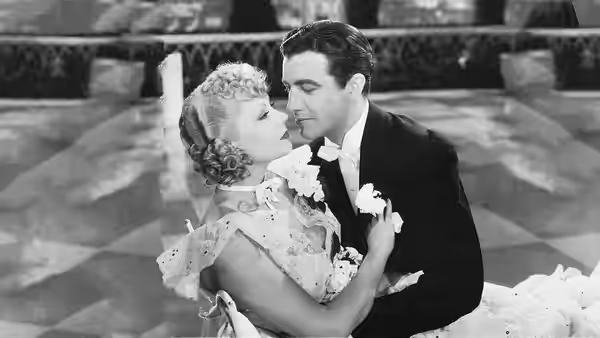
What does not work is everything holding these things together. Moss Hart’s story asks us to believe that Robert Gordon cannot recognise the girl he grew up with because she has put on a veil and an accent, and then asks us to believe it again in the next scene. Robert Taylor is very handsome and about as mobile as the furniture, and when he sings he does it with the caution of a man reading the words off the back of a chair. June Knight’s Lillian Brent is a villain who never does anything villainous. Blanche Sewell cuts the numbers with patience and the dialogue with the same patience, which is a mistake; the film runs 103 minutes and a good half of it is people explaining who Arlette is.
Set against the year’s other musicals, the difference is plain. Over at RKO, Astaire and Rogers were making dances into conversations. Powell has no partner who can keep up with her, so she dances alone, and the numbers are exhibitions rather than exchanges. Adrian dresses her for the finale in tails and a top hat, which suits her better than any of the frocks, and Rosher gives the stage a hard white shine that makes the tapping look like something struck off a surface. It is a marvellous display. It is not a story.
Watch it as you would a revue. Give the plot the attention it gives you, keep a thumb near the remote if you must, and do not feel bad about it; the film has arranged itself so that nothing important happens while anyone is talking. When Powell starts to move, put the thumb down.