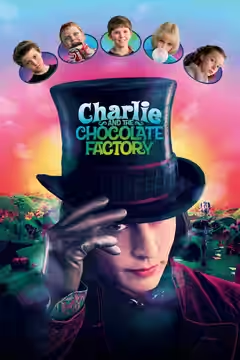
Tim Burton’s second run at Roald Dahl’s book is faithful, handsome and often funny, and it never warms up. The Bucket household is lovely; the factory is a marvel to look at; the man who owns it keeps the whole film at arm’s length.
Tim Burton goes back to Roald Dahl’s book rather than to the 1971 film, and John August’s screenplay keeps the book’s shape: Charlie at the centre, four dreadful children taken into the factory with him, an Oompa Loompa song after each misfortune. Burton adds one thing of his own, a father for Willy Wonka. The result is a faithful, sumptuous, frequently funny 115 minutes that we admired throughout and liked in patches. Adults may find themselves waiting for a warmth that arrives only when Wonka is off screen.
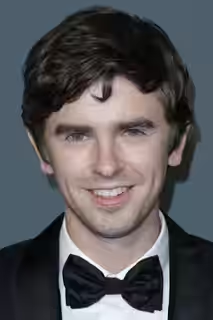
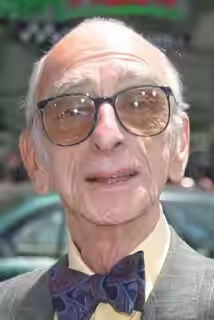
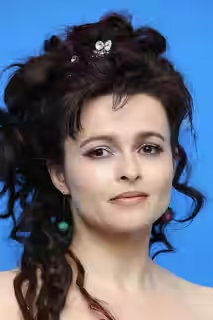
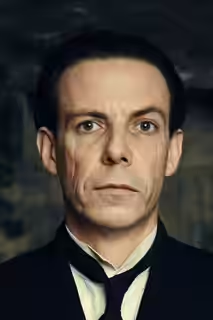
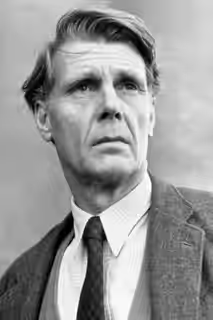
The warmth is all in the Bucket house. Alex McDowell builds it as a shack leaning at forty-five degrees, with the four grandparents sharing a single bed in the middle of it. Philippe Rousselot shoots the town in the colours of slush and lights the house with one weak bulb. Noah Taylor plays Mr. Bucket as a man quietly ashamed of the toothpaste caps, Helena Bonham Carter ladles out cabbage soup as if it were a treat, and David Kelly’s Grandpa Joe leaps out of bed with a joy that has been waiting decades. We were moved by these scenes more than we expected, and by Freddie Highmore most of all, who plays Charlie’s goodness without a trace of smugness. When he offers to sell his ticket to feed the family, we believed him.
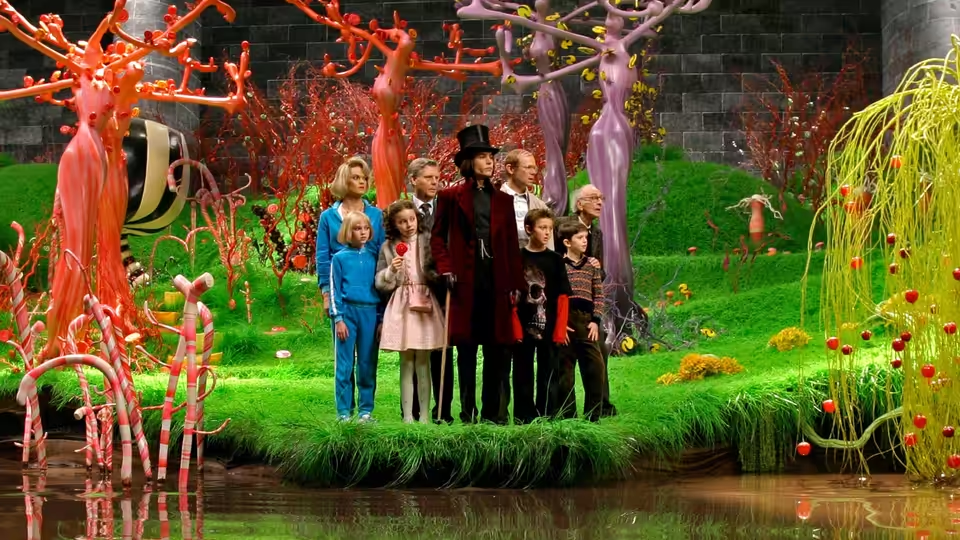
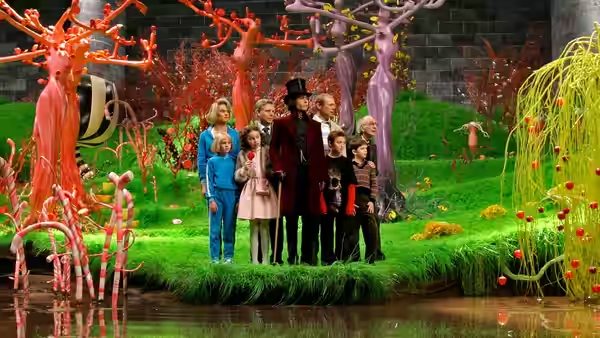
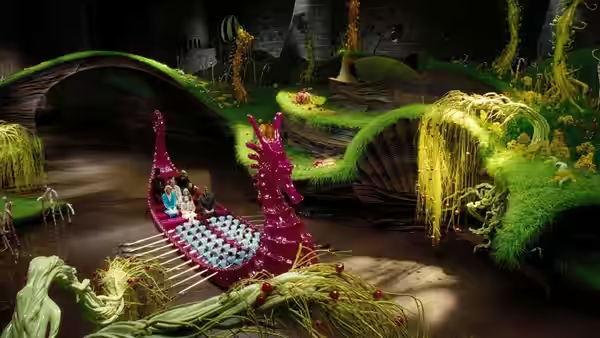
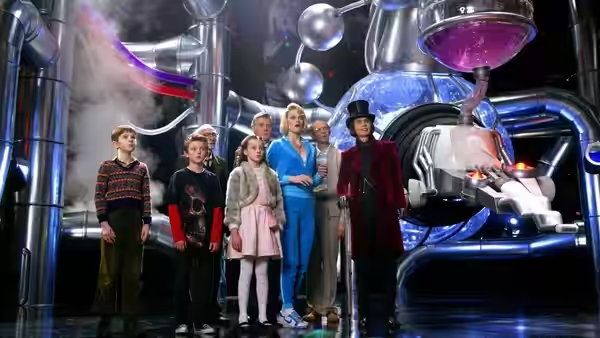
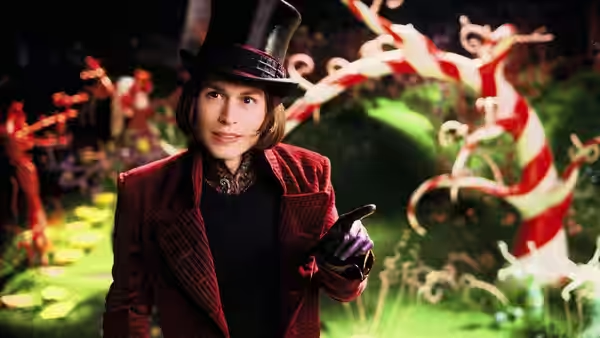
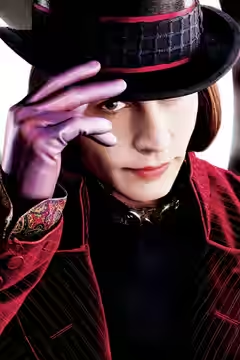
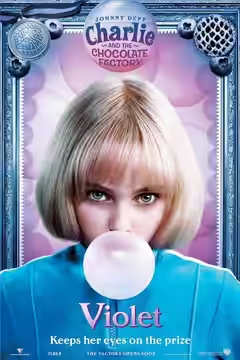
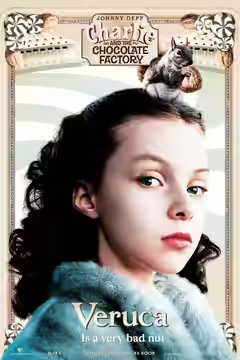
Then the gates open and the film changes palette. McDowell’s chocolate room is a green valley with a brown river running through it and a waterfall churning at one end; there is a boat made of boiled sweet, a glass lift that goes sideways, a white room where a television waits. Rousselot saturates every one so hard that, after the grey outside, the eye needs a moment to adjust. Gabriella Pescucci dresses Wonka in a plum frock coat, a top hat and goggles, and the four other children in the exact clothes their parents would choose for them. Chris Lebenzon moves briskly between rooms and never lets a set piece outstay itself. It is a factory we wanted to walk round.
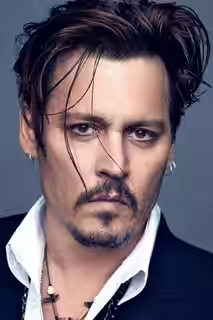
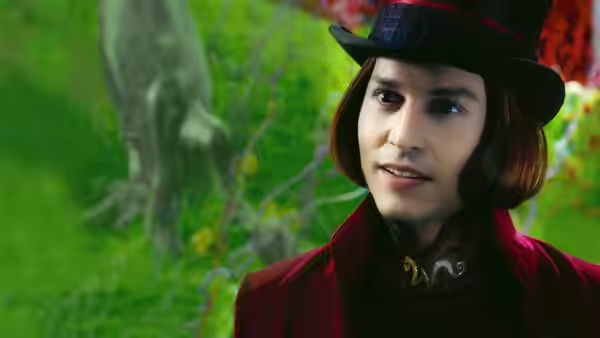
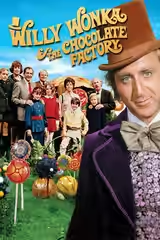
The trouble is the man giving the tour. Depp plays Wonka with a pale face, a bob, a set of large false teeth and the bright, careful voice of a children’s television presenter who does not care for children. Some of this is funny, and Depp’s timing is good; we laughed at the burning welcome-puppets and at Wonka’s small delight in them. But we also spent long stretches watching him through our fingers, not because he was frightening but because he was so plainly uncomfortable in his own film. Gene Wilder’s Wonka kept you guessing whether he liked you. Depp’s does not, and once that is settled there is nothing left to wonder about him.
Danny Elfman sets Dahl’s own verses to music, and Deep Roy, multiplied by computer into every Oompa Loompa in the building, performs them as a chorus line. Each number is in a different borrowed style, and the choreography is inventive, but the arrangements are loud and the words often go under them, which is a pity when the words are the joke.
The father is a worse idea. Christopher Lee plays Dr. Wonka, a dentist who forbade his son sweets and clamped his head in braces, and the film cuts back to him in flashback whenever Wonka is asked a question he would rather not answer. The problem is that Wonka was a man who did not need explaining, and every minute spent explaining him is a minute taken from Charlie.
Burton has done this pale outsider before, with Depp, in Edward Scissorhands (1990), and that film ached where this one only twitches. He did the difficult father in Big Fish (2003) and did it better. Here he has a marvellous factory and a Charlie worth the ticket, and he has left them with a host who wishes they would all go home. See it with a child of eight or so, who will not mind, and watch the Bucket scenes for yourself. It carries a PG and opened in British cinemas on 29 July 2005.