Disney’s send-up of its own fairy tales is funny for an hour and then stops teasing and starts believing. Amy Adams, playing a cartoon princess in the flesh without once winking, is the reason it holds together.
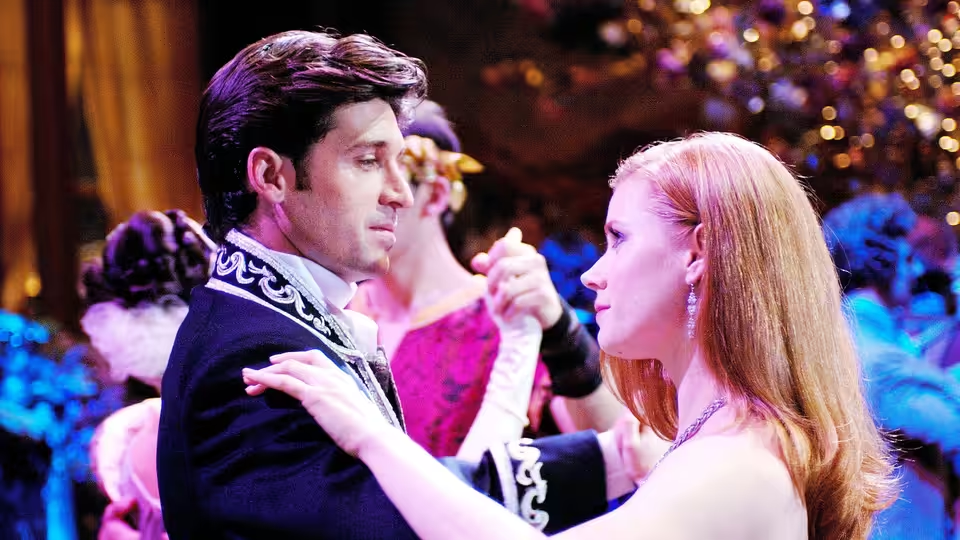
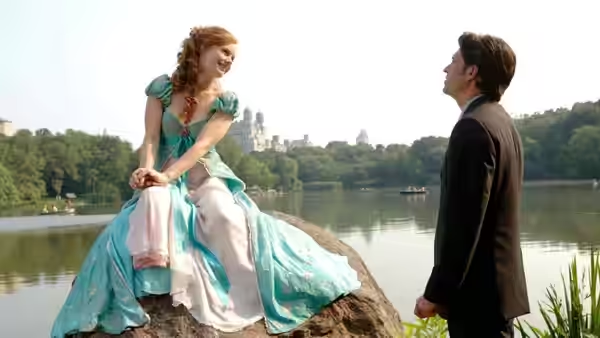
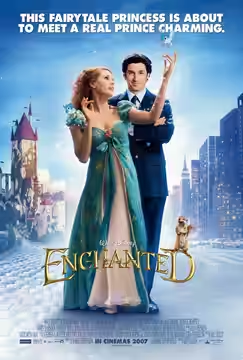
Kevin Lima’s Enchanted opens as a hand-drawn cartoon, narrated by Julie Andrews, in Andalasia, where the animals talk and a maiden named Giselle sings about true love’s kiss. Within ten minutes she is engaged to Prince Edward and pushed down a well by his stepmother, Queen Narissa, and she climbs out of a manhole into Times Square in her wedding dress. The joke is that Disney is sending up Disney. The film is good: brisk, funny, sung with conviction, and in Amy Adams it has a performance that keeps working after the joke has worn thin. It also, in its last half hour, decides it would rather be the thing it was mocking, and it is less fun once it has.
Adams plays Giselle without a wink. She widens her eyes, tilts her head, and speaks in the sing-song of a woman who has never been contradicted. Giselle assumes strangers will help her and summons the pigeons, rats and cockroaches of Manhattan to scrub a bathroom. When she learns what anger is, later, in Robert’s kitchen, Adams plays it as a physical discovery, as though she has found a new limb.
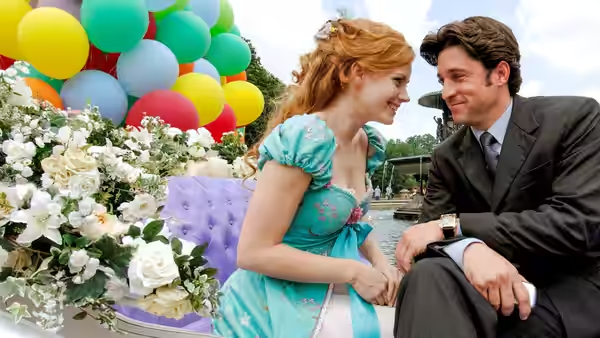
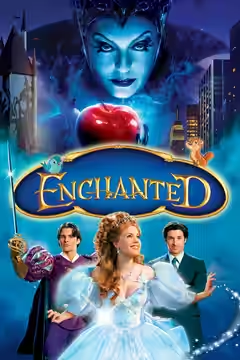
Patrick Dempsey is the straight man, a divorce lawyer named Robert Philip who believes in none of this and has a daughter, Morgan (Rachel Covey), who believes in all of it. James Marsden is the surprise. His Prince Edward runs a bus through with his sword, and Marsden plays him as a man who has never had a doubt. Timothy Spall shuffles after him as the henchman Nathaniel, offering Giselle poisoned apples she keeps failing to eat. Susan Sarandon’s Queen Narissa is heard more than seen; the film has hired a star and left her in the cartoon for most of the running time. Idina Menzel, a Broadway singer, plays Robert’s girlfriend Nancy and is not given a note to sing, which seems a waste.
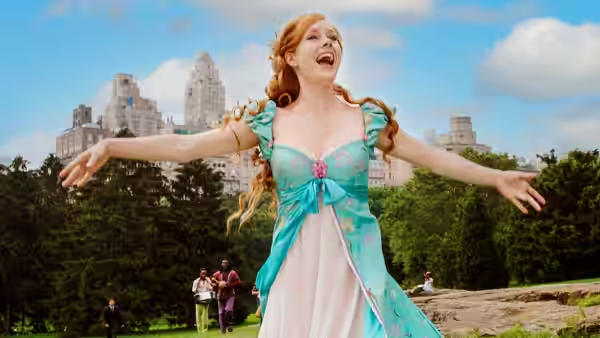
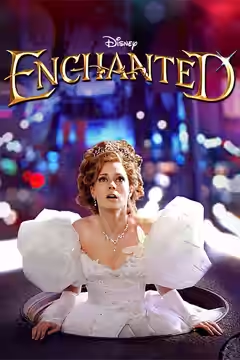
Don Burgess shoots New York in a grey, damp light, so that Giselle’s dress, white satin with sleeves the size of pillows, looks like something spilled on the pavement. Mona May’s costumes carry a fair amount of the story: the dress gets dirtier, then gives way to one Giselle cuts from Robert’s curtains. Stuart Wurtzel gives Robert a beige flat of the kind owned by a man who does not expect visitors. Alan Menken’s songs are the old Menken songs, big and clean, and the best of them, That’s How You Know, is staged in Central Park with what looks like every extra in Manhattan. Stephen A. Rotter and Gregory Perler cut it so that it keeps growing and never shows the join.
We came in braced to be irritated. Cute has a short shelf life and Giselle is cute for a living. Instead, somewhere around the second chorus in the park, we found we were grinning like fools, because Adams sings as though she means every word and Dempsey looks exactly as embarrassed as we would have. We winced later, once, at a lavatory joke that belongs somewhere else.
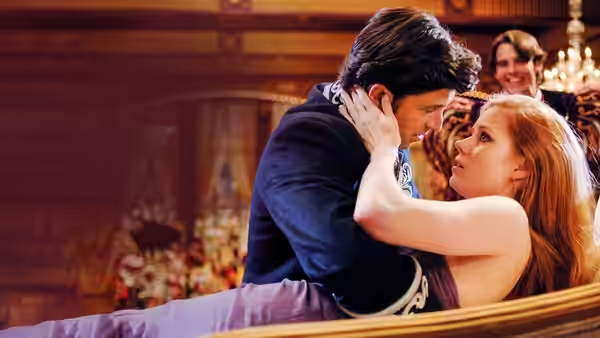
The trouble is nerve. For an hour Bill Kelly and Rita Hsiao’s script pokes at everything the studio has sold since Snow White: love at first sight, the wicked stepmother, the poison apple, the girl who needs rescuing. Then it turns round and sells them again. Giselle learns about dating and anger and doubt; nobody in New York is asked to learn anything back. The last stretch swaps comedy for spectacle, in a way we will not describe, and the effects are the weakest thing on screen. At 107 minutes it does not outstay its welcome, but the final twenty are the ones you will remember least.
Set against Shrek, which made the same joke six years earlier and with more malice, this is gentler and has better songs. Set against the studio’s own cartoons it is an oddity: a film that knows exactly why those pictures work and cannot quite bring itself to stop them working. Watch it with a child who will believe all of it, or with an adult who once did. Anyone in between should bring a cushion for the last act.