Stanley Kubrick’s slow, unsettling marital thriller is worth the patience it asks for. Tom Cruise and Nicole Kidman keep it painfully intimate, though the drawn-out exchanges sometimes test our goodwill.
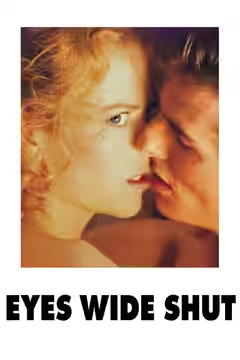
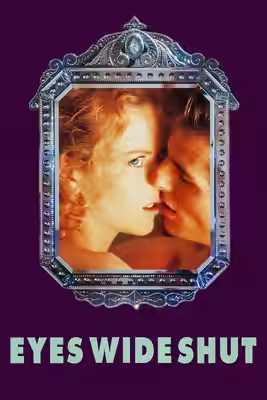
Stanley Kubrick’s Eyes Wide Shut is a disturbing, sometimes funny study of a marriage, and we recommend it with one reservation: some of its scenes are too long. At 159 minutes, it gives jealousy time to become repetitive, petty and difficult to shake. The film asks us to take sexual fantasy seriously without assuming that the person having it understands much about it. That is a good use of a thriller, particularly one whose central man seems so poorly equipped to understand his own desires.
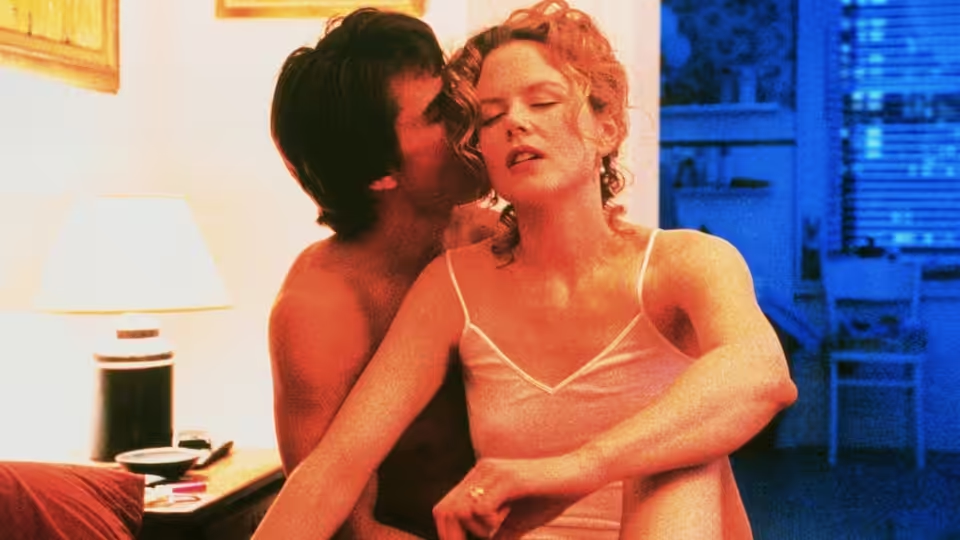
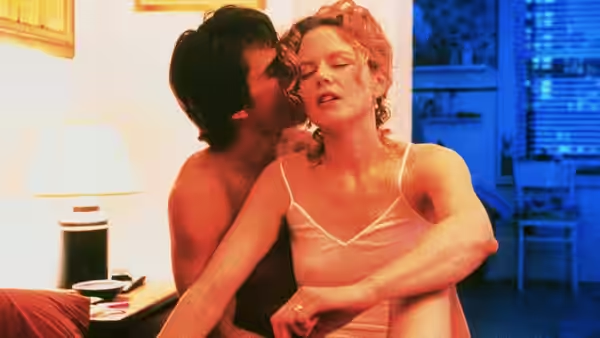
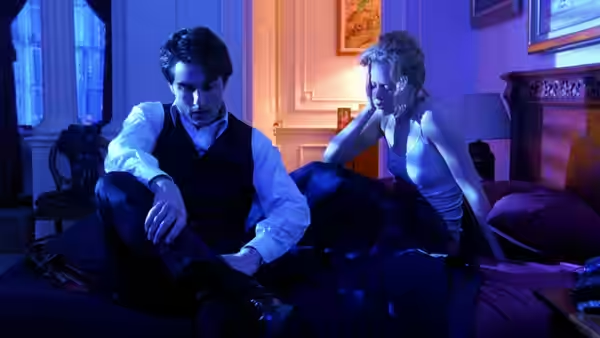
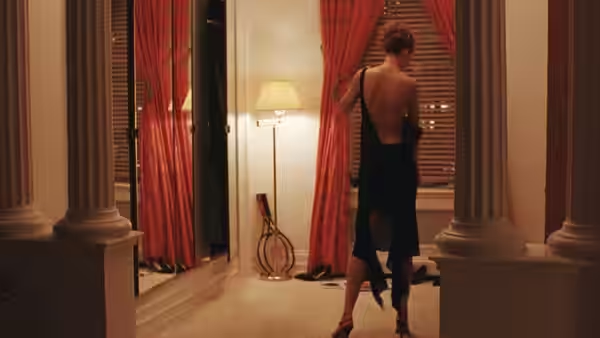
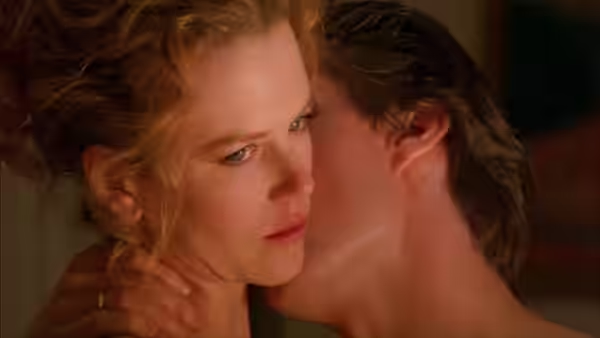
Tom Cruise gives Dr William Harford enough feeling to keep his passivity from becoming intolerable. His need for reassurance is recognisable, and Cruise lets him look foolish without making his distress seem negligible. Nicole Kidman’s Alice has thoughts and desires that do not depend on her husband’s understanding of them. The domestic scenes made us uneasy: their physical familiarity makes the uncertainty about what each wants more painful.
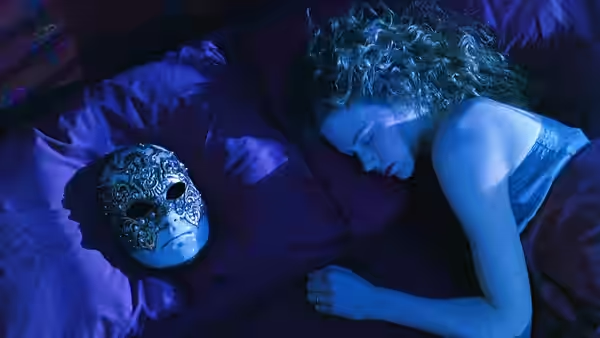
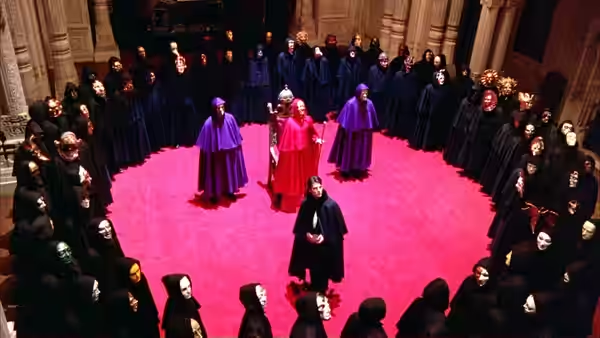
The opening party establishes the wealthy social world with a languor that is both seductive and faintly absurd. Larry Smith’s cinematography is particularly effective here, where the pleasure of looking makes it harder to dismiss the company. Production designers Roy Walker and Leslie Tomkins make these prosperous surroundings feel uncomfortably self-contained, giving the encounters a sense of people being admitted on someone else’s terms. The appeal of this comfort matters, because disgust alone would make the film much easier to sit through.
Nigel Galt’s editing lets encounters continue beyond the moment when a brisker thriller would move along. Sometimes that delay is precisely what makes the film disturbing: we have time to notice the awkwardness beneath the invitation. Sometimes a scene simply goes on too long, and Kubrick and co-screenwriter Frederic Raphael cannot make every exchange worth the wait. The dialogue can become so deliberate that it is difficult to believe these people are talking to each other. Those stretches are a real cost at this length.
Jocelyn Pook’s music helps sustain the unease without making desire feel inviting. Its severity suits Kubrick’s interest in sexual apprehension, keeping us alert to how easily attraction becomes fear. The attention paid to female nudity is less persuasive, and the film’s curiosity about women can seem much narrower than its curiosity about male jealousy. Giving Alice a private life of her own does not quite excuse the limited interest in what other women might be thinking.
As a mystery, Eyes Wide Shut asks for a different kind of attention from a thriller built around pursuit and clear objectives. Sexual jealousy is enough to make an encounter threatening, even when the person feeling it cannot explain what he stands to lose. Kubrick handles this well, allowing scenes to approach absurdity without losing their capacity to embarrass or disturb. There is humour in the disproportion between Harford’s distress and his grasp of the situation, and taking every moment solemnly makes the film harder work than it needs to be. Give it an unhurried evening, preferably with someone willing to disagree about the marriage.