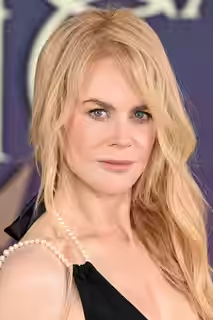
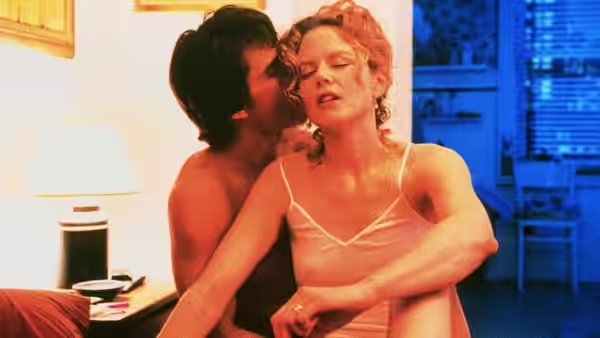
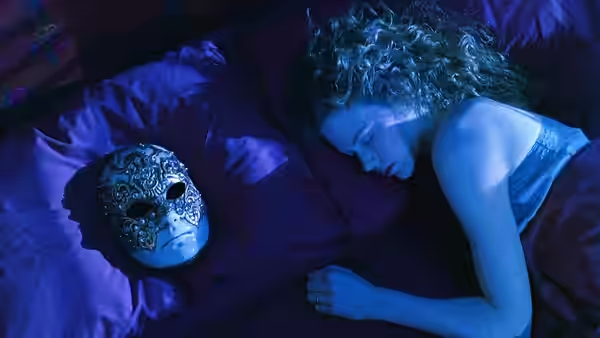
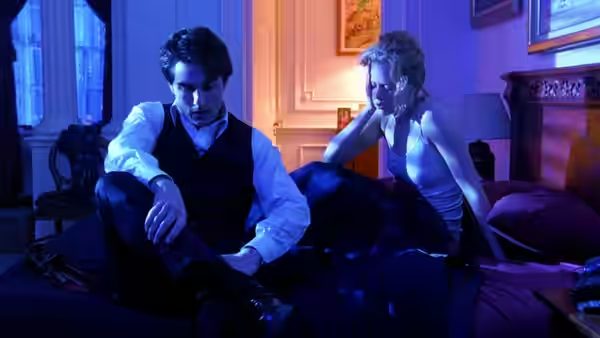
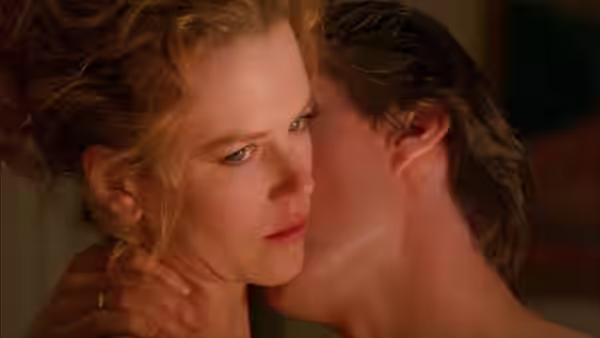
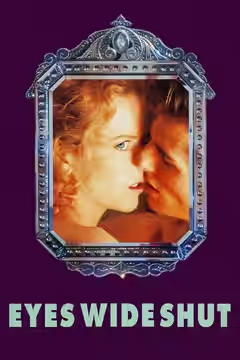
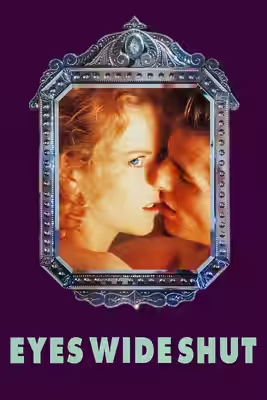
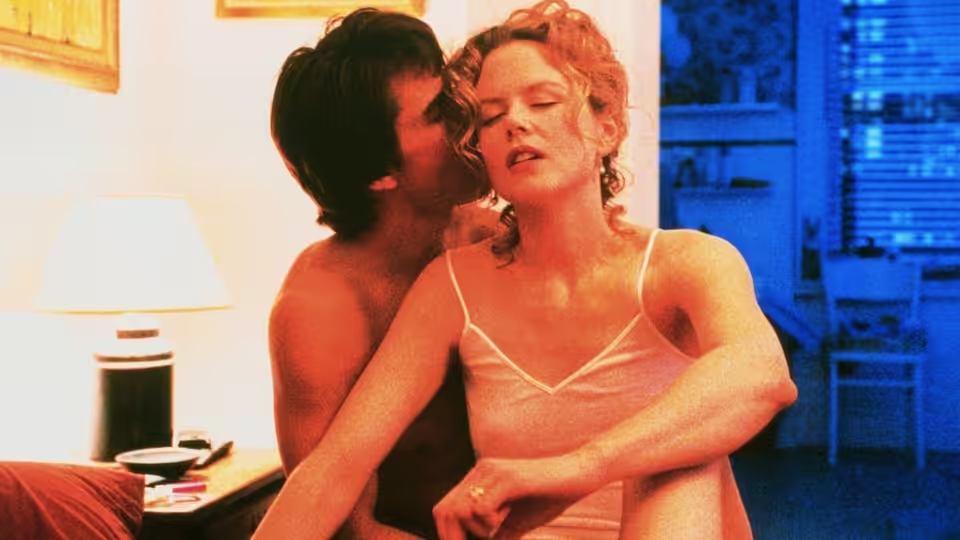
Alice Harford (Nicole Kidman) embraced by Dr William Harford (Tom Cruise) in a bedroom
Film review

Eyes Wide Shut

1999 · Directed by Stanley Kubrick · 2h 39m

In a sentenceTom Cruise takes his wife’s imagination rather personally

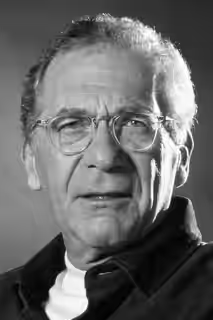
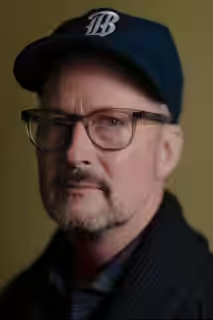
Dr William Harford (Tom Cruise) and his wife, Alice (Nicole Kidman), face questions about desire, jealousy and what they know of one another. Moving between their domestic life and encounters among the wealthy, Eyes Wide Shut follows a marriage unsettled by sexual possibility. A party places private longings in a social setting, where appearances offer little certainty about what anyone wants. Stanley Kubrick directs this drama of sexual anxiety, with Sydney Pollack as Victor Ziegler and Todd Field as Nick Nightingale. The couple’s intimacy provides the starting point for a story shaped by fantasy and suspicion.

Plays from YouTube when you press play; nothing loads from them until then.

Fi1m review

Stanley Kubrick’s slow, unsettling marital thriller is worth the patience it asks for. Tom Cruise and Nicole Kidman keep it painfully intimate, though the drawn-out exchanges sometimes test our goodwill.

Stanley Kubrick’s Eyes Wide Shut is a disturbing, sometimes funny study of a marriage, and we recommend it with one reservation: some of its scenes are too long. At 159 minutes, it gives jealousy time to become repetitive, petty and difficult to shake. The film asks us to take sexual fantasy seriously without assuming that the person having it understands much about it. That is a good use of a thriller, particularly one whose central man seems so poorly equipped to understand his own desires.

Tom Cruise gives Dr William Harford enough feeling to keep his passivity from becoming intolerable. His need for reassurance is recognisable, and Cruise lets him look foolish without making his distress seem negligible. Nicole Kidman’s Alice has thoughts and desires that do not depend on her husband’s understanding of them. The domestic scenes made us uneasy: their physical familiarity makes the uncertainty about what each wants more painful.

The opening party establishes the wealthy social world with a languor that is both seductive and faintly absurd. Larry Smith’s cinematography is particularly effective here, where the pleasure of looking makes it harder to dismiss the company. Production designers Roy Walker and Leslie Tomkins make these prosperous surroundings feel uncomfortably self-contained, giving the encounters a sense of people being admitted on someone else’s terms. The appeal of this comfort matters, because disgust alone would make the film much easier to sit through.

Nigel Galt’s editing lets encounters continue beyond the moment when a brisker thriller would move along. Sometimes that delay is precisely what makes the film disturbing: we have time to notice the awkwardness beneath the invitation. Sometimes a scene simply goes on too long, and Kubrick and co-screenwriter Frederic Raphael cannot make every exchange worth the wait. The dialogue can become so deliberate that it is difficult to believe these people are talking to each other. Those stretches are a real cost at this length.

Jocelyn Pook’s music helps sustain the unease without making desire feel inviting. Its severity suits Kubrick’s interest in sexual apprehension, keeping us alert to how easily attraction becomes fear. The attention paid to female nudity is less persuasive, and the film’s curiosity about women can seem much narrower than its curiosity about male jealousy. Giving Alice a private life of her own does not quite excuse the limited interest in what other women might be thinking.

As a mystery, Eyes Wide Shut asks for a different kind of attention from a thriller built around pursuit and clear objectives. Sexual jealousy is enough to make an encounter threatening, even when the person feeling it cannot explain what he stands to lose. Kubrick handles this well, allowing scenes to approach absurdity without losing their capacity to embarrass or disturb. There is humour in the disproportion between Harford’s distress and his grasp of the situation, and taking every moment solemnly makes the film harder work than it needs to be. Give it an unhurried evening, preferably with someone willing to disagree about the marriage.
Critical consensus AI synthesised

67
Positive
6
Mixed
1
Negative
1

Most critics respond favourably to Eyes Wide Shut, with praise clustering around Kubrick’s eerie, dreamlike direction and his treatment of marriage, jealousy and sexual fantasy. The more appreciative reviews find its deliberate pace hypnotic, its encounters unsettling and its domestic intimacy more affecting than its elaborate sexual spectacle. Cruise’s performance draws praise for bringing humanity to the psychological probing, while Kidman and the supporting cast also receive favourable notice.

The reservations concern drawn-out scenes, emotional distance and sexual imagery that some critics find tame or dated. The spread is wide: Total Film finds the pace tedious and the eroticism ineffective, though it admires the opening party’s decadent languour. Film Comment directly disputes the charge of dullness and highlights humour that other readings overlook. The Independent takes a mixed position, finding the marital intimacy persuasive but the dialogue and dramatic stakes unconvincing.

Radio Times
★★★★ · Jayne Nelson
80

Kubrick's final film could have been a masterpiece with its trademark creepiness, grandeur and orgy sequence, but to modern eyes it feels tame with an uncomfortable focus on female nudity and overlong scenes. It remains a hypnotic, eerie story of a marriage falling apart with a purely Kubrickian mood.

Read the full review →
RogerEbert.com
16 July 1999 · Roger Ebert
80*

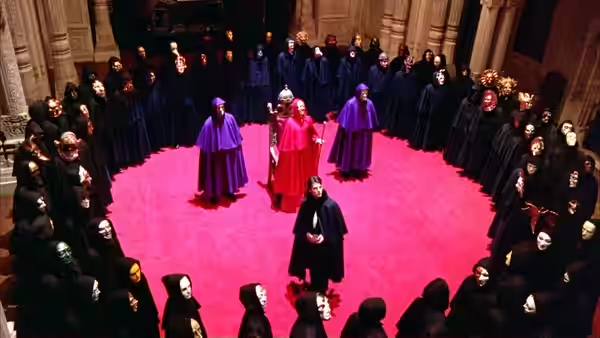
Kubrick’s final film is an erotic daydream of missed chances and sexual fantasy that holds an unsettling, dreamlike tone through a series of intense encounters. The director excels at the film’s hypnotic orgy sequence and supporting performances but the tidy reconciliation ending feels conventional.

Read the full review →
Los Angeles Times
30 July 1999 · Eric Harrison
75*

Kubrick’s last film is an ambitious psychological drama and sexualized fever dream rather than a conventional erotic thriller, with danger arising from subconscious fears rather than weapons. The enigmatic story cloaks real-life concerns about marriage and desire in dreamy metaphor and ambiguity.

Read the full review →
Empire
1 January 2000 · Angie Errigo
70*

As Kubrick's final film it is unmistakably his, intellectually intent and fastidiously crafted yet potentially laborious and remote. The critic singles out Cruise's central performance for lending essential humanity amid the psychological probing of marriage, jealousy and sexual paranoia.

Read the full review →
The Guardian
29 November 2019 · Peter Bradshaw
70*

The film is a fascinating though flawed late Kubrick work about sexual obsession among the wealthy, adapted from Schnitzler's novella. The critic singles out its chilling emphasis on ruling-class secrecy and the heartfelt performances by Cruise and Kidman for praise, while noting some soft-porn elements feel quaint.

Read the full review →
Variety
16 July 1999 · Todd McCarthy
70*

Kubrick’s final film provokes polarized reactions upon release as his works often do, but rewards repeated viewings with greater clarity on its virtues and flaws. The director’s latest work merits a second look to appreciate its richness beyond initial bewilderment.

Read the full review →

Straight answers AI written, from our review

Is Eyes Wide Shut worth watching?
Eyes Wide Shut is worth watching for anyone prepared to give a slow, unsettling study of a marriage a full and unhurried evening, and we scored it 81. Tom Cruise and Nicole Kidman keep it painfully intimate, but at 159 minutes several scenes run on past the point of usefulness. Watch it with someone willing to argue about the marriage afterwards.
How long is Eyes Wide Shut, and what is it rated?
Eyes Wide Shut runs 2h 39m. It is a drama and thriller film.
Where can I watch Eyes Wide Shut in Romania?
Eyes Wide Shut is available to rent from Amazon Prime Video from lei 9.99. Availability is checked daily; the links above go straight to each service.
How violent or frightening is Eyes Wide Shut, and is it suitable for children?
Eyes Wide Shut carries an 18 certificate in the UK and is not suitable for children. Its unease comes from sexual jealousy and fantasy rather than violence, and the film pays sustained attention to female nudity. It is disturbing in a slow, embarrassing way rather than a frightening one, and its 159 minutes will test younger or impatient viewers.
How does Eyes Wide Shut compare to Don't Look Now?
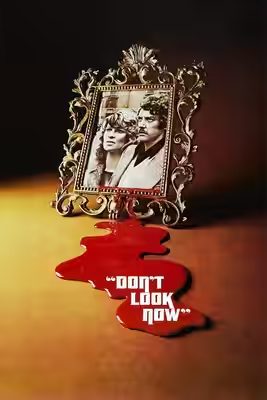
Eyes Wide Shut and Don't Look Now are both thrillers that make a marriage painfully intimate through a patient build-up of unease, but they are about different wounds. Kubrick's film is about sexual jealousy and is cooler, slower and occasionally funny; Roeg's is about bereavement and is the more frightening and more deeply felt of the two. Choose Kubrick for discomfort, Roeg for fear.
Is Eyes Wide Shut based on a true story or a book?
Eyes Wide Shut is based on a novel by Arthur Schnitzler, not on a true story. Kubrick and co-screenwriter Frederic Raphael adapt it into a contemporary drama of sexual anxiety among the wealthy. You do not need to know the book to follow the film, which asks only for patience and an unhurried evening.
What should I watch after Eyes Wide Shut?
After Eyes Wide Shut, try Belle de Jour (1967, Fi1m 86): For sexual fantasy treated with wit, unease and little interest in reassurance. Then Don't Look Now (1973, Fi1m 90): Another marriage made painfully intimate by a thriller’s patient accumulation of unease; and The Double Life of Véronique (1991, Fi1m 86): For the feeling that private desire might obey rules nobody can explain.

Cast

If you liked this, try…

  1. Belle de Jour (1967, Fi1m 86)For sexual fantasy treated with wit, unease and little interest in reassurance.

  2. Don't Look Now (1973, Fi1m 90)Another marriage made painfully intimate by a thriller’s patient accumulation of unease.

  3. The Double Life of Véronique (1991, Fi1m 86)For the feeling that private desire might obey rules nobody can explain.

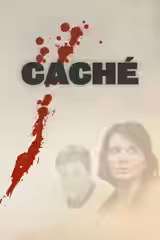
  4. Caché (2005, Fi1m 88)For domestic comfort disturbed by suspicion, and a director unwilling to explain everything.

  5. Burning (2018, Fi1m 72)For jealousy that grows more persuasive as certainty becomes harder to find.

Free account

Know what to watch tonight

Two lists that know where things are streaming, collections you can share, your own score beside ours, and Discover that remembers what you have seen.

  • Want to see, sorted by what is streaming now
  • Seen, with your score out of ten
  • No adverts, ever