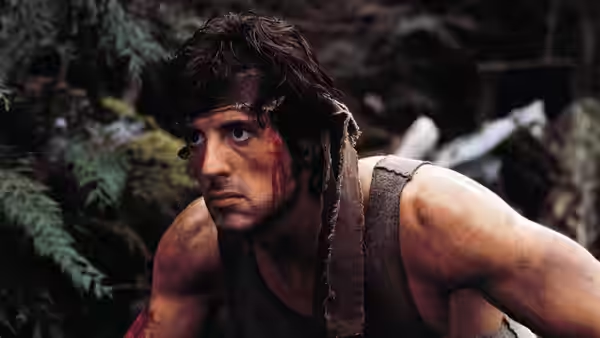
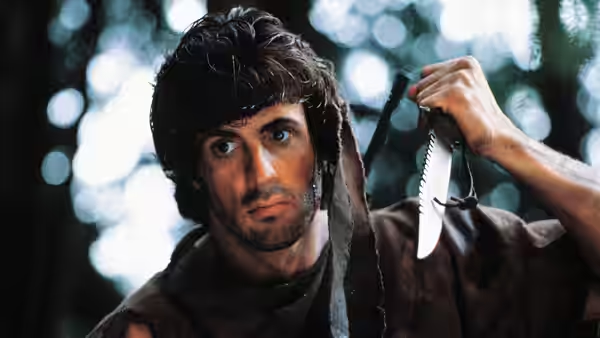
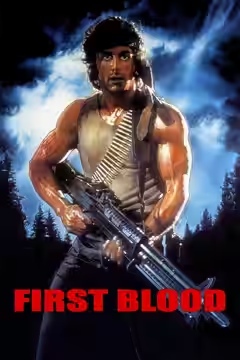
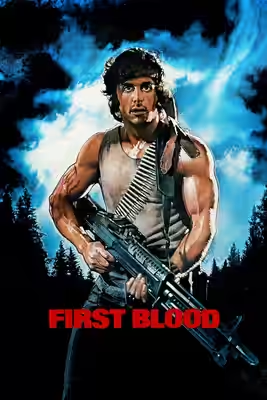
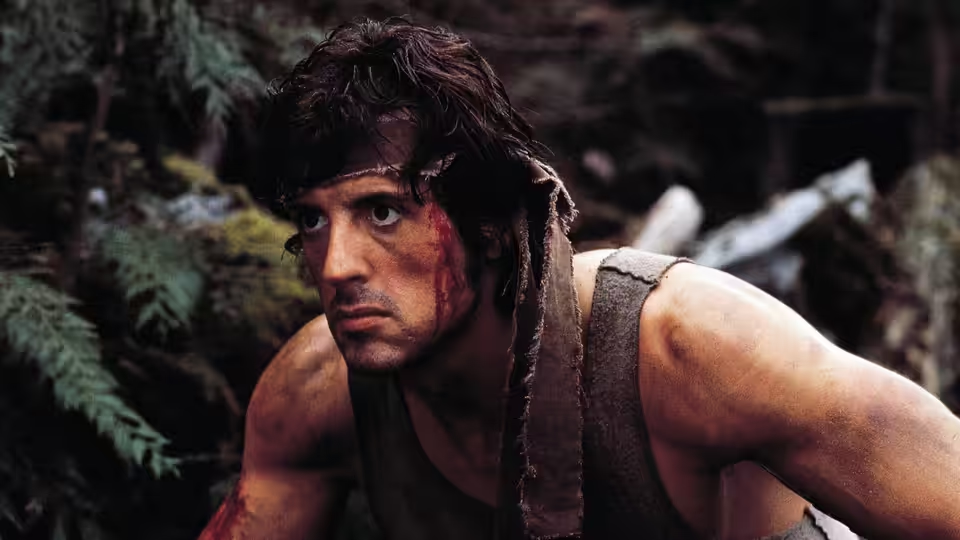
John Rambo (Sylvester Stallone) crouches among rocks and ferns in the woods
Film review

First Blood

1982 · Directed by Ted Kotcheff · 1h 33m · Medierådet 15

In a sentenceThe sheriff could have bought him lunch and saved his town a great deal of plate glass

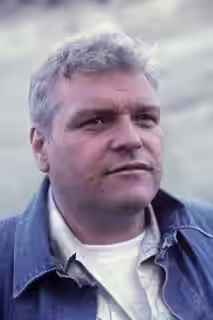
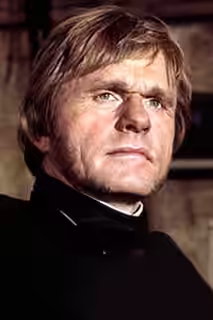
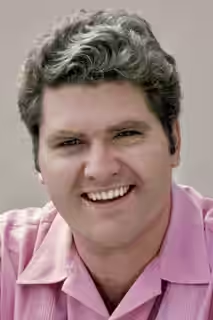
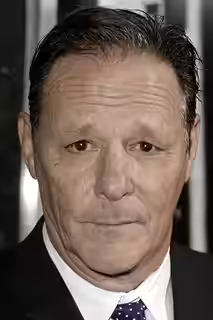
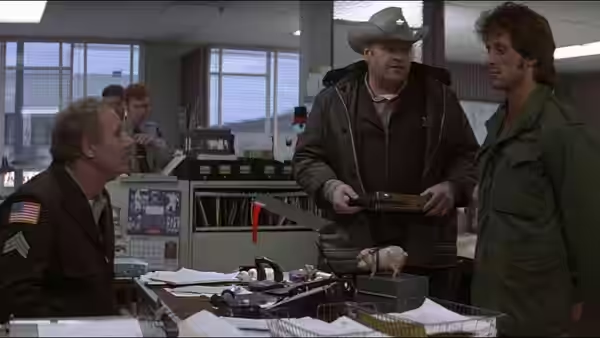
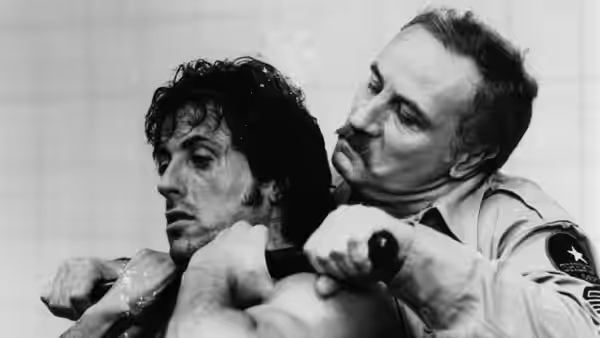
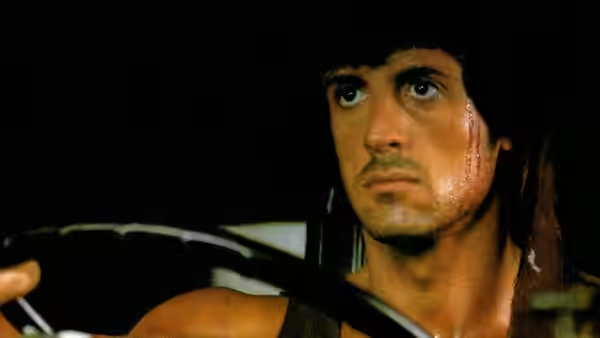
A drifter in an army jacket, John Rambo (Sylvester Stallone), walks into the small town of Hope looking for the last man left from his unit in Vietnam, and learns from a woman on a porch that he has died of cancer. Sheriff Will Teasle (Brian Dennehy) picks him up on the main street, drives him to the town line and tells him not to come back. Rambo turns round and walks back in. Teasle arrests him for vagrancy, and in the cells Deputy Sgt. Arthur Galt (Jack Starrett) and Deputy Mitch (David Caruso) set about shaving and hosing him down, which brings the prison camp back. Rambo breaks out, takes a motorbike and heads for the mountains with Teasle’s men and their dogs behind him. Col. Samuel Trautman (Richard Crenna), the officer who trained him, is on his way.

Plays from YouTube when you press play; nothing loads from them until then.

Fi1m review

Ted Kotcheff’s manhunt thriller is cold, quick and far quieter than the franchise it started, with Brian Dennehy giving it a sheriff worth fearing. It cannot decide whether to mourn its hero or cheer him, but the last ten minutes decide for it.

Ted Kotcheff’s film, taken from David Morrell’s novel, is the one the Rambo name was built on, and it is a stranger and sadder thing than that name now suggests. A Vietnam veteran walks into a small town wanting a meal, the sheriff decides he is the wrong sort, and within half an hour the two of them are at war in the woods. The screenplay, by William Sackheim, Michael Kozoll and Sylvester Stallone, gets all this done in 93 minutes and wastes few of them. It is a good, cold, fast thriller with something on its mind, and it does not manage to think that something through. We liked it a good deal more than its reputation told us to.

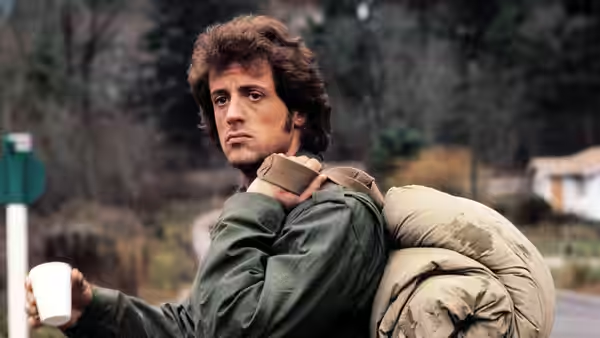
Stallone says almost nothing for most of the running time, and the film is better for the quiet. He walks into Hope with a stoop and a rolled sleeping bag, and when a woman on a porch tells him his friend is dead he stands there and takes it. Brian Dennehy plays Sheriff Teasle as a man who keeps a tidy town and is used to being thanked for it. He gives an order, it is disobeyed, and he cannot be seen to take it back; that is the whole engine of the film, and Dennehy keeps it turning. Richard Crenna turns up in dress uniform as Colonel Trautman and talks about Rambo the way an engineer talks about a bridge he built. Proud or appalled, Crenna never lets on.

Andrew Laszlo shoots the Pacific Northwest under a lid of cloud. The town is wet tarmac and brown brick; the forest is so dark a green it reads as black, and the rain never quite stops. Wolf Kroeger’s police station is cream tile and iron bars, a room built to be hosed down. Joan E. Chapman cuts the scene in the cells so that a razor in the present and a blade in a prison camp trade places a few frames at a time, and we understood his panic before anyone explained it. Jerry Goldsmith gives Rambo a lonely trumpet line and gives the pursuit a sawing figure in the strings, and the motorbike-and-police-car chase out of town, downhill on gravel, is as well put together as any chase of its decade.

Here is what we felt. When Rambo picks off Teasle’s men one at a time in the trees, each of them wounded rather than killed, we felt a cheer coming and let it come, then felt slightly ashamed, because the film had spent twenty minutes telling us this man was damaged and now wanted us to enjoy the damage. Then, near the end, Kotcheff gives Stallone a scene we will not describe, and it moved us far more than we expected. His face comes apart in stages, the words arrive in the wrong order, and for the first time the film stops being about what he can do and is about what was done to him.

The second half is where the credibility goes. A man steps off a cliff into pine branches and walks on. The state police, under Bill McKinney’s Captain Kern, are brought in so that they can be outwitted, and the National Guard arrive to be laughed at. The politics wobble too. The film tells us the war did this to him, and tells us Hope did this to him, and then has Rambo insist the town drew first blood, which the script treats as an answer rather than an excuse. Of the deputies, only David Caruso’s Mitch, who flinches, and Jack Starrett’s Galt, who enjoys himself, are people. The rest are jackets.

For a film whose title became a byword for slaughter, it kills remarkably few, and the restraint is what dates best. Here he wants something to eat, somewhere to sleep and nobody to put hands on him, and the drama is in how little it would have cost to let him have that. See it on a wet evening with the lights off, and go to bed before anyone suggests the sequel.

Critical consensus AI synthesised

61
Positive
4
Mixed
4
Negative
1
Radio Times
★★★★ · Jason Caro
80

Caro finds the film an involving action drama, unlike its cartoonish sequels. He praises Brian Dennehy’s snarling performance and the tautly assembled woodland chase.

Read the full review →
RogerEbert.com
22 October 1982 · ★★★/4 · Roger Ebert
75

Ebert gives the film a positive review. He singles out Rambo’s wounded character as a strength.

Read the full review →
Empire
1 January 2000 · Adam Smith
70*

The critic regards the film as a politically significant, first-rate action thriller, despite some flaws. They especially praise Kotcheff’s tightly paced motorcycle-and-police-car chase and the film’s evocative cinematography.

Read the full review →
Time Out
· TM
64*

The accessible page identifies this as a review, but its verdict is unavailable. No praise or complaint can be determined from the accessible text.

Read the full review →
The Guardian
23 June 2022 · Peter Bradshaw
55*

Bradshaw finds the film watchable but preposterous, with limited dramatic wit. He praises its old-school action spectacle, especially the explosions and stunt-glass window crashes.

Read the full review →
The New York Times
22 October 1982 · Vincent Canby
50*

The critic’s verdict is mixed. The review’s specific praise or complaint cannot be verified from the inaccessible page.

Read the full review →

Straight answers AI written, from our review

Is First Blood worth watching?
First Blood is worth watching for anyone who wants a cold, quick manhunt thriller with more on its mind than its sequels, and we scored it 74. Brian Dennehy's sheriff and Andrew Laszlo's rain-soaked forest carry it, though the second half loses credibility and the politics wobble. Go to bed before anyone suggests the sequel.
How long is First Blood, and what is it rated?
First Blood runs 1h 33m and is rated 15 by the Medierådet in Denmark. It is an action and thriller film.
Where can I watch First Blood in Denmark?
First Blood is streaming on Amazon Prime Video in Denmark, and it is also available to rent from Amazon Prime Video from kr 39.00. Availability is checked daily; the links above go straight to each service.
How violent or frightening is First Blood, and is it suitable for children?
First Blood carries a UK 15 and a US R, and it is not for children. It kills remarkably few people for a film whose title became a byword for slaughter, but the scene in the cells, where deputies hose and shave Rambo and the prison camp comes back, is harsh, and the wounds in the woods are shown plainly. Older teenagers who can take a hard thriller will manage it.
How does First Blood compare to Wake in Fright?
First Blood and Wake in Fright are both Ted Kotcheff films about a town turning on a stranger, and the earlier one is far nastier. First Blood is the faster and more conventional thriller, with a chase and a sheriff worth fearing; Wake in Fright is the more frightening and the more unpleasant, and its real animal cruelty needs a warning. Take the Rambo film for a wet evening and the outback one when you can bear it.
Is First Blood based on a true story or a book?
First Blood is based on David Morrell's novel of the same name, not on a true story. The screenplay by William Sackheim, Michael Kozoll and Sylvester Stallone gets the book's manhunt done in 93 minutes, and we cannot say from our review how closely it follows the page. You need not have read it; the film explains everything it wants you to know.
What should I watch after First Blood?
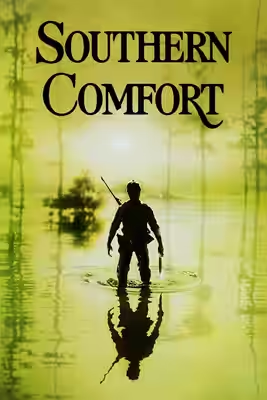
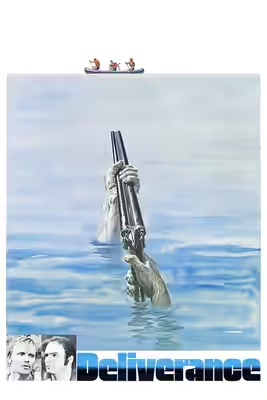
After First Blood, try Wake in Fright (1971, Fi1m 86): Kotcheff’s earlier film: a town’s hospitality turns on a stranger, and it is far nastier. Then Southern Comfort (1981, Fi1m 81): Walter Hill sends the National Guard into the bayou and the bayou objects; and Deliverance (1972, Fi1m 85): Four men, one river, and the woods are not on anyone’s side.

Cast

If you liked this, try…

  1. Wake in Fright (1971, Fi1m 86)Kotcheff’s earlier film: a town’s hospitality turns on a stranger, and it is far nastier.

  2. Southern Comfort (1981, Fi1m 81)Walter Hill sends the National Guard into the bayou and the bayou objects.

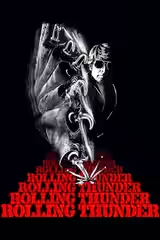
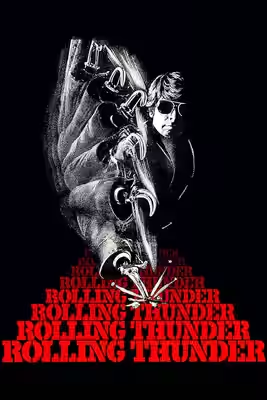
  3. Rolling Thunder (1977) · not reviewed yetA returning prisoner of war comes home to Texas and finds nothing waiting but a grudge.

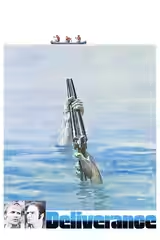
  4. Deliverance (1972, Fi1m 85)Four men, one river, and the woods are not on anyone’s side.

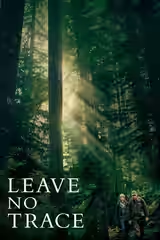
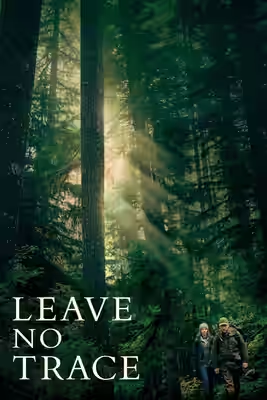
  5. Leave No Trace (2018, Fi1m 88)A veteran and his daughter live in the Oregon forest until someone notices them.

Free account

Know what to watch tonight

Two lists that know where things are streaming, collections you can share, your own score beside ours, and Discover that remembers what you have seen.

  • Want to see, sorted by what is streaming now
  • Seen, with your score out of ten
  • No adverts, ever