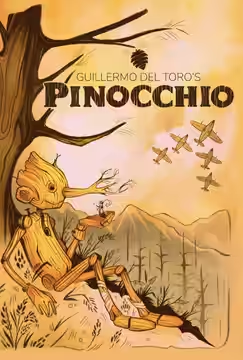
Guillermo del Toro and Mark Gustafson carve the fairy tale out of rough pine and set it in Mussolini’s Italy. The puppets are the most expressive we have seen in years; the songs are thin and the middle sprawls, but the father is worth it.
Everybody knows the story. A puppet comes to life, lies, falls in with bad company, is swallowed by a sea beast and learns to be good. Guillermo del Toro and Mark Gustafson, directing in stop-motion from a script by del Toro and Patrick McHale, keep the outline and change the moral. Their Pinocchio is not a boy who must learn to obey but a boy who will not, in a country where everyone else has, because the country is Mussolini’s Italy. It is a handsome, strange, crowded film and we recommend it, with reservations about the songs and the length.
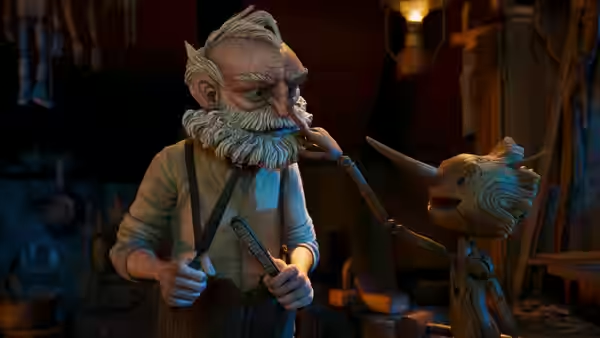
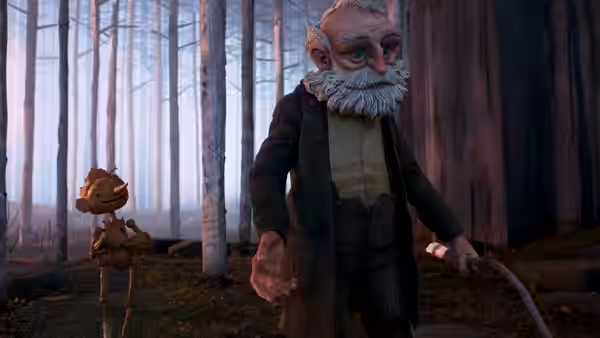
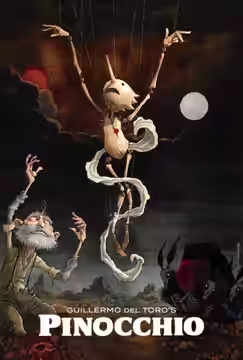
It opens before the puppet exists. Geppetto (David Bradley) is a woodcarver with a son, Carlo (Gregory Mann), and the two of them are finishing a wooden Christ for the village church when a plane drops a bomb on it. The film gives the boy perhaps ten minutes and then spends years at his grave, and Bradley’s voice, low and dry and cracking at the edges, does most of the work. We were moved earlier than we expected, and by less: an old man planting a pinecone at a grave, and the pine growing. When Geppetto finally gets drunk and takes an axe to that tree in a thunderstorm, hacking a boy out of it with his teeth bared, we were frightened of him.
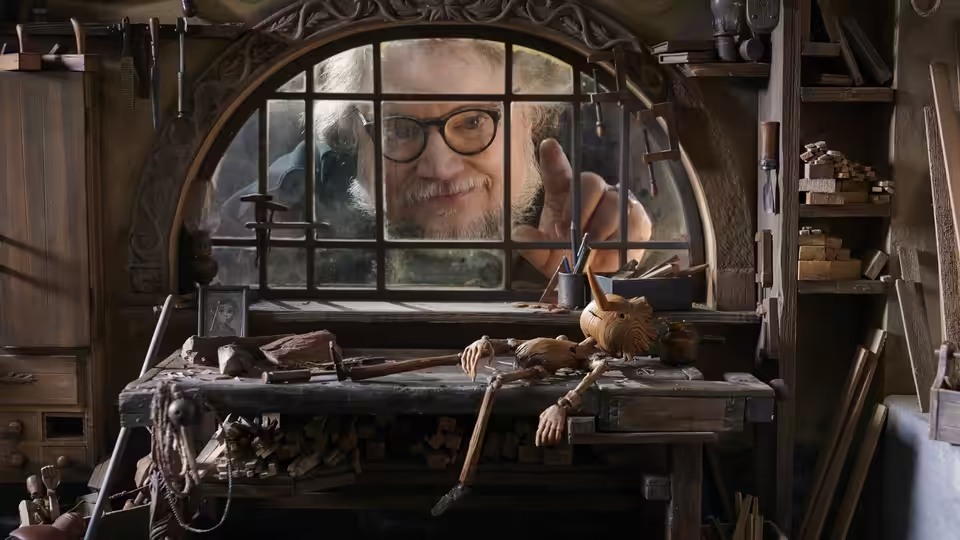
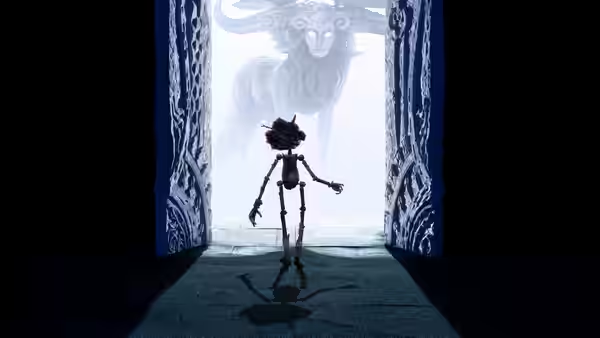
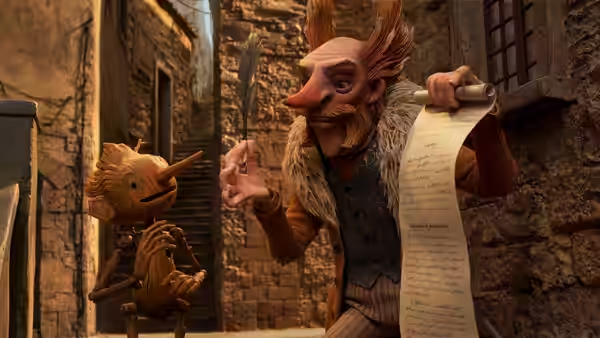
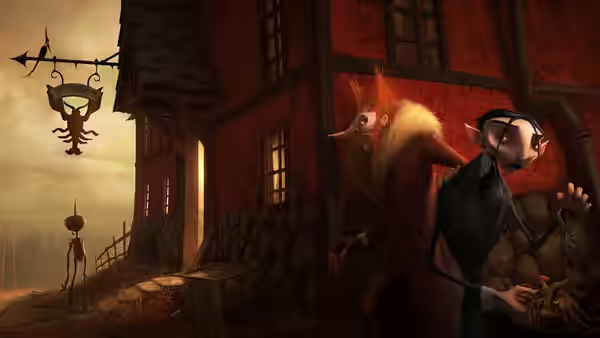
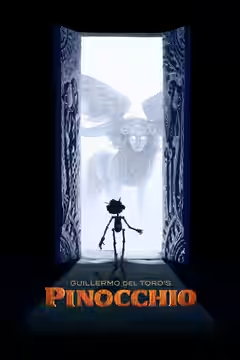
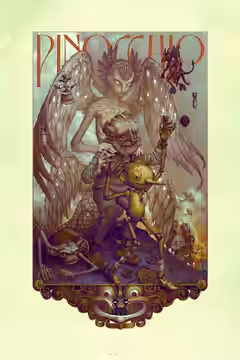
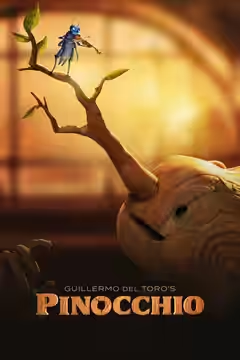
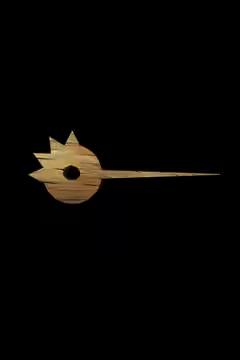
Frank Passingham lights nearly everything with lamps, candles and firelight, so the grain of the wood is always visible. The village that Curt Enderle, Guy Davis and Karla Castañeda have built is ochre plaster and grey stone with a church at the top, and the carnival that rolls into it is red paint and gilt over rot. The puppets are the point. Pinocchio has nails driven into his head, gaps where the carving stopped and no attempt at cuteness anywhere. The Wood Sprite (Tilda Swinton) who wakes him is a blue creature with wings, and the wings have eyes. Swinton also voices Death, who has the same face and less patience.
Ewan McGregor’s Cricket narrates like a man dictating memoirs nobody asked for, and is flattened, repeatedly, for laughs; we laughed each time. Mann gives Pinocchio a real child’s voice, loud and unable to hear a rule without asking why, and for twenty minutes we found him wearing, and then on his side. Christoph Waltz purrs as Count Volpe, the showman who wants the puppet for his stage; Cate Blanchett is credited as Spazzatura, his monkey, and does not get a word. Ron Perlman’s Podesta has a jaw like a shovel and a son, Candlewick (Finn Wolfhard), he is trying to make in his own image. Burn Gorman’s priest looks at the puppet in church and sees the devil, while the puppet looks up at the wooden Christ and asks why everyone likes him.
The songs are the weak part. Alexandre Desplat’s score waltzes when the film lets it, but the film keeps stopping for songs that are short, thin and forgettable, and it knows it: more than one is cut off mid-verse as a joke. Once Pinocchio leaves the village the film moves between Volpe’s carnival and the Podesta’s plans for him, and Holly Klein and Ken Schretzmann cannot find a rhythm across the two; it is 117 minutes and feels longer. Pinocchio is also carried from place to place more than he chooses, which is odd in a film about a boy who refuses.
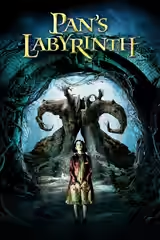
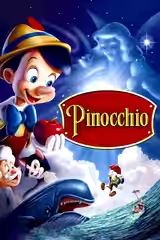
Set against del Toro’s own films, this is the gentler cousin of Pan’s Labyrinth, which also put a child between a fascist and a creature and asked which was the monster. Set against the Disney version of 1940, it is the more honest: that Pinocchio learned that good boys do as they are told, and this one is told, plainly, that they do not. The one strong dissent among the reviews so far found it unmoving; the film is busy, and there are stretches where the busyness is all there is. But the last movement, which we will not describe, sent us out quiet.
It is a PG, and rightly, but it will frighten under-eights in the way the old tales did, on purpose. Watch it with a child old enough to ask what the posters in the square are for, and be ready to answer.