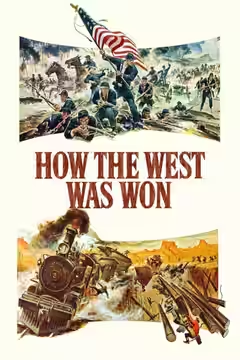
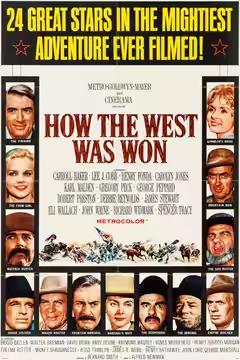
This Cinerama western follows one family across five chapters and 164 minutes, and it is more parade than film. But the train robbery is a proper set piece, and John Ford’s Civil War chapter shows what the rest might have been.
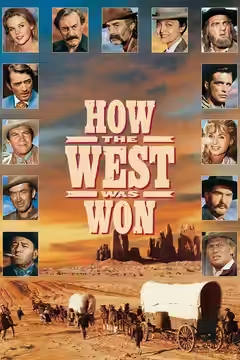
Three directors, four cinematographers and a dozen stars were assembled by producer Bernard Smith to tell the story of the American West through one family, the Prescotts, across five chapters and roughly fifty years. Henry Hathaway takes the rivers, the wagon train and the outlaws; John Ford takes the Civil War; George Marshall takes the railroad. James R. Webb and John Gay wrote it as a relay, each generation handing on to the next. The result runs 164 minutes and looks like nothing else, and about a third of it is worth the trouble. The rest is a parade, handsome and slow, with the family waving from the floats.
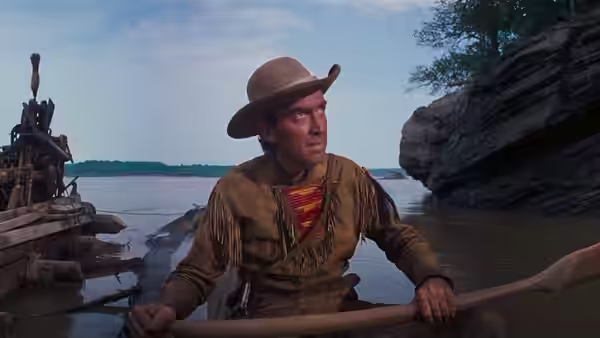
The look is the reason it exists. It was shot in three-strip Cinerama, three cameras side by side making a picture more than twice as wide as it is tall, and Milton Krasner, Charles Lang, William H. Daniels and Joseph LaShelle fill that width with river, prairie and mountain. A raft drifts down the Ohio with wooded banks on both sides and sky in the middle. Wagons cross a plain that runs off the frame in either direction. Seen flat, the picture has two visible joins, and anything straight that crosses them, a railway line, a fence, a canal bank, bends slightly at each one. The actors are kept to the middle panel, and whenever two people talk the camera stands well back, as if it would rather be looking at the hills.
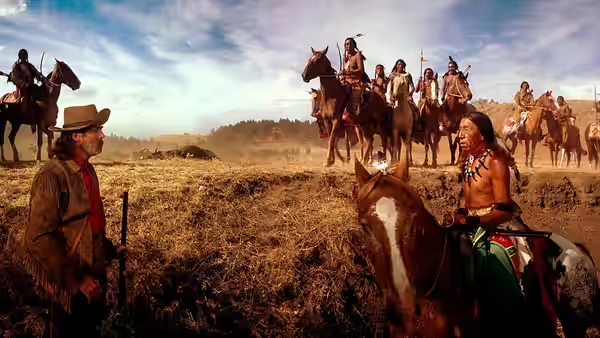
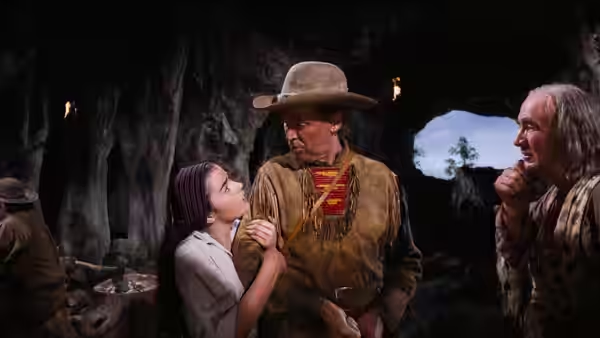
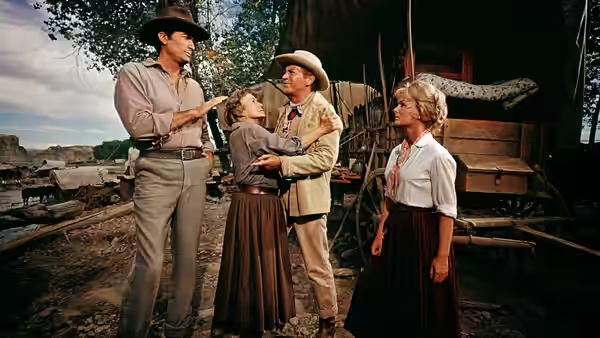
Hathaway’s opening chapters set the pattern. James Stewart plays Linus Rawlings, a trapper, with his usual ease, and Carroll Baker’s Eve decides to marry him more or less on sight; Stewart is well into middle age and the film hopes we will not notice. Then Debbie Reynolds’s Lilith takes over for the wagon train, courted by Gregory Peck’s gambler Cleve Van Valen and Robert Preston’s wagon master Roger Morgan, who proposes marriage the way he might buy oxen. Reynolds sings a song to the tune of Greensleeves by the fire, and it is the chapter’s best minute. We were bored through most of the rest, and we can say why: Peck and Preston are given nothing to do but wait for her to choose, and the attack on the wagons that should be the climax arrives with less force than the buffalo do an hour later.
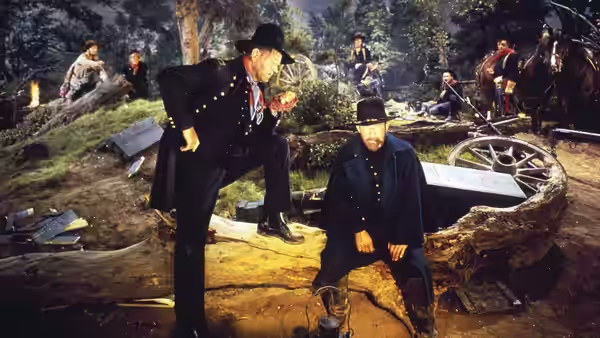
Ford’s chapter is short, dark and different. George Peppard’s Zeb Rawlings goes to war and finds himself, on the night after Shiloh, near a campfire where John Wayne’s General Sherman is talking his exhausted commander out of quitting. Ford shoots it close and low, faces in lamplight, and for the length of the chapter the wide screen is used for people instead of scenery. It moved us more than the previous hour had, and we think that is because Ford is the only one of the three who lets a death slow the film down.
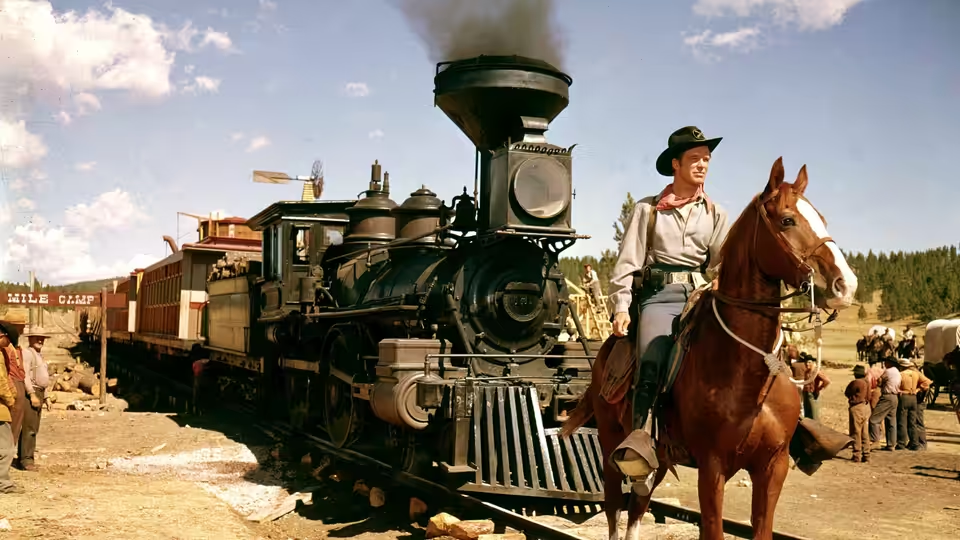
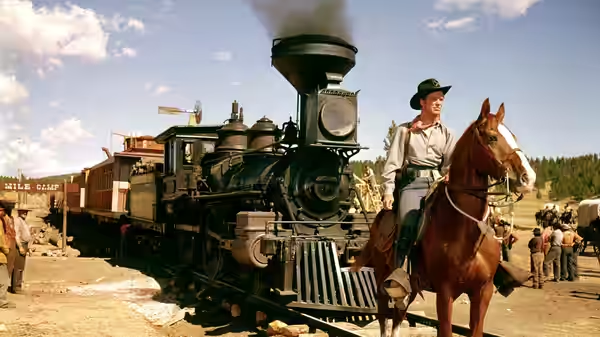
Marshall’s railroad chapter has Henry Fonda as Jethro Stuart, a buffalo hunter who has seen what is coming, and a stampede through a railhead camp that is loud, long and impressive without ever being frightening. Hathaway returns for the outlaws, and here the film finally earns its width. Eli Wallach’s Charlie Gant, all grin and grievance, plans to rob a train; Lee J. Cobb’s Marshal Lou Ramsey would rather not be involved. The robbery becomes a running fight along a moving train, logs sliding off flatcars, wagons tearing loose, men going under the wheels, and Harold F. Kress cuts it fast and clean so that we always know which car we are on. We sat forward for the first time in two hours. Carolyn Jones, as Zeb’s wife Julie, is on hand mainly to be worried.
Alfred Newman’s score is the film’s spine, a big open main theme for chorus and orchestra and a run of folk tunes arranged so that even the campfire songs sound like a procession. It plays under almost everything and it is often better than what it plays under. Walter Plunkett and Ron Talsky dress fifty years of change so that we can read the decade off Reynolds’s skirts; the men stay in buckskin and dust, which is about right.
Ford’s own The Searchers (1956) covered less ground and said more about the same country. This one covers far more and says less, and it seems to know it, which is why it never stops moving. Watch it at home with the seams showing, go briskly through the wagon train, and do not hurry the train.