Max Ophüls makes a circus entertainment out of a woman’s exposure, and makes us uneasy about enjoying it. Lola Montès is worth seeing for its moving camera and theatrical splendour, though its heroine remains frustratingly distant.
Max Ophüls is interested in what happens when a famous woman’s life becomes public entertainment. Lola Montès makes that entertainment lavish enough for us to enjoy, then gives us reasons to feel uncomfortable about enjoying it. It is a fine, disquieting film, recommended with a reservation about how little access it gives us to Lola herself. The circus puts that problem before us from the start. There is an audience, a woman to be watched and a professional in charge of presenting her.
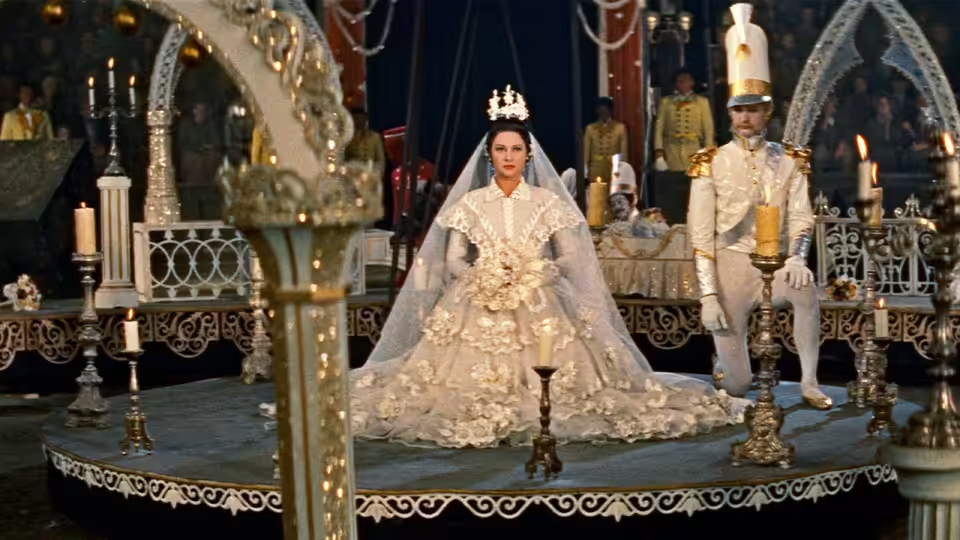
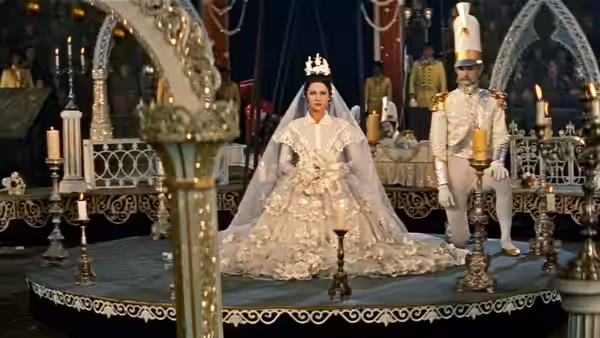
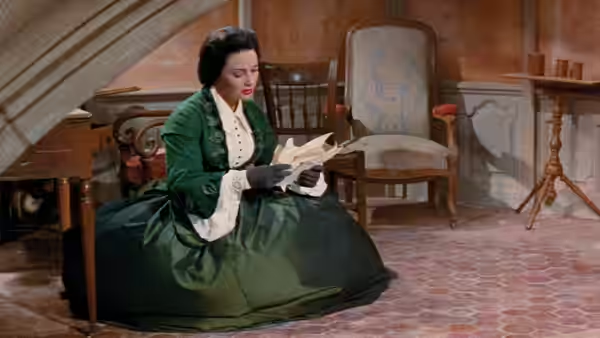
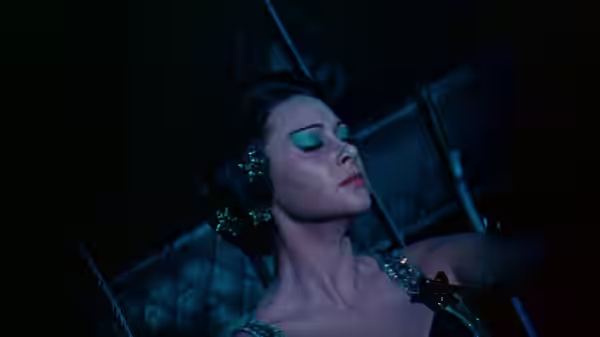
Christian Matras’s fluid widescreen photography keeps the circus from becoming a row of attractions waiting to be inspected. The camera’s movement continually changes which part of the display commands our attention, so watching becomes an active, slightly unsettled pleasure. Jean d’Eaubonne’s production design gives those movements plenty to take in, with the scale of the circus pressing upon its central figure. Georges Annenkov’s costumes contribute to the same crowded richness. We can enjoy the workmanship while noticing how easily Martine Carol gets absorbed into the display.
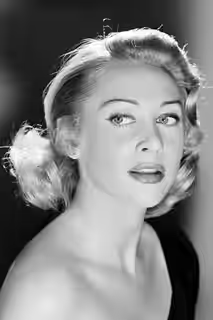
We felt uneasy watching Lola become just one more attraction amid the circus pageantry. There is so much to look at around Martine Carol that the eye can wander away from the person whose life supposedly matters most. That is a persuasive way of showing what celebrity does to someone, and it also exposes a weakness in the film. Martine Carol’s reserve does not always suggest feelings being kept back; sometimes it leaves too little to hold our attention. The spectacle occasionally has to supply interest that the performance cannot.
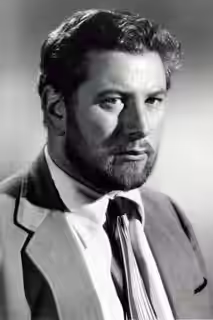
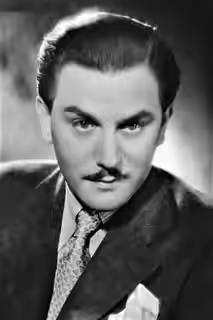
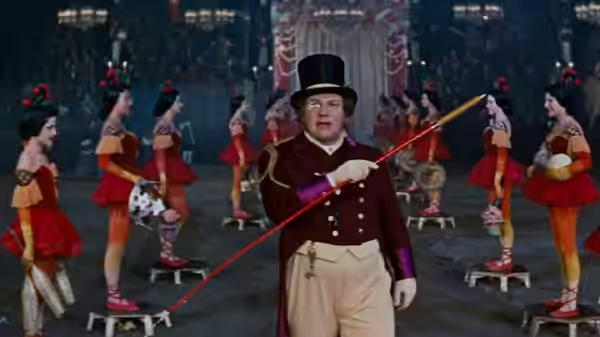
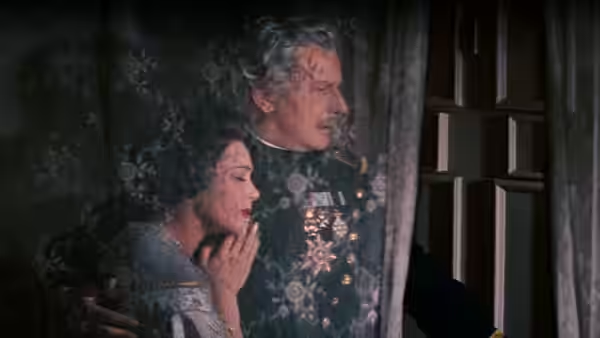
Peter Ustinov is well suited to the Circus Master, giving the business of presenting Lola a brisk professional confidence. His authority helps the circus feel like a working entertainment, with someone responsible for keeping its audience interested. That ordinary competence is an uncomfortable quality in a man presiding over another person’s exposure. Anton Walbrook brings a welcome warmth to Ludwig I, King of Bavaria. He gives us a person to attend to without needing the surrounding spectacle to make him interesting.
Georges Auric’s score reinforces the ceremony, helping the spectacle feel insistently public. Its grandeur suits a circus that is always asking for our attention, and the music contributes to the slightly overbearing pleasure of the display. The editing is credited to Jacqueline Sadoul, Madeleine Gug and Adolf Schlyssleder, whose work keeps the presentation of Lola central to the telling of her story. It is not always dramatically brisk. Some passages continue to offer visual pleasure after their point about public curiosity has become clear, and the pace can feel more stately than Lola’s situation warrants.
For a romantic drama, Lola Montès puts unusual pressure on the pleasure of looking. Max Ophüls allows the circus to remain enjoyable even while showing how degrading its treatment of Lola can be. That makes the audience’s appetite harder to dismiss as somebody else’s failing: we have been enjoying the same display. The film is most persuasive when it makes us notice where our own attention has gone. Give it an evening without a second screen competing for your eyes.