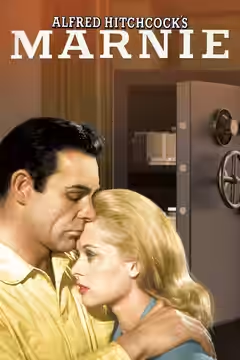
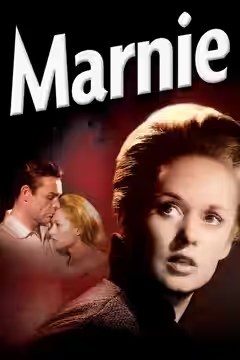
Hitchcock’s study of a thief who cannot bear to be touched is uneven, oddly staged in places and unusually honest about its own cruelty. Tippi Hedren and Louise Latham make it worth an evening; the painted backdrops and Sean Connery’s amateur psychiatry do not.
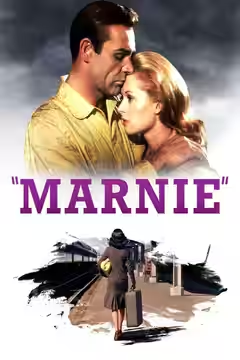
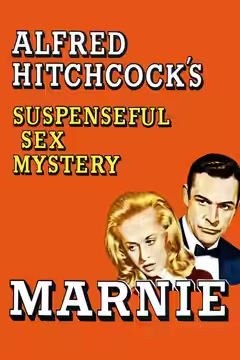
Alfred Hitchcock’s Marnie opens with a woman walking away down a railway platform, a yellow handbag under her arm full of another man’s money. What follows, for 130 minutes, is Hitchcock trying to find out what is wrong with her, using a rich man with time on his hands as his instrument. Working from Winston Graham’s novel and a screenplay by Jay Presson Allen, he has made a thriller with almost no suspense and a love story in which the lover behaves like a warden. It is uneven, and more honest about its own cruelty than most films of its decade. We admired it more than we enjoyed it.
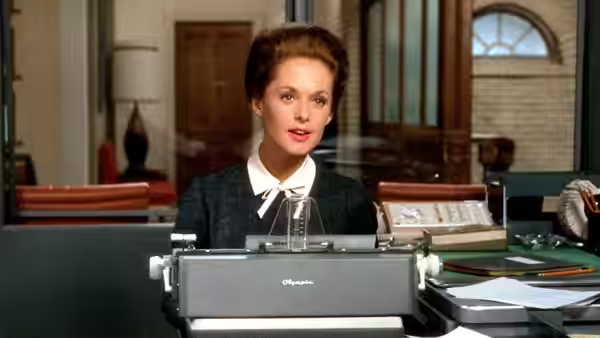
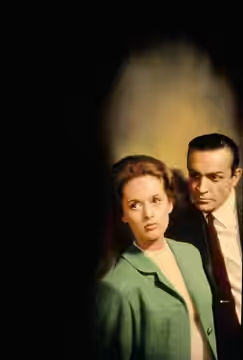
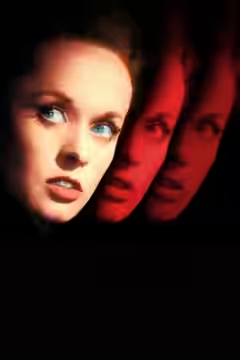
Tippi Hedren, a year on from The Birds, plays Marnie Edgar in two registers. In offices she is smooth and pale and gives nothing away; in her mother’s house in Baltimore she is a child again, asking to be loved. Louise Latham plays the mother, Bernice, with a hard mouth and a way of drawing her hand back when her daughter reaches for it, and their scenes are the best in the film. One of them got at us more than we expected: nothing happens except that a woman declines to stroke her grown daughter’s hair, and Hedren’s face falls in a way no line could have managed.
Some of the craft is Hitchcock at his most exact. Marnie’s second robbery, at Rutland’s, is held by George Tomasini as one wide shot split down the middle: Marnie at the safe on the right, a cleaner mopping towards her on the left, and no music at all. Robert Burks lights the office in the flat glare of a Friday afternoon, so there is nowhere to hide. Edith Head dresses Marnie in greys and greens that make her look like part of the filing system, and puts the one warm colour in that handbag. When Marnie takes off her shoes to cross the floor in silence, and one starts to slide out of her pocket, we stopped breathing, and we knew exactly what Hitchcock was doing to us and did not mind.
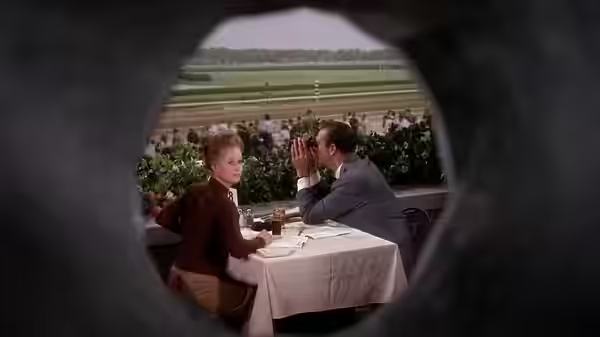
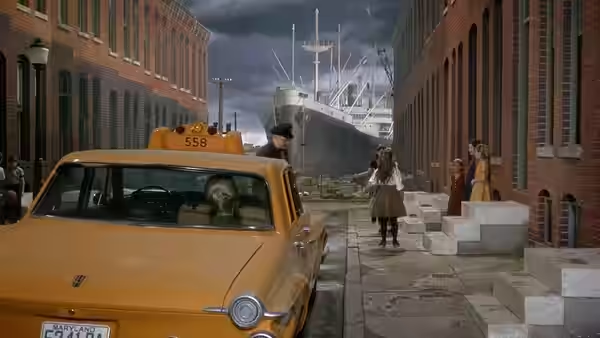
Other choices have aged badly, and we do not think all of them were meant. When Marnie rides, the horse is real and the countryside behind it is plainly a film of countryside, moving at a different speed. Robert F. Boyle’s set for Bernice’s street ends in a painted harbour with a ship in it the size of a cathedral, so obviously a backdrop that for a moment we took it for a joke. Bernard Herrmann’s score is large and romantic and arrives on cue every time Marnie feels anything, telling us what the actress has already shown.
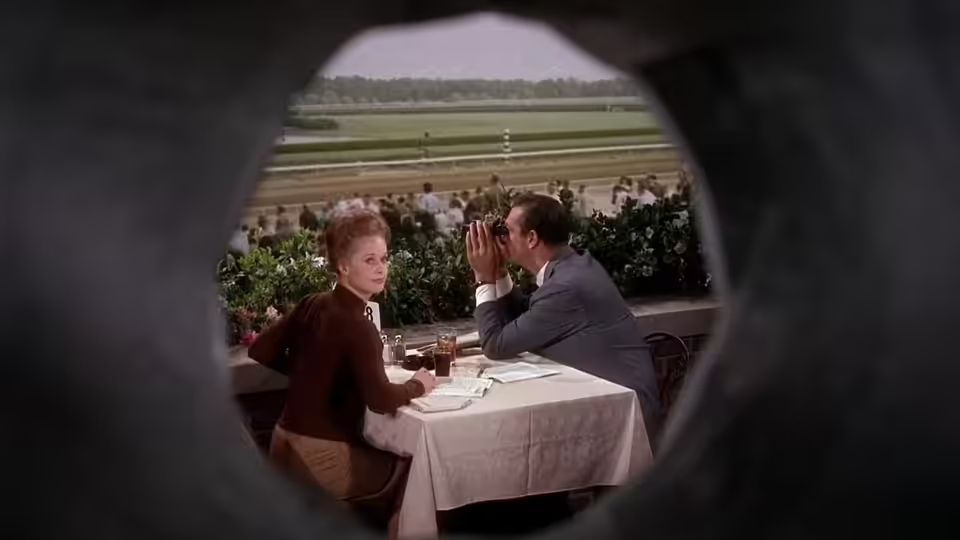
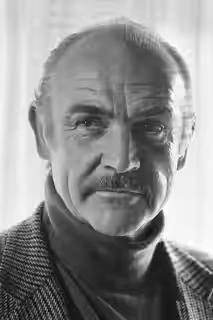
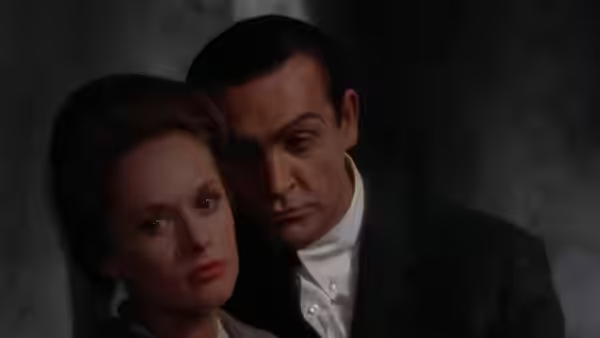
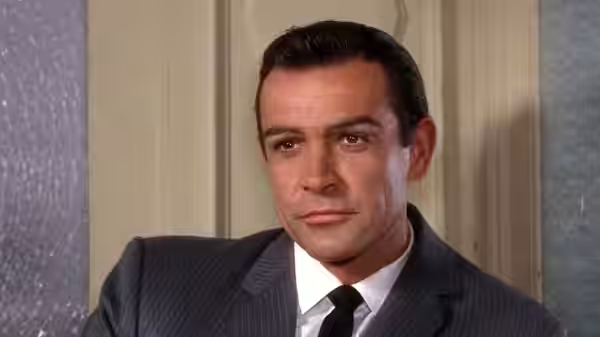
Then there is Mark Rutland, whom Sean Connery plays with relaxed good humour and a stare he holds a beat too long; the film never asks us to like him quite as much as it expects. Mark catches a thief and decides to keep her; he reads books on the criminal female and quizzes her over dinner. Diane Baker, as Lil, the sister-in-law who wanted Mark for herself, watches the whole business with a face that says so, and she gets the film’s few dry lines. There is a scene in the second half, on a boat, that we will not describe. It turned our stomach, and it is meant to; the trouble is that the film then wants us to go on hoping these two will be happy, and we could not.
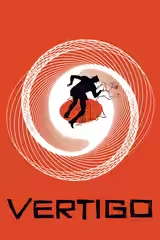
Against Hitchcock’s own work it is the odd one. Vertigo (1958) made a man’s obsession with remaking a woman into a tragedy; Psycho (1960) made a damaged childhood into a knife. Marnie wants both and settles for talking about them, and the last stretch explains in words a good deal the pictures had already made plain.
See it for Hedren and Latham, and for the safe. Watch it at home, where the back projection is easier to forgive and the mother’s house feels smaller and closer. Expect two hours of a man deciding what a woman is for, and a film that half knows it should not have let him.