Niki Caro’s Mulan has vivid colour, imposing costumes and a capable lead in Liu Yifei. We wish its characters received the same care: the hurried storytelling and fussy cutting leave too little room for feeling.
Niki Caro’s Mulan takes its heroine seriously, which ought to be a sound place to start. But this is a disappointing action fantasy, handsome enough to keep us watching and too thinly written to make that attention feel rewarded. The film wants strength, duty and self-determination to carry considerable weight, yet its characters are rarely allowed much untidy human behaviour. A little humour would have helped, especially when the dialogue grows solemn.
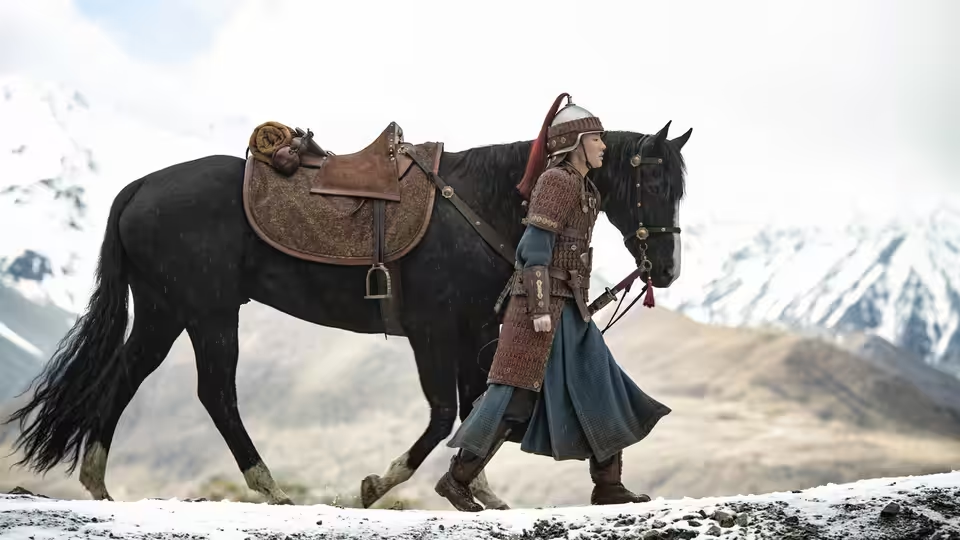
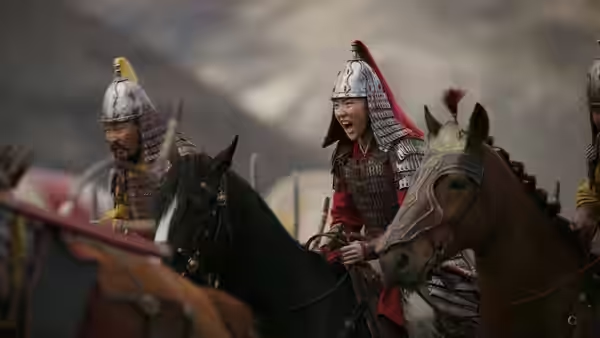
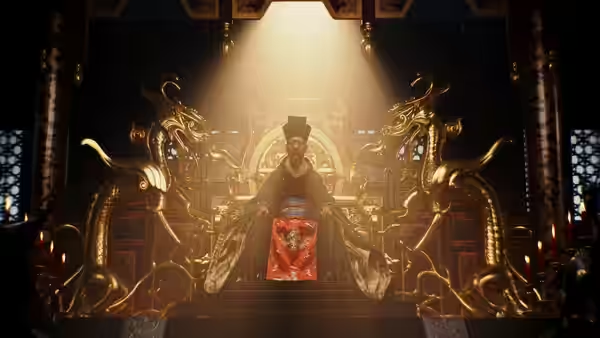
Mandy Walker’s cinematography supplies the most consistent pleasure, using vivid colour to give the spectacle an energy the conversations often lack. Grant Major’s production design gives the action suitably imposing surroundings, while Bina Daigeler’s costumes hold our attention even when the characters do not. The sets and clothes are worth looking at in their own right. The difficulty is that a setting and an outfit can only do so much for a character whose personality has barely been written.
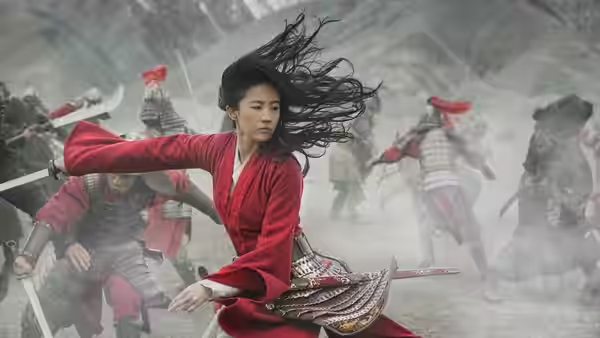
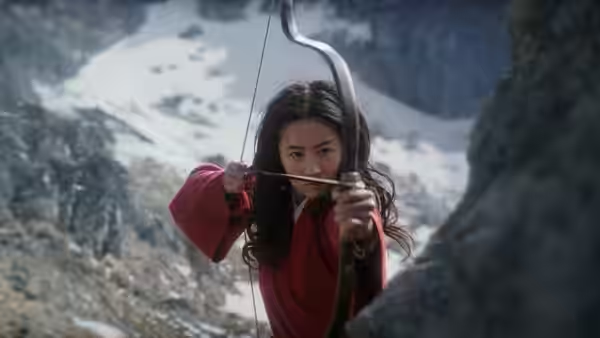
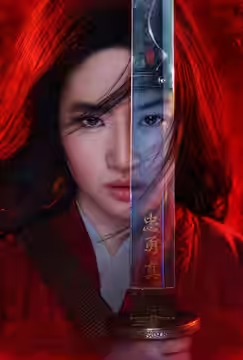
Liu Yifei, as Hua Mulan, gives the film a steady centre. Her physical assurance is persuasive, and there are stretches when simply watching her move supplies the interest missing from the dialogue. Gong Li makes Xian Niang a commanding presence too, without needing the film to insist on her importance. Their relationship deserves more attention than the script gives it, and the missed opportunity is particularly irritating because both performers seem capable of making it count.
The screenplay is credited to Rick Jaffa, Elizabeth Martin, Lauren Hynek and Amanda Silver, and it repeatedly hurries past the things that might make its heroine individual. We get the broad lessons clearly enough, but too little of the hesitation, friction or humour that could make them convincing. The villain-focused plotting takes up time without making the people involved much more interesting. This leaves the film oddly busy for something that gives us so few reasons to feel attached.
David Coulson’s editing causes a more immediate problem. The fights have promising movement, but the cuts too often interrupt our sense of how one action follows another, while slow motion arrives without a clear reason for the emphasis. We were frustrated when the cutting made Liu Yifei’s movement harder to follow; we wanted to watch the performance, and kept noticing the editing instead. In a martial-arts adventure, giving us time to see a body complete a movement is a basic pleasure, and this film makes it unnecessarily difficult.
Harry Gregson-Williams’s music is more effective at keeping the adventure moving, giving the action an impetus that the storytelling struggles to maintain. The film can still generate excitement, and its more expansive passages suggest why Caro’s approach might have worked. Yet the glossy visual effects soften the impact of the combat, even when the staging is confident. Judged simply as a martial-arts fantasy, it needs more clarity and a less dutiful manner.
There is enough skill here to prevent Mulan becoming a wasted evening, but not enough warmth or dramatic detail for us to recommend it. Liu Yifei and Gong Li deserved scenes that let their characters become more than statements about strength. Admirers of costume and production design will have plenty to examine. Anyone coming chiefly for the fighting should be prepared to lose patience with the cuts.