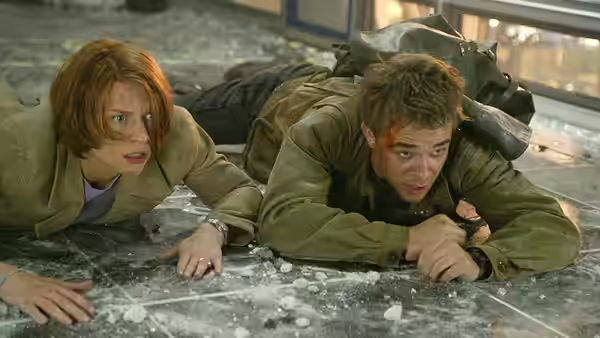
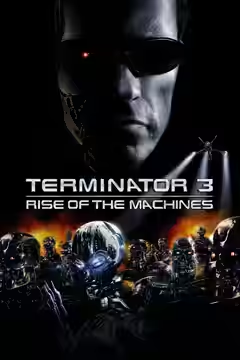
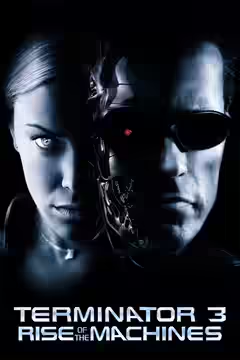
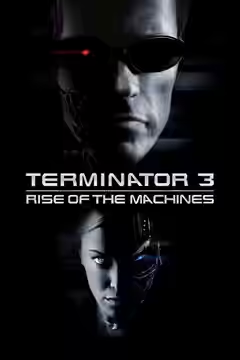
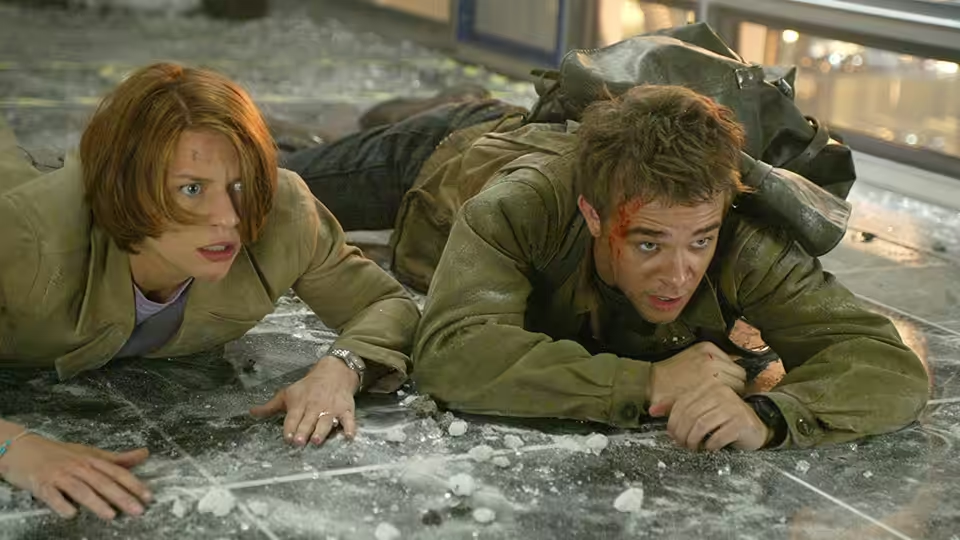
Kate Brewster (Claire Danes) and John Connor (Nick Stahl) lying on broken glass
Film review

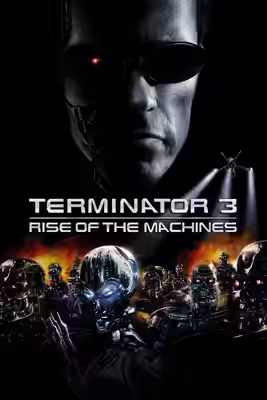
Terminator 3: Rise of the Machines

2003 · Directed by Jonathan Mostow · 1h 49m

In a sentenceA crane the size of a house, a woman in red leather, and Arnold hanging off the hook like a coat

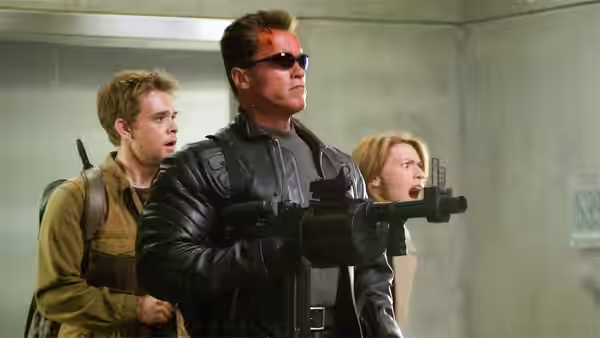
Los Angeles, some years after 1997. John Connor (Nick Stahl) is in his twenties, sleeping rough and paying cash, because the nuclear war he was raised to survive was due that year and never came. After a motorbike crash he breaks into an animal hospital for painkillers and is found there by the vet, Kate Brewster (Claire Danes), who knew him at school. The same night a T-X (Kristanna Loken), a new model with a weapon in her arm and a liquid-metal skin, arrives from the future and begins working through a list of names, Kate’s among them. An older Terminator (Arnold Schwarzenegger) arrives to keep the two of them alive. Kate’s father, Robert Brewster (David Andrews), a senior Air Force officer, is being pressed to switch on a defence system called Skynet to stop a computer virus.

Plays from YouTube when you press play; nothing loads from them until then.

Fi1m review

Jonathan Mostow’s third Terminator is an honest, well-built chase film with one tremendous set piece and a final reel braver than anything around it. It is also a retread of the first film, and it knows it. Worth an evening; do not expect Cameron.

Twelve years after Terminator 2: Judgment Day, and without James Cameron, the series comes back with a new director and the old machine. John Connor (Nick Stahl) is in his twenties and living off the grid, because the nuclear war he was raised to survive was due in 1997 and did not come. A new model (Kristanna Loken) arrives from the future to settle the question, and an older one (Arnold Schwarzenegger) arrives to stop her. Jonathan Mostow’s film is not the disaster many feared and not the equal of what came before. It is a sturdy, loud, often funny chase film with one tremendous set piece and a final reel braver than the rest of it.

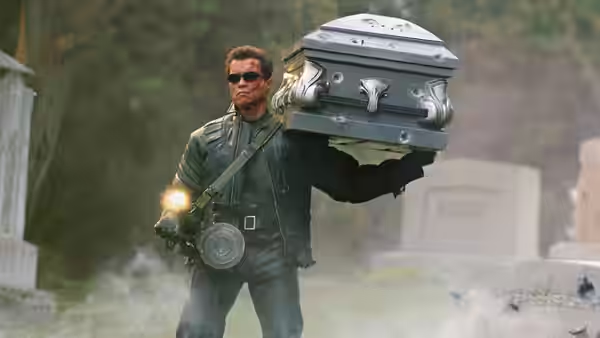
John Brancato and Michael Ferris’s script, from a story they wrote with Tedi Sarafian, follows the shape of the 1984 original almost beat for beat: a killer, a protector, a target who believes none of it, and a great deal of running. The film does not hide this, and makes jokes about it, half of which land. Schwarzenegger’s Terminator walks into a bar on ladies’ night, takes a stripper’s leathers and comes out in star-shaped sunglasses, and the film has the sense to let him take them off. When he announces that he is an obsolete design, Schwarzenegger says it without a flicker, and it is funnier than it has any right to be.

The crane chase is why you watch. The T-X steals a mobile crane the size of a house, snags the Terminator on its hook and drives through Los Angeles with him swinging behind her, through the glass front of an office block and out the other side. Don Burgess shoots it from street level, so we always know where the crane is, where the fire engine is and where John is on his bike, and Nicolas De Toth and Neil Travis let each collision finish before the next one starts. We grinned through the whole thing, because nothing in it asked to be admired; it simply kept happening, and kept getting bigger, for minutes on end.

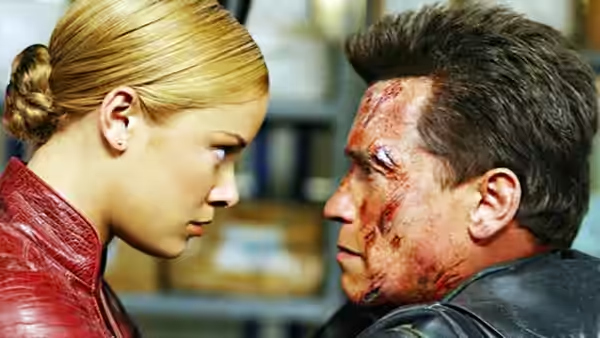
Schwarzenegger is heavier and slower than he was, and Mostow uses that rather than hiding it. Stahl plays John as pale and twitchy, a man who has been told he will lead the human race and would rather not, and his fear reads as fear rather than sulking. Claire Danes’s Kate Brewster is dragged out of a veterinary clinic, engaged to a pleasant man (Mark Famiglietti) and not remotely interested in saving the world, and Danes plays exasperation better than anyone else here. Loken, in April Ferry’s red leather, has a model’s stillness and a sneer she can hold for a minute; she is less frightening than the liquid policeman of the last film, but she does the job. Earl Boen returns as Dr Silberman for one scene, and it is the best-written thing in the film.

The trouble is everything between the set pieces. The T-X is a T-1000 with a gun in her arm and the power to boss other machines about, which is a list of features rather than an idea. Jeff Mann’s Cyber Research Systems facility is anonymous corridor and blue-lit server room. Marco Beltrami’s score is brass and drums telling us to be tense, and it holds the old theme back until almost the end. David Andrews’s Robert Brewster, Kate’s father, carries the plot’s one thought about how the machines take over, that a computer virus is the excuse the military needs to hand everything to Skynet, and the film hurries past it.

Then there is the ending, which we will not describe. We will say that the last ten minutes go somewhere the rest of the film gave us no reason to expect, and that we sat quite still, colder than we had been all evening, while the credits began. Cameron’s films earned their dread over two hours; this one buys it in a lump at the close, but it does buy it.

Terminator 2 was about a boy, his mother and a machine learning to be a father, with the end of the world as backdrop. Here the end of the world is the whole story and the people are along for the ride, and it is a smaller film for it. It runs 109 minutes and carries a 12A, which softens things so that machines and people go through walls and stand up unmarked. See it for the crane, for Schwarzenegger’s timing and for the final reel; the rest is furniture you have seen before.
Critical consensus AI synthesised

66
Positive
12
Mixed
3
Negative
2

Most critics like it, though few love it. Twelve of seventeen reviews are positive, and the praise lands on the same things: the action set pieces, the long crane chase in particular, and Arnold Schwarzenegger, whom several reviewers find on better form than expected. Jonathan Mostow gets credit for pace, for a lighter comic touch than the series has shown before, and for an ending that more than one critic calls surprisingly dark and bold.

The reservations cluster just as tightly. The commonest complaint is that the film retreads the plot of the earlier entries without their dread or ideas, and that Mostow, however capable, lacks James Cameron’s gift for making an audience fear for the characters. The spread runs from strong approval to outright dismissal; The New Yorker finds it a numbing spectacle and Time Out a cheesy retread. Later reassessments from Den of Geek and Collider are kinder than most of the 2003 notices.

Variety
30 June 2003 · Todd McCarthy
85*

McCarthy calls it a hard-hitting straight-ahead actioner that delivers the goods without pretension and balances urgent drama with eye-popping violence. He singles out the scale of the crane chase and Schwarzenegger's return to form.

Read the full review →
Los Angeles Times
2 July 2003 · Kenneth Turan
80*

Turan praises the film as an expertly paced sci-fi thrill machine that marries impressive action with persuasive storytelling and unexpected darkness. He singles out the crane chase sequence and the ability to make audiences worry about the characters.

Read the full review →
RogerEbert.com
7 July 2003 · ★★★/4 · Roger Ebert
75

Ebert finds the film a skillful piece of work that will entertain action fans but dumbs down the sci-fi ideas of its predecessors. He singles out the wall-to-wall action sequences and the ending's perfunctory quality as key elements.

Read the full review →
Empire
· Kim Newman
70*

The review finds the film a sleek, satisfying return to the series' supercharged B-picture roots that avoids the disaster many feared. It singles out the machine-like efficiency of the action and the genuinely surprising, affecting finale for praise.

Read the full review →
Evening Standard
10 April 2012 · Neil Norman
70*

The critic calls it a serviceable but lesser film that recycles elements from prior entries while delivering set-piece action and metal-on-metal violence. He singles out the balanced humour and the courage to embrace an unremittingly bleak theme for praise.

Read the full review →
Screen Daily
30 June 2003
70*

The review notes that the film delivers entertaining action, drama and humour that will appeal to fans and new audiences, though it lacks the dark intensity and groundbreaking effects of Cameron's entries; praises the action set pieces orchestrated with skill.

Read the full review →

Straight answers AI written, from our review

Is Terminator 3: Rise of the Machines worth watching?
Terminator 3: Rise of the Machines is worth an evening for anyone who wants a loud, well-built chase film, and we scored it 61. It follows the shape of the 1984 original almost beat for beat, and everything between the set pieces is furniture. Watch it for the crane chase, Schwarzenegger's timing and a final reel braver than the rest.
How long is Terminator 3: Rise of the Machines, and what is it rated?
Terminator 3: Rise of the Machines runs 1h 49m. It is an action and thriller film.
Where can I watch Terminator 3: Rise of the Machines in Belgium?
Terminator 3: Rise of the Machines is available to rent from meJane and Amazon Prime Video from €2.99. Availability is checked daily; the links above go straight to each service.
How violent or frightening is Terminator 3: Rise of the Machines, and is it suitable for children?
Terminator 3: Rise of the Machines is a UK 12A, so the violence is loud and constant but softened: machines and people go through walls and stand up unmarked. The T-X is less frightening than the liquid policeman of the earlier film, and much of the action is played for laughs. The last ten minutes turn cold and grim, which younger children may find harder than the crashes.
Do you need to have seen the other Terminator films before Terminator 3: Rise of the Machines?
Terminator 3: Rise of the Machines can be followed without the earlier films, since its plot is a straightforward chase and it explains who John Connor is and why he is hiding. It is not the place to start, though: its jokes depend on knowing the old machine, and its ending lands hardest if you have seen what the series promised before. See the first two first if you can.

What should I watch after Terminator 3: Rise of the Machines?
After Terminator 3: Rise of the Machines, try Terminator 2: Judgment Day (1991, Fi1m 88): The one this film keeps looking over its shoulder at, and with reason. Then Mad Max 2 (1981, Fi1m 88): Vehicles as weapons, shot so you always know where everyone is.
What order should I watch the Terminator films in?
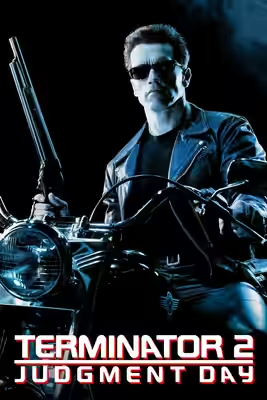
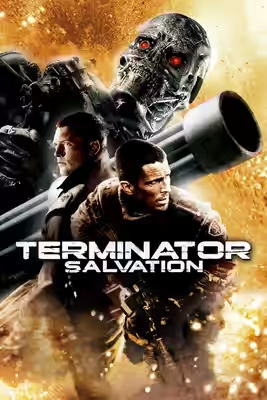
Release order is the safe choice for Terminator, and it is the order our collection page lists them in. Terminator 3: Rise of the Machines is number 3 of the 6 Terminator titles on Fi1m; before it comes Terminator 2: Judgment Day and after it Terminator Salvation. The full order.

Part of · 3 of 6

Terminator

6 films on Fi1m · 1984–2019 · average 65 · best The Terminator 88

All 6 in order

Cast

If you liked this, try…

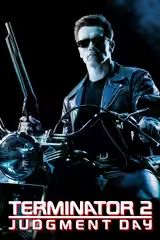
  1. Terminator 2: Judgment Day (1991, Fi1m 88)The one this film keeps looking over its shoulder at, and with reason.

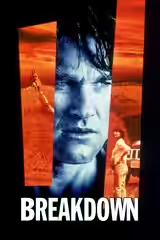
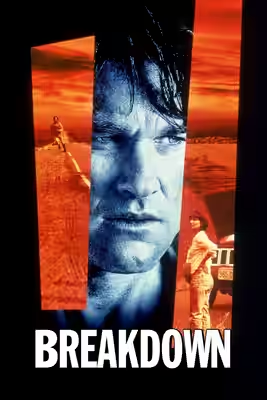
  2. Breakdown (1997) · not reviewed yetMostow’s earlier thriller: one man, one truck, no fat on it anywhere.

  3. Mad Max 2 (1981, Fi1m 88)Vehicles as weapons, shot so you always know where everyone is.

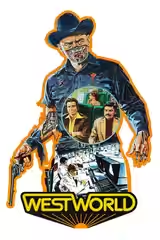
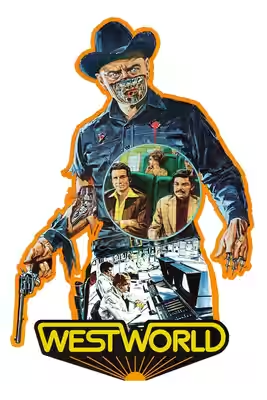
  4. Westworld (1973) · not reviewed yetThe unkillable machine walking after you, done first and done cheaply.

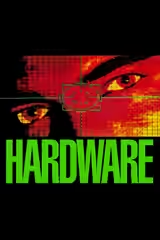
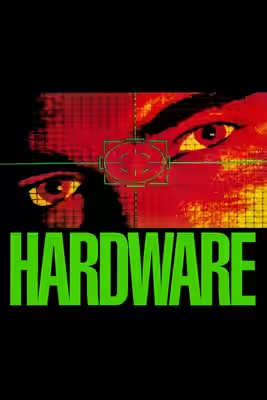
  5. Hardware (1990) · not reviewed yetA British killer robot in one flat, made for the price of this film’s catering.

Free account

Know what to watch tonight

Two lists that know where things are streaming, collections you can share, your own score beside ours, and Discover that remembers what you have seen.

  • Want to see, sorted by what is streaming now
  • Seen, with your score out of ten
  • No adverts, ever