Ridley Scott tells one accusation three times, and only the third telling, Jodie Comer’s, earns the method. The rest is handsome, blunt and too long, with a final duel savage enough to make you forget, briefly, whose story this was.
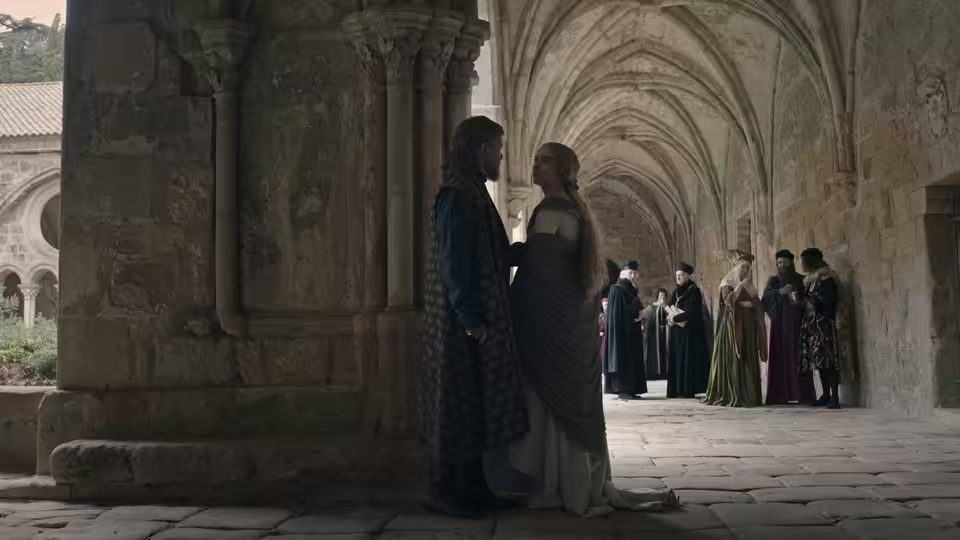
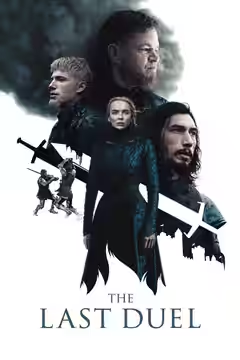
Ridley Scott’s The Last Duel goes to Normandy in the 1380s for the story of a squire, his wife, his former friend and the trial by combat that settled the matter between them. The screenplay, by Matt Damon, Ben Affleck and Nicole Holofcener, tells it three times: as Jean de Carrouges remembers it, as Jacques Le Gris does, and as Marguerite de Carrouges does. The idea is sound. The film is 153 minutes long, and those two facts are at odds for most of the evening. It is worth seeing for the third chapter and for the fight at the end, and it makes you sit through a good deal to reach either.
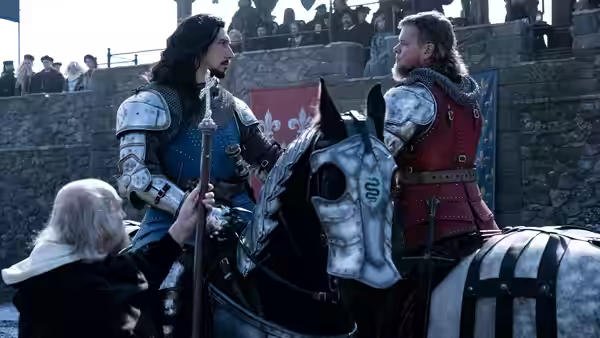
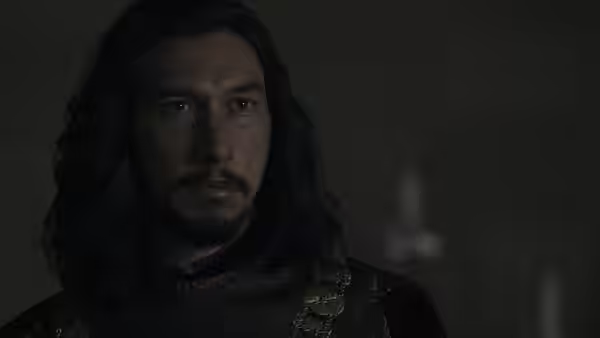
Chapter one belongs to Damon’s Carrouges, played as a man permanently owed something: a scar down the cheek, a mullet, a jaw set against the world. The script understands that a medieval grievance is about land and money before it is about honour, and it keeps count of both. Adam Driver’s Le Gris is the clever one, the count’s man who reads Latin and keeps his accounts, and Driver gives him a stillness that reads as good manners here and as something else later. Affleck’s Count Pierre, blond, bored and cruel for sport, is the one performance that knows it is allowed to be enjoyed, and we enjoyed it.
Chapter two runs the same years again through Le Gris’s eyes, and Claire Simpson cuts the repeated scenes so the small differences register as corrections: a look held a beat longer, a kiss at a reconciliation that in his memory Marguerite returns. That much of the method works. Then the chapter shows the assault, at length, and the third chapter shows it again. We understood the argument, that the second version is a man’s lie about himself and the third is what happened. We still felt, sitting there, that the film had decided it could show us the thing twice and so it did.
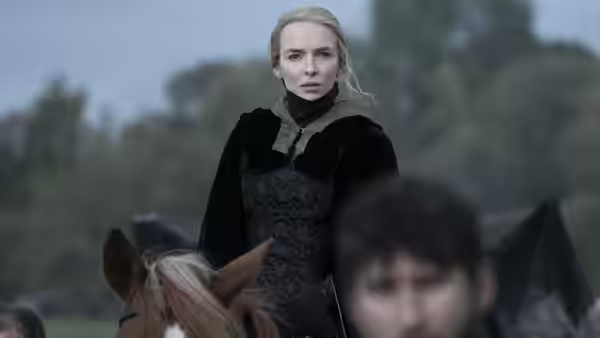
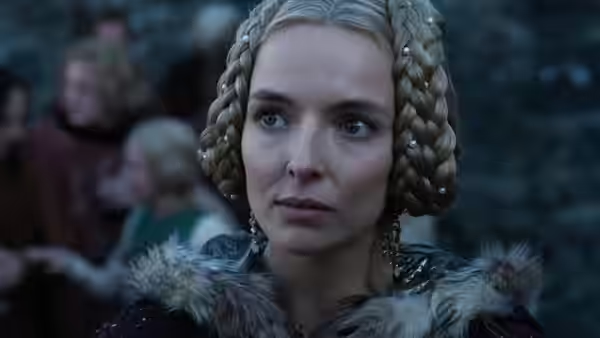
The third chapter is the reason to see the film. Marguerite has been standing at the edge of the frame for two chapters, and Jodie Comer makes it clear how much was going on there: the estate she runs while Jean is away at war, the rents she collects more efficiently than he did, the mother-in-law (Harriet Walter) who keeps the house like a garrison, the friend Marie (Tallulah Haddon). Comer plays her as clever, watchful and tired of being discussed, and when she tells her husband what happened to her, his first thought is for himself, and she notices. The chapter’s title card holds on the words “the truth” a second after the rest has faded. It is the film’s best joke and its only quiet one.
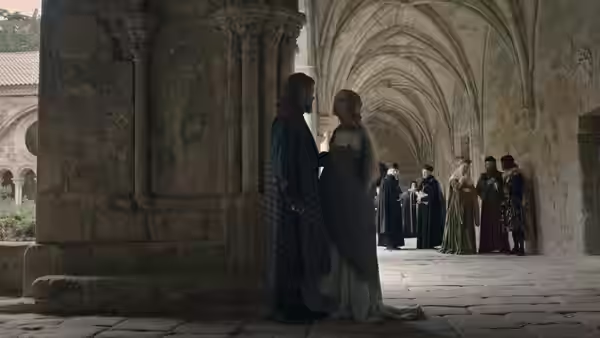
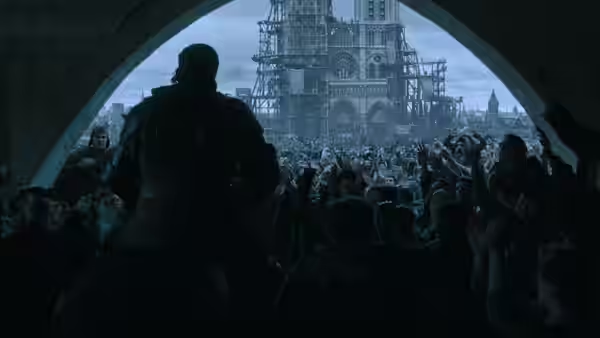
Dariusz Wolski shoots it all under a low grey sky, mud and wet stone outside, candlelight through slit windows inside, and after two hours we were tired of it. Arthur Max builds the Paris lists as a timber box on frozen ground, ringed with stands. Janty Yates does the sharpest work in the film: Marguerite’s gowns change cut and colour depending on which man is remembering her, and you can tell the chapter by her neckline. Harry Gregson-Williams keeps the score to low drums and a choir and mostly stays out of the way. The dialogue is flatter than the pictures, plain modern English that sits oddly in a French court, and the accents wander from scene to scene.
The duel itself is superb and ugly. Scott stages it as horses first, then axes, then two exhausted men in armour rolling in frozen mud, and he lets it take as long as it takes. We flinched more than once. Then we noticed Marguerite in the stands with nothing to do for ten minutes but watch two men decide her fate, which is the history, and is also the film forgetting for a while whose story it had just told us it was.
Scott’s first film, The Duellists (1977), was about two men who could not let a quarrel go, and this one is closer to that than to Gladiator (2000): more intelligent, less fun, longer than both. See it for Comer and for Affleck, and consider watching at home, where a pause after the second chapter costs nothing and the third arrives fresher. It carries an 18 certificate and it earns it.