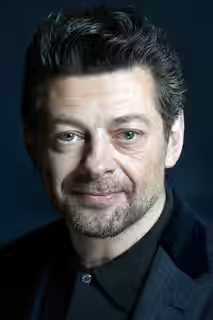
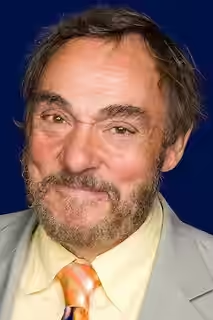
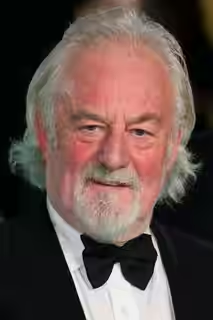
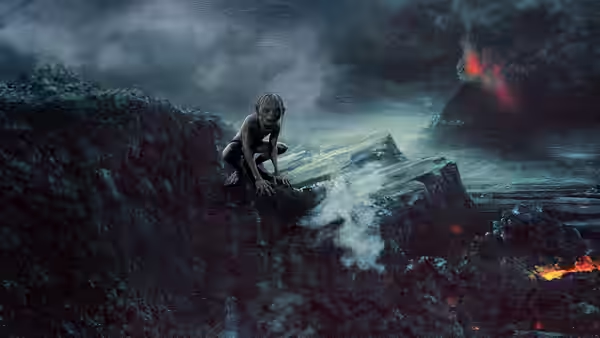
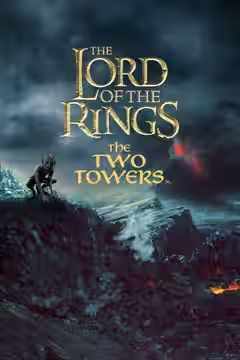
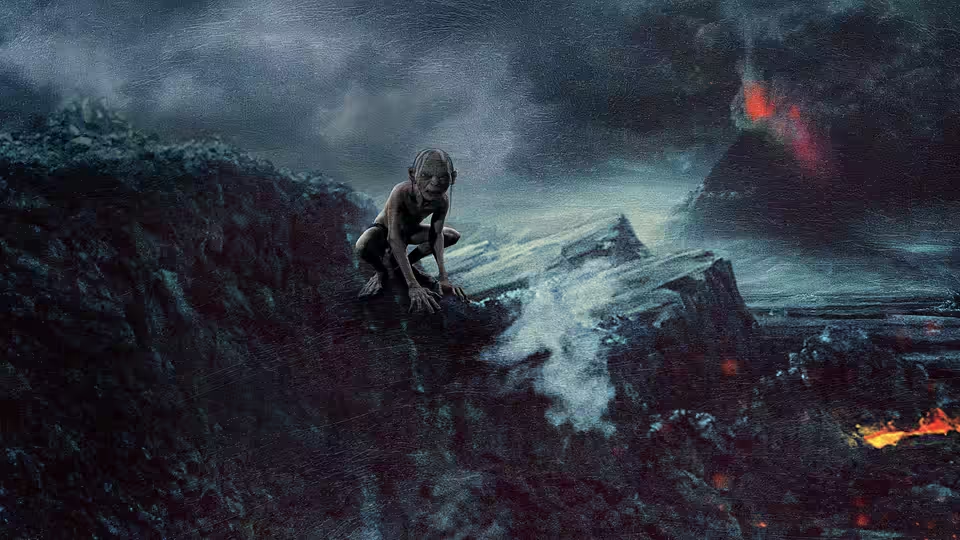
Gollum (Andy Serkis) crouching on rocks above streams of molten lava
Film review

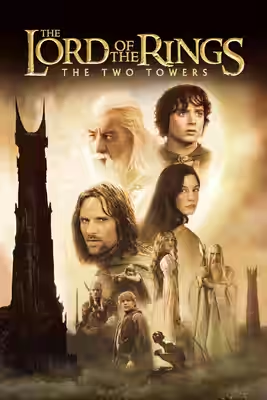
The Lord of the Rings: The Two Towers

2002 · Directed by Peter Jackson · 2h 59m

In a sentenceWe would not trust Gollum with the coats, but we would give him another scene

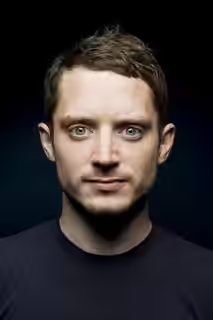
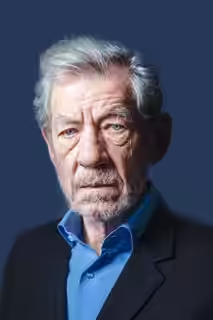
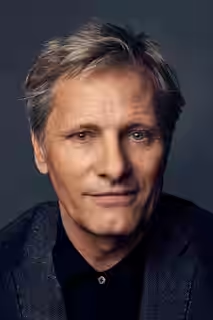
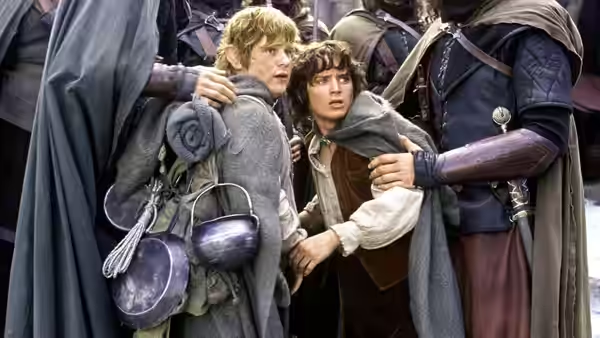
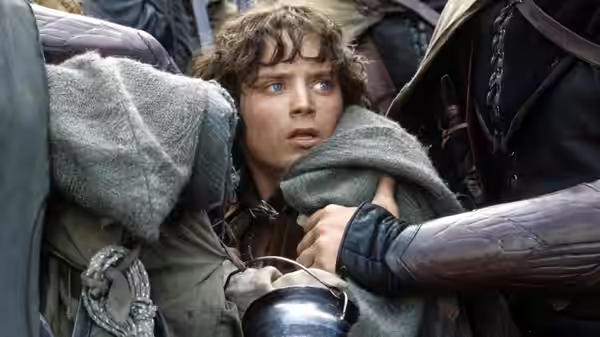
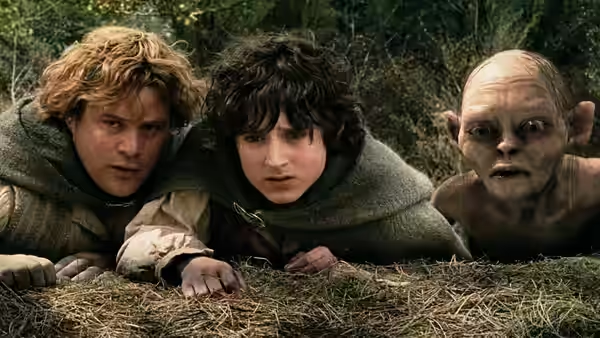
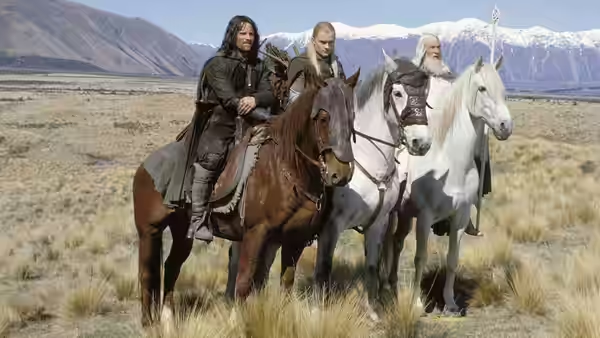
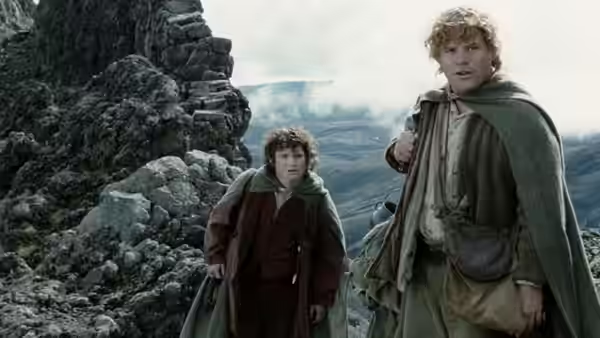
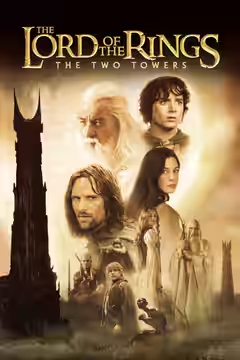
Frodo (Elijah Wood) and Sam (Sean Astin) continue their journey as the adventure splits across several storylines. Gollum (Andy Serkis) brings the ring’s power to corrupt into focus, while Aragorn (Viggo Mortensen) takes a larger part in the fighting. Gandalf (Ian McKellen), Legolas (Orlando Bloom) and Gimli (John Rhys-Davies) also feature, alongside Théoden (Bernard Hill) and Éowyn (Miranda Otto). Peter Jackson’s adaptation of J. R. R. Tolkien reaches its middle chapter, following its scattered company through a landscape increasingly shaped by war.

Plays from YouTube when you press play; nothing loads from them until then.

Fi1m review

The Two Towers is a stirring fantasy adventure, though Peter Jackson’s divided storylines sometimes make it lumber. Andy Serkis gives Gollum enough fear and spite to compete with the armies for our attention.

Peter Jackson gives the middle chapter of this adventure enough danger and feeling to justify its considerable length. The Lord of the Rings: The Two Towers is engrossing, though its divided storylines occasionally make it cumbersome. It asks us to follow several journeys while the fighting grows in importance, a difficult change of emphasis to manage. At 179 minutes, the interruptions have time to register.

The surest reason to stay is Andy Serkis’s Gollum. The computer-created face is expressive enough for fear to interrupt malice without making either seem less convincing, and Serkis never makes the creature safely endearing. We felt sorry for him, and were unsettled by how readily that pity arrived. The frightened expressions keep asking for sympathy that the spite in his voice makes difficult to sustain. The ring’s capacity to damage someone becomes easier to grasp when we have to spend time with the damaged person.

Viggo Mortensen gives Aragorn the gravity needed to carry the film’s increased emphasis on action, although that emphasis sometimes pushes the hobbits too far aside. Sean Astin’s Sam supplies a welcome directness of feeling when the larger story threatens to turn everyone into a military responsibility. Astin makes concern for another person seem sufficient reason to keep going. We do not need another account of the stakes when his face has already made them clear.

Andrew Lesnie’s landscape photography makes the distances feel daunting, so the journeys retain some sense of effort even when the film is hurrying between them. Grant Major’s production design gives the inhabited places a convincing weight beside that open country. At Helm’s Deep, the solidity matters: the battle needs somewhere we believe people could defend, not simply an impressive backdrop. Jackson’s staging keeps the struggle comprehensible at a scale that could easily have reduced individual bodies to movement across the screen.

The difficulty comes in getting from one strand to another. The screenplay, by Fran Walsh, Philippa Boyens, Stephen Sinclair and Jackson, cannot always make those switches feel necessary at the moment they occur. Michael Horton’s editing maintains momentum within the action, but some returns to the other journeys feel like obligations being discharged. A quieter scene can be welcome on its own terms and still arrive just when we have settled into caring about somebody else.

Helm’s Deep repays much of that patience. Jackson lets the pressure build across the battle, and the sustained tension is more persuasive than a succession of isolated displays of force would have been. Howard Shore’s score gives the fighting weight without making it feel like a victory parade, although its solemnity can become insistent elsewhere. There is enough urgency here to justify the time spent on the battle, and enough attention to the people involved to keep us concerned about them.

Fantasy adventures often struggle to make an enormous threat feel personal. Jackson succeeds most clearly when he lets Gollum or Sam command our attention without another reminder of the wider war. We could have used more of that confidence in the quieter stretches, but the spectacle has earned its space too. Give it the full evening, and do not expect every strand to move at the same speed.
Critical consensus AI synthesised

74
Positive
15
Mixed
2
Negative
2

Most critics are won over, with fifteen of nineteen positive. The praise clusters on two things: Gollum, the computer-generated creature almost every review calls the standout, and the battle at Helm’s Deep, which even the doubters describe as the film’s high point. Several find it more assured than The Fellowship of the Ring, faster on its feet once the exposition is behind it, and a few credit Jackson with underplaying Tolkien’s weaker passages rather than filming them dutifully.

The reservations gather around the intercut storylines, which some find shortchange the smaller threads and slacken the tension, and around the cliffhanger ending. The spread is wide. The Guardian finds long stretches boring; The Independent thinks it has lost Tolkien’s essence to horror-film clichés; The Times calls the acting wooden, though it too rates Gollum a marvel. The dissenters are chiefly the British broadsheets, writing on release.

Empire
18 December 2002 · ★★★★★ · Caroline Westbrook
100

The critic finds The Two Towers not quite as strong a standalone as Fellowship and somewhat one-note in tone, but still awards it full marks due to the high benchmark set by the series. They single out the breathtaking Battle of Helm's Deep and the impressive Gollum for particular praise.

Read the full review →
Screen Daily
6 December 2002
90*

The second film in Peter Jackson's trilogy is one of the year's best, a thrilling, muscular entertainment that accelerates the pace into real adventure after the first film's exposition. It showcases Jackson as a disciplined cinematic storyteller who eradicates Tolkien's prose tedium in favor of fast-moving action, with standout praise for the compelling Gollum creation and the urgent energy elucidating themes of good versus evil.

Read the full review →
Sight and Sound
1 February 2003
90*

The review praises Jackson's adaptation for shifting emphasis to underplay Tolkien's weaknesses and staging the Helm's Deep battle as satisfying spectacle. It singles out the CGI Gollum as the standout, stealing the show with expressive range and perfect mimesis.

Read the full review →
The AV Club
18 December 2002 · Keith Phipps
90*

The critic finds the film better than its predecessor, commending its seamless shifts between epic action and lyrical moments, thematic depth on war and loss, and technical achievements including Gollum.

Read the full review →
The New York Times
18 December 2002 · Elvis Mitchell
90*

The critic praises Jackson's scrupulous devotion to Tolkien's spirit in a gripping epic that drops viewers into the action and creates a perfect mating of filmmaker and material.

Read the full review →
Time Out
10 September 2012 · TCh
90*

The review calls the film the centrepiece of the trilogy that redefines 'epic' in size and scale while giving the series stature through attention to small things like Sam's emotional moments. It notes the proliferation of subplots but highlights Gollum exposing the ring's corruptive power.

Read the full review →

Straight answers AI written, from our review

Is The Lord of the Rings: The Two Towers worth watching?
The Lord of the Rings: The Two Towers is worth watching for anyone with an evening to spare for a long fantasy adventure, and we scored it 85. Andy Serkis’s Gollum and the sustained siege at Helm’s Deep are the reasons to stay. The divided storylines make it lumber at times, so expect some strands to move more slowly than others.
How long is The Lord of the Rings: The Two Towers, and what is it rated?
The Lord of the Rings: The Two Towers runs 2h 59m. It is an adventure and fantasy film.
Where can I watch The Lord of the Rings: The Two Towers in India?
The Lord of the Rings: The Two Towers is streaming on Netflix in India, and it is also available to rent from Amazon Prime Video and Apple TV from ₹119.00. Availability is checked daily; the links above go straight to each service.
How violent or frightening is The Lord of the Rings: The Two Towers, and is it suitable for children?
The Lord of the Rings: The Two Towers is a 12A, with prolonged battle scenes and a Gollum whose fear and spite we found unsettling rather than cute. It suits older children and teenagers who can sit through 179 minutes of war and menace. Younger or more nervous children may find the length and the grimness of the fighting too much.
How does The Lord of the Rings: The Two Towers compare to The Lord of the Rings: The Fellowship of the Ring?
The Lord of the Rings: The Two Towers is bigger and more warlike than The Fellowship of the Ring, and the earlier film is the tighter of the two. The first film follows one company and is the better place to start; the second splits its attention and sometimes stumbles between strands. The sequel gains Gollum and the Helm’s Deep siege, which are worth the extra effort.
Is The Lord of the Rings: The Two Towers based on a true story or a book?
The Lord of the Rings: The Two Towers is based on J. R. R. Tolkien’s novel, not on a true story, and it is the middle chapter of Peter Jackson’s adaptation. You do not need to have read the book to follow the film. Readers should expect a version that leans harder on the fighting than on the quieter journeys.
Do you need to have seen the other Middle-earth films before The Lord of the Rings: The Two Towers?
The Lord of the Rings: The Two Towers does not stand alone; it picks up the journey exactly where The Fellowship of the Ring left it, with no introductions. Newcomers should watch the first film before this one, or the scattered storylines will make little sense. The other Middle-earth films are not required to follow it.
What should I watch after The Lord of the Rings: The Two Towers?
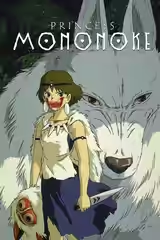
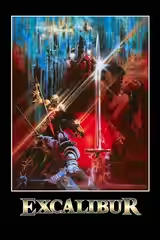
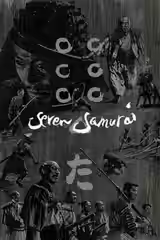
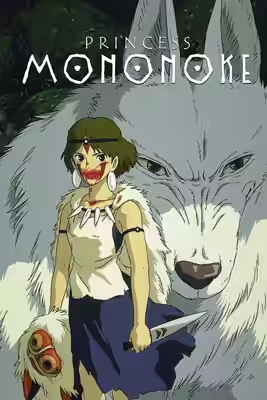
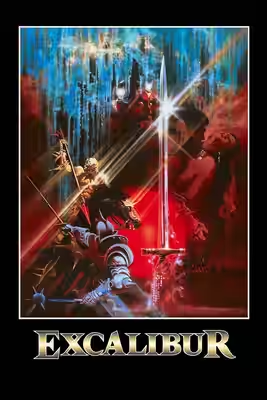
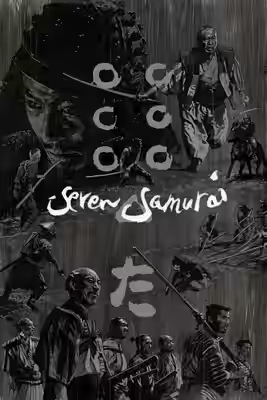
After The Lord of the Rings: The Two Towers, try Princess Mononoke (1997, Fi1m 88): Another fantasy that gives the creatures strong reasons to distrust the humans. Then Excalibur (1981, Fi1m 79): Armour, enchantment and fallible rulers, with rather less interest in respectable behaviour; and Seven Samurai (1954, Fi1m 95): For the patient preparation of a battle whose defenders remain recognisably human.
What order should I watch the Middle-earth films in?
Release order is the safe choice for Middle-earth, and it is the order our collection page lists them in. The Lord of the Rings: The Two Towers is number 2 of the 6 Middle-earth titles on Fi1m; before it comes The Lord of the Rings: The Fellowship of the Ring and after it The Lord of the Rings: The Return of the King. The full order.

Part of · 2 of 6

Middle-earth

6 films on Fi1m · 2001–2014 · average 74 · best The Lord of the Rings: The Fellowship of the Ring 90

All 6 in order

Cast

Awards

Academy Awards, 2003

Nominated
Best Film Editing
Nominated
Best Picture
Nominated
Best Production Design
Nominated
Best Sound
Won
Best Sound Editing
Won
Best Visual Effects

BAFTA Film Awards, 2003

Nominated
BAFTA's Children & Young People Award - Feature Film

Hugo Awards, 2003

Won
Best Dramatic Presentation, Long Form

If you liked this, try…

  1. Princess Mononoke (1997, Fi1m 88)Another fantasy that gives the creatures strong reasons to distrust the humans.

  2. Excalibur (1981, Fi1m 79)Armour, enchantment and fallible rulers, with rather less interest in respectable behaviour.

  3. Seven Samurai (1954, Fi1m 95)For the patient preparation of a battle whose defenders remain recognisably human.

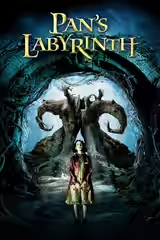
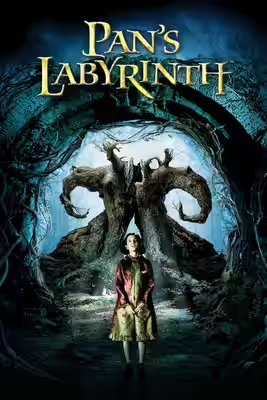
  4. Pan's Labyrinth (2006, Fi1m 87)A harsher meeting of fantasy and war, with cruelty kept painfully close.

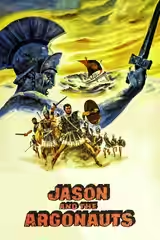
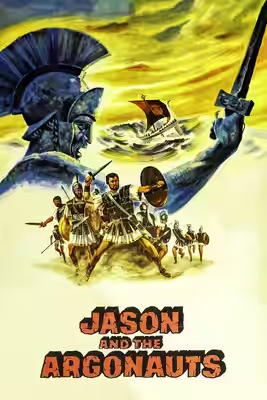
  5. Jason and the Argonauts (1963) · not reviewed yetHandmade creatures and a travelling company facing problems that swords cannot always solve.

Free account

Know what to watch tonight

Two lists that know where things are streaming, collections you can share, your own score beside ours, and Discover that remembers what you have seen.

  • Want to see, sorted by what is streaming now
  • Seen, with your score out of ten
  • No adverts, ever