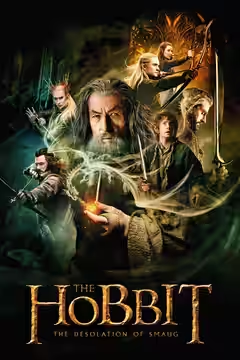
Peter Jackson’s middle chapter is quicker, darker and better than the first, with one river chase and one dragon worth the evening. It is also 161 minutes of running that stops rather than ends, and the padding still shows.
Peter Jackson’s second visit to Tolkien’s slim children’s book has the same problem as the first, which is that there is not enough book to go round. An Unexpected Journey (2012) took the best part of an hour to leave the house. The Desolation of Smaug has the sense to start running and to keep running for most of its 161 minutes, and it is a better film for it. It is still the middle third of something that did not need three parts, and you can see the joins.
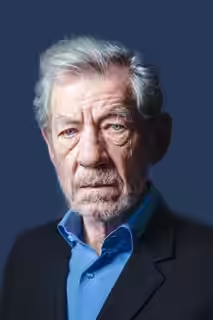
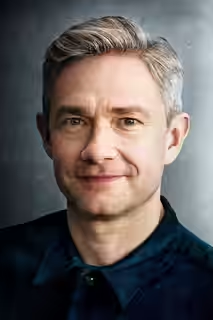
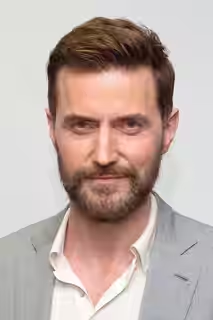
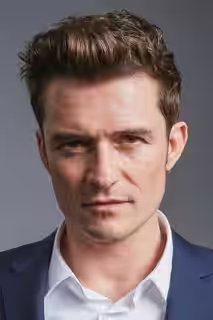
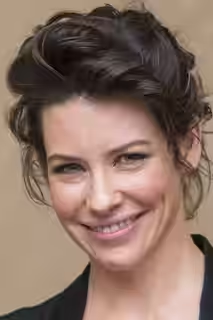
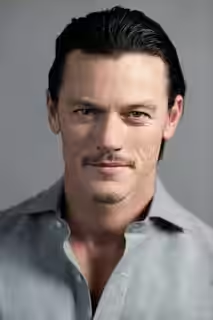
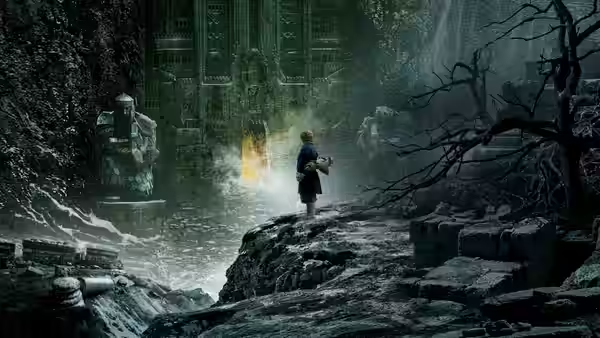
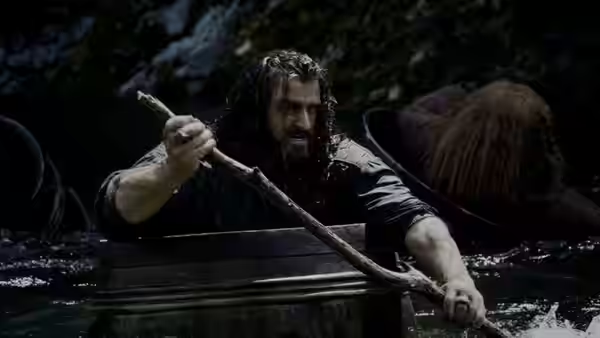
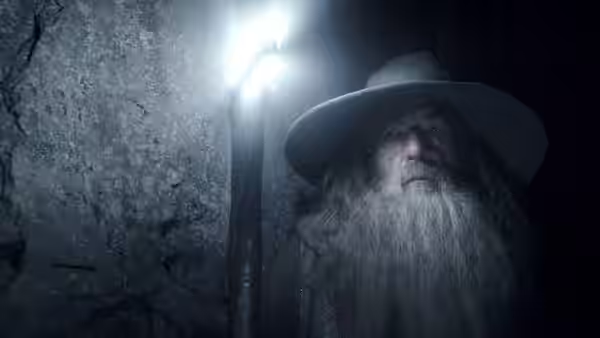
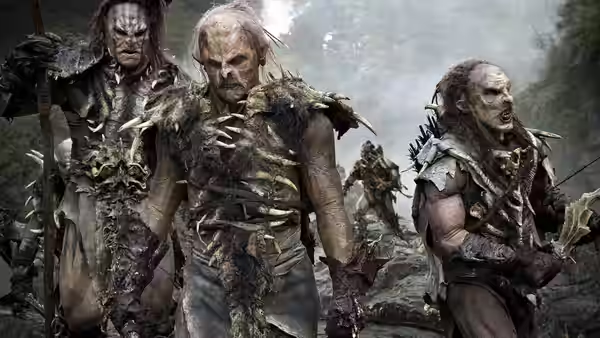
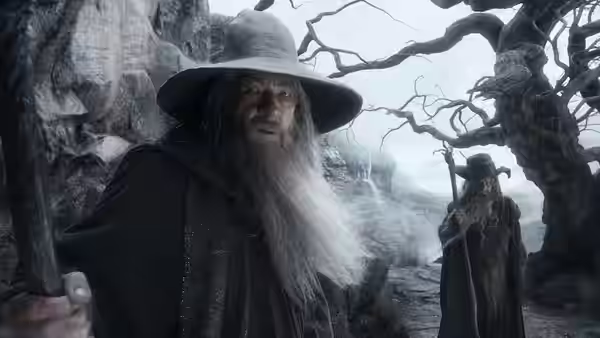
The company is where the last film left it, on the road to the Lonely Mountain with orcs behind. Thorin Oakenshield (Richard Armitage) wants his grandfather’s kingdom of Erebor back and the Arkenstone that goes with it. Bilbo Baggins (Martin Freeman) has a ring in his pocket he has told nobody about. Gandalf the Grey (Ian McKellen) leaves them at the edge of Mirkwood on business of his own. The screenplay, by Jackson, Fran Walsh, Philippa Boyens and Guillermo del Toro, then adds what Tolkien did not: an elf warrior named Tauriel (Evangeline Lilly), a returning Legolas (Orlando Bloom), a bargeman called Bard (Luke Evans) with a family and a grievance, and a great many more orcs.
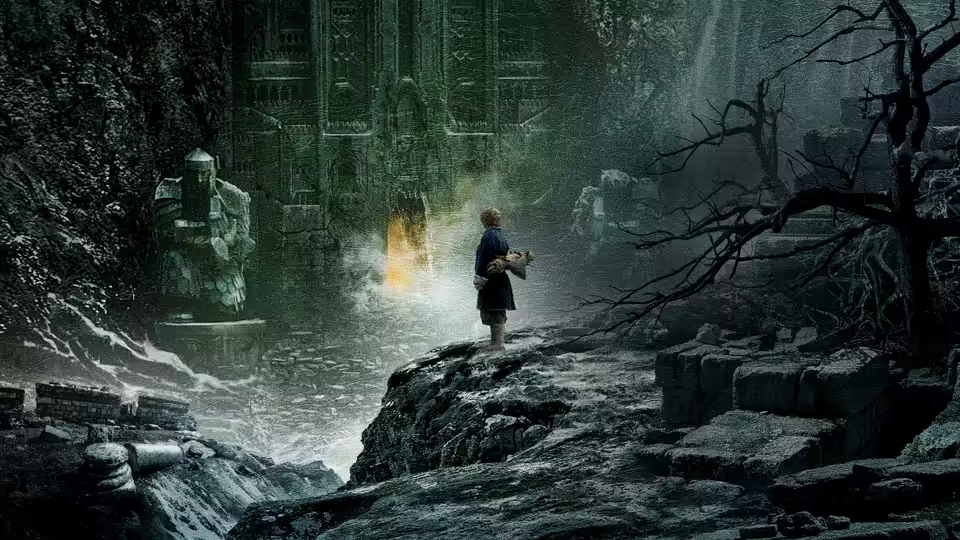
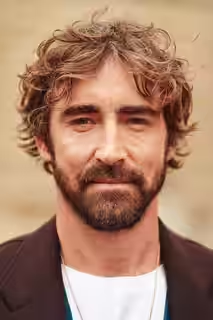
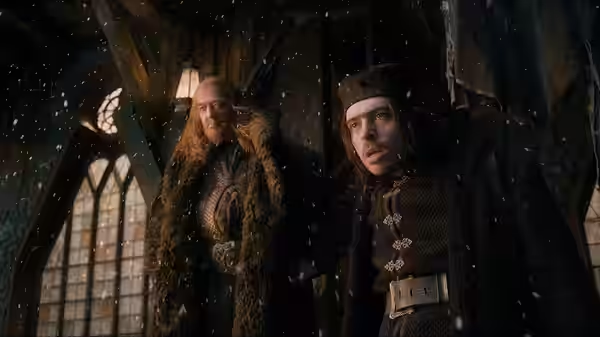
The places are the best of it. Dan Hennah builds Mirkwood as a forest that has been ill for a long time, trunks knotted into fists, cobweb in the light, and Andrew Lesnie drains the colour out until the whole thing is grey and the green of old copper. Lake-town, when the film gets there, is the opposite: rotting timber on stilts, frost on the canals, lanterns in every window, and Stephen Fry’s Master ruling it from a chair he never leaves. Richard Taylor, Bob Buck and Ann Maskrey dress Lee Pace’s Thranduil in robes so heavy he has to move slowly, which suits a king who has plainly never been refused anything.
Two set pieces earn the ticket. The spiders come first, and Jackson has Bilbo put on the ring, so the sound drops away and we hear the creatures muttering to each other about supper. Freeman is good all the way through, fumbling and apologetic and braver than he lets on, and he is best in one short moment here, when he kills a spider for touching the ring and then looks frightened of himself. We were more unsettled by that than by anything with fangs. Then comes the river, a chase in barrels that Jabez Olssen cuts as a run of gags, and we laughed, properly, at a fat dwarf bouncing down the bank and flattening a dozen orcs. It is the one stretch where the film remembers this was written for children.
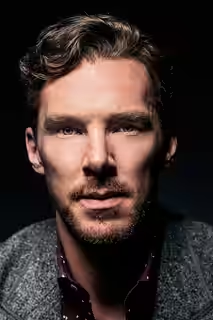
And there is the dragon. Benedict Cumberbatch gives Smaug a voice that seems to come up from under the floor, and the creature itself is vast and slow and pleased with itself, a cat that has found something worth toying with. His conversation with Bilbo, hobbit flattering, dragon amused, is the best written scene in the film, and Freeman’s gift for talking to nothing and making it look like someone has never been put to better use. Then the talking finishes and the running starts again, and there is always more gold to run across.
The rest is filler with a large budget. Gandalf’s excursion is cut back to at intervals and every time it is, the film slows to a walk. Tauriel is given a flirtation with one of the younger dwarves that neither the writing nor the film’s length can make matter. Legolas is a special effect with hair. Howard Shore’s score is mostly the old themes played again, a little slower; his Lake-town material is new and better. Armitage glowers handsomely, but Thorin’s story is on hold until next year.
The Fellowship of the Ring (2001) found an ending in a book that had none. This one does not end; it stops, at the point of highest interest, with a title card. We have no objection to cliffhangers. We object to waiting twelve months for a third act that could have been the second half of this film.
See it for the spiders, the river and the dragon, which between them account for perhaps forty minutes. At home you can pause the remainder, which is an odd thing to have to say about a film in which nobody stands still.