Peter Jackson’s last Hobbit film is a battle that runs the better part of an hour, much computer-generated masonry and one small scene about an acorn. The acorn is the best thing in it, fans should finish, and nobody else need begin.
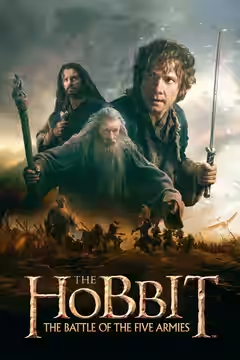
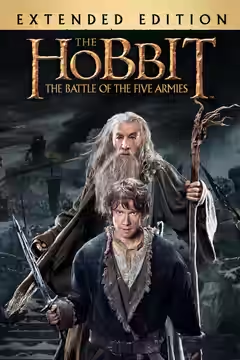
Peter Jackson’s third and last Hobbit film picks up where The Desolation of Smaug (2013) left off, with the dragon in the air over Lake-town, and ends 144 minutes later after a battle that runs the better part of an hour. J. R. R. Tolkien covered the fight in a few pages and had Bilbo sleep through most of it. Jackson keeps that detail and builds everything else. What he has made is huge, well tooled and mostly weightless, with two good performances and one scene we will remember, and it is for people who have sat through the first two and nobody else.
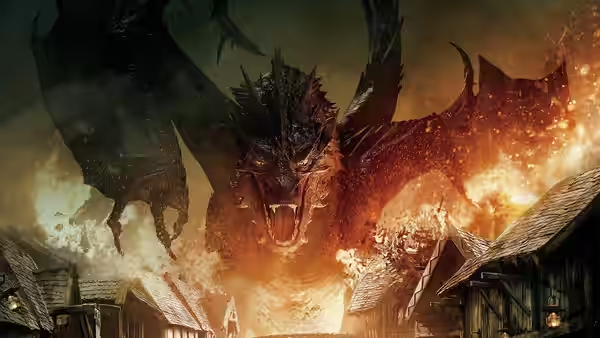
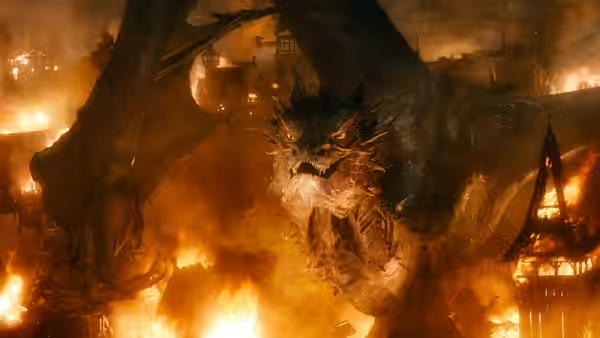
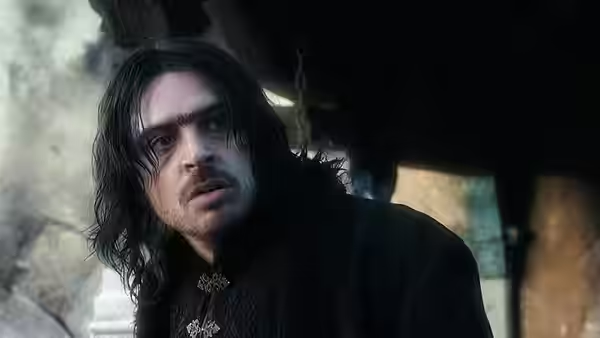
The opening is the best stretch. Smaug (Benedict Cumberbatch, with the same slow purr as before) burns Lake-town from the air, and Andrew Lesnie shoots the wooden town in orange and black, the camera skimming the canals as the roofs go up. Luke Evans’s Bard climbs a bell tower with a bow and his son, and for ten minutes the film has one man, one dragon and a clear job. It also has its best joke, a barge piled with gold being poled through the burning water while the townspeople swim. Then the dragon is dealt with and there are two hours to fill.
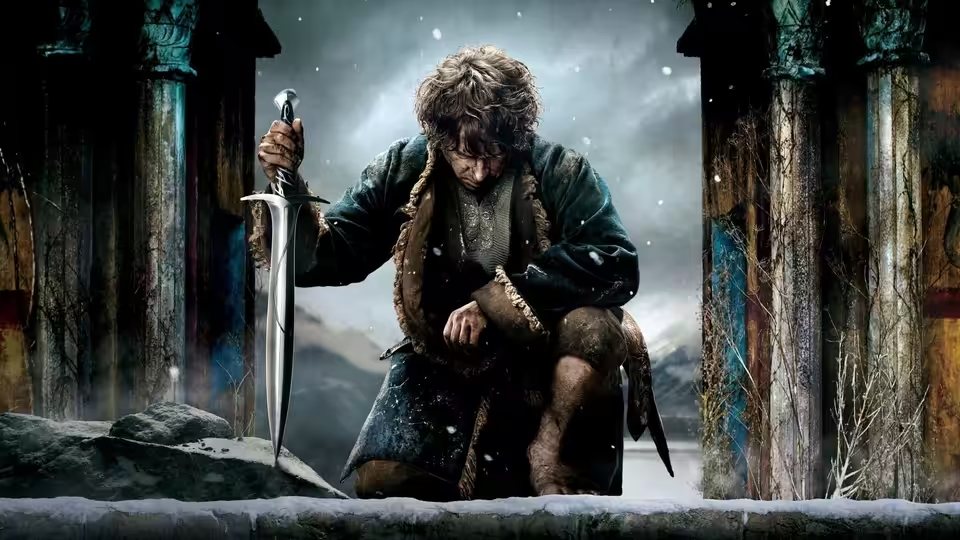
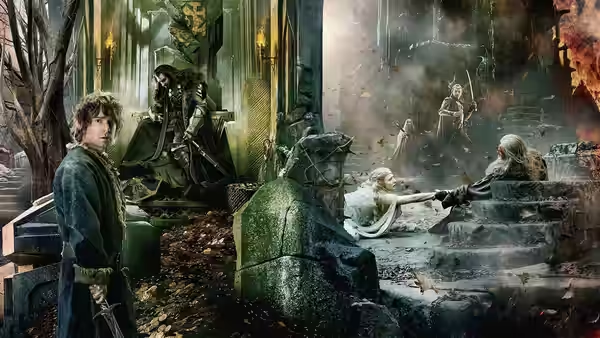
Richard Armitage fills a good many of them. Thorin, inside Erebor, has the gold-sickness, and Armitage plays it low and hoarse, pacing the treasure hall and eyeing his own company as if pricing them. Dan Hennah’s hall is the film’s one frightening set: a floor of coins so deep it shifts, with the dragon’s shape still scorched into it. When Thorin stands alone on that floor and the gold seems to rise and close over him, Jackson trusts a picture and an actor, and it works. So does a quiet exchange between Thorin and Bilbo about an acorn. It moved us more than the farewells still to come, because Martin Freeman plays it as a small man trying to say a large thing and not quite managing.
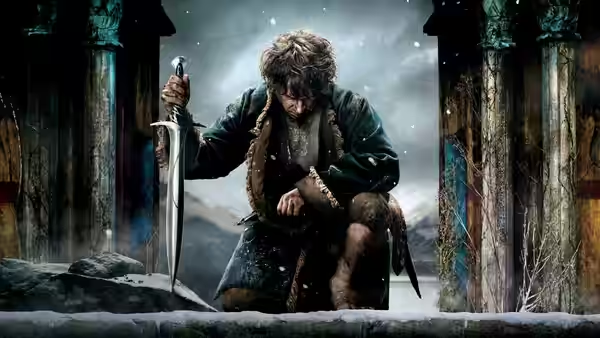
Freeman is the film’s other asset, and the film wastes him. Bilbo has the title and, for long stretches, a seat in the stalls. He hides the Arkenstone, makes one honest decision about it, and is then moved to the edge of the frame while larger people hit each other. The screenplay, credited to Fran Walsh, Philippa Boyens, Jackson and Guillermo del Toro, has decided this is Thorin’s story. That leaves the hobbit in The Hobbit watching his own climax from behind a wall.
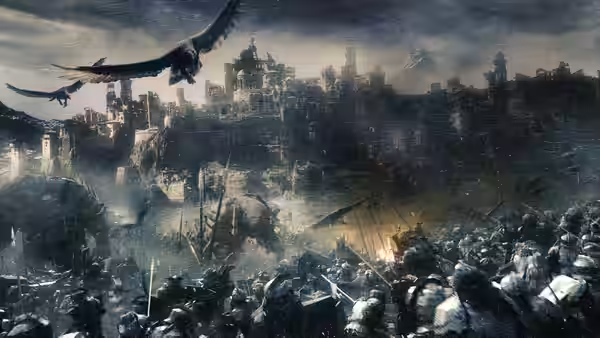
Then the battle. Jabez Olssen cuts across five fronts: dwarves under Billy Connolly’s Dain Ironfoot, who arrives on an armoured boar and insults everyone within earshot; Lee Pace’s Thranduil and his elves in silver; Bard’s townsfolk in the ruins of Dale; and orcs from two directions. For the first quarter of an hour the geography holds and the tactics can be read. Then it moves into Dale and up onto the frozen falls above it and becomes a run of duels, each with its own stunt and none with any weight. Orlando Bloom’s Legolas runs up a collapsing tower, stone by falling stone, and looks faintly embarrassed about it. Somewhere in there we felt nothing at all, then noticed how much had been spent to make us feel nothing, and that was where the film lost us. Evangeline Lilly’s Tauriel and Aidan Turner’s Kili get a romance the film keeps cutting back to as though it were the point.
The craft round the edges is careful. Richard Taylor, Ann Maskrey and Bob Buck put Thranduil in armour like a set of good cutlery and Dain’s dwarves in iron plate that clanks. Howard Shore brings back the dwarves’ theme from An Unexpected Journey (2012) for the charge out of the mountain and it lands, though the score is doing work the images should be doing. Ian McKellen spends the first act in a cage at Dol Guldur and the rest sitting on rocks looking troubled, which he does better than most people do anything.
Jackson’s own standard is the problem. The Return of the King (2003) had a battle this size and made us care because we always knew where the small people were. Here we always know where the camera is. The last twenty minutes are quieter, and a closing match to the older trilogy is a graceful way out of a room Jackson has been in for a long time. Watch it at home, where the battle shrinks to a size the eye can hold. If you have not seen the first two, do not start here.