Herbert Ross’s ballet drama gives Anne Bancroft and Shirley MacLaine two proper parts and Mikhail Baryshnikov the dancing, then keeps stopping to explain what it means. Worth an evening for the women and the leaps, less so for the speeches.
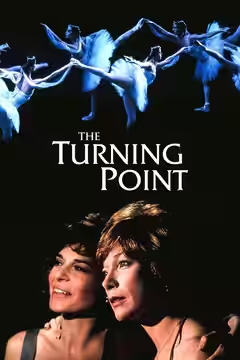
Herbert Ross was a choreographer before he directed films, and Arthur Laurents wrote the books for West Side Story and Gypsy, so between them they know how a backstage story goes and how a dancer stands when she is tired. The Turning Point is that story moved into ballet. Two women wanted the same career; Emma (Anne Bancroft) took it and Deedee (Shirley MacLaine) walked away to have a family, and they meet again as Emma’s is running out. It is a good film, well acted and well danced, and it is written as if the audience might have wandered off to make tea.
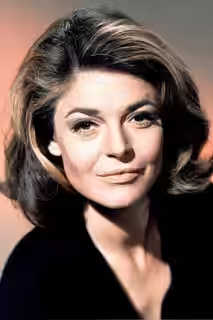
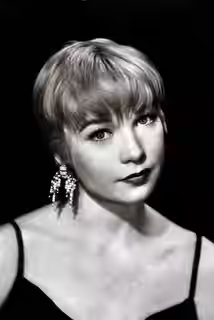
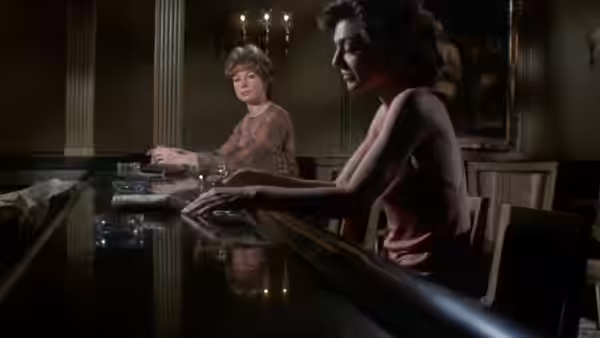
The two women are the reason to watch. Bancroft plays Emma as someone who has been looked at all her life and has lately started checking the mirror for a different reason; she holds herself like a dancer even sitting down, and lets the tiredness show only when she thinks nobody is looking. MacLaine’s Deedee is brisk and funny, running a school in a strip of Oklahoma City suburb, and cheerful right up to the moment anyone asks whether she minds. In the scenes where the two of them sit up late with a drink and go round the subject without landing on it, the film is as sharp about old friendship as it ever gets. It moved us more than we expected, and what did it was watching each woman envy the other and try to hide it.
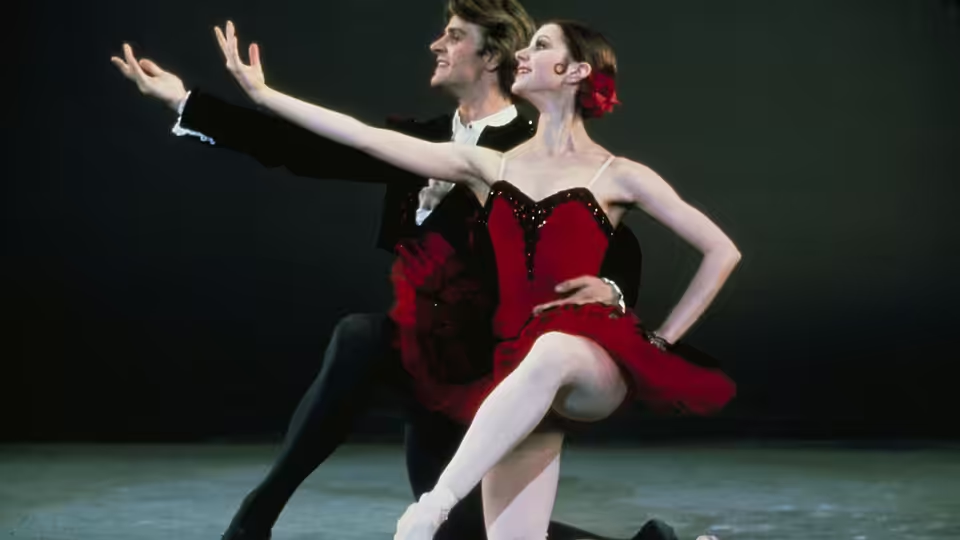
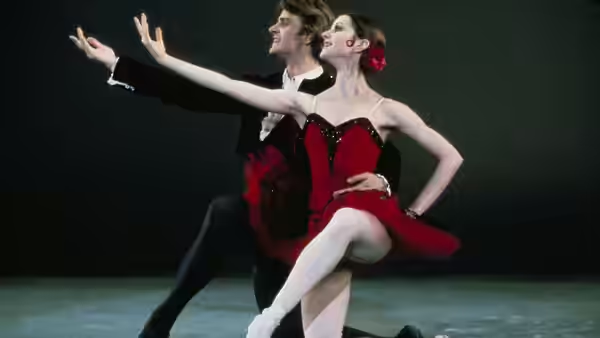
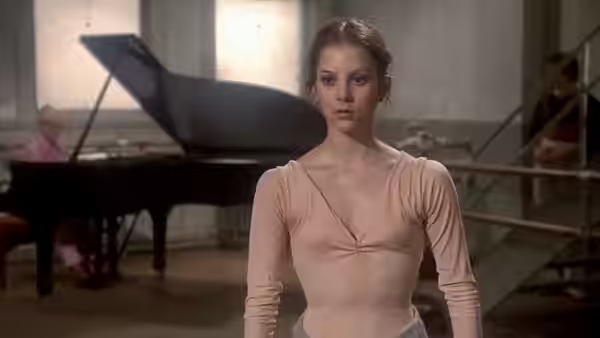
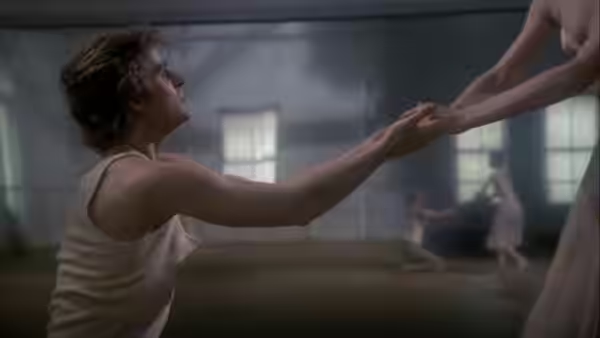
Then there is the dancing, which is filmed generously and not always well. Mikhail Baryshnikov, as the company’s Russian star Yuri, gets most of it, and the first time he left the floor we felt the plain pleasure of watching a body do something a body should not be able to do. Leslie Browne, as Deedee’s daughter Emilia, is a dancer first and an actress a distant second, and the film is honest enough to let her dance far more than she speaks. Antoinette Sibley and Starr Danias, as the company’s other ballerinas, are given real steps rather than reaction shots. John Lanchbery conducts the Tchaikovsky, Prokofiev, Minkus and Adam, and it is played properly and at length.
The trouble with the dancing is where the camera is. Robert L. Surtees shoots most of the ballets from the stalls, front on and full figure, which is how you would see them from a good seat and is not the same as seeing them in a film. William H. Reynolds then cuts within the variations, so a jump begins in one shot and lands in another, and the eye loses the line it was following. Ross, of all directors, should know that a dance has a shape and that the shape is the point. What he gives us is a well-lit record.
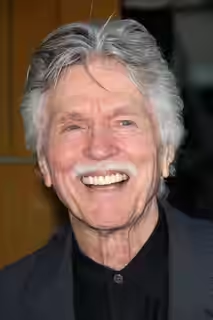
The larger trouble is the script. Laurents hands almost everyone a speech that says what the film is about: work or family, the chance taken or the chance refused, the mother living through the daughter. The tagline on the poster says it too. Wayne (Tom Skerritt), the husband who also gave up dancing and claims not to mind, has one good quiet scene and several that tell us what the quiet scene meant. Martha Scott, as the company’s director Adelaide, and James Mitchell, as its choreographer Michael, plainly know the world and are given lines from a duller one. Emilia’s romance with Yuri is a duet with dialogue attached, and the dialogue is the weaker partner. We grew restless during the third of these explaining scenes, and by the fifth we were looking at the furniture.
The furniture is worth looking at. Albert Brenner’s rehearsal rooms are scuffed and over-lit and full of people stretching in the background who never glance at the camera. Albert Wolsky keeps the offstage clothes plain, cardigans and leg warmers and coats thrown over practice dress, so that when the stage costumes arrive they look like what they are, a different world.
Late on there is a confrontation between the two women that we will not describe, except to say that both of them have it coming and that it is the one scene where the film stops telling us what it means and lets two adults behave badly. It is the best thing in it, and the only time the writing trusts the actresses as much as the direction trusts Baryshnikov.
See it for Bancroft and MacLaine, and for the leaps. The speeches you can talk over, which is more than the film allows its characters to do. It runs 119 minutes.