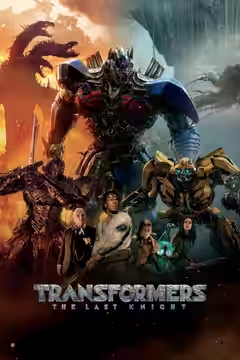
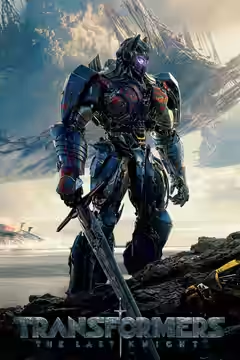
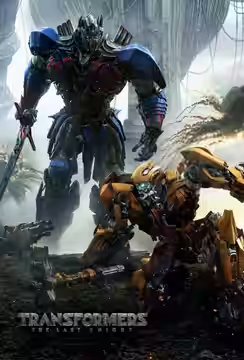
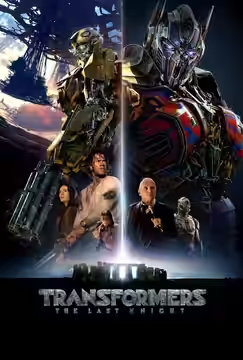
Michael Bay finds occasional striking images and gives Anthony Hopkins room to enjoy himself, but the muddled action and overworked story make Transformers: The Last Knight a long, unrewarding evening.
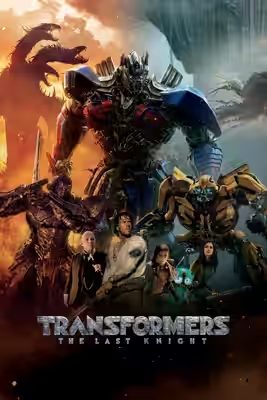
Michael Bay directs Transformers: The Last Knight with an appetite for spectacle that the storytelling cannot support. It is a poor science-fiction adventure, intermittently inventive to look at and persistently difficult to enjoy. Across 154 minutes, the film keeps adding explanations when it ought to be giving us a clearer reason to follow its characters. We can accept the absurdity of two worlds colliding; the problem is how much work the film makes of following the collision.
Art Marcum, Ken Nolan and Matt Holloway share the screenplay credit, and the writing never makes its competing demands feel manageable. Each new explanation seems to require another, while the people delivering them get little chance to become more than carriers of information. A film this keen on urgent business needs to make the next objective simple, even when the larger story is ridiculous. Here we spend too much time wondering what we are supposed to be following.
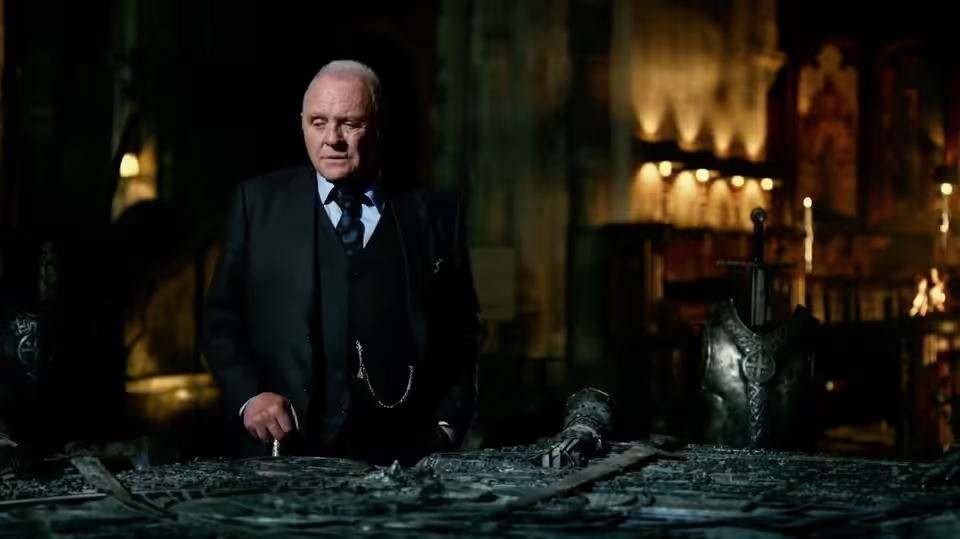
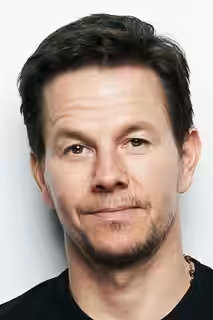
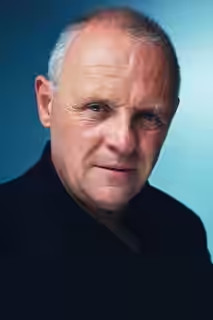
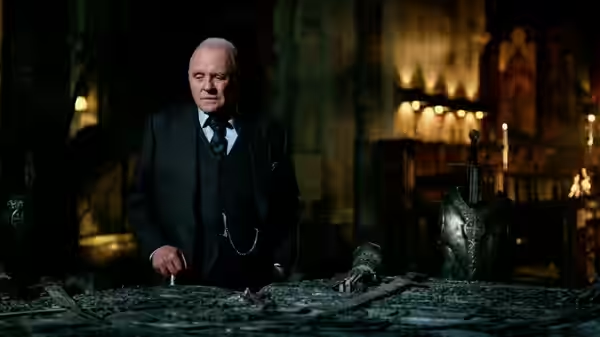
Mark Wahlberg gives Cade Yeager a useful bluntness, and his exchanges with Laura Haddock’s Viviane Wembly have some life. There is enough chemistry to suggest how much easier the film might have been to enjoy with fewer distractions. We laughed at the relish Anthony Hopkins brings to Sir Edmund Burton’s explanations; he treats them as an opportunity to have some fun. His performance is welcome, though the amount of information he has to deliver remains a problem.
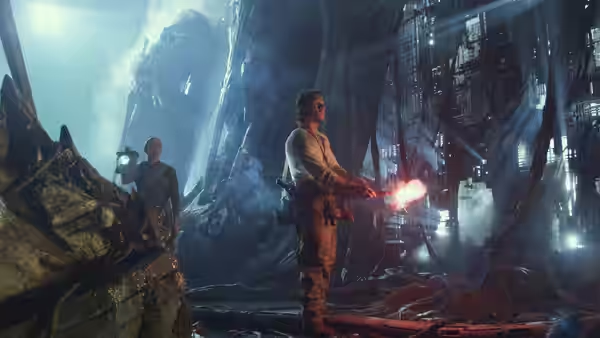
Jonathan Sela’s cinematography occasionally conveys the enormous scale that makes this sort of spectacle worth attempting. Jeffrey Beecroft’s production design contributes to the crowded images, but the camera and cutting give us little chance to inspect the surroundings. Michael Bay fills the image with movement, then too often hurries away before the action has become clear. Some shots deserve considerably longer than the film allows them.
Roger Barton, Adam Gerstel, John Refoua, Mark Sanger, Debra Neil-Fisher and Calvin Wimmer share the editing credit. The finished film seldom lets an action develop clearly before cutting to another demand on our attention. We were exhausted by the fighting, because we kept having to work out where everyone stood when we should have been enjoying ourselves. An imaginative move needs a pause afterwards so that we can take in what happened.
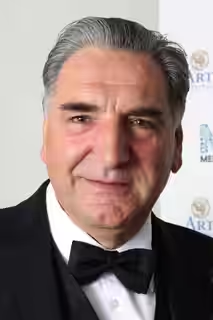
Steve Jablonsky’s score contributes to the pressure, pressing for a response when the scenes have not earned one. A little less insistence might have helped the jokes, which already struggle to find space between explanations and action. Jim Carter brings an enjoyable comic edge to Cogman. Elsewhere, the humour is frequently too juvenile to offer much relief, particularly across a film of this length.
An action film can survive a daft plot when each pursuit or fight gives us something clear to enjoy. Knowing where the danger is, and who is in its way, is a reasonable expectation even when the plot makes little sense. Admirers of frantic spectacle may get further than we did, but even they deserve action they can follow without so much effort. We would spend the evening elsewhere.