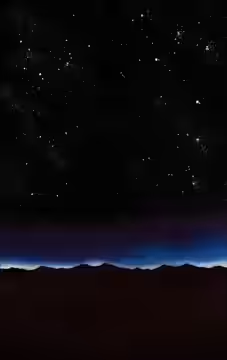
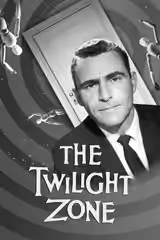
Four directors revisit Rod Serling’s series and produce one frightening story, one clever design, one sermon and one hug. George Miller’s aeroplane segment is worth the evening on its own; Spielberg’s rest-home fable is the one you will want to skip.
Four directors, one hundred and one minutes, and a television series that had been off the air for nearly twenty years. Twilight Zone: The Movie asks John Landis, Steven Spielberg, Joe Dante and George Miller each to make one short film in the manner of Rod Serling’s programme, which ran from 1959 to 1964, and stitches them together with a prologue. Three of the four are remakes of episodes people remember; one is new. The result is what anthologies usually are, uneven, and one quarter of it is worth the whole ticket.
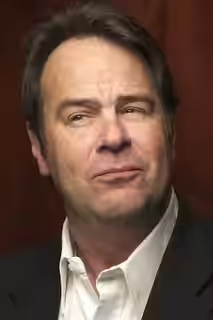
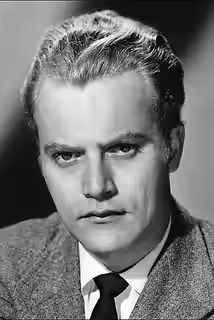
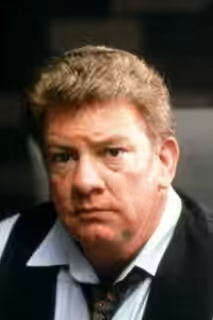
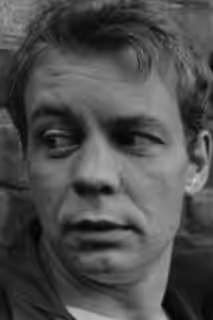
The prologue is the best joke in the film. Dan Aykroyd and Albert Brooks drive a dark road with the radio on, singing along, then switch it off and test each other on television themes, and Stevan Larner lights them with nothing but the dashboard and the headlamps. It is loose, quick and slightly menacing, and it ends on a gag Landis has plainly been waiting his whole career to spring. Then he starts his own story, and the fun stops. Bill (Vic Morrow) sits in a bar having lost a promotion, blames the Jews, the Black people and the Asians for it, and walks out of the door into occupied France. It is written as a lesson, and it is taught with a stick. Malcolm Campbell cuts it hard and fast, and the piece feels cut short, as if it had run out of things to say before it ran out of places to go.
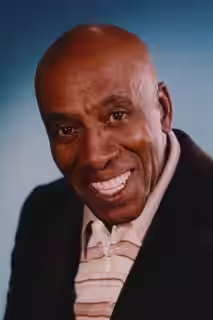
Spielberg’s segment, written by Melissa Mathison from George Clayton Johnson’s original, is the one we would skip. Mr. Bloom (Scatman Crothers) arrives at a retirement home with a bag of tin cans and a grin, and proposes to the residents that they play kick the can after lights out. Allen Daviau lights every room like late afternoon in September, Michael Kahn cuts to wet eyes, and Jerry Goldsmith, sly and nervy elsewhere in the film, turns on the strings. We felt embarrassed, and then a little cross, because the old people are treated as adorable rather than as people, and Crothers is asked to beam at them for the length of the story as if beaming were a performance. It is the one tale here with no shadow in it.
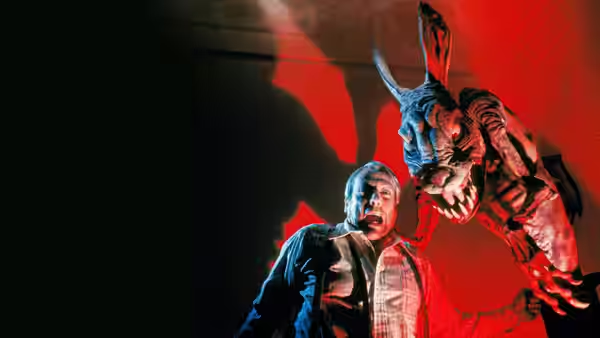
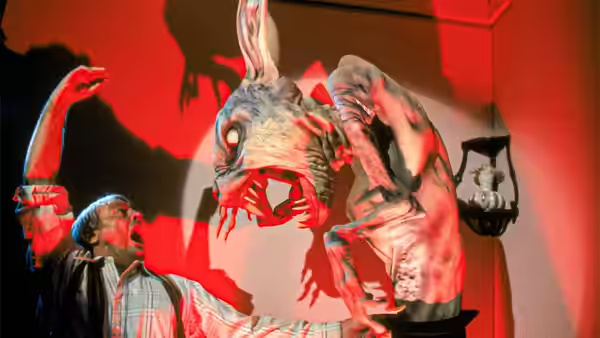
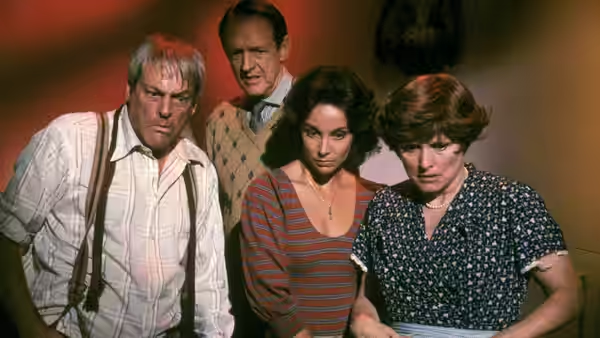
Dante’s is the best-made thing in the film. Helen Foley (Kathleen Quinlan), a schoolteacher on the move, gives a lift home to a boy she meets at a roadside diner and is invited to stay for dinner. James D. Bissell builds the house as a cartoon: staircases at the wrong angle, a television that is always on, colours out of a cereal packet, and a family who smile too much and too long. John Hora shoots it low and wide so that the ceilings seem to lean in, and Tina Hirsch keeps cutting to the animation on the screen until we are not sure which side of it we are on. We were delighted and uneasy at the same time, and the two feelings never settled, which is what Jerome Bixby’s story wants. Where it finally goes we will not say.
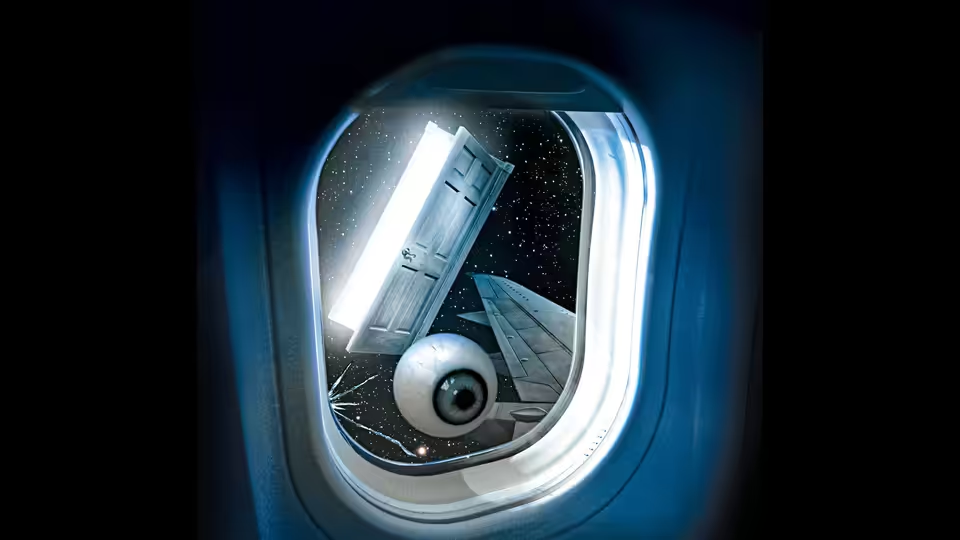
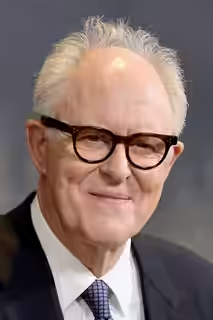
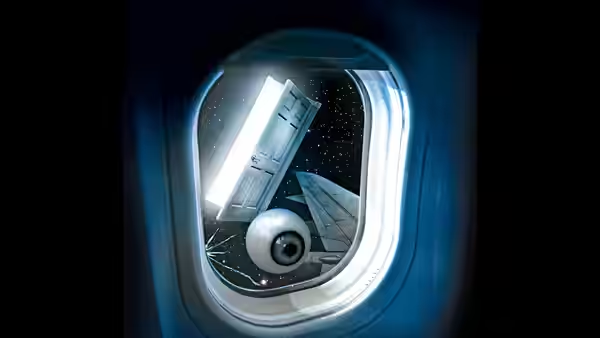
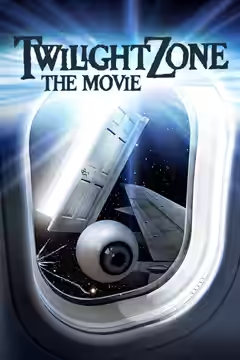
Miller’s closer is the reason to watch. Valentine (John Lithgow) is a passenger on a night flight through a thunderstorm, already afraid of flying, who then sees something on the wing. Miller keeps the camera in the cabin, so the storm is only ever lightning at the porthole and the aircraft lurching under us, and he lets Lithgow run: sweating, praying, clawing at the blind, begging the cabin crew to look. Richard Matheson wrote the original, and William Shatner played the part on television in 1963, but Lithgow gives it something new, a man who knows exactly how mad he looks and cannot stop. We gripped the armrest. It is the only time the film frightened us, and it frightened us properly.
Two of the four stories end on a hug where the series would have ended on a sting, and the film is softer for it. Watch it at home, where you can arrive for the car, sit through the rest home with a drink within reach, and stay for the plane. It runs 101 minutes, carries a 12 certificate, and opened in British cinemas on 1 September 1983.