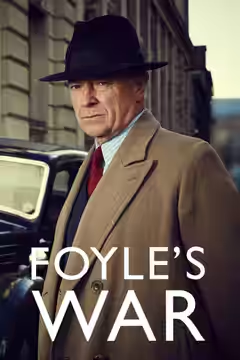
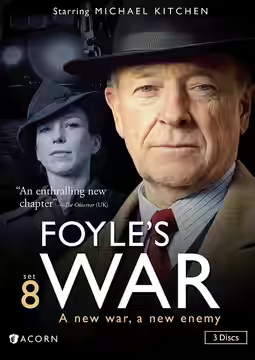
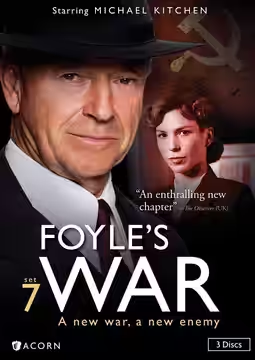
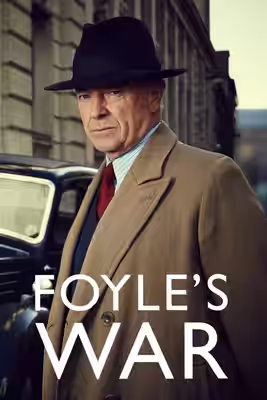
Anthony Horowitz’s wartime detective series is slow, decent and angrier than it lets on about what the war allowed people to get away with. Michael Kitchen’s Foyle is a lesson in underplaying. The two-hour episodes do not all earn the second hour.
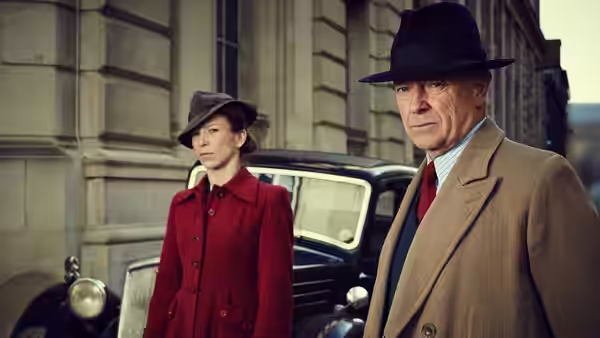
Anthony Horowitz’s series opens in May 1940, with the war going badly and a policeman who would rather be in it. Foyle (Michael Kitchen) has asked for a transfer and been refused. Somebody still has to find out who killed whom in Hastings, and the Assistant Commissioner has decided it is him. That is the whole idea of the programme and it is a good one. Murder does not stop for a war, and the war hands everyone a new set of reasons to commit it, hide it and look away from it.
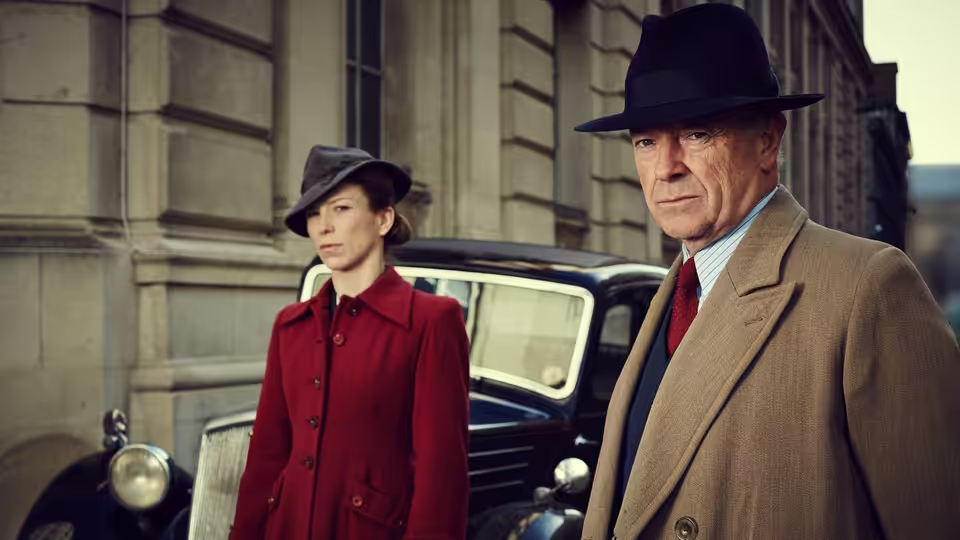
Kitchen’s performance is the reason to watch, and it is built out of doing as little as possible. Foyle seldom raises his voice and rarely finishes a sentence when a look will do the job. Watch him listen to a lie: the head tilts a degree, the mouth sets, and the liar starts talking faster to fill the silence. In a genre that runs on interrogation-room shouting, a detective who waits is close to radical. He ends most interviews by thanking people and putting on his hat, and we came to dread that hat on behalf of whoever he had just been talking to.
By the end of the first series we were angry, and slightly surprised to be. Not at the killers, who are mostly small, frightened people. At the councillors, factory owners and officers who treat the war as a business opportunity and expect Foyle to mind his manners while they get on with it. The programme is furious about this and never says so out loud. It lets Kitchen say “I see”, and move on, and the fury is in how little he gives them.
Around him Horowitz builds a household rather than a squad. Honeysuckle Weeks plays Samantha Stewart, a vicar’s daughter who has never been told to stop talking and sees no reason to start, and she is bright without being winsome most of the time. Anthony Howell’s Paul Milner is the opposite case, a sergeant who came home from Norway with one leg and no wish to be useful, and Howell plays his slow return to work with no fuss at all. The scenes in Foyle’s car, Sam driving, Foyle looking out of the window, are where the series is at its warmest.
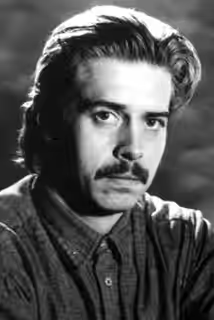
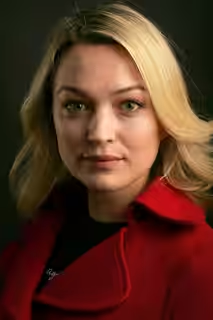
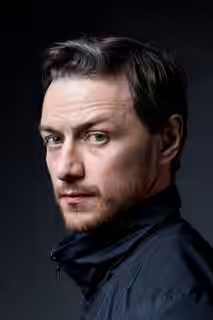
The directors, Jeremy Silberston and Stuart Orme among them, shoot Hastings in weak sunlight and keep the war in the corners of the frame: sandbags at a door, the beach wired off, a wireless on in another room. Nothing looks like a costume, which is harder than it sounds. The guest casting has become a game for the sofa over the years. James McAvoy turns up as Ray Pritchard, Emily Blunt as Lucy Markham, Sophia Myles as Susan Gascoigne, all of them long before anyone outside casting offices knew the names, and none of them playing it as a stepping stone.
Now the second hour. Each episode runs 120 minutes, and the whodunit does not always have 120 minutes in it. The culprit is too often the one familiar face who has been given least to do, and a subplot about a sports club or a petrol fiddle will mark time while the main plot waits for its next body. When the mystery and the history are the same story, as they are in the first episode, the length feels earned. When they run alongside each other and meet only at the end, we noticed the clock.
The series ran from 27 October 2002 to 2015, nine series in all, and in its later years it took a new direction. The Guardian’s Sam Wollaston thought that change gave the programme new life, and he has a case. We are fonder of the war years, when the setting did half the work and Foyle did the rest with his eyebrows.
Begin at the beginning, in May 1940, and give it the full two hours. It does not hurry, and it is not interested in anyone who does.