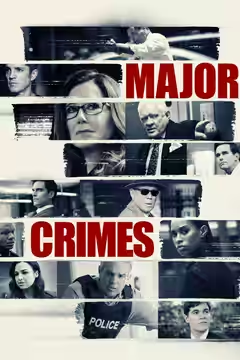
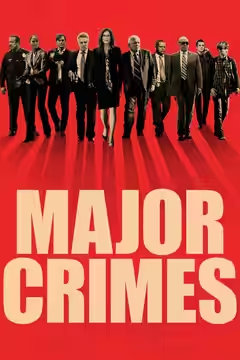
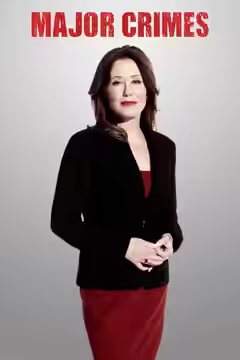
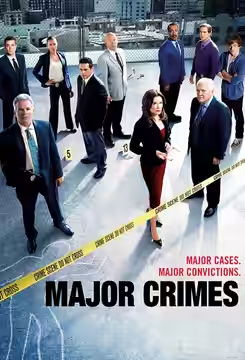
The Closer without Kyra Sedgwick turns out to be a steadier, drier programme than anyone expected, held up by Mary McDonnell’s patient captain and G. W. Bailey’s grumbling. It is also, week to week, the same programme, and it knows it.
James Duff has made a spin-off out of the moment most series end. When Kyra Sedgwick left The Closer, he kept the squad room, the squad and the corpses, and replaced the chief who charmed confessions out of suspects with a captain who reads the rulebook aloud. Captain Sharon Raydor (Mary McDonnell) arrives with new orders: the city cannot afford long trials, so the division is to close cases with confessions and plea deals instead. Lieutenant Louie Provenza (G. W. Bailey) wanted her job and says so. That is the whole of the premise, and it is a better one than it sounds.
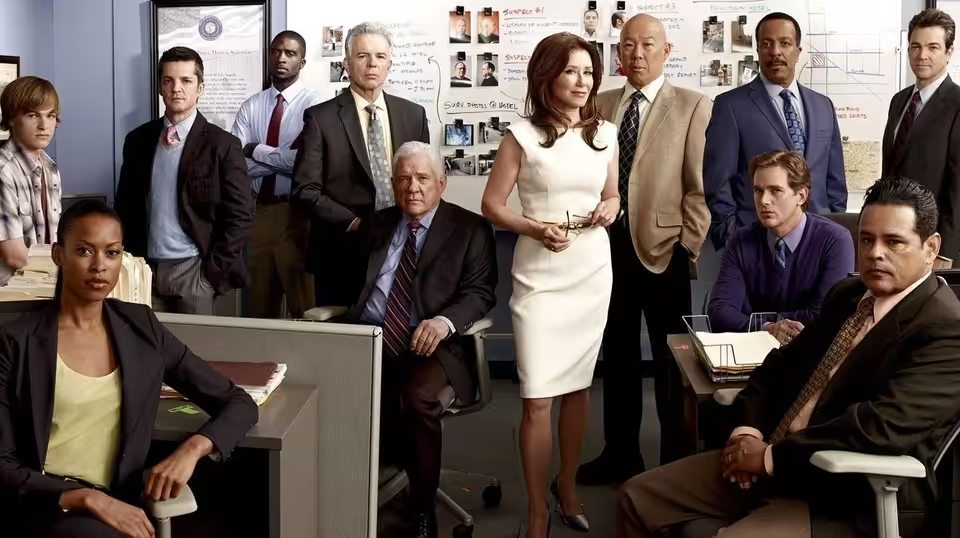
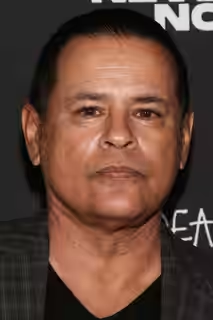
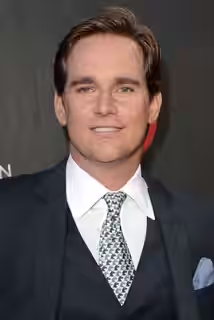
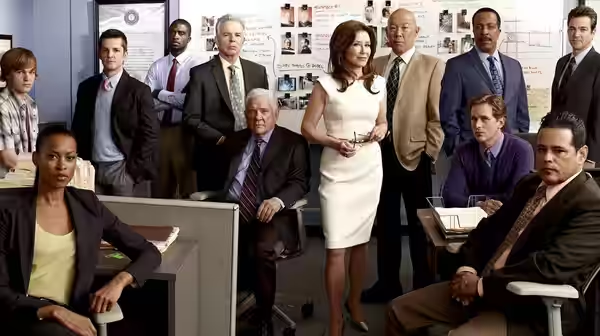
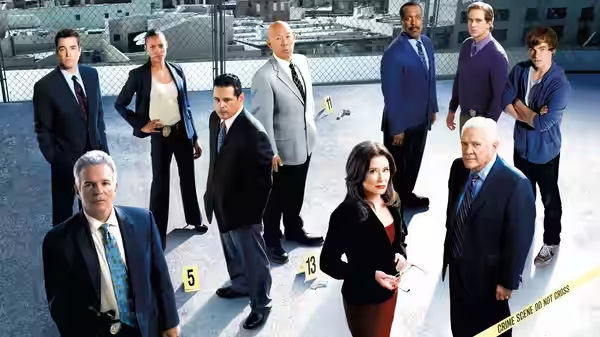
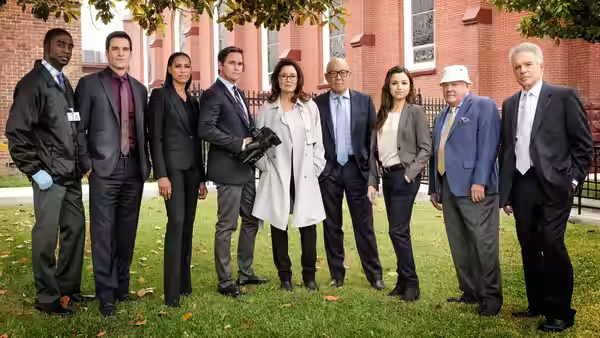
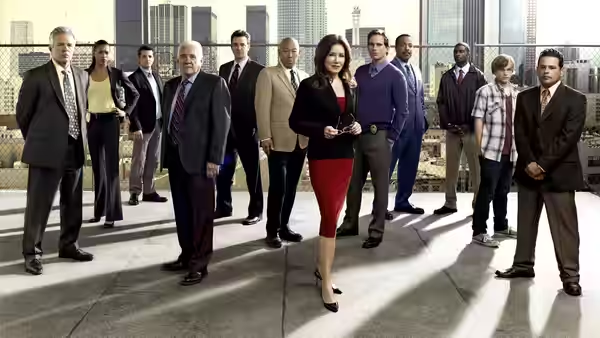
McDonnell is the reason to keep watching. She plays Raydor as a woman who has decided that being disliked is a cost of doing the job properly. She stands to one side with a folder, waits, and says something quiet that changes what everyone else is doing; when she does raise her voice it is perhaps once a season. Bailey’s Provenza grumbles from his first scene, and the programme knows exactly how much grumbling an episode can carry, which is about three lines. Anthony Denison’s Flynn is his straight man, Michael Paul Chan’s Tao explains the forensics, Raymond Cruz’s Sanchez does the shouting in the interview room, and Phillip P. Keene’s Buzz films everything from the doorway.
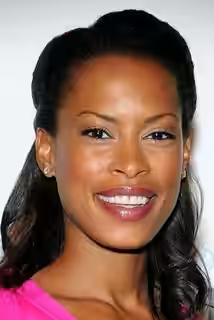
The premise gives the writers something the genre usually lacks: a reason not to want a trial. In the ordinary cop programme the arrest is the ending. Here it is the middle, and the last ten minutes of an episode are a negotiation, with the suspect, a lawyer, and a deputy district attorney (Nadine Velazquez’s Emma Rios) who has to defend the deal in court. The writers, Duff, Adam Belanoff, Mike Berchem and Jim Leonard among them, understand that this is where the drama is: a murderer being offered twenty-five years and told it is a kindness.
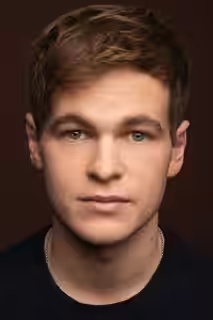
What surprised us was the other half. Raydor takes in Rusty Beck (Graham Patrick Martin), a teenage witness with nowhere to live, and the scenes between them, at a kitchen table with a plate of something neither of them wants, moved us more than a procedural has any business doing. Martin plays a boy who has learned to distrust every adult’s kindness, and McDonnell gives him none to distrust; she keeps turning up. It is patient writing, spread across whole seasons, and it is what we remembered afterwards.
Now the caveats. Directed by Michael M. Robin, Rick Wallace, Anthony Hemingway and others, it looks as The Closer looked: the same flat, bright Los Angeles daylight, the same murder room with the screens along one wall, the same walk from the lift to the desk. Not a shot in a hundred and five episodes would tell you which director was working that week. The cases are the usual run: a body in a car park, a body in a house in the hills, a body that turns out to belong to someone richer than expected. By the second season we could set our watches by the confession, and somewhere in the fourth we caught ourselves waiting for the Rusty scenes and letting the murder go by.
The first season leans hard on friction. Provenza and Flynn oppose Raydor because the programme needs them to, not for any reason the writers have found. Robert Gossett’s Assistant Chief Taylor exists to disapprove. It settles once Kearran Giovanni’s Amy Sykes stops being the new one, but that takes ten episodes.
Most of the reviews asked why the programme needed a new title when so little else had changed. We think the answer is McDonnell, and that the question is fair. This is The Closer run at a lower temperature, with a lead who does not need to be loved, and it is a more honest way to run a division and a less exciting way to run a drama. It began on 13 August 2012 and ran for six seasons, 43 minutes an episode, with a 15 certificate. Watch it an episode at a time, with the kettle on; that is the pace it was made for.