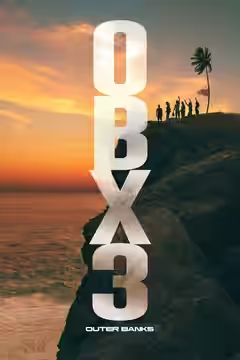
Outer Banks is an enjoyable teenage treasure hunt with an appealing ensemble and plenty of coastal sunshine. The plotting needs indulgence, but the friendships give us a reason to keep following the search.
Outer Banks is good company if teenage treasure hunting sounds like an evening well spent. It does require considerable tolerance for poor decisions. Created by Shannon Burke, Josh Pate and Jonas Pate, the series puts a young ensemble into a coastal community divided by money and gives them something valuable to look for. Its opening season works best when the search gives the friendships something to grow around, rather than simply providing another emergency for everyone to deal with.
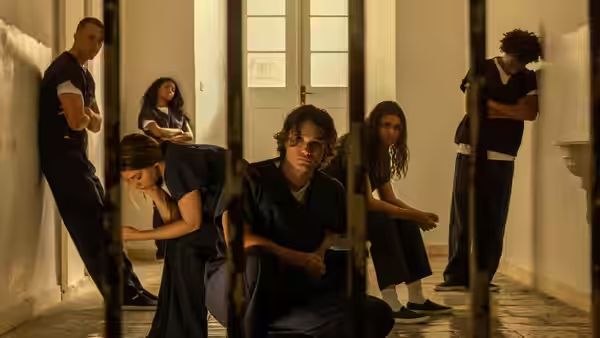
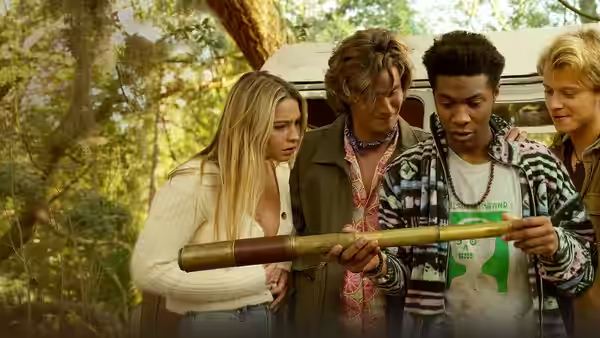
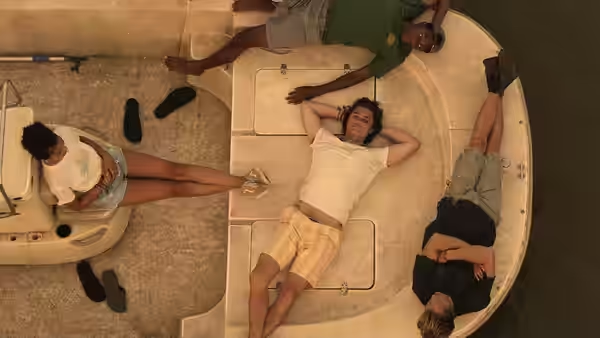
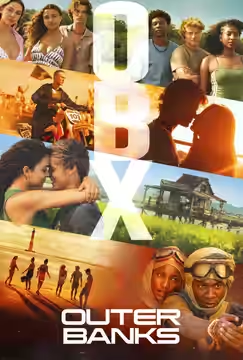
Chase Stokes, as John B. Routledge, gives the search enough urgency to get us moving. Madelyn Cline’s Sarah Cameron and Madison Bailey’s Kiara Carrera contribute to the easy appeal of the young ensemble, alongside Jonathan Daviss’s Pope Heyward and Rudy Pankow’s JJ Maybank. The performances make the friendships convincing enough that we can enjoy spending time with the group without needing a fresh revelation every few minutes. The writing does not always give these actors much beyond an immediate problem, but they keep the adventure from becoming merely a succession of clues.
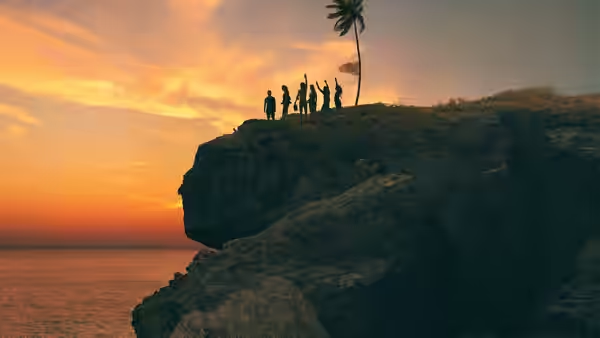
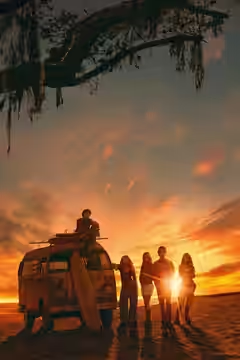
The coast does a fair amount of the persuading. The cinematographers, including Itai Ne’eman and Gonzalo Amat, make it look like somewhere we would happily spend time, irrespective of the treasure. The sunny images help sell the teenagers’ freedom, though they also make hardship rather easy on the eye. Daniel Novotny’s production design keeps differences in wealth readable, which matters in a story that uses class resentment to complicate the adventure without examining it particularly closely.
The editors, including Darrin Navarro and David Crabtree, understand how to end an episode before curiosity has been satisfied. The cliffhangers are effective even when we can see how deliberately the plot has been arranged to produce them. Fil Eisler’s music supports that urgency, giving the search a useful sense of occasion without having to make the danger solemn. We were happily caught up in the hunt; those unresolved questions about the treasure kept us watching past developments we did not quite believe.
The difficulty is that the writers keep raising the stakes without always giving the people involved another believable reason to act. Shannon Burke, Josh Pate and Jonas Pate have built a series that can accommodate plenty of foolishness, but some complications feel imposed simply to keep it running. The characters are sometimes too thin to support the amount of trouble they encounter, and the villains become so exaggerated that they begin to crowd out the pleasure of discovery. The constant escalation also leaves less room for quieter exchanges that might have given the young cast more to play.
Teen adventure needs a certain amount of recklessness, and a treasure hunt would not get far if everyone waited for permission. The class divisions give that recklessness a reason: the prospect of money is not equally trivial to everyone involved. That helps make the young people’s impatience understandable, even when their behaviour becomes harder to accept. The later stretch could have used more of that social friction before piling on another dramatic complication, particularly once the mystery already had enough going on to hold our attention.
This is worth trying if the treasure hunt and the young ensemble are the attraction. Anyone hoping for careful detective work should make other plans. Allow some room for foolishness, but perhaps resist the cliffhangers long enough to decide whether another episode is what the evening needs.