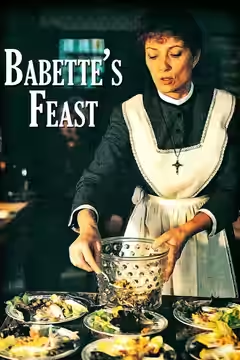
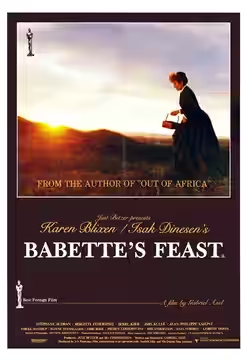
Gabriel Axel’s film of Karen Blixen’s story about a French cook in a pious Danish village is patient, dry and finally overwhelming. The first half leans on narration; the dinner, when it comes, is as good a stretch about eating as we have seen.
Babette’s Feast is about people who have made a religion of going without, and a woman who decides, once, to give them everything. Gabriel Axel adapted Karen Blixen’s story with Annemarie Aaes, and he keeps its shape: a long, plain account of a village on the Danish coast, and then a dinner. It is a fine film and we recommend it warmly, with the caveat that it does not hurry. For its first forty minutes it is content to tell you things.
Most of that telling is done by Ghita Nørby’s narration, and there is more of it than the pictures need. We are told that the pastor’s daughters are beautiful and that the village men look at them in church; Henning Kristiansen’s camera has already shown us both. The two suitors are dispatched briskly. Gudmar Wivesson’s young Lorens Löwenhielm sits at the pastor’s table, cannot get a word out, and rides away. Jean-Philippe Lafont’s Achille Papin hears Hanne Stensgaard’s Filippa sing a hymn, sees the Paris Opera in front of him, and is sent away just as quietly. Finn Henriksen cuts these flashbacks cleanly, but the young versions of the sisters are pretty and a little blank, and we were glad when the film came back to the old ones.
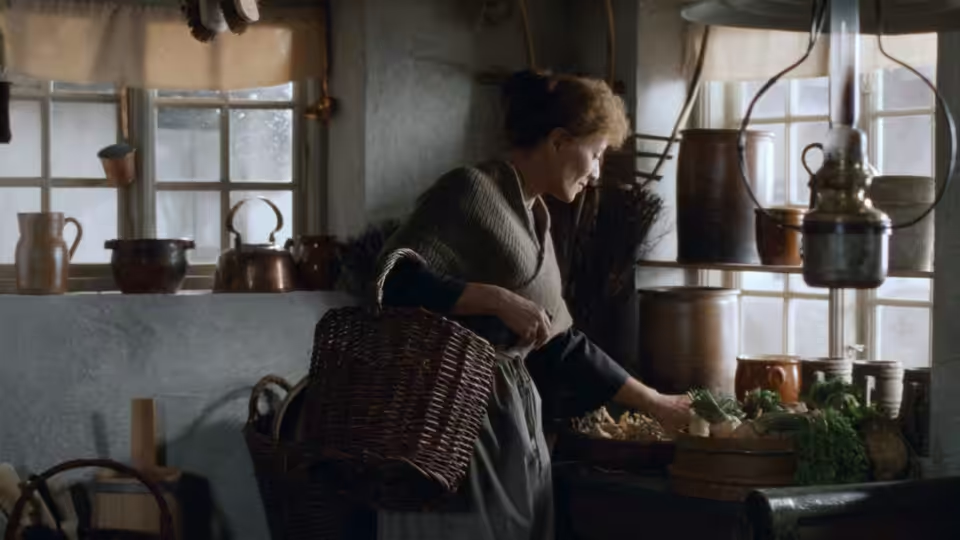
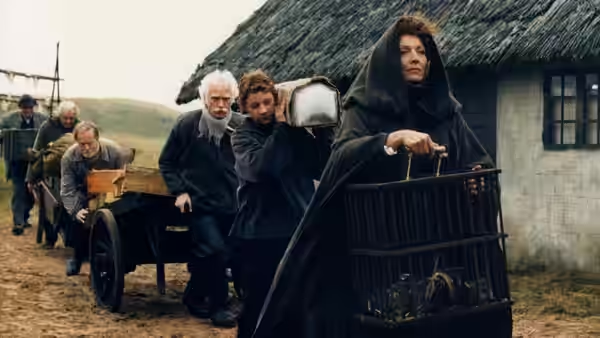
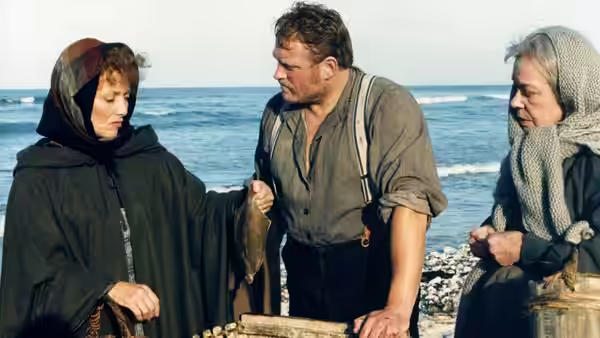
Then Babette arrives, and the film finds its footing. Stéphane Audran says almost nothing for an hour. She learns to make split cod and ale-bread soup by watching the sisters make it, haggles with the fishmonger in Danish she has picked up, and walks the dunes alone. Axel lets fourteen years go past in a few minutes of this, and Audran carries them without a line of dialogue we can remember. The performance is in how she holds a basket and how she looks at a pot.
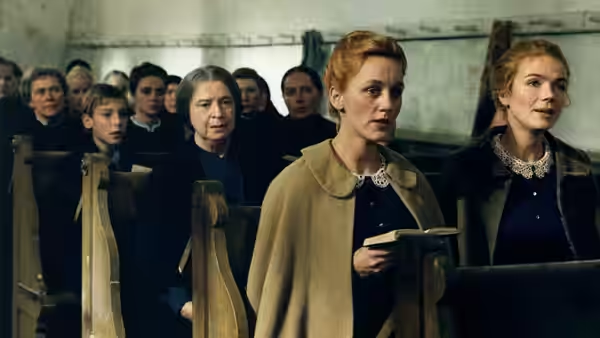
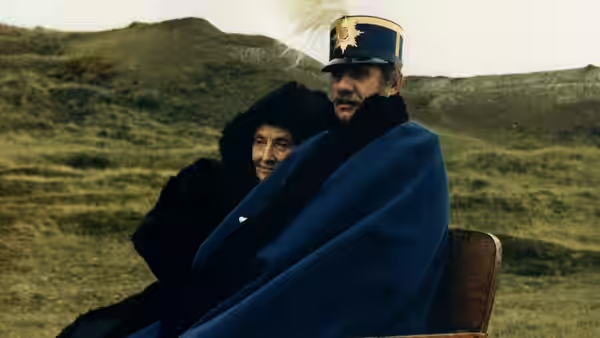
Kristiansen shoots the village in grey and straw colour: slate sea, thatched roofs, dunes, and interiors that Sven Wichmann has kept to whitewashed walls, low beams and brown wood. The costumes, credited to Annelise Hauberg, Pia Myrdal and Karl Lagerfeld, are black and grey with white collars, so that the whole congregation looks like one garment. Per Nørgård’s score is hardly there. The music you remember is the hymns, sung slightly out of tune by a dozen old voices, and that is the right call; this is a place where the only art anyone permits themselves is a psalm.
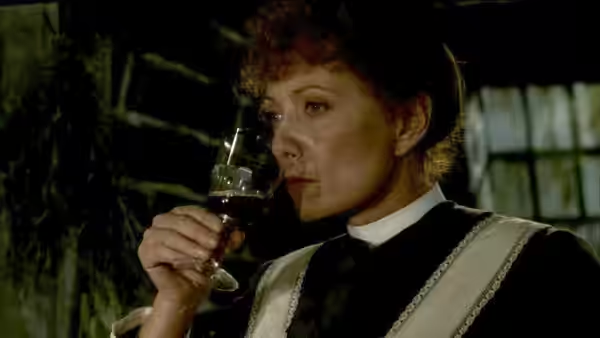
The dinner takes up the last third, and it is why the film has lasted. The ingredients come in by boat first: a live turtle in a crate, cages of quail, cases of wine, a block of ice. Birgitte Federspiel’s Martine takes one look at the turtle and goes to warn the congregation, and their response is one of the film’s best jokes. Then Henriksen and Kristiansen change everything. The light goes to candle-gold, the cutting goes pot, plate, face, pot, plate, face, and the consensus slowly warms. What moved us, more than we expected, was not the turtle soup or the quails in pastry but a row of elderly faces trying hard not to enjoy themselves and failing, one by one. We will not describe what happens around the table. We will say that Jarl Kulle’s general, the one guest who knows what he is eating, is given the film’s only real speech and earns every word of it.
The film is gentle, and some viewers will find it too gentle. The villagers’ feuds are settled a shade too neatly, and beyond the sisters and the general the congregation is a set of types: the two who once wronged each other, the old woman who talks. There is no cruelty in it anywhere. Against other films about food, though, it wins on the thing that matters. It is about the people eating, not the person cooking, and it understands that a meal is something done to you as much as for you.
It runs 104 minutes and holds a U certificate. Eat first, or watch it hungry and discover what fourteen years of ale-bread soup does to a person.