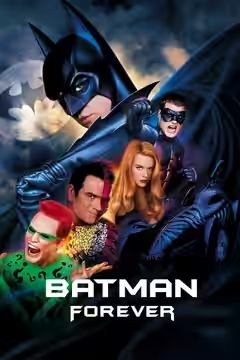
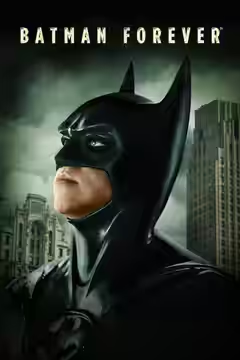
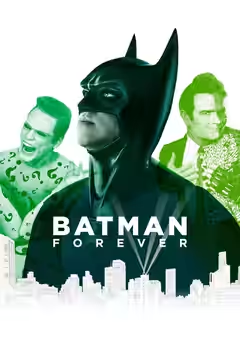
Joel Schumacher turns Gotham up to neon, hands the film to Jim Carrey and leaves Val Kilmer standing about in rubber. It is bright, quick and often funny for an hour, and then it is merely loud.
Joel Schumacher takes over Gotham from Tim Burton, who stays on as producer, and the first thing he does is turn the lights on. Burton’s Gotham was black at night; Schumacher’s is green, pink and orange, with something always moving in the fog. The script, by Lee Batchler, Janet Scott Batchler and Akiva Goldsman, hands him two villains, a sidekick, a love interest and a psychologist to explain the hero, and 121 minutes to fit them in. The result is quick, bright and often funny for an hour, and then it is merely loud, and we came out knowing a good deal about the Riddler and almost nothing about Batman.
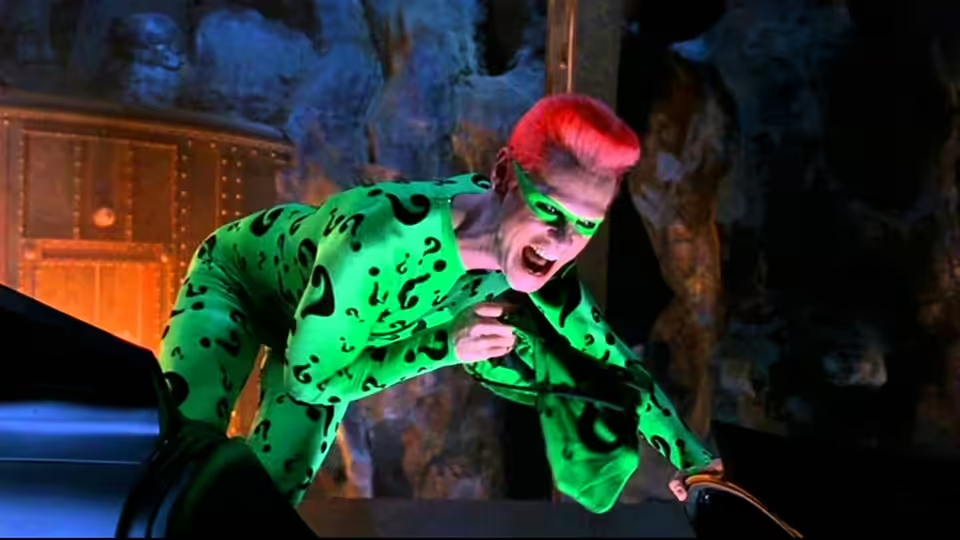
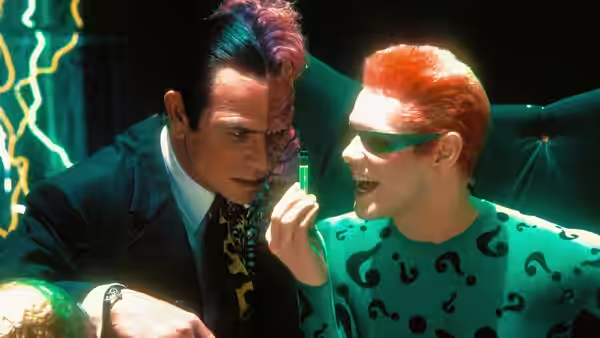
Jim Carrey is the reason it works when it works. His Edward Nygma is a Wayne Enterprises engineer who has built a box that beams television into the brain, and the scene in which he pitches it to Bruce Wayne, lurching a step closer with every sentence while Bruce backs towards the door, is the best thing here. We laughed, properly, more than once; Carrey plays a man who has rehearsed this meeting in the mirror for years and cannot stop even as it goes wrong. Later, in the green suit with the question marks, he does the same act at twice the volume, and by the third time we had stopped laughing and started counting.
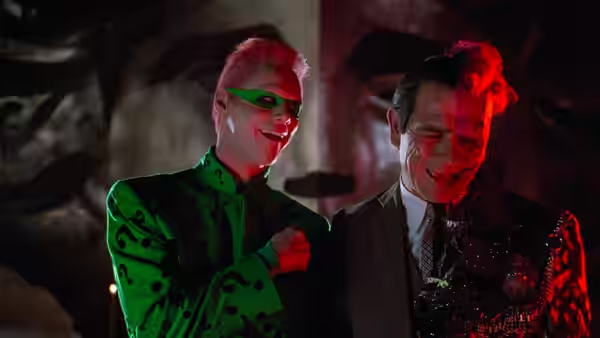
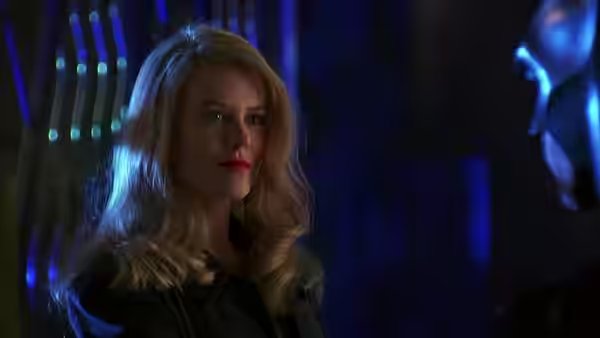
Barbara Ling’s production design is the other reason. Her Gotham is a city of giant statues, stone men holding up bridges, with a neon tube fixed to every surface. Stephen Goldblatt shoots it tilted and steaming and lights the faces in whatever colour the nearest sign happens to be, so half the cast look faintly seasick. It is a comic strip and it says so. When the Batmobile, its wheels glowing blue, drives up the side of a building, we had no complaint.
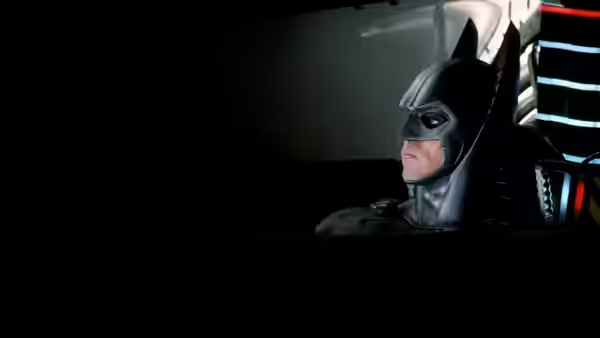
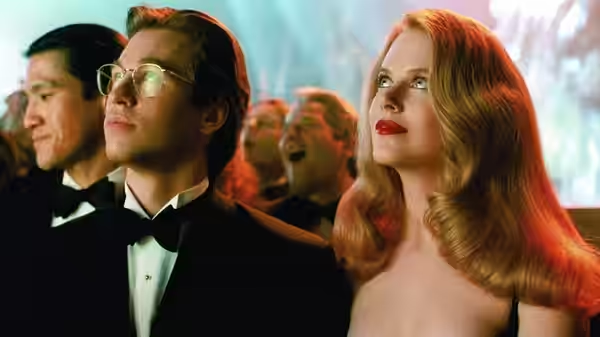
Bob Ringwood and Ingrid Ferrin’s suits are part of the same joke, and the film opens on them, in close-ups of rubber sliding over rubber, nipples included. Val Kilmer is inside, and he is fine. He plays Bruce as a quiet, well-mannered man with something on his mind, and the script gives him a recovered memory, a psychologist and little else. Nicole Kidman’s Dr. Chase Meridian arrives on a rooftop to tell Batman she fancies him, and the two of them then repeat the information at each other in different lighting for an hour and a half. Kilmer is the calmest thing in the film and the film treats him as furniture.
Tommy Lee Jones has the harder job and does not manage it. His Two-Face is a coin, a half-purple suit and a lair split down the middle, one side sunny with Drew Barrymore’s Sugar in it and the other black with Debi Mazar’s Spice, and Jones fills all of it by shouting. Next to Carrey it looks like competition rather than a performance. Chris O’Donnell’s Dick Grayson is introduced with some care, a circus boy who has lost everything and wants to hit somebody, and is then hurried into tights. Michael Gough’s Alfred gets the only two quiet scenes in the film and is the better for it.
The cutting does the rest of the damage. Mark Stevens and Dennis Virkler run the fights as a blur of cape and neon, and there is not one set piece in which we could have told you where Batman stood in relation to the man he was hitting. Elliot Goldenthal’s score is brass, choir and circus drums, and it keeps announcing an arrival that never quite happens. The second half goes to places we will not describe. By then we were tired, in a film this bright and this fast, which takes some doing, and then faintly cross about it, because the first hour had promised something with a shape.
Set against Burton’s Batman (1989) and Batman Returns (1992), this tells its story more clearly and has less to say; it is closer to the 1960s television series than to anything Burton made. Most critics are split down the middle, and we sit where the split is, admiring Carrey and the sets and unable to say what the film thinks about anyone in it.
The 12 certificate is about right, and so is the audience it implies. Put it on for a twelve-year-old and they will have a good evening. Sit beside them and you will enjoy the first hour, admire the sets, and spend the rest wondering where the man in the title went.