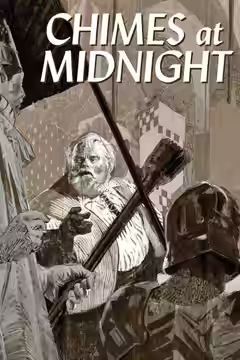
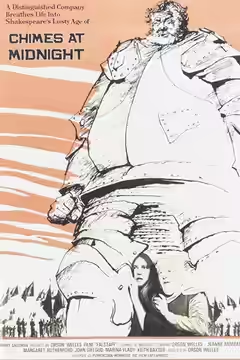
Welles cuts five plays down to one story about a prince with two fathers, and plays the fat one himself. The sound is rough and the money ran short, but the battle in the mud and the faces in the tavern are as good as anything he made.
Orson Welles takes the two parts of Henry IV, borrows scraps from Richard II, Henry V and The Merry Wives of Windsor, and cuts the lot to 115 minutes about one thing: a young man deciding which of two old men to belong to. Welles wrote the screenplay, directed it, designed the costumes and plays Falstaff. It was made in 1965 and did not reach British cinemas until 23 March 1967, which tells you something about how it was received at the time. We think it is the finest film of his later years. It is also a mess in ways you can hear, and we will come to those.
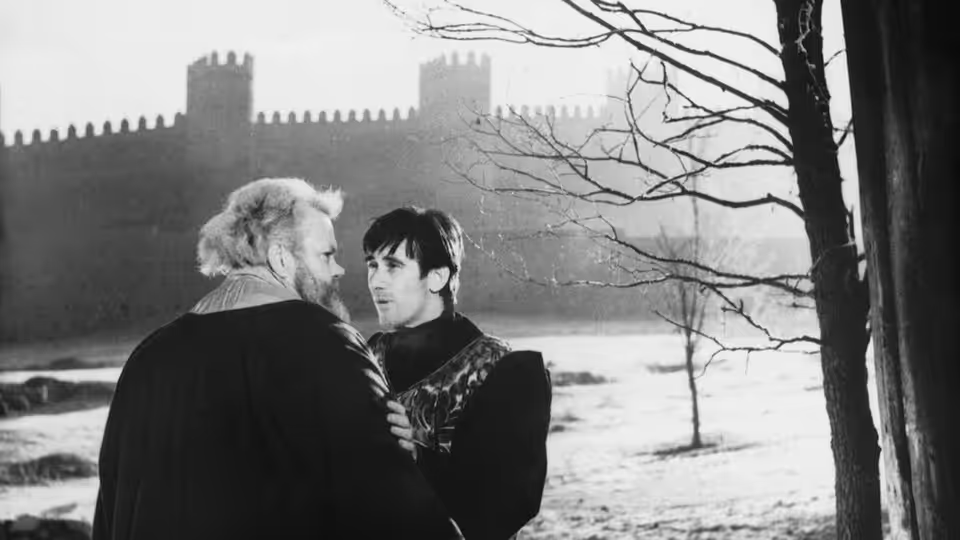
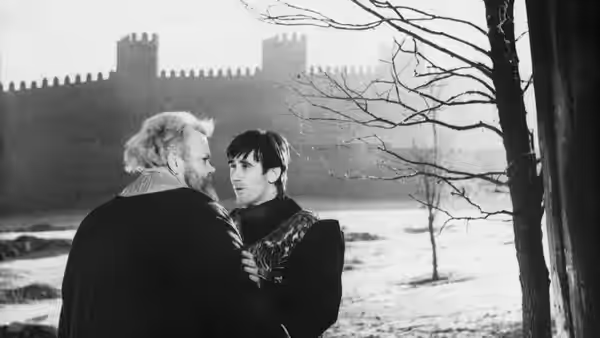
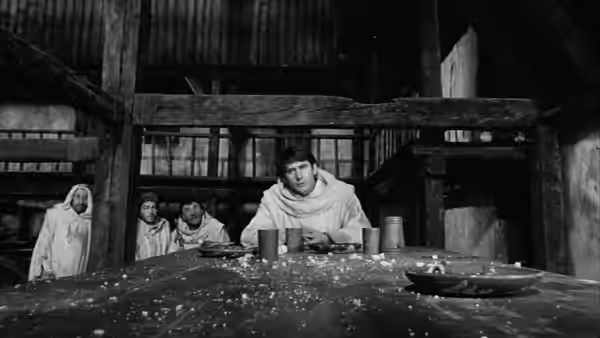
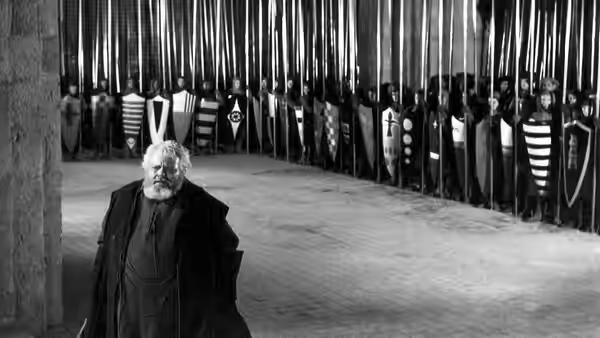
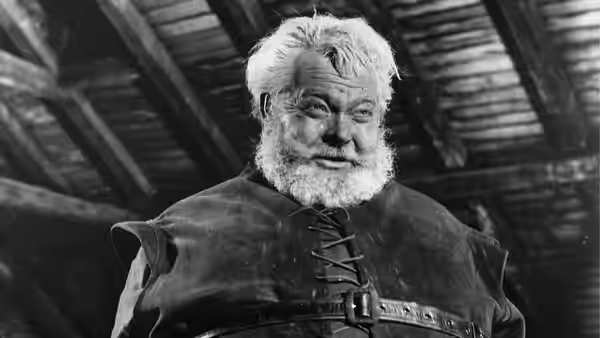
The film opens in snow, with Falstaff and Justice Shallow (Alan Webb) tottering towards a fire and remembering that they have heard the chimes at midnight. That line is usually buried in the second play. Welles puts it first, so that everything that follows is already a memory. Edmond Richard shoots the tavern from the floor, with a wide lens, so the beams press down and Welles fills the frame like furniture. The court is the opposite: bare stone, a high chair, light falling in shafts from windows we never see. Nothing has been built that did not need to be.
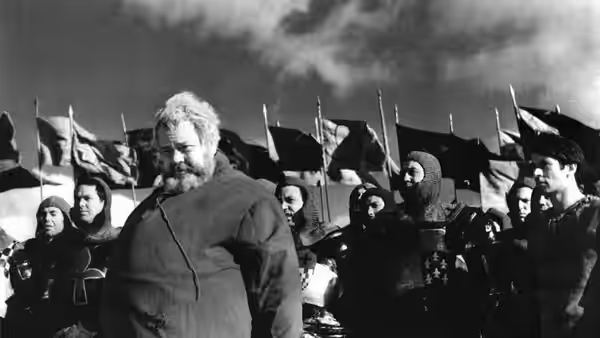
The Battle of Shrewsbury is the reason the film is still talked about. It starts almost as comedy, with knights winched onto their horses by pulley, and it ends with men in armour lying in slurry, stabbing at whatever is nearest. Elena Jaumandreu and Frederick Muller cut it into shots too short to tell one side from the other, and Angelo Francesco Lavagnino’s drums and brass drop away until there is mostly grunting and metal. We were horrified, and we had gone in expecting to be. What did it was the mud: it gets into the lens, onto the faces, and by the end nobody on screen looks like a person who could have a name.
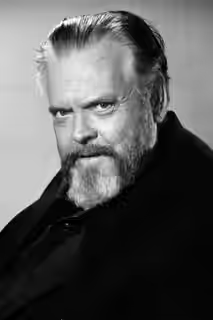
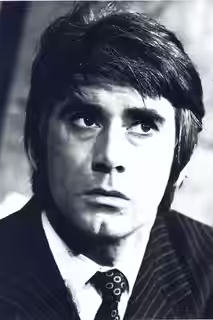
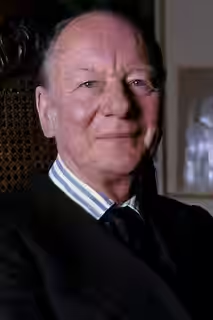
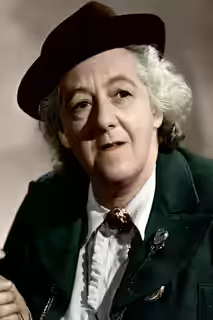
Welles’s Falstaff is quieter than you expect. The lies, the belly and the roar are all there, but the eyes keep going to Hal, checking. In the scene where the two of them play at being king and prince for the tavern, Hal, still in the game, tells him that he will be banished, and Welles simply stops. It is a face waiting to be told it was a joke. Keith Baxter plays Hal as a man who, most critics think, has already half left the play and is ashamed of how easy he finds it. John Gielgud speaks the king’s verse as if reading his own accounts, cold, exact and frightened, and he is the best thing in the film after the battle. Margaret Rutherford is warm and slightly baffled as Quickly, and Norman Rodway’s Hotspur is played for laughs in the bath and then not.
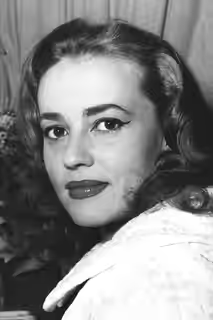
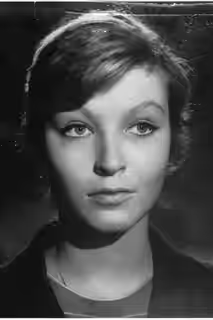
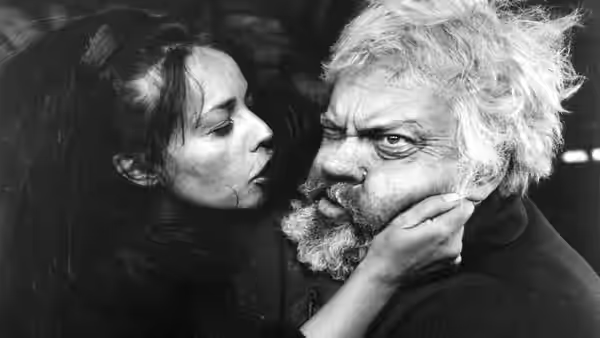
Now the trouble. The dialogue was recorded afterwards, and lips and voices part company often enough that we stopped noticing and then noticed again. Several of the smaller parts speak in a voice that sounds suspiciously like the director’s. Jeanne Moreau is billed fourth and has perhaps four minutes; Marina Vlady’s Kate Percy has fewer. Scenes end a beat early, as though the money did. Shot in Spain on little of it, the film wears its poverty in the court scenes, which are a chair and a shaft of light and a great actor doing the rest.
Set against Welles’s other Shakespeare, this is far ahead of his Macbeth and his Othello, both of which are all mood and mist. Here the mood serves the people. The ending is where the plays end, and we will not describe it, except to say that Welles has built the whole film so that you watch it coming and cannot look away.
Watch it with the subtitles on and the volume up. The verse fights the soundtrack all the way through, and the verse should be allowed to win.