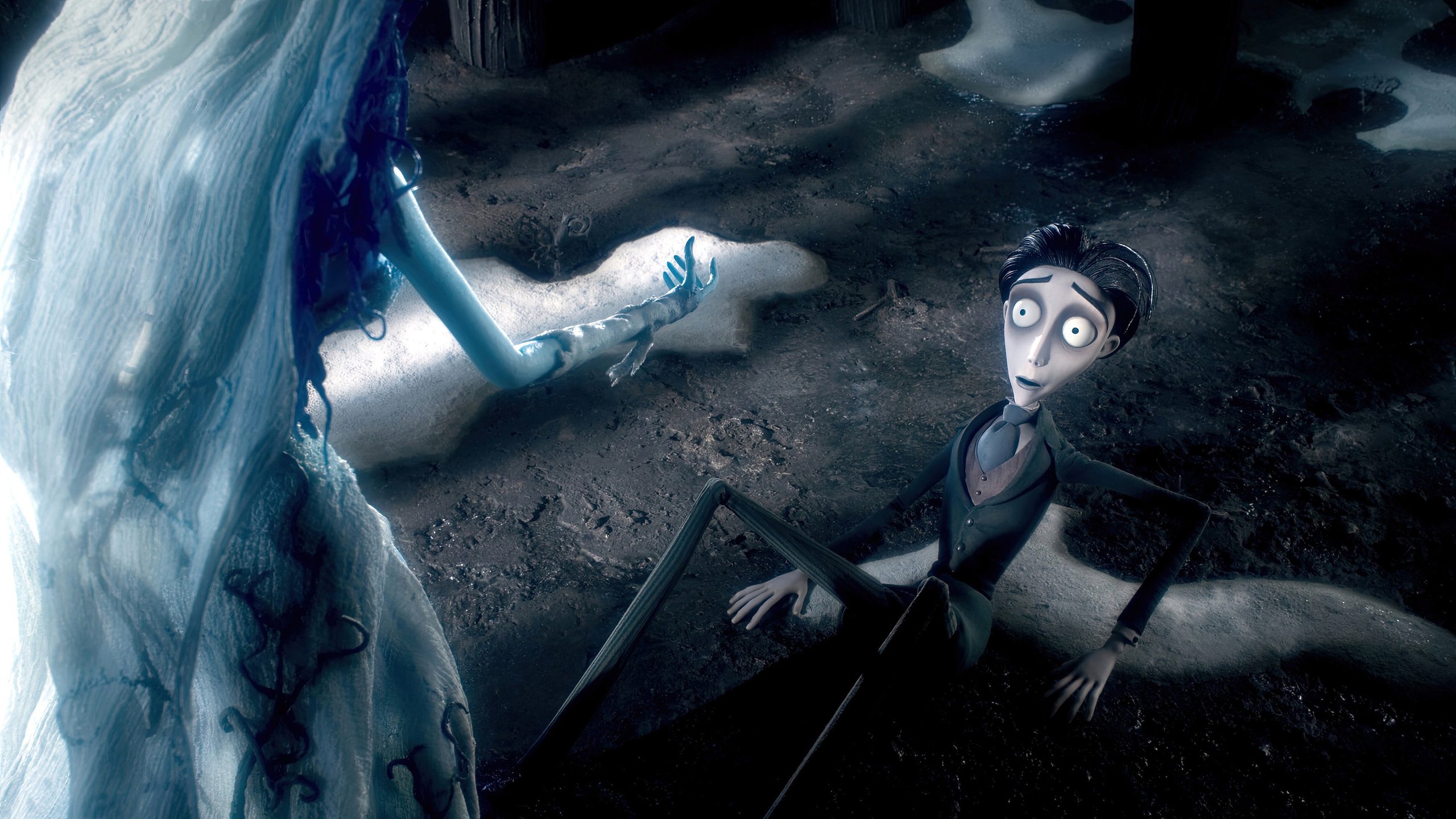
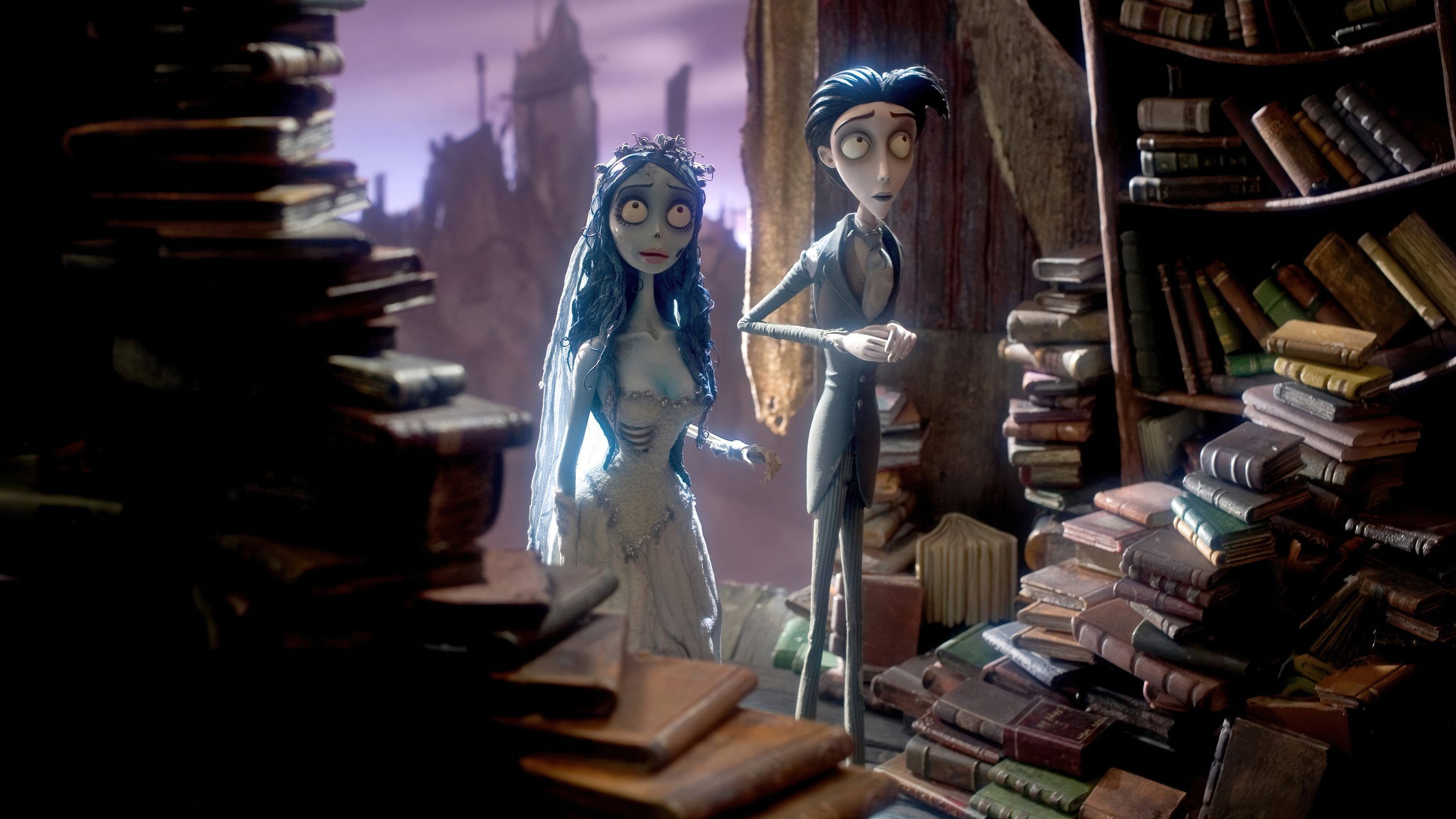
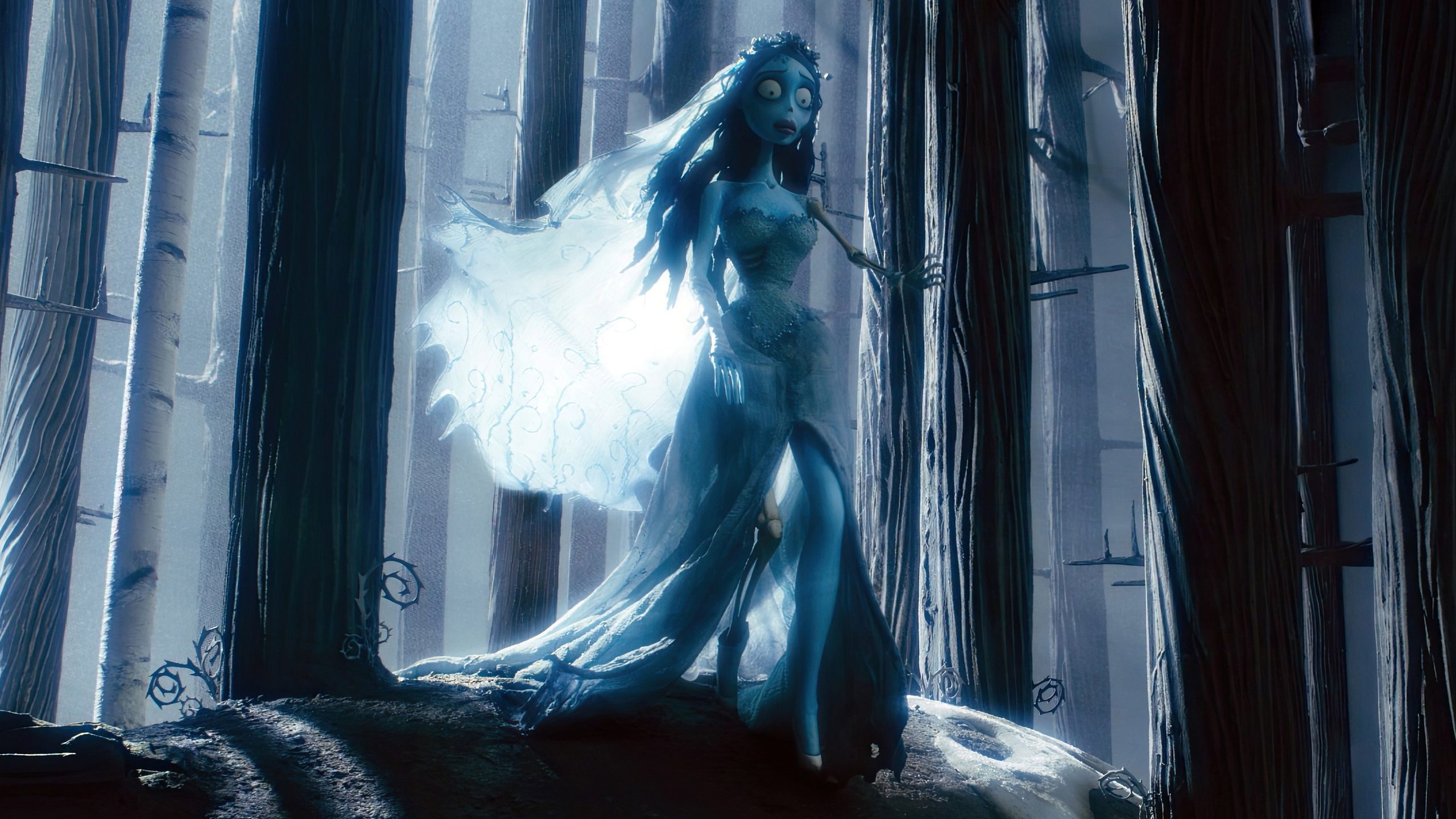
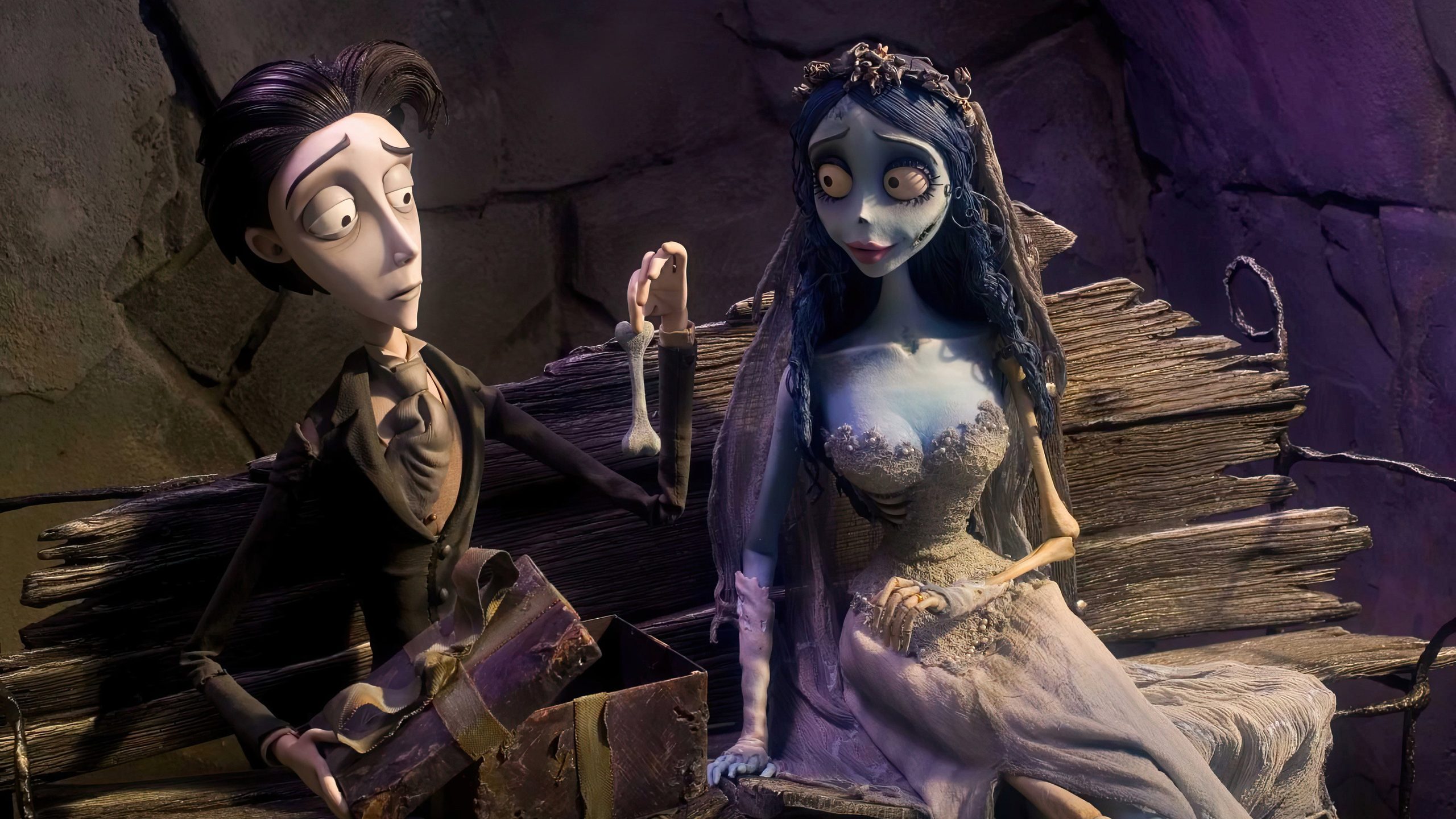
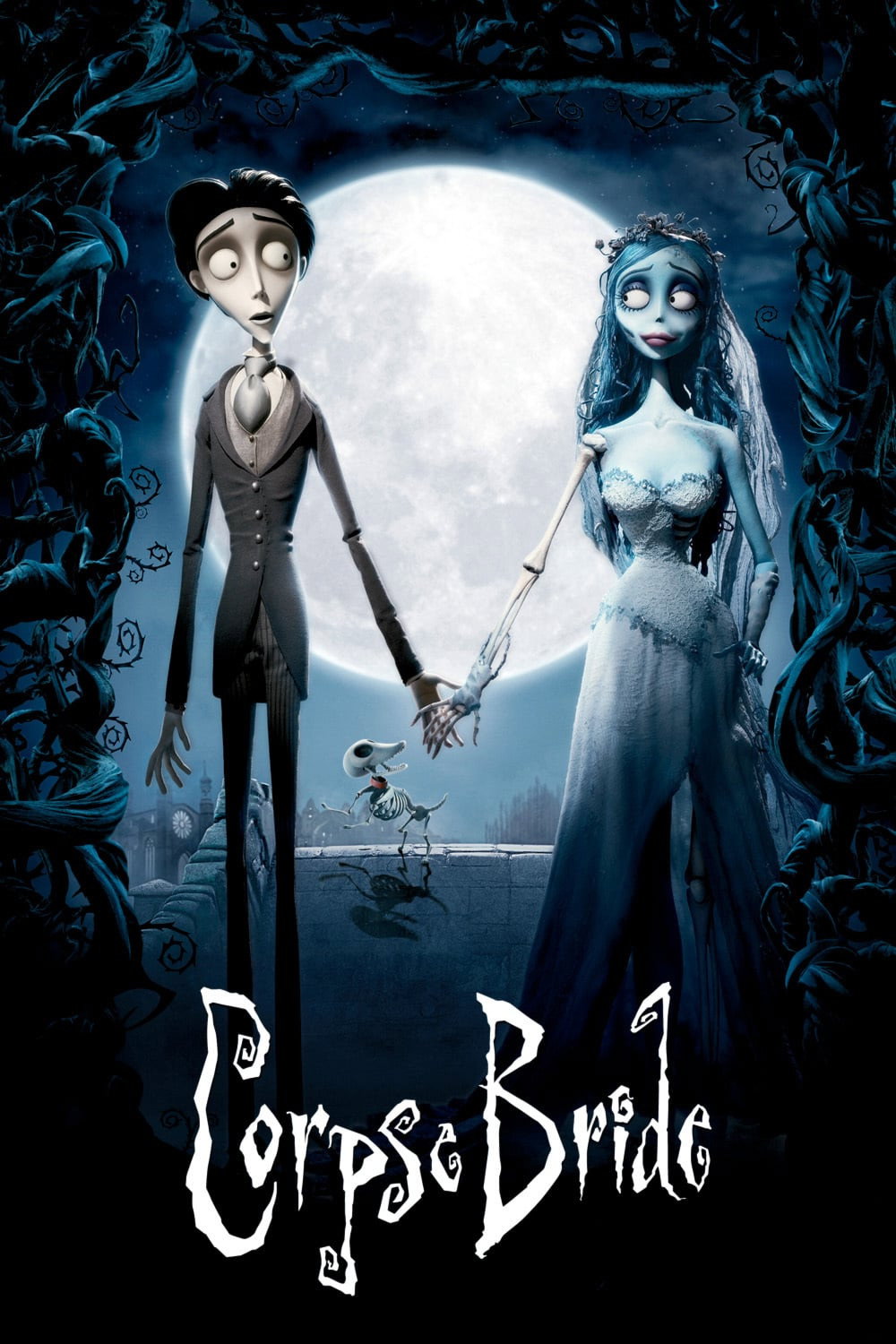
Tim Burton and Mike Johnson’s stop-motion fairy tale is small, handsome and over in 77 minutes. Helena Bonham Carter’s dead bride is the best thing in it; the songs are thinner than they should be. We were fonder of it than we expected.
Corpse Bride says more plainly than anything else Tim Burton has made that the dead are better company than the living. Burton directs with Mike Johnson, from a screenplay by Pamela Pettler, Caroline Thompson and John August, and it is over in 77 minutes. It is a small film, handsomely built and kindly meant, and we liked it more than its title suggests we should. It is also thinner than it looks, and the songs are the reason.
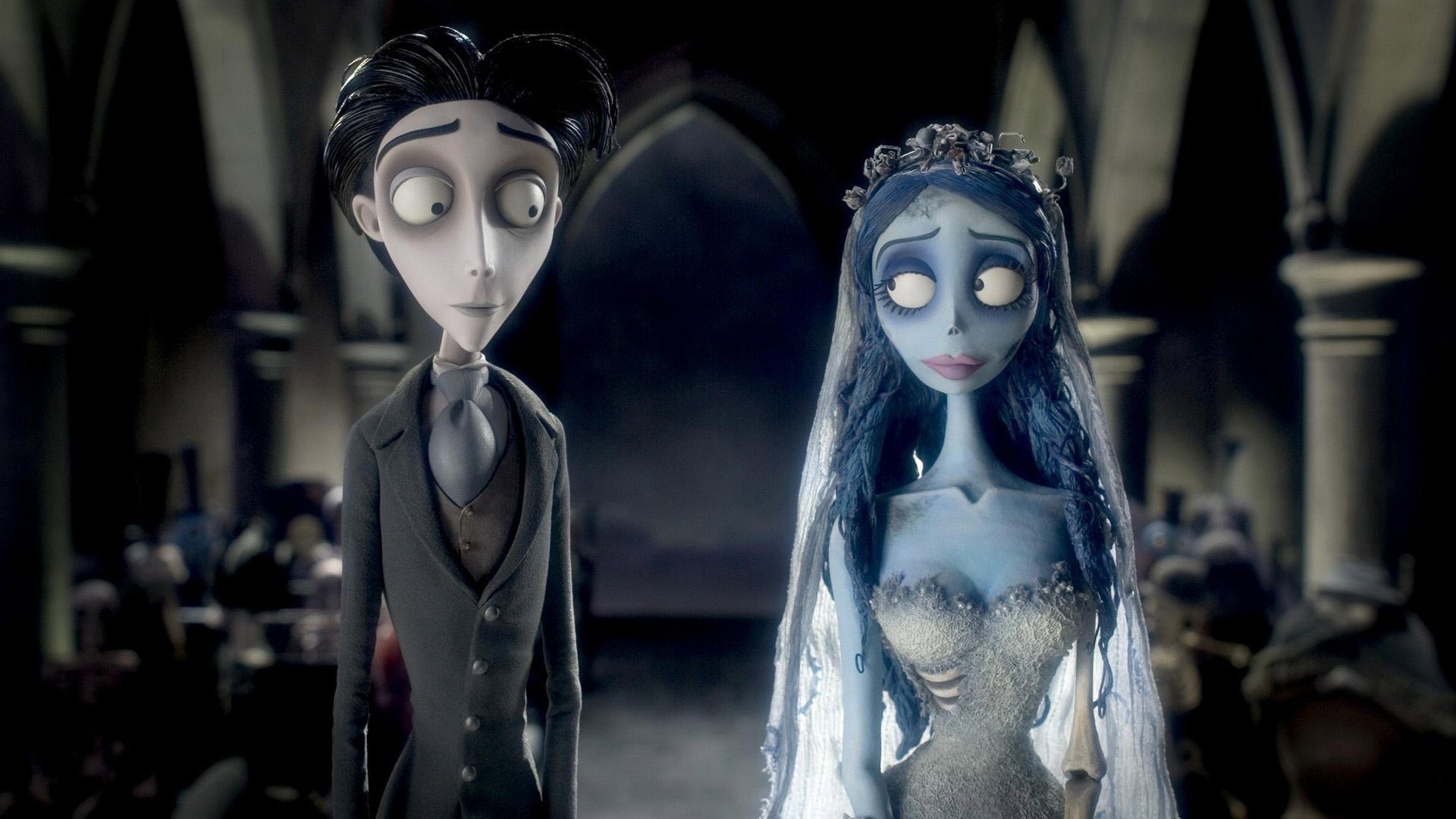
The town of the living has hardly any colour. Pete Kozachik shoots it in greys and browns so drained that the puppets’ faces are the brightest things in the frame, and Alex McDowell builds it out of leaning houses, barred windows and a church whose spire looks like something pulled from a jaw. Below ground everything changes. The Land of the Dead is lit in greens and purples, the bar is full, a skeleton band is playing, and the corpses are far more relaxed than anyone upstairs.
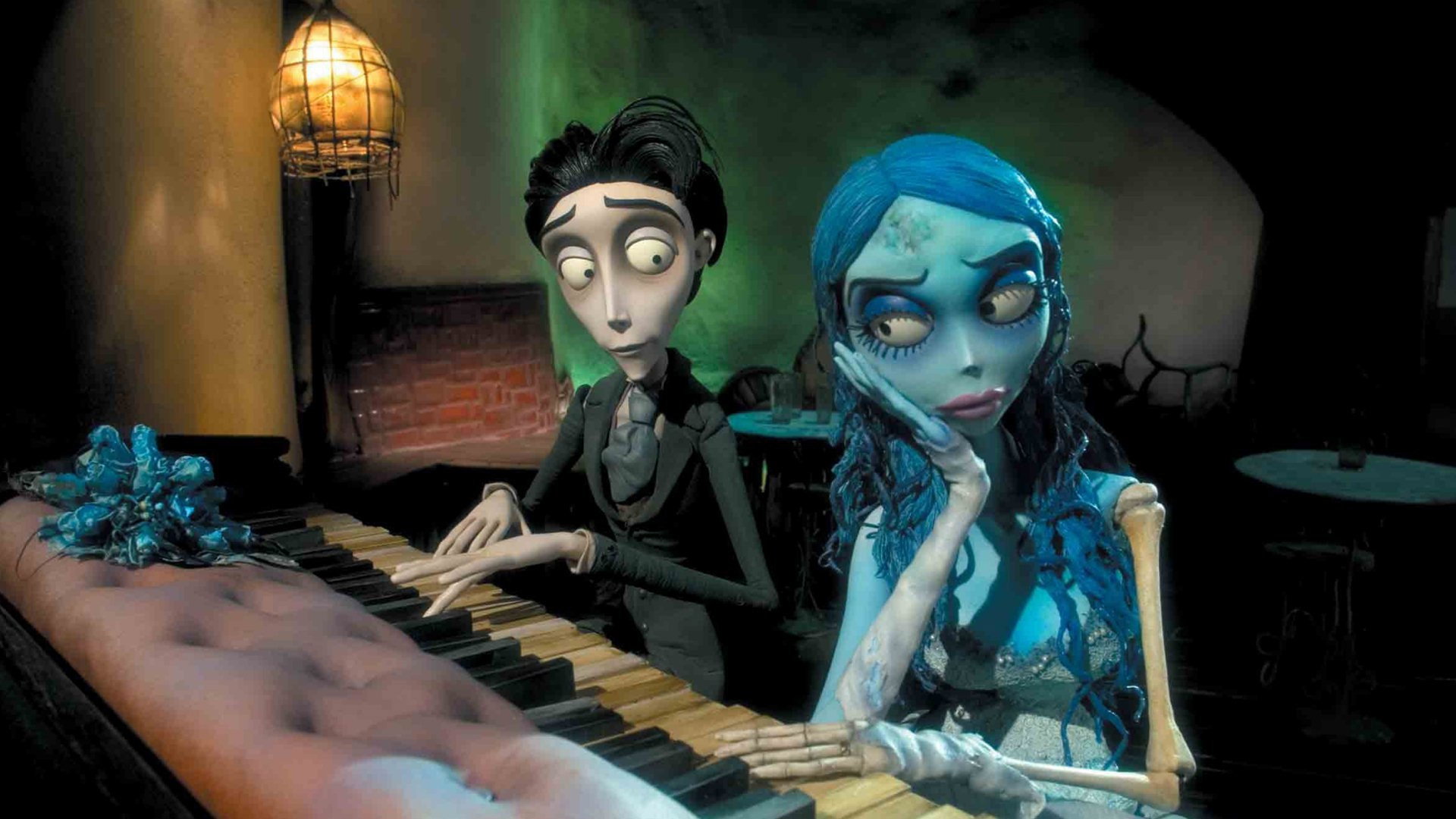
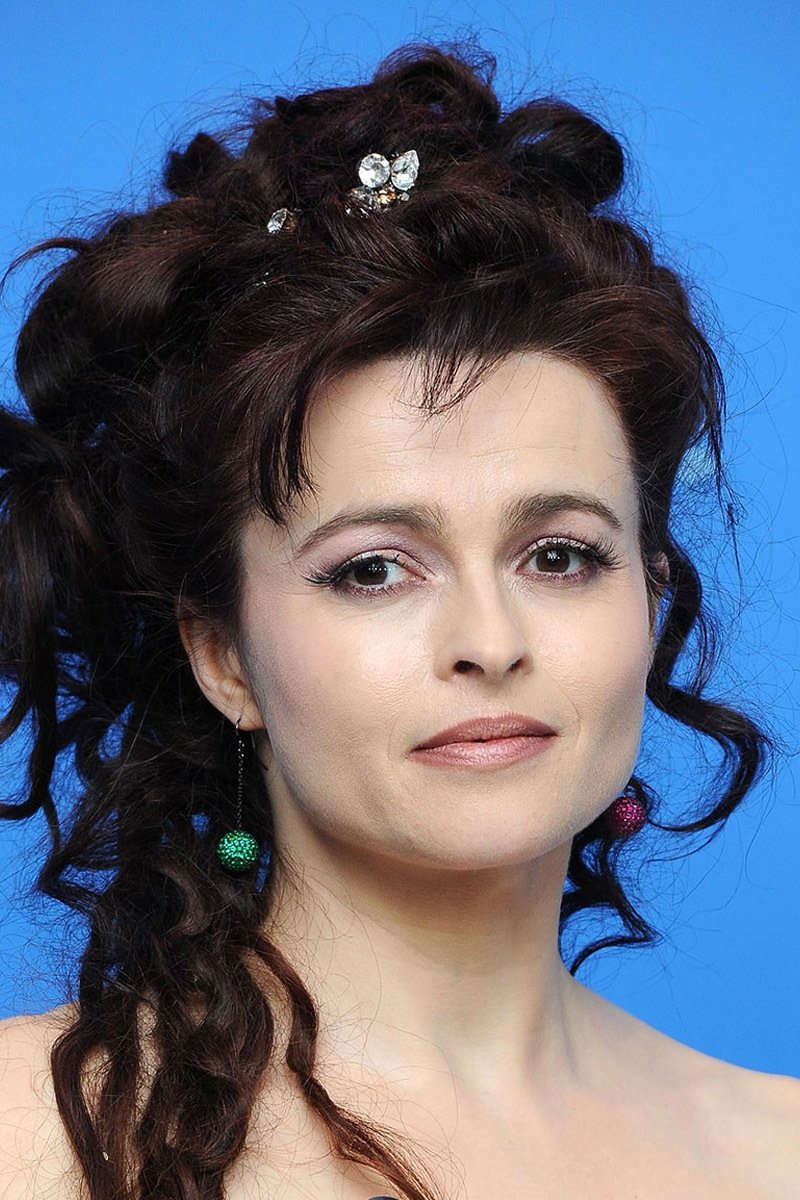
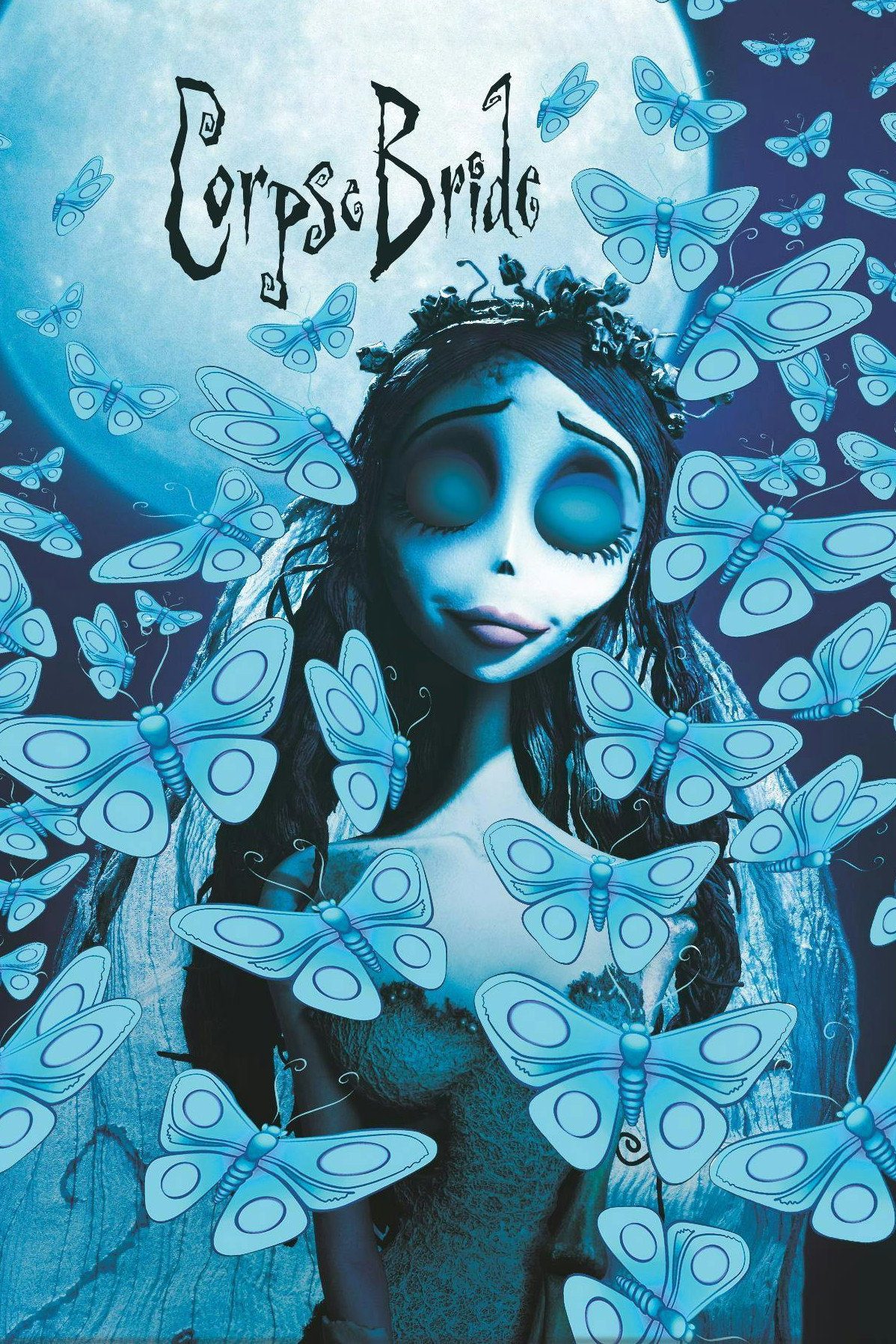
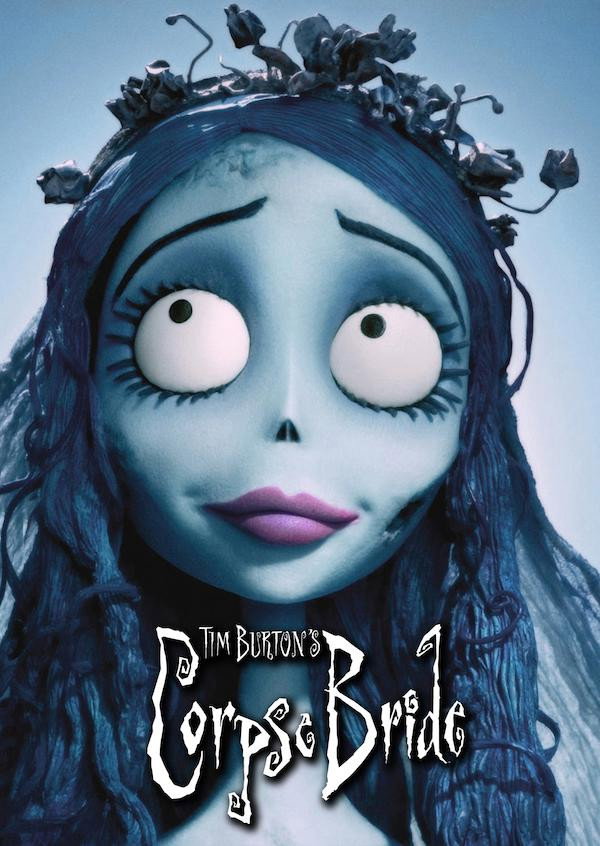
The puppets are the achievement. Their faces move by degrees, an eyebrow here, a corner of the mouth there, and Victor’s hands do most of his talking. Helena Bonham Carter’s Corpse Bride, Emily, has blue skin, a wedding dress gone to rags, one leg reduced to bone and an eye that drops out of its socket so that a maggot (Enn Reitel) can advise her. She should be a gag. Instead there is a scene at a piano where she sits down beside Victor and joins in, and her hand comes off and carries on playing, and it moved us more than a puppet with an exposed shin bone has any right to. The reason is Bonham Carter’s voice, which never asks for pity: a woman delighted to have a guest, trying not to show how long she has waited for one.
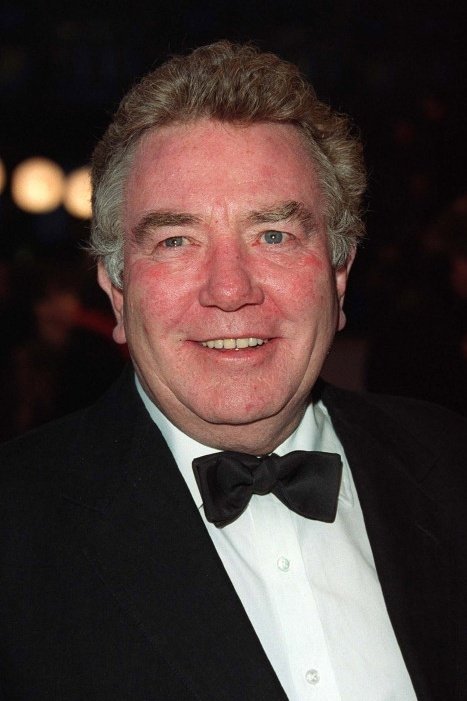
Johnny Depp gives Victor a stammer and a permanent apology, and the design helps him, all elbows and enormous eyes. Emily Watson’s Victoria, the living bride, is quiet and sensible and the only adult in her house. Joanna Lumley and Albert Finney play the Everglots as a titled couple who speak of their empty accounts as if the servants had done it, and Tracey Ullman and Paul Whitehouse play the Van Dorts as fish merchants who want a coat of arms to go with the smell. Christopher Lee thunders as Pastor Galswells, Michael Gough plays Elder Gutknecht as a dusty underworld wizard, and Richard E. Grant’s Barkis Bittern is the guest nobody invited.
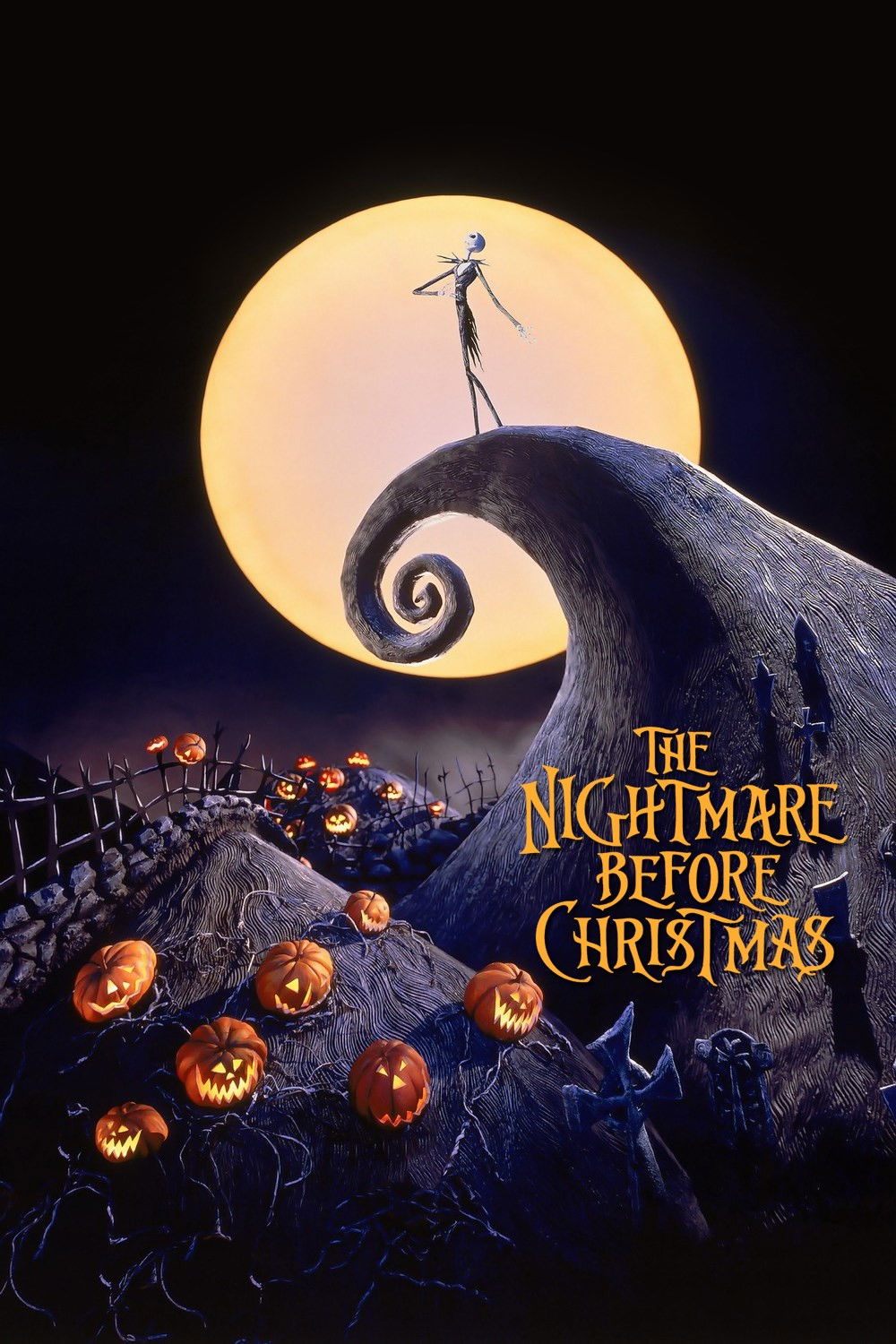
Danny Elfman writes the songs as well as the score, and the songs are where the film runs short. The skeleton band’s number is the best, fast, rude and staged like a floor show; the opening ensemble lays out the two families; Emily’s lament, sung to a spider (Jane Horrocks) and the maggot, has the sharpest lyric. None of them stays in the head the way the songs in The Nightmare Before Christmas did, and the film keeps stopping for them. The story is short, and the middle, with Victor going up and down between the worlds, is where you feel it stretched. Chris Lebenzon, Claire Dodgson and Jonathan Lucas share the editing credit and keep the pace up, but pace is not the same as incident.
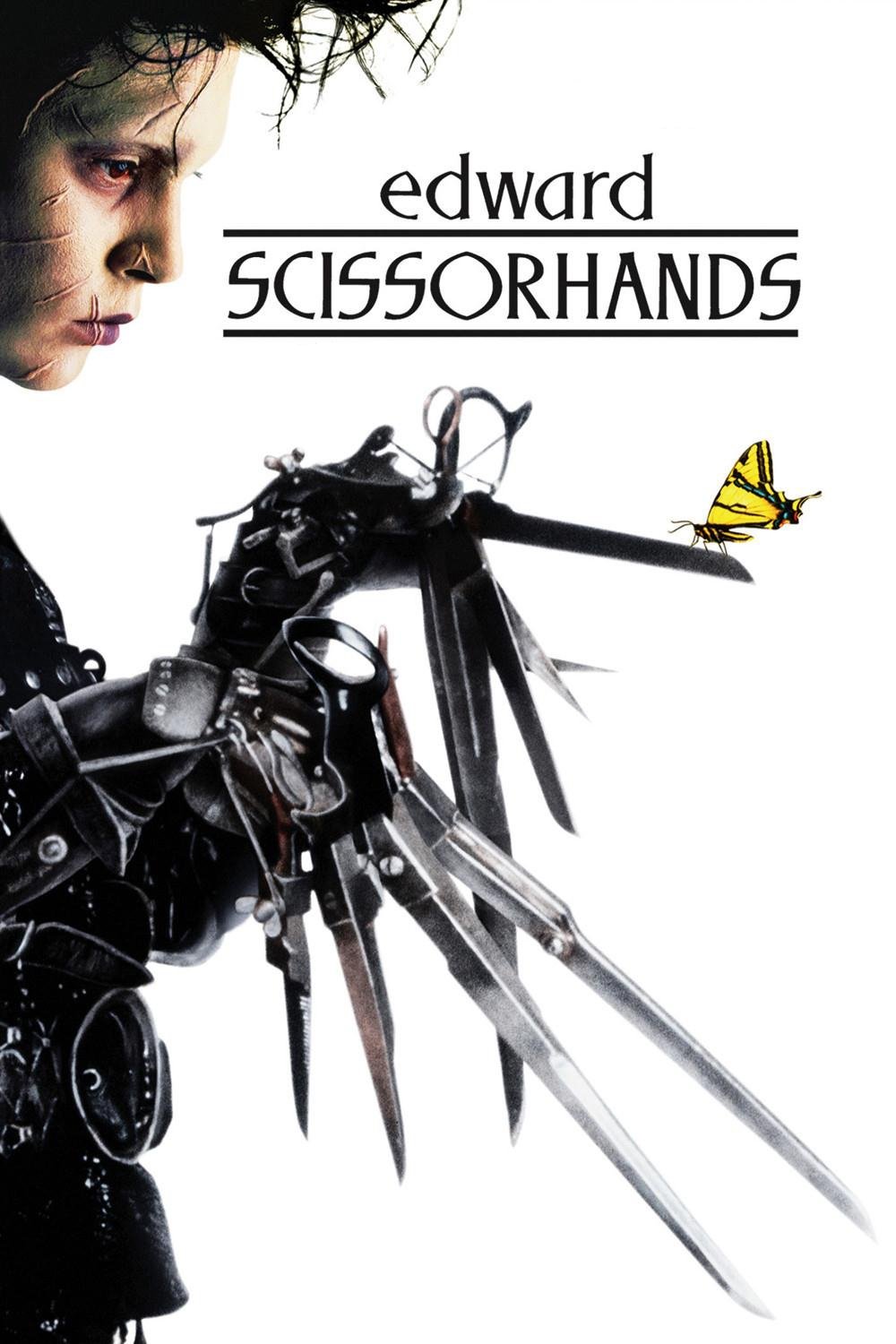
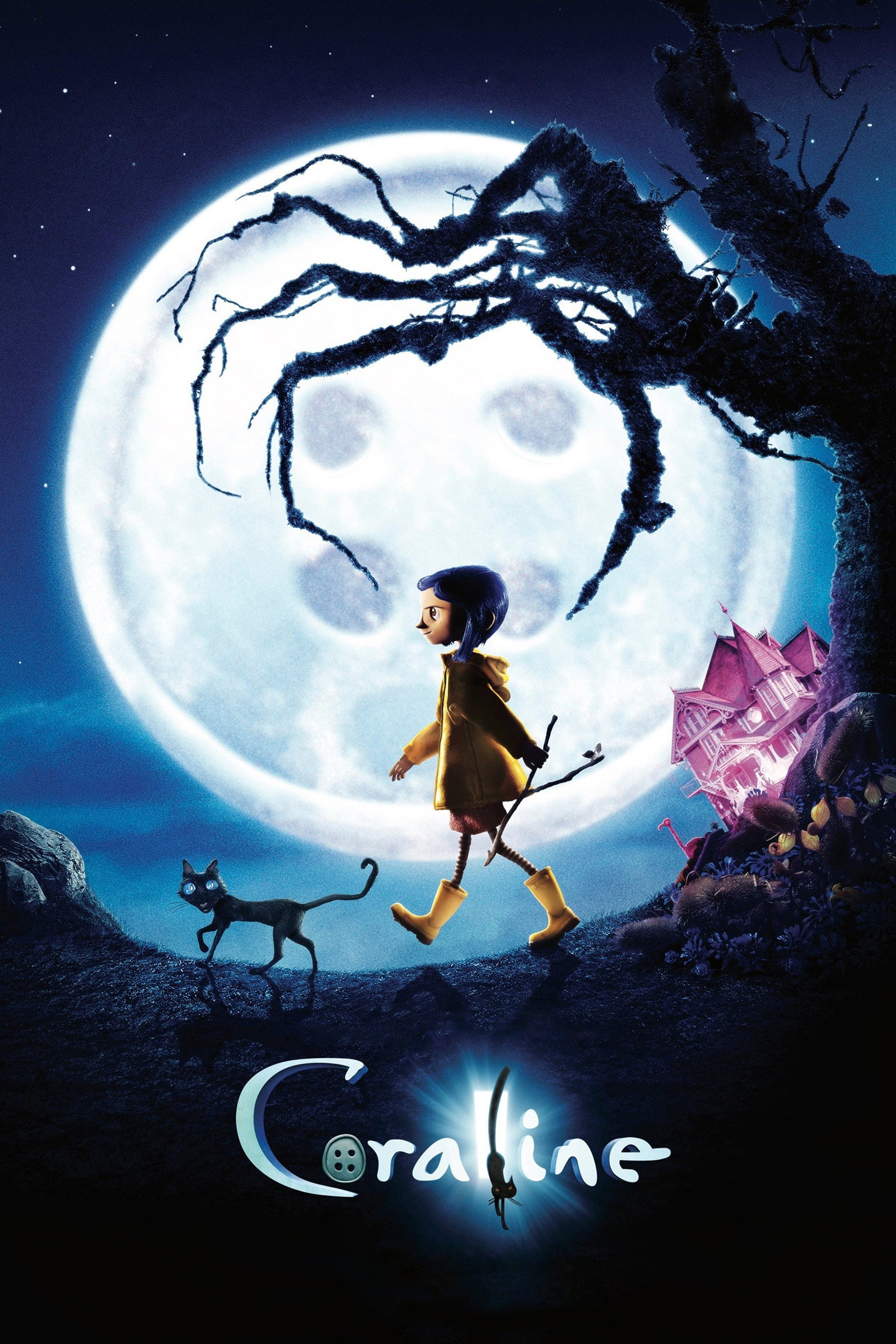
Set it beside Burton’s other stop-motion work and this is the tender one. The Nightmare Before Christmas (1993), which Burton produced and Henry Selick directed, had more energy, more tunes and no love story. Corpse Bride is closer to Edward Scissorhands (1990), which Caroline Thompson also wrote: a gentle oddity, a town full of fools, and a girl who sees the point of him. It is less funny than Nightmare, but it has a heart, and the heart is under the ground.
Take it, a 77-minute fairy tale with a PG certificate, best watched with children past being frightened by skeletons and adults who would rather be at the bar downstairs. The second half turns on the question of which bride Victor belongs with. Then it stops, and the credits are up before you have quite finished feeling it.