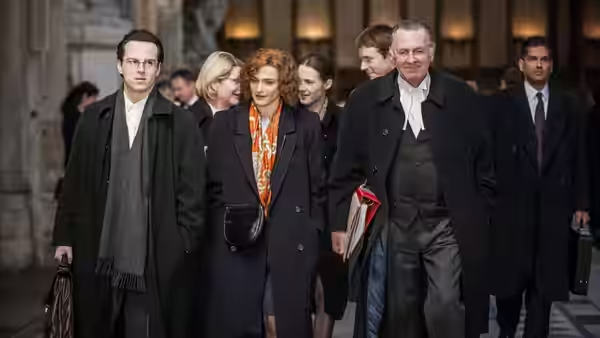
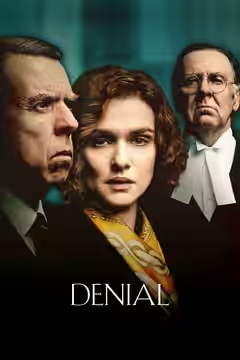
Mick Jackson and David Hare turn the Irving libel trial into a sober, well-argued courtroom drama that is strongest when Tom Wilkinson is on his feet and flattest whenever it leaves the court. Worth an evening; do not expect to be swept away.
In 2000, in the High Court in London, David Irving sued the American historian Deborah Lipstadt for calling him a Holocaust denier, and because English libel law puts the burden of proof on the defendant, she had to show that the Holocaust happened and that he had lied about it. Mick Jackson’s film, from a screenplay by David Hare, takes Lipstadt’s own account of the case and makes 109 minutes of it. It is intelligent and decent and a little airless. The argument is made well; the drama around it is thinner.
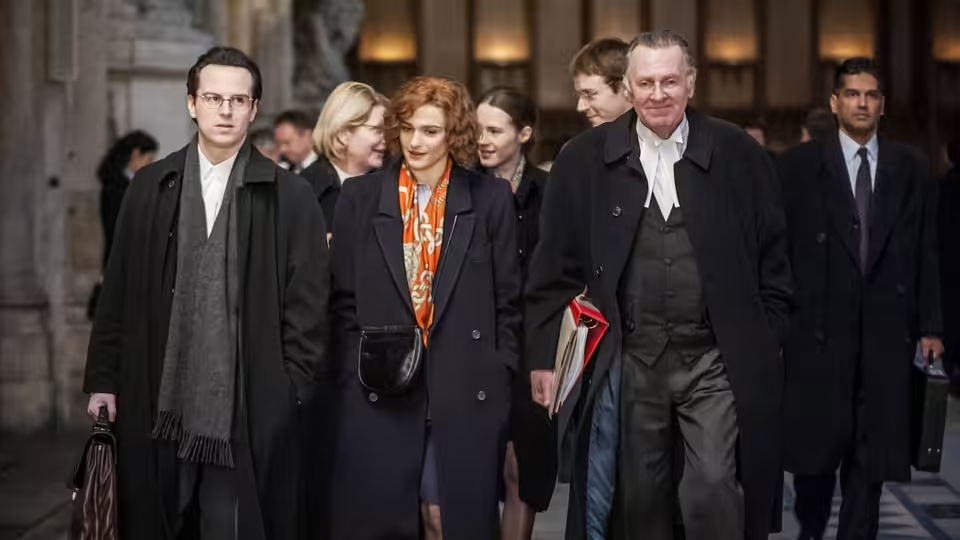
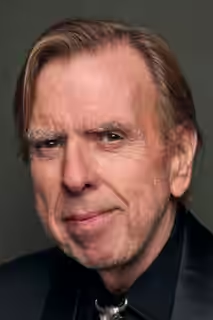
Tom Wilkinson is the reason to see it. He plays Richard Rampton, the barrister, as a man who takes a glass of red at lunch, will not look Irving in the eye, and treats the whole thing as a job until, at Auschwitz, we see that it is not one. He walks the site in the fog asking where the barracks stood, how far, how long it would take, and the plainness of the questions upsets more than any speech could. Timothy Spall plays Irving pink and eager, hands folded, with a smile that arrives a second before the insult, and he never plays him as a fool. Their exchanges, with Irving representing himself and Alex Jennings’s judge watching from above, are the best stretch of the film.
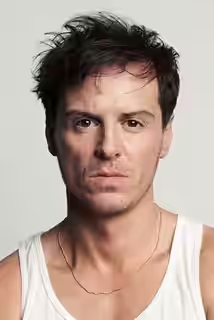
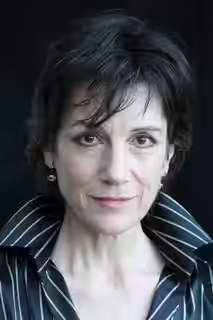
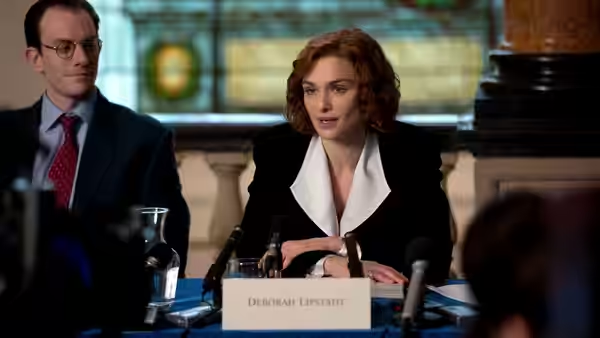
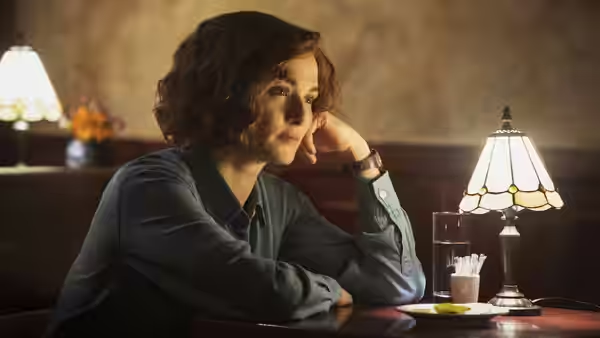
The difficulty is Lipstadt. Rachel Weisz gives her a Queens accent, a run along the Thames each morning and a temper, and then the script takes her voice away. Anthony Julius (Andrew Scott, brisk and expensive) tells her she will not testify and neither will any survivor; the case will be won on Irving’s footnotes or not at all. But the lawyers are right, the film knows they are right, and so for an hour its lead is a woman in a gallery being told to sit down. Harriet Walter, as a survivor who asks to speak and is turned away, has one scene and makes more of it than the film does.
Haris Zambarloukos shoots London in flat winter grey and the court in brown oak under even light, and keeps the camera well back at Auschwitz, which is tact and leaves the place to the actors. Andrew McAlpine’s sets are correct and unmemorable: chambers full of ring binders, a flat Lipstadt never seems to unpack. Odile Dicks-Mireaux dresses Irving a touch too well, a sharp detail. Howard Shore’s score stays out of the way and then lays strings under the camp scenes, where silence had already done the work. Justine Wright cuts the trial as short volleys with reaction shots to the gallery; it keeps things moving and looks like good television.
We were moved at Auschwitz more than we had braced for, and what did it was Wilkinson saying nothing and pacing out a distance while Weisz stood apart with her head bowed. We were also, by the second week of the trial, bored, and then uncomfortable about being bored by this of all subjects. The film has a case to make about the tedium of proving the obvious, and Hare half makes it, but Jackson never makes slow work look like anything but slow work.
Mark Gatiss, as the Auschwitz expert Robert Jan van Pelt, and John Sessions, as the historian Richard Evans, who went through Irving’s citations line by line, each get one piece of evidence and a paragraph. There is one question from the bench that unsettles the whole court, and we will not describe it; it is the film’s one jolt of real suspense.
Jackson made Threads for television in 1984; he knows how to make an audience feel dread without a word of explanation. Here he explains the law twice and the strategy three times. Hare’s screenplays for The Hours and The Reader had the same virtues and the same ceiling: literate, honourable, fair, never quite alive.
Watch it at home, with someone who likes to argue about evidence. It carries a 12A and runs 109 minutes. It will remind you that facts are established by people with footnotes and tape measures, and that this is slow, necessary work that does not photograph well.