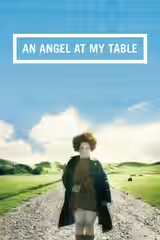
Gillian Armstrong’s first feature gives Miles Franklin’s novel to Judy Davis and gets out of her way. It is warm, sharp and very well made, and it sags for a quarter of an hour in a farmhouse full of dirty children.
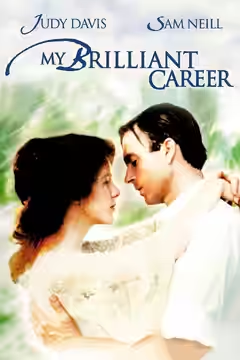
Gillian Armstrong’s first feature is a period romance in which the heroine spends the whole film deciding whether she wants the romance at all. It is adapted by Eleanor Witcombe from Miles Franklin’s novel, and it is carried, scene by scene, by Judy Davis, who was almost unknown when she made it and looks in every frame as if she knows exactly what she is doing. We liked it a great deal. It runs 100 minutes, it is handsome without being smug about it, and it has a lead performance that has not dated by a day.
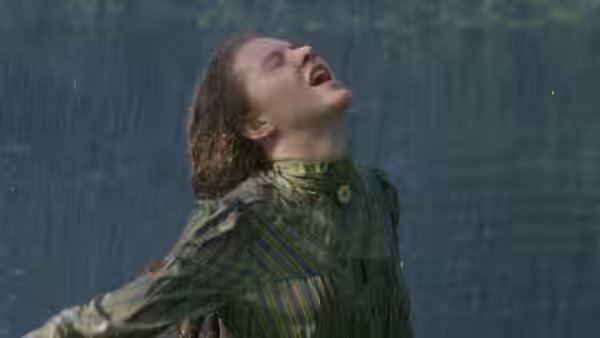
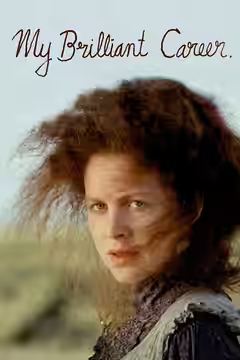
Davis plays Sybylla Melvyn as a girl who is rude before anyone can be rude to her. She has a cloud of red hair she cannot control, freckles she is told about, and a habit of laughing at the wrong moment in a room full of people who never laugh. In the early scenes at Possum Gully she stares into a mirror and announces that she is plain, and Davis says it as a fact she has decided to get in first with. Later, at Caddagat, she is put into a decent dress for the first time and does not know what to do with her arms. It is a performance built out of small physical embarrassments, and it never once asks us to feel sorry for her.
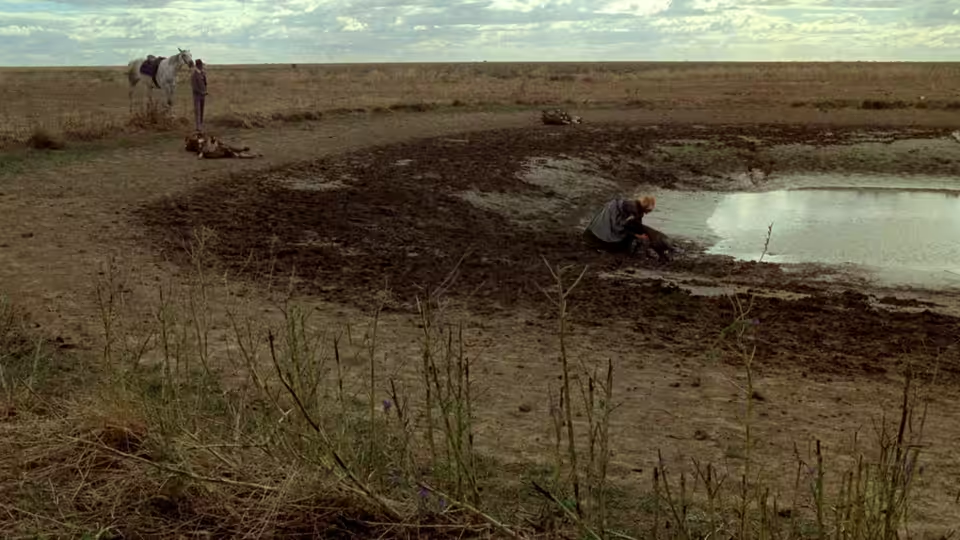
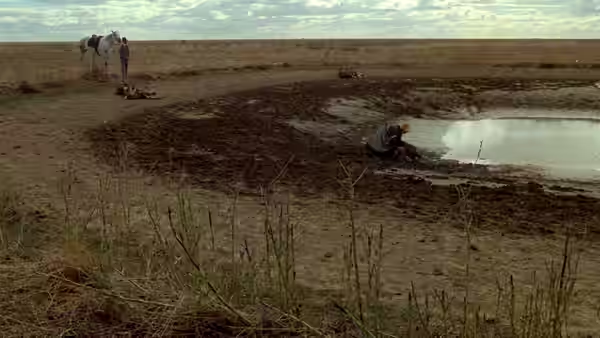
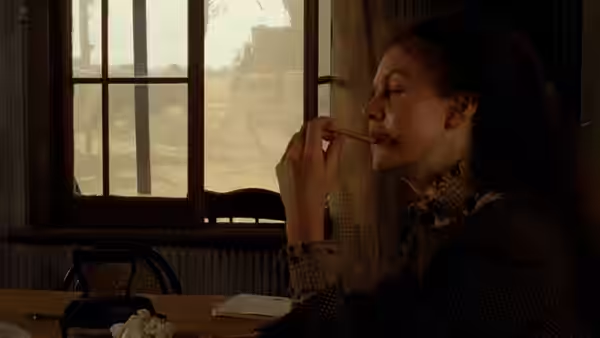
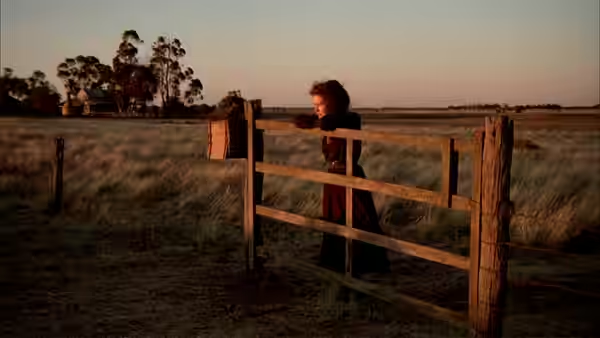
Donald McAlpine shoots the two worlds so that you could tell them apart with the sound off. Possum Gully is yellow dust, low sun and a kitchen where everything has a film of dirt on it. Caddagat is green shade, verandahs and lamplight on polished wood. Luciana Arrighi fills the grandmother’s house with the clutter of people who have never had to sell anything, and Anna Senior puts Sybylla in frocks that always fit a fraction wrong, at the shoulder or the waist, so that she looks borrowed even when she looks nice. Nathan Waks builds the music around Schumann’s Scenes from Childhood, which Sybylla plays herself at the piano, so the score is something she does rather than something done to her. Nicholas Beauman lets scenes run: the boat on the lake is held long enough that we start to notice the silence, which is the point.
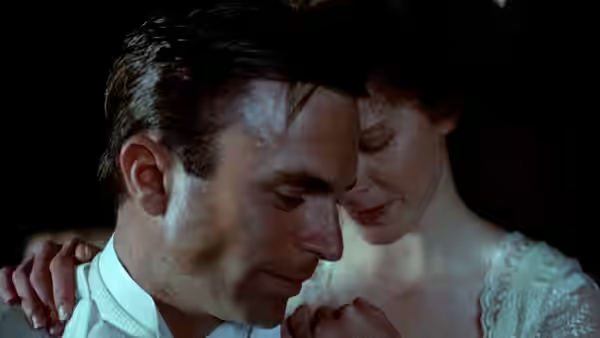
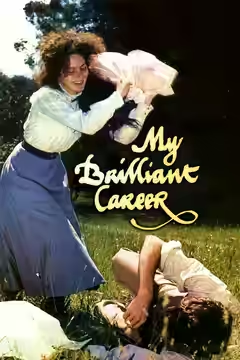
Sam Neill’s Harry Beecham is the film’s second best idea. He is rich, decent and quiet, and Neill plays him as a man who has never had to ask for anything and is puzzled to find himself asking. The pillow fight between them, which starts as a joke and turns into a chase through the house and out across the lawn, is the sequence we would show anyone who asked what the film was like. We laughed, and then we went quiet, because Davis’s face at the end of it shows a girl realising she is having a better time than she meant to. Nothing is said. Armstrong trusts us to have seen it.
The film’s weak stretch is the third quarter, when Sybylla is sent to the McSwatts to pay off a debt of her father’s. Max Cullen is fine as the head of that household, but the sequence is played as broad comedy, all grubby children and bad table manners, and it slows the film just when it should be tightening. Robert Grubb’s Frank Hawdon is the other lazy element, a cartoon Englishman there to be humiliated, and the humiliation is the one moment where the script takes the easy laugh. And Harry, for all Neill’s care, is written a little thin: the film wants us to feel the pull of him as strongly as Sybylla does, and it gives him perhaps two scenes in which to earn that.
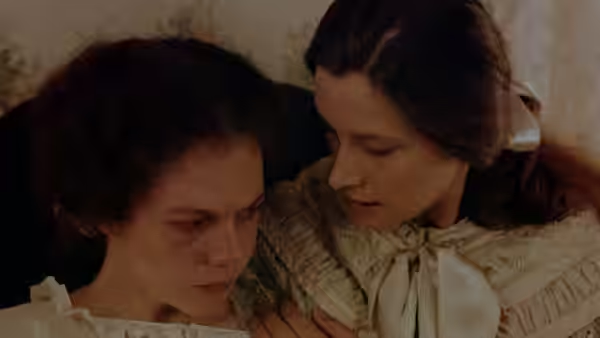
Wendy Hughes is quietly excellent as Aunt Helen, a woman whose own marriage went wrong and who teaches Sybylla how to be looked at without ever quite recommending it. Aileen Britton’s Grandma Bossier is the voice of what a girl is for. Together they make the case against Sybylla’s ambitions from inside the family, kindly, which is far more persuasive than any villain would have been.
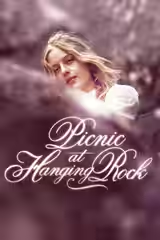
Set beside Peter Weir’s Picnic at Hanging Rock (1975), the other period film that told the world Australian cinema had woken up, this is the smaller and the sturdier of the two. It has no mystery to hide behind, only a girl and a decision, and it stays honest about how much the decision costs. See it for Davis, for the pillow fight, and for a heroine who is allowed to be difficult without the film apologising for her.