Sydney Pollack turns John Grisham’s novel into a long, handsome, unhurried thriller, and the best of it is Gene Hackman, sunburnt and sad, showing a young man what the money buys. It runs 154 minutes and we felt most of them.
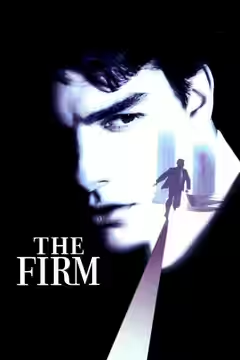
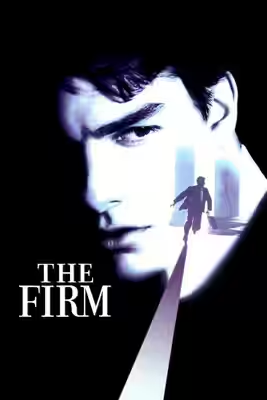
Sydney Pollack has made a thriller about a job offer. Mitch McDeere takes the job at a small firm because the money is absurd and the people are kind, and The Firm spends 154 minutes showing him what the kindness was for. It is a handsome, patient, old-fashioned piece of work, and it is half an hour longer than it needs to be. We enjoyed it most of the way and checked our watch twice.
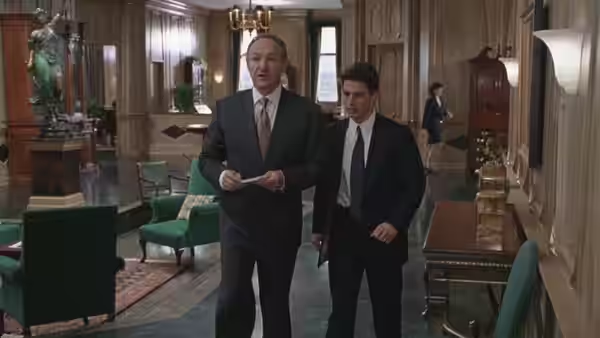
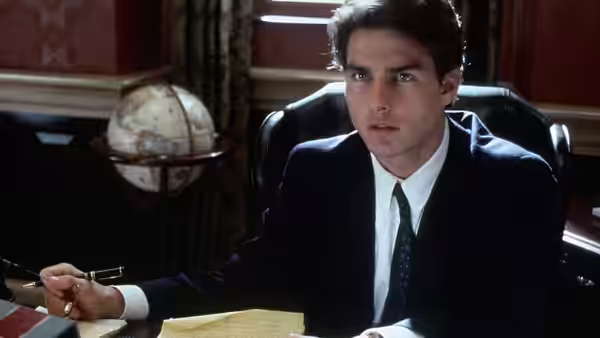
The screenplay, credited to David Rabe, Robert Towne and David Rayfiel from John Grisham’s novel, is at its best early on, when the firm is a seduction rather than a trap. Richard Macdonald builds the offices as a Southern gentleman’s club, dark wood, brass lamps, portraits on the walls, and John Seale shoots them in a soft amber that makes them look like somewhere to grow old. Ruth Myers dresses the partners in suits that cost more than Mitch’s car and dresses Mitch in one that plainly did not.
Gene Hackman is the reason to see it. Avery Tolar, the partner who takes Mitch on, is a tax lawyer with a tan, a drink to hand and a marriage he does not discuss, and Hackman plays him as a man who worked out the price of all this years ago and has been paying it monthly. He does almost nothing: a slow smile, a glass raised, a pause before a question he has heard from many young men. There is a scene late on in which he tells someone what his life has cost him, and it moved us more than we expected a Tom Cruise thriller to. Then Cruise starts running again.
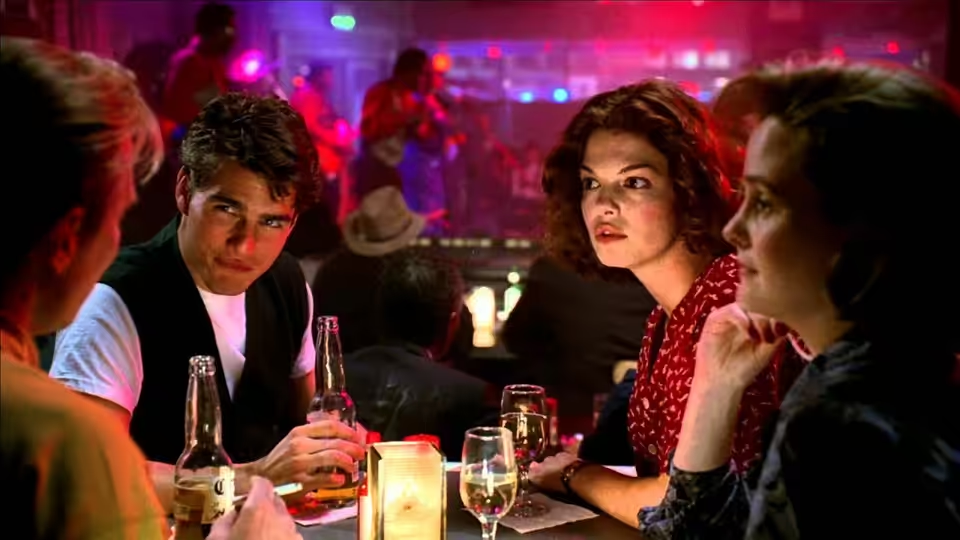
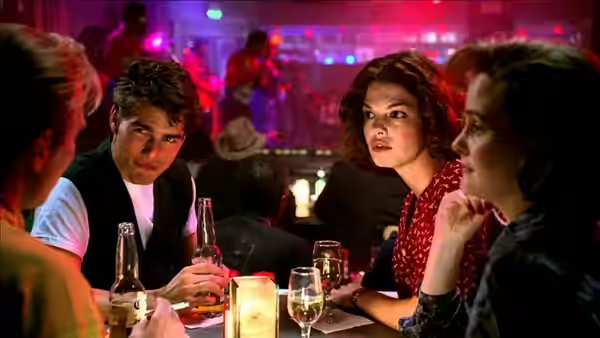
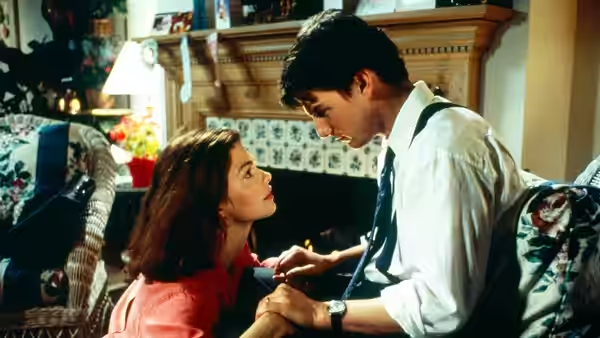
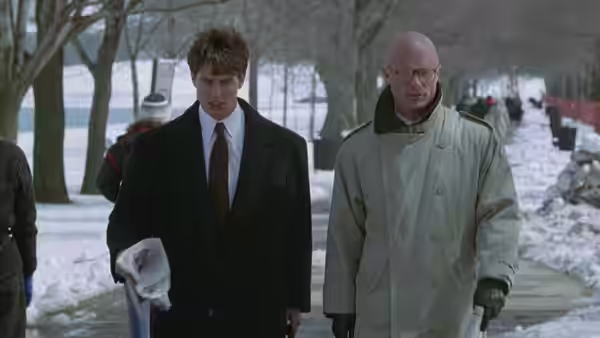
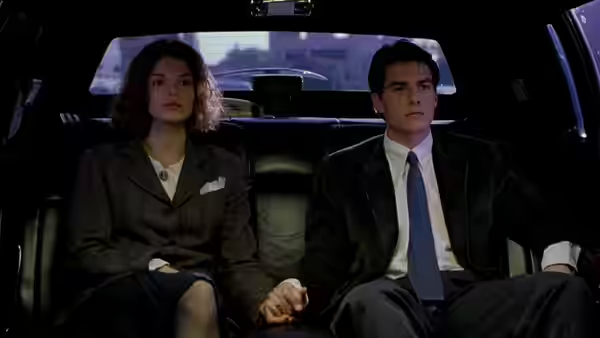
Cruise is fine. He is quick, eager and believable as a man who can memorise a file in a sitting, and the film asks him to sprint through a great deal of the city, which he does as if the running were the acting. Jeanne Tripplehorn gives Abby more spine than the script gives her lines, and her scenes of a marriage going quiet in a house too big for it are among the best things here. Ed Harris, shaven and furious, treats Mitch as a problem rather than a person. Holly Hunter has perhaps fifteen minutes as Tammy Hemphill, a secretary with a cigarette and no illusions, and takes most of them. Hal Holbrook, as the courtly senior partner, and Wilford Brimley, as the soft-voiced security man, do what is needed. Tobin Bell, as a killer billed only as The Nordic Man, says almost nothing and is the one person here we were frightened of.
The trouble is in the middle and at the end. Fredric and William Steinkamp cut the opening and the chases with real snap; then the film sits down for forty minutes of Mitch photocopying and being followed, and the length shows. The villains, when they come into the open, are men in bad jackets with guns, and a story that has made a quiet law firm so frightening does not need them. The climax, which we will not describe, turns on paperwork rather than gunfire, braver than it sounds and less exciting than it needs to be. Dave Grusin’s score is piano, nearly all the way through, light and rippling, pleasant for an hour and a little maddening after two.
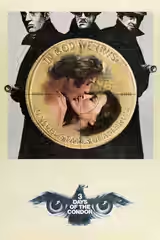
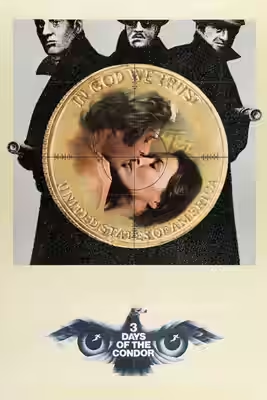
Pollack made Three Days of the Condor (1975), a tighter version of the same anxiety, and Tootsie (1982), where letting actors talk over one another paid off best. The Firm has the ease of both and the discipline of neither. It is a good film with a great performance in it, and the performance is not the star’s.
See it for Hackman, for Hunter, and for the first hour in those warm offices, before anyone has to run. It carries a 15 certificate and opened in British cinemas on 10 September 1993.